The right table setting for your wedding depends on whether you are wiring greenery the night before or renting pieces that arrive ready to set down, whether you want produce from the morning market or candelabras that need a safety plan.
These 11 ideas share one trait: each one commits fully to its look or falls flat, from a produce-run centerpiece to a wall of candles to a table dressed entirely in black.
1. Floral Arrangements Centerpieces

A centerpiece is the single item every guest faces for an hour or more, so its height matters as much as its color.
Tall gold stands lift flowers above eye level so people can talk across the table without craning; low bowls suit a more intimate, elbows-in dinner.
Fresh arrangements need a florist’s timeline and your venue’s rules on water and wax; greenery garlands can be built the morning of and travel better to outdoor heat.
If flowers aren’t in the budget at all, cluster found objects, vintage books, or even fruit in odd numbers. Fresh blooms wilt, but nothing else carries that particular scent and shadow; silk or dried stems last longer yet sit still.
2. Candles and Vases
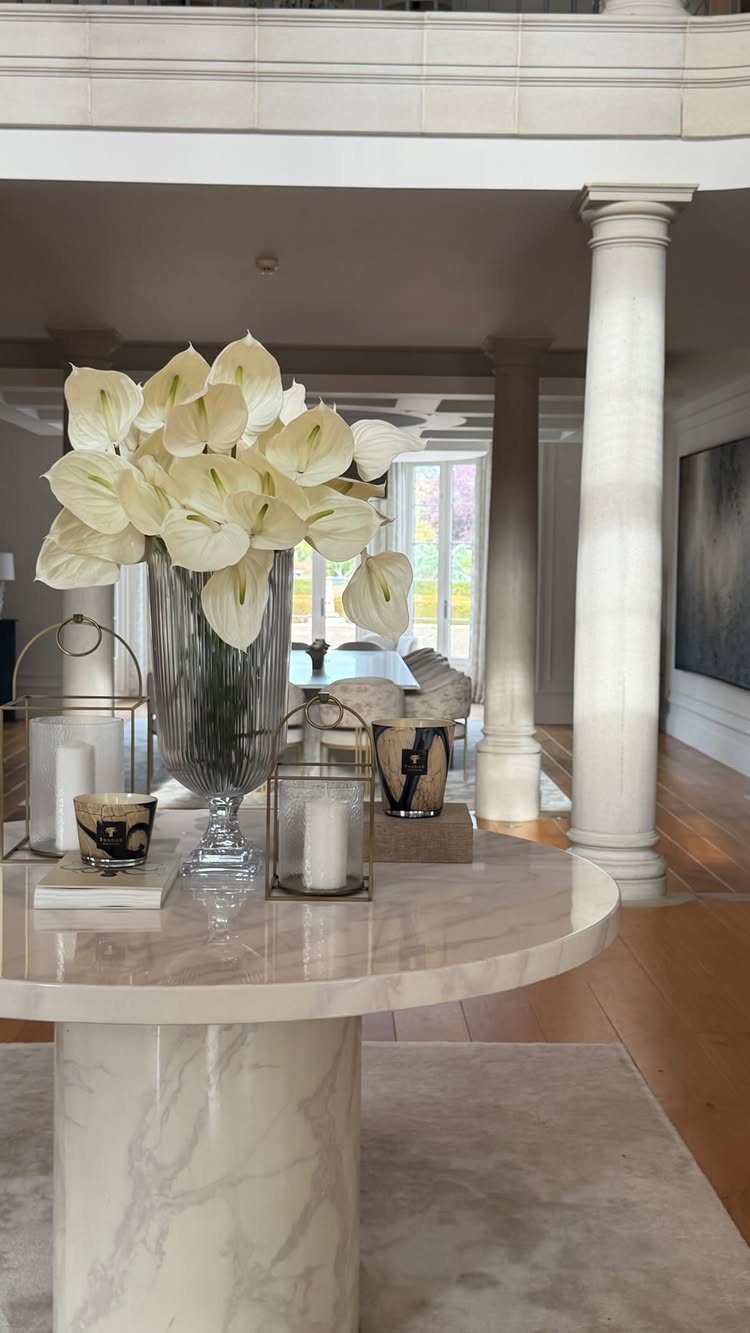
Candles do what overhead lighting cannot; they drop the ceiling visually and slow the room down. Glass hurricanes around pillars last through speeches, while tapers need watching but give the sharper vertical line that photographs well against dark suits.
Vases should be rented or thrifted, not bought outright, unless you already own the shelf space. The marble-and-glass pairing works because every surface reflects; matte ceramic would read heavier and need stronger flowers to balance it.
3. Creative Place Cards
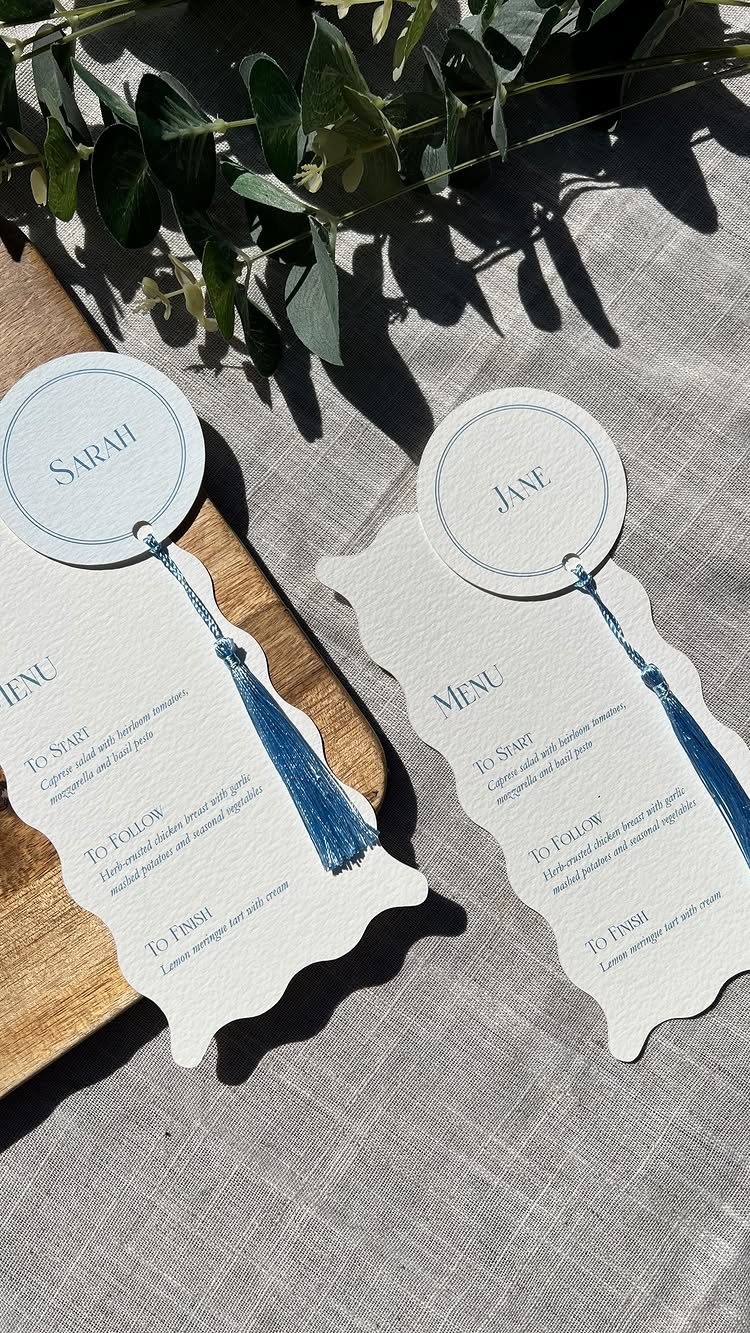
Place cards that only say where to sit are a missed opportunity; the ones worth designing also carry the menu or double as favors.
A scalloped card with a tassel costs more per piece than a printed tent fold, but it replaces two separate purchases.
The wavy edge and blue thread tie into a coastal or celestial palette without requiring matching flowers at every seat.
If your calligrapher charges by the envelope, round tags let you print names at home and attach them with ribbon you buy in bulk.
The limit is assembly time: a tassel per guest adds up fast, and the choice becomes which evening you spend tying knots or what a stationer charges to do it.
4. Grounded in Greenery
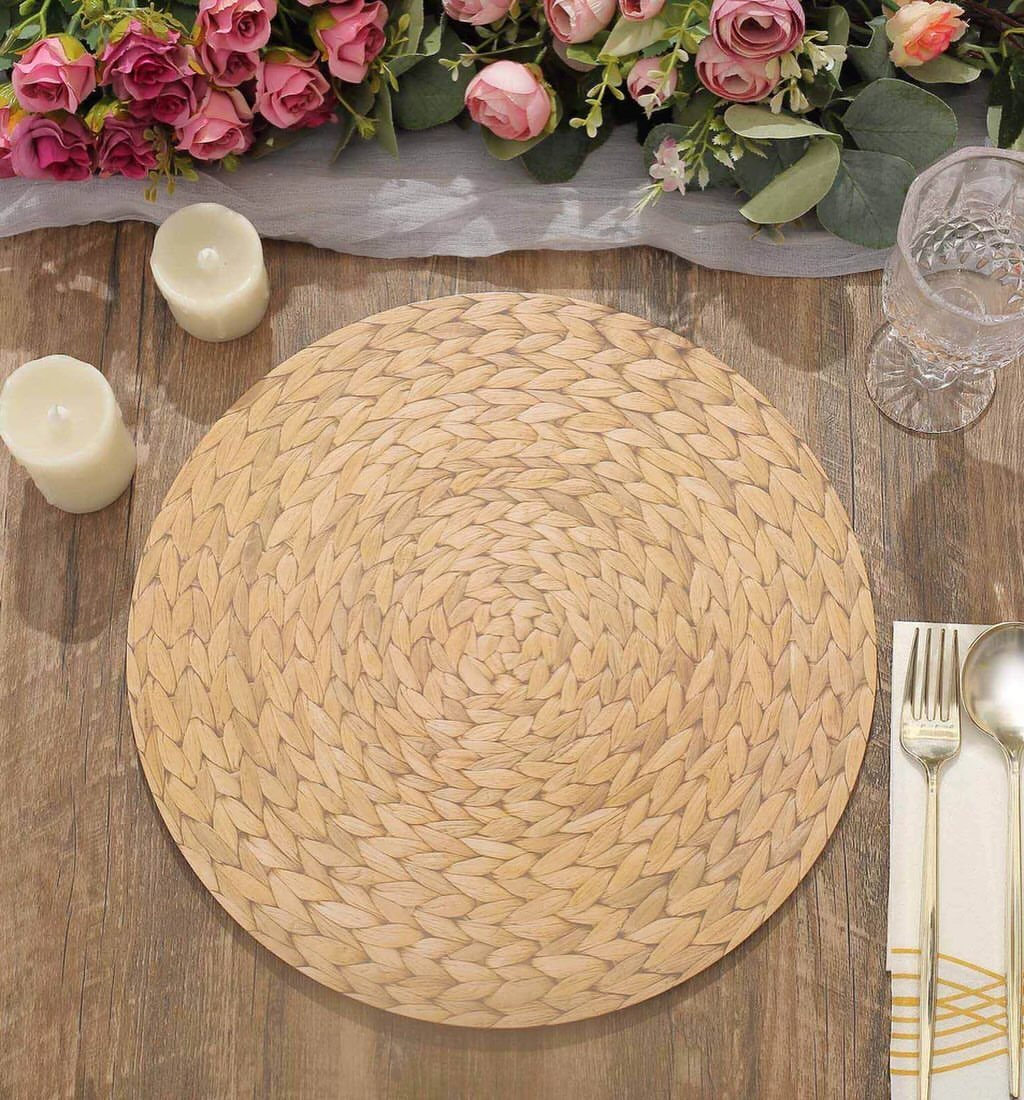
Faux garlands solve the problem fresh garlands create: they do not brown at the edges by hour 3 of a July reception, and they do not require a florist to install them morning-of.
The willow leaf strand drapes softly enough for a standard round without swallowing the plates; eucalyptus runs heavier and suits a longer farm table where it can pool at the ends.
Either can be dressed up with a few real stems tucked in for scent, or left alone if your budget is tight and your venue has no cooler space.
Check the underside before you buy: visible plastic stems photograph poorly from a guest’s seated angle.
5. Classic Candelabras
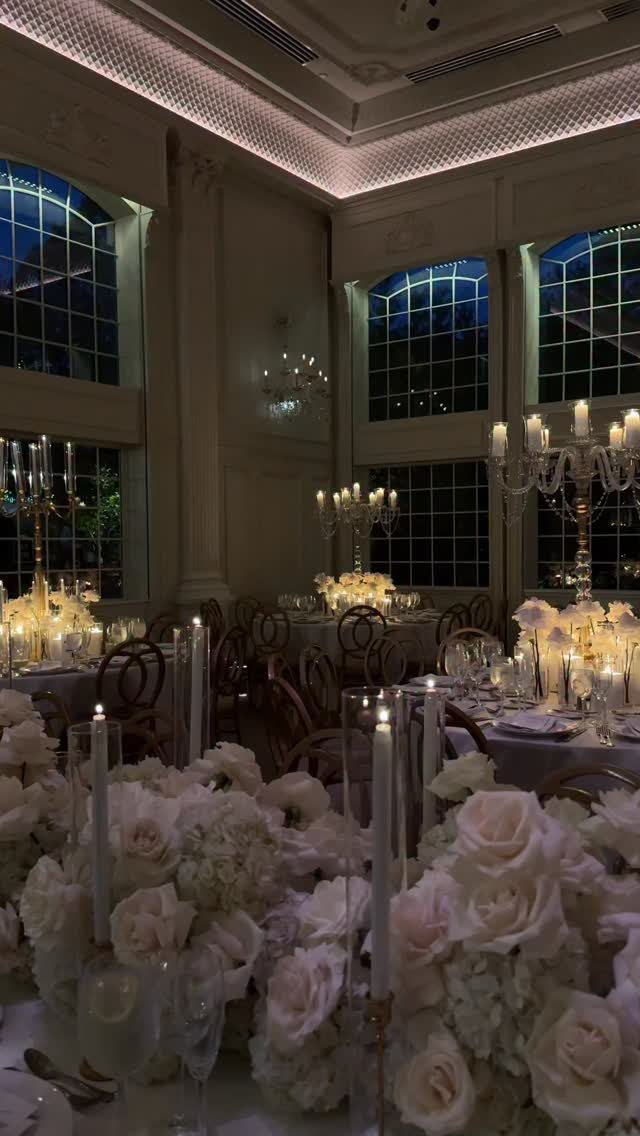
Candelabras carry a formality that single vases do not; they also occupy vertical space without blocking faces, which is why a 300-guest host chose them to keep conversation possible across wide tables.
Silver reads traditional, brass warmer, iron more rustic than the photo’s ballroom suggests.
The moss and vine wrap replaces flowers entirely, a move that cuts the centerpiece budget by roughly half if you source moss by the bag and wire it yourself the day before.
Real candles need drip catchers and a venue fire permit; LED pillars with good flicker are indistinguishable in photographs and safer around open bar sleeves.
6. An Unexpected Color Palette
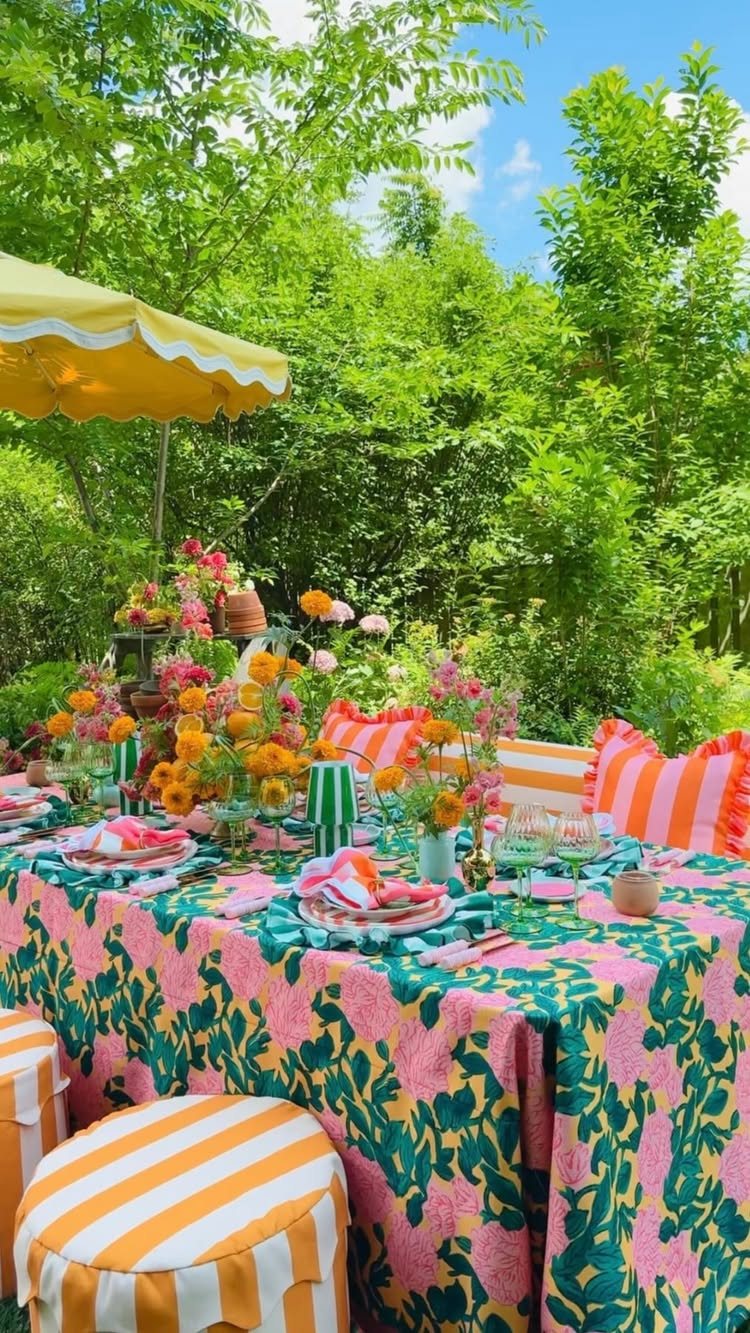
A pink-and-orange palette works only if you commit fully; half measures read as mistake rather than boldness. The floral tablecloth does the heavy lifting, so the flowers can be simpler and the glassware single-color rather than mixed.
Chartreuse and citrus are not standard rental stock, which means buying linens outright or paying a premium for dye-to-match. Your tables need no additional pattern; a solid napkin would be the one quiet element.
This suits a daytime outdoor wedding where natural light balances the saturation, or a winter tent where the color itself becomes the warmth. In a traditional ballroom after dark, the same intensity reads jarring rather than joyful.
7. Personalized Table Settings
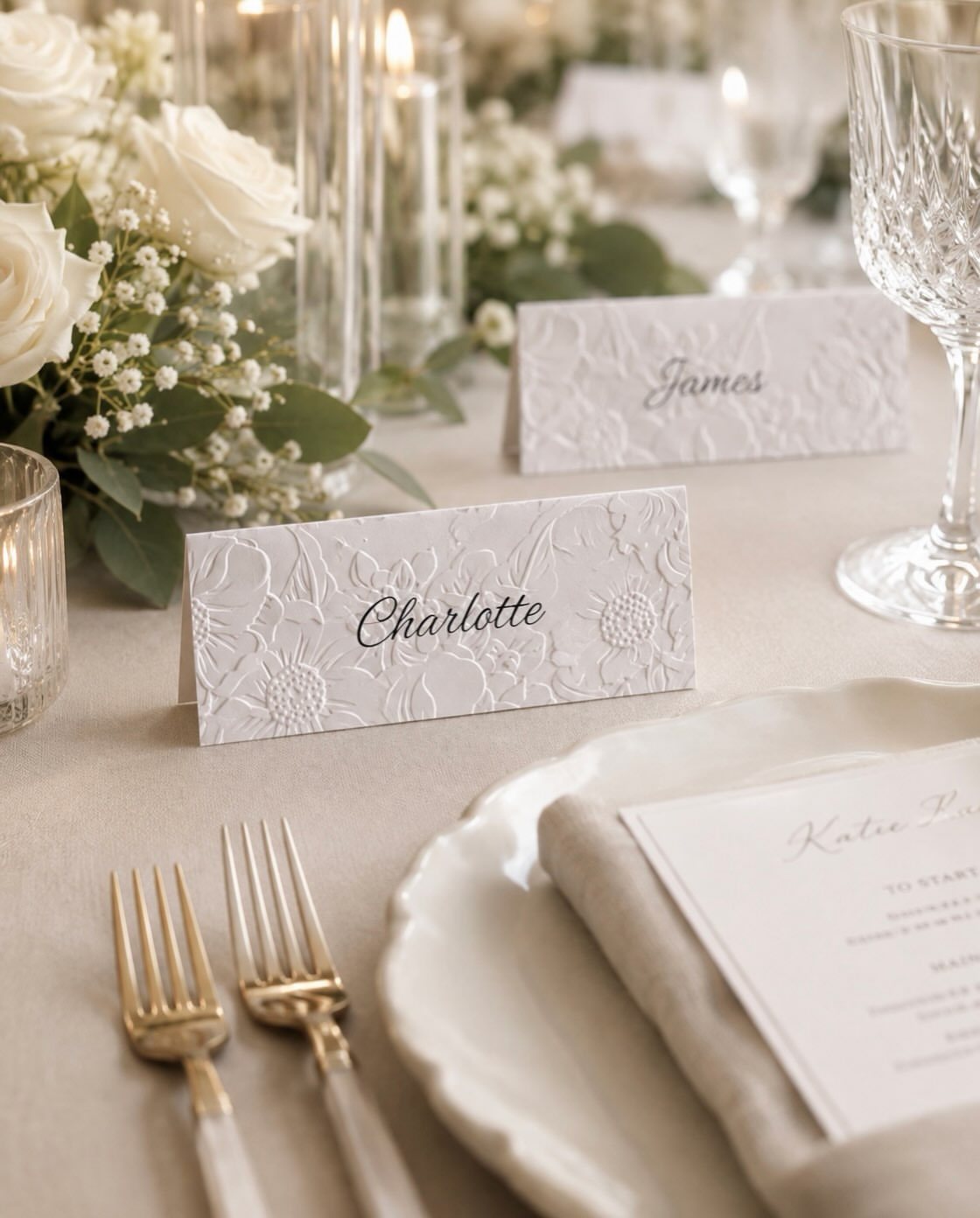
A menu card with a guest’s name at each seat turns a table assignment into a moment of recognition.
I like embossed paper for this: it catches light without demanding it, and a local printer can run a batch cheap if you design the layout yourself.
Match the printing to your other paper goods so nothing looks ordered from separate catalogs.
For couples watching their spending, holiday decorations or inherited silverware can stand in for rented pieces. A silver set from a grandparent’s house, polished a week before, reads as heritage rather than thrift.
Check what you already own before you rent anything that sits still through the whole reception.
Wedding table settings are arguably the most memorable part of a couple’s wedding decor, combining multiple visual elements that are reflective of the couple, their location, and their aesthetic.
— Vogue
8. Rustic Table Settings
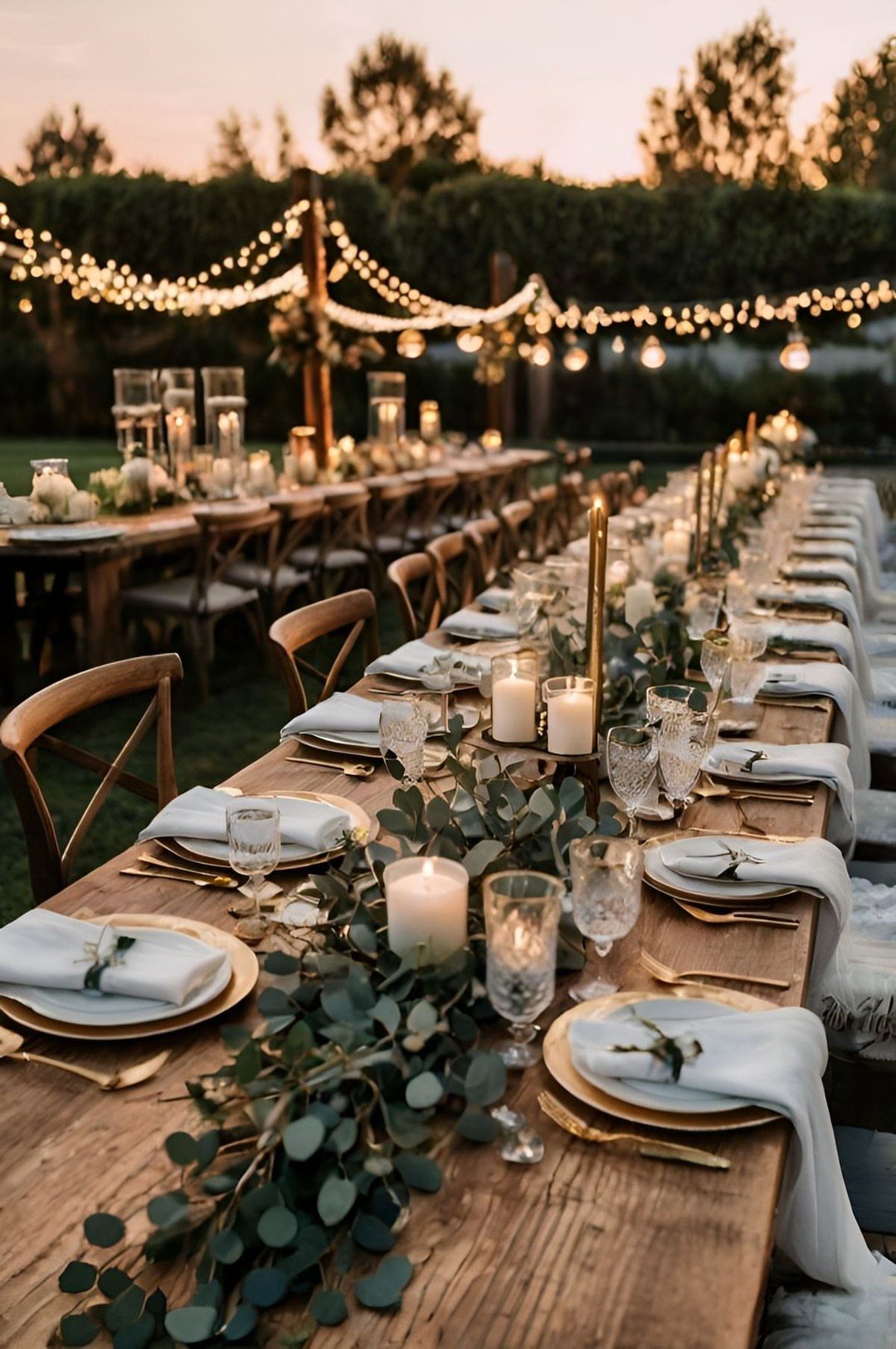
Farm tables and cross-back chairs do half the work of establishing a mood; the rest comes from keeping every other choice in that same register.
I have seen rustic styling fail when one element breaks rank: glossy rented chairs against raw wood, or neon uplighting on burlap. The question to ask is whether each piece could plausibly share a barn.
If the answer is no, swap it. Your venue’s existing architecture counts here; a steel-and-glass loft needs a different definition of rustic than an actual farm.
9. Produce-Infused Centerpiece Tables

Bok choy and kiwi on a white tablecloth sounds like a risk until you see it arranged: the green reads as a single tone from across the room, and the irregular shapes do what florals cannot.
This is a Monday-morning market run, not a florist order, which matters for a tight budget.
The technique is treating produce as a runner rather than individual pieces. Grapes drape, peppers stack, leafy greens fill gaps.
It lasts one evening, which is the point. For a longer event, replace anything that wilts with hardier vegetables: artichokes, cucumbers, citrus.
A tall vase at the center can lift the eye if the low runner starts to feel too flat.
10. All-White Reception Table
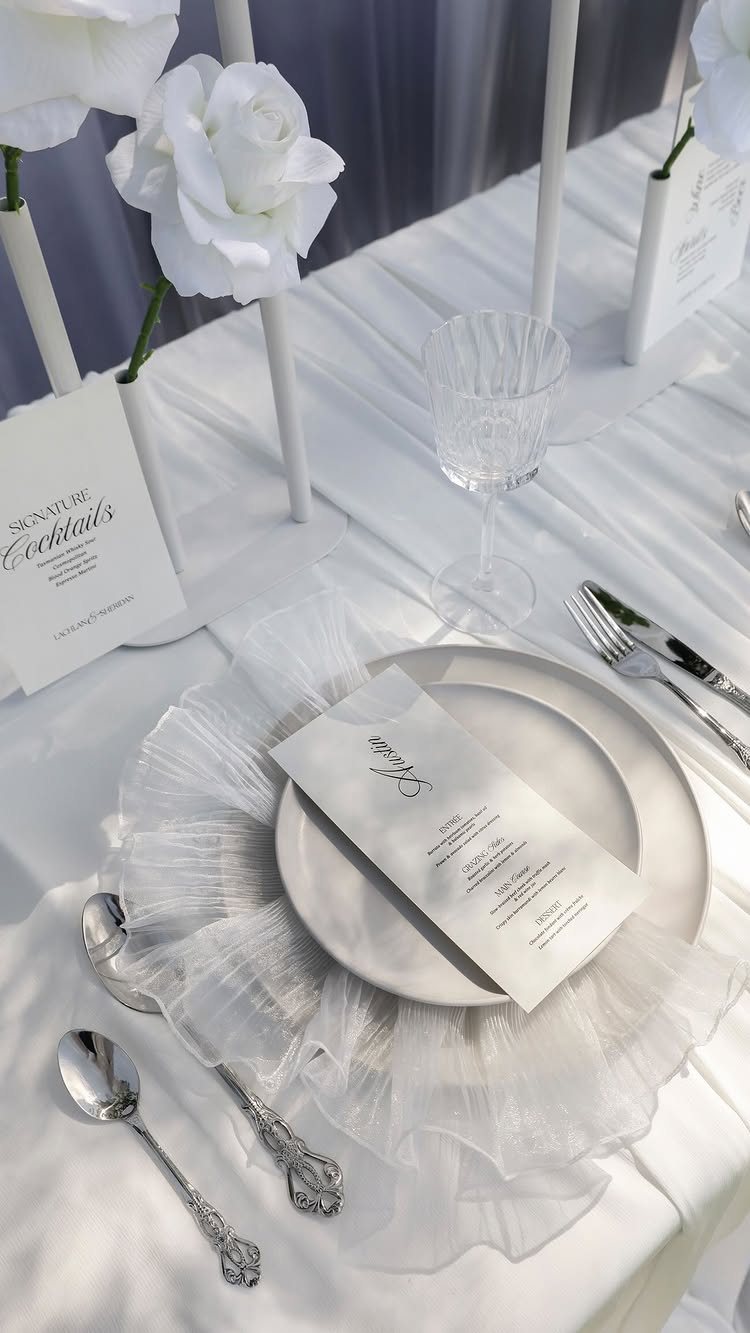
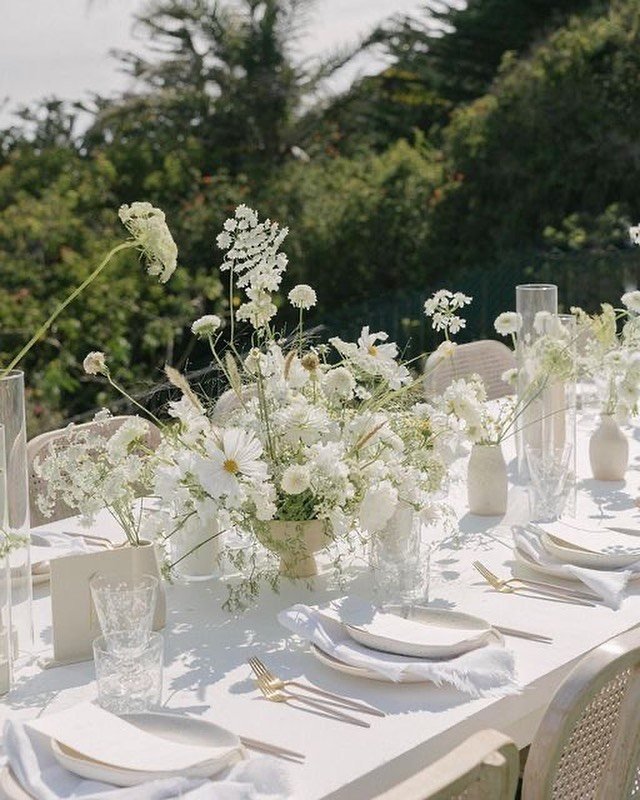
White on white succeeds only when textures differ enough to read as layers. A ruffled tulle charger casts shadow under a smooth plate, and ribbed glassware breaks light differently than flat china.
Without those distinctions, the table goes blank.
I would reserve this for a space with strong natural light or excellent uplighting; a dim room swallows it. The cost runs higher than mixed palettes because every rental piece must be pristine, and white shows water spots.
Budget for extra napkins or accept polyester. If your venue has patterned carpet or busy wallpaper, this approach fights rather than complements.
11. Black and Dramatic Table Setting
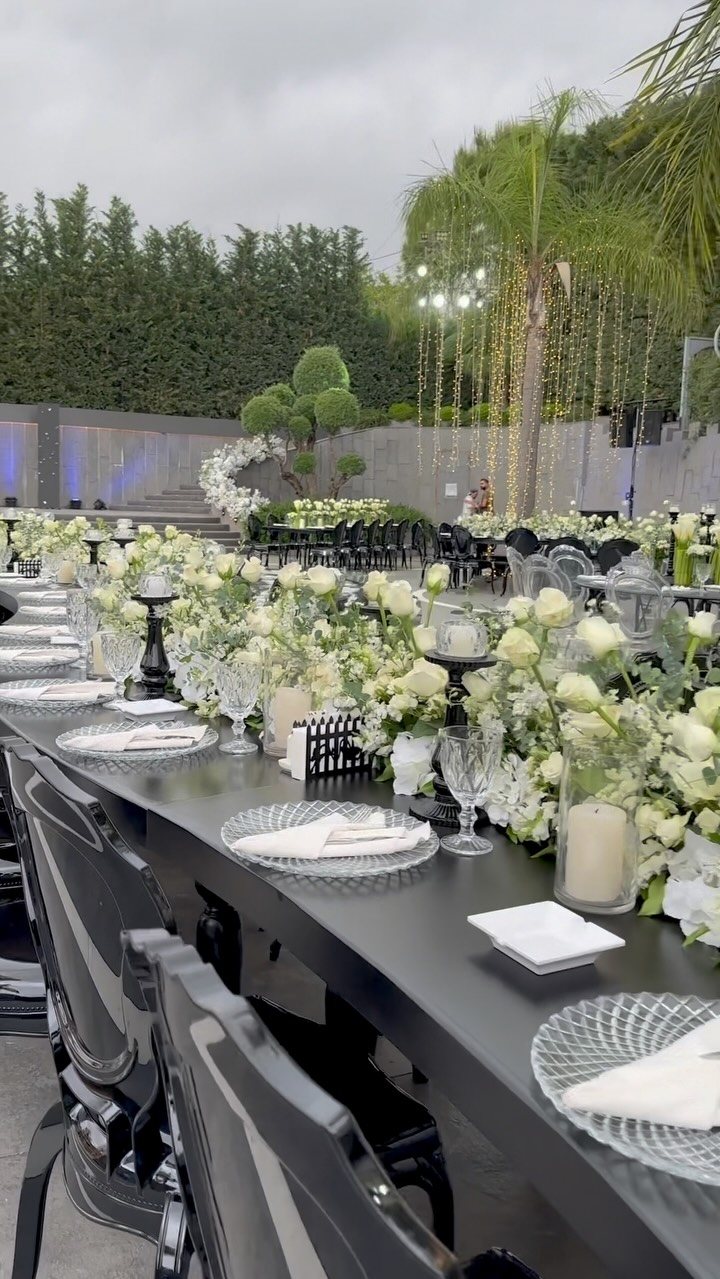
Black tables with white roses reverse the usual wedding contrast, and the reversal is the whole effect. Glossy surfaces help; matte black absorbs too much light and can read as missing rather than chosen.
Clear textured plates do quiet work, letting the table color show through while keeping food visually separate.
This suits evening receptions in tents or enclosed courtyards, where you can control light and the sun will not fight your palette.
Draping a tent interior in black curtain, as one Cotswolds wedding did, extends the mood to the room itself. Black fabric photographs darker than it appears, so test with your photographer before committing.
For a partial version, use black napkins on white linen and save the rental premium.
Frequently Asked Questions
How do I properly set a table for a wedding?
A proper wedding table setting starts with the plate, silverware, and napkins as the foundation. I start with chargers and a tablecloth that grounds the look, then layer in flowers, candles, and smaller pieces until the table feels finished.
What are the classic table settings?
Classic table settings lean on symmetry and restraint: matching plates, polished silverware, and linens that complement rather than compete.
Silver candelabras with white roses still read as timeless in a ballroom; brass and greenery give the same formality a rougher edge.
Match the weight of every piece, from the flatware to the centerpieces, so nothing arrives from a different party.
What are 2026 wedding trends?
Food-forward centerpieces are already showing up, with couples using fruit and produce as the focal point rather than flowers alone. Tables dressed with artful fruit spills and darker, Dutch Masters-style arrangements are showing up more often for 2026.
I would expect this to keep growing into 2026 as more couples look for centerpieces that guests can actually eat or that at least start conversation.
What are some examples of wedding table settings?
Tall gold floral stands keep the center of the table high enough for conversation across it. Low greenery garlands suit farm tables without blocking sightlines.
Produce runners, built from bok choy or grapes, cut the floral bill for tighter budgets. All-white receptions work when linen folds, ceramic ridges, and candle wax carry the visual interest instead of color.
Black tables with white roses flip the usual contrast for evening tents, and candelabras wrapped in moss and vine can halve what you spend on flowers.
How do I choose the right table setting for my venue and season?
Start with the mood you want people to feel when they sit down. Spring and summer weddings tend toward lighter palettes; fall and winter can carry heavier ones, though plenty of couples run the opposite direction.
The reception décor needs to live inside the venue’s architecture and alongside every other choice you have already made, so nothing competes.