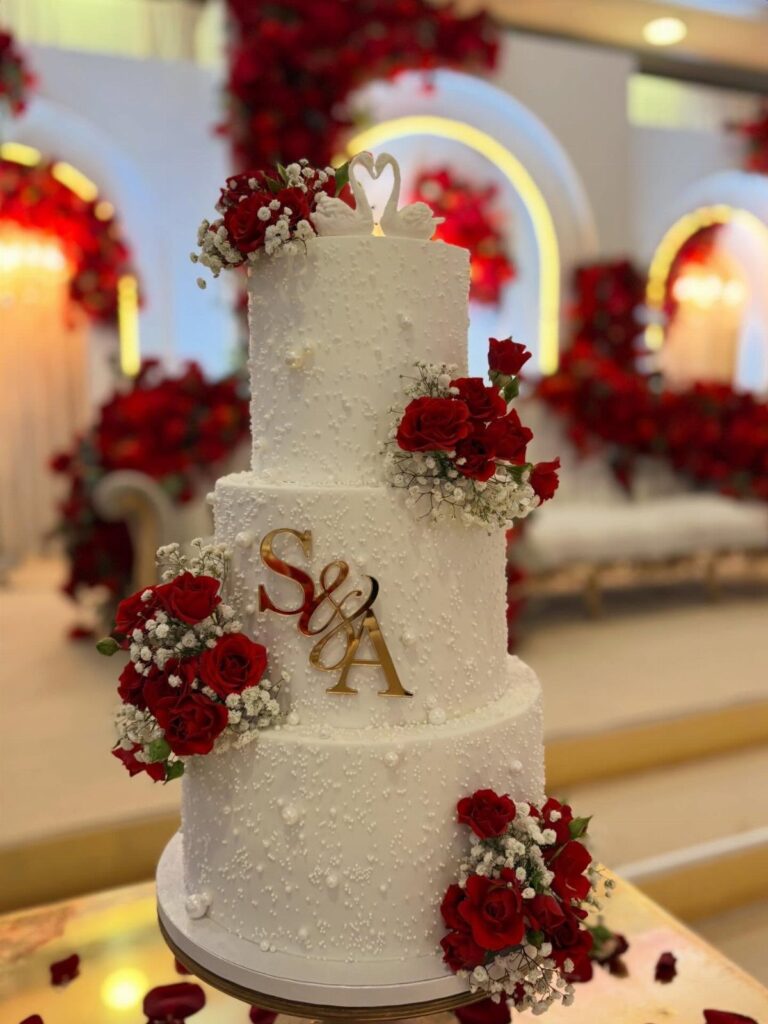
Three-tier wedding cake flowers run from buttercream ruffles and wild daisies to hand-shaped sugar petals and full cascades, and the deciding factor is where the cake sits and for how long.
A barn reception with quick cutting favors fresh clusters or a cascade that stops at the middle tier; a formal ballroom where the cake stays on display until late rewards the cost of sugar flowers you keep afterward.
The green ruffled base tier does its own decorative work with minimal roses, while peach and cream wiring needs someone experienced with cake weight, not just bouquets.
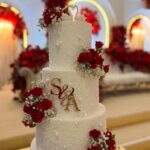
1. Three-tier White Buttercream Cake
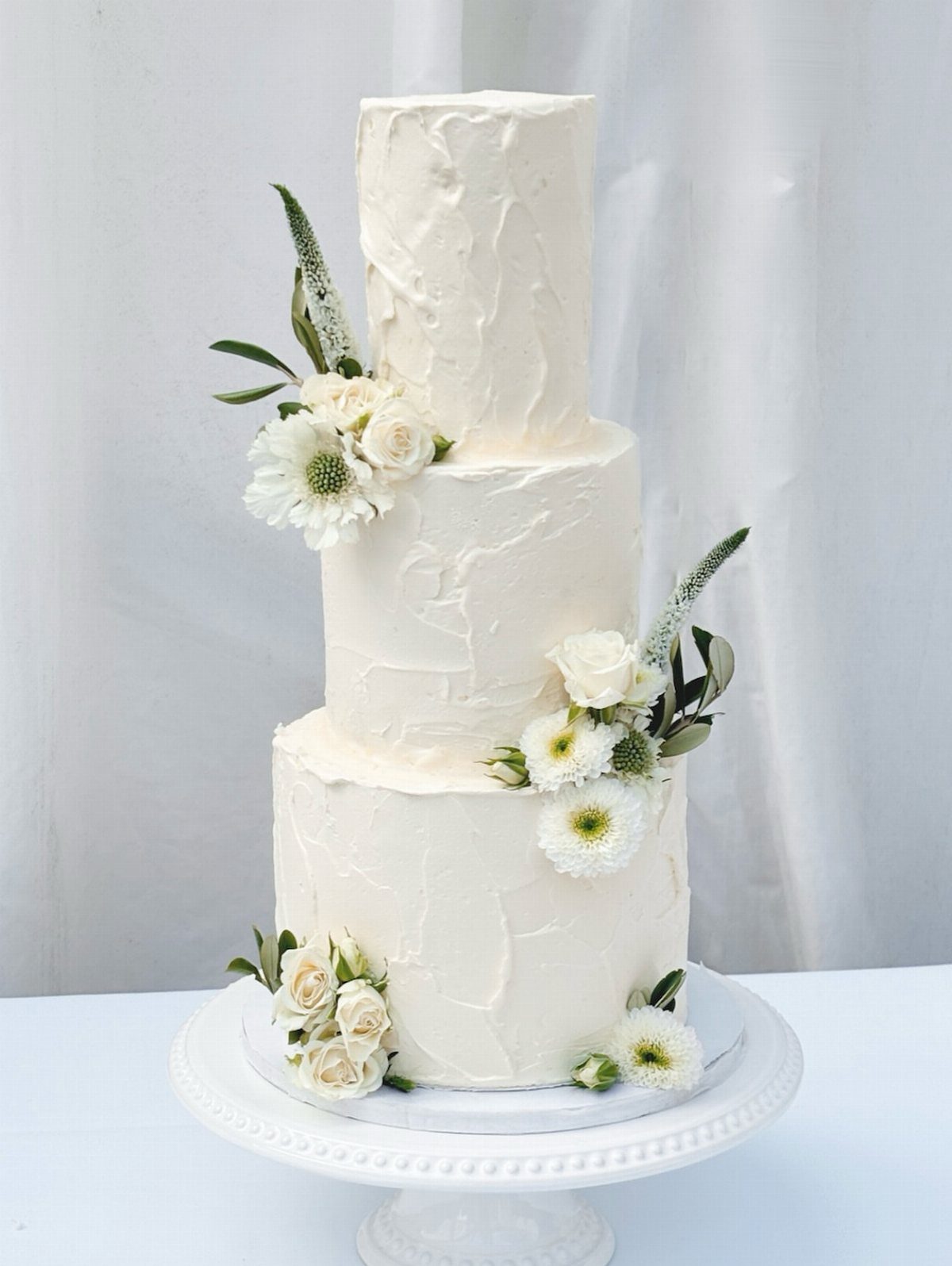
White buttercream gives the florist something to work against.
I would ask the baker to keep the frosting slightly imperfect; sugar pearls at the base of each tier hide the seam where flower stems meet cake.
This is the choice for couples who want their flowers to read as fresh, not fussy.
2. Cascading Floral Arrangement
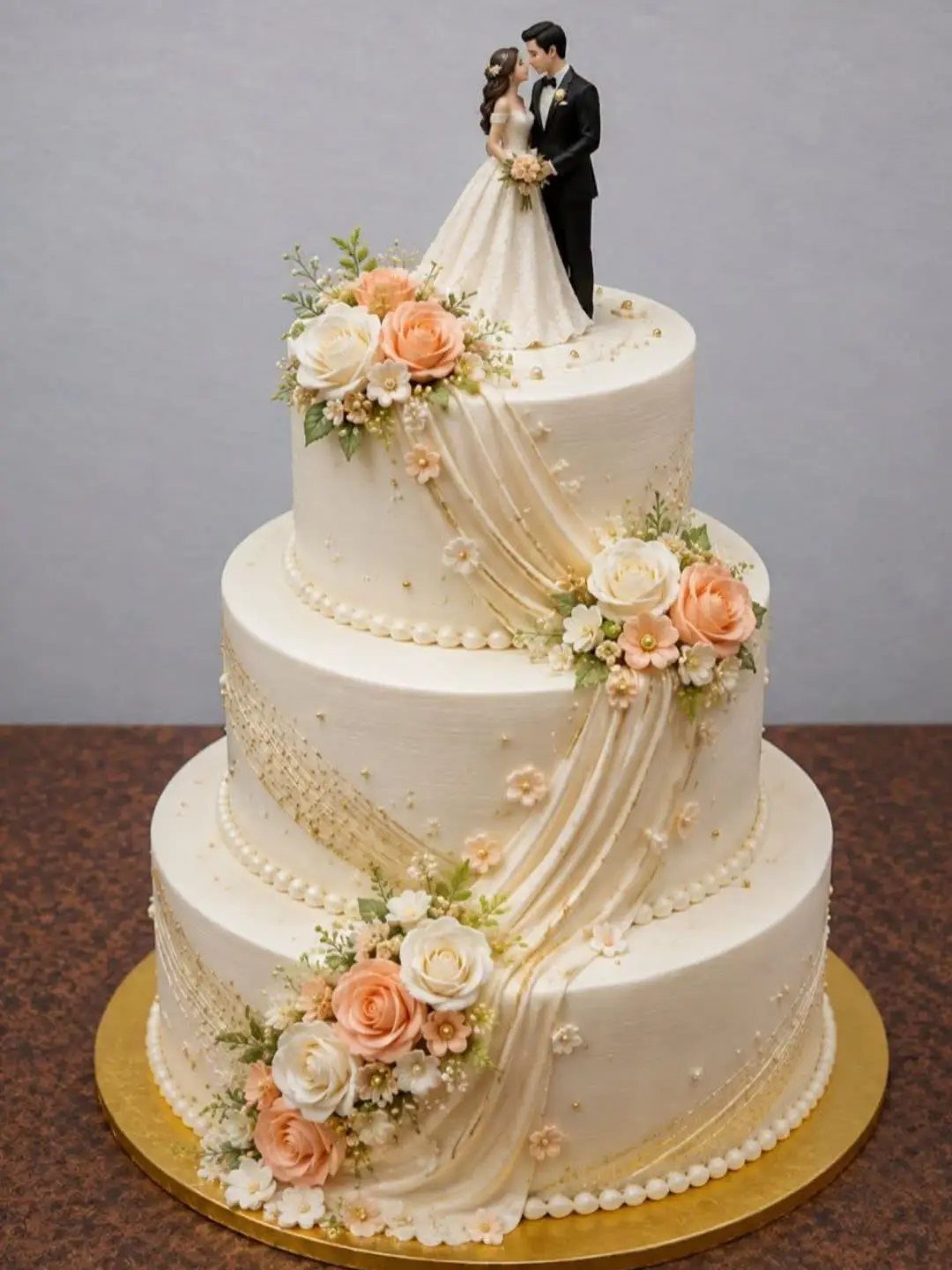
A cascade moves the eye down the cake and out toward the room, which helps at a crowded reception where guests see the cake from a distance.
Peach and cream roses with filler flowers need wiring by someone who works with cakes, not just bouquets; the weight pulls if the placement is wrong.
For that setting, let the cascade stop at the middle tier and keep the base clean.
3. Wildflowers Like Daisies and Lavender
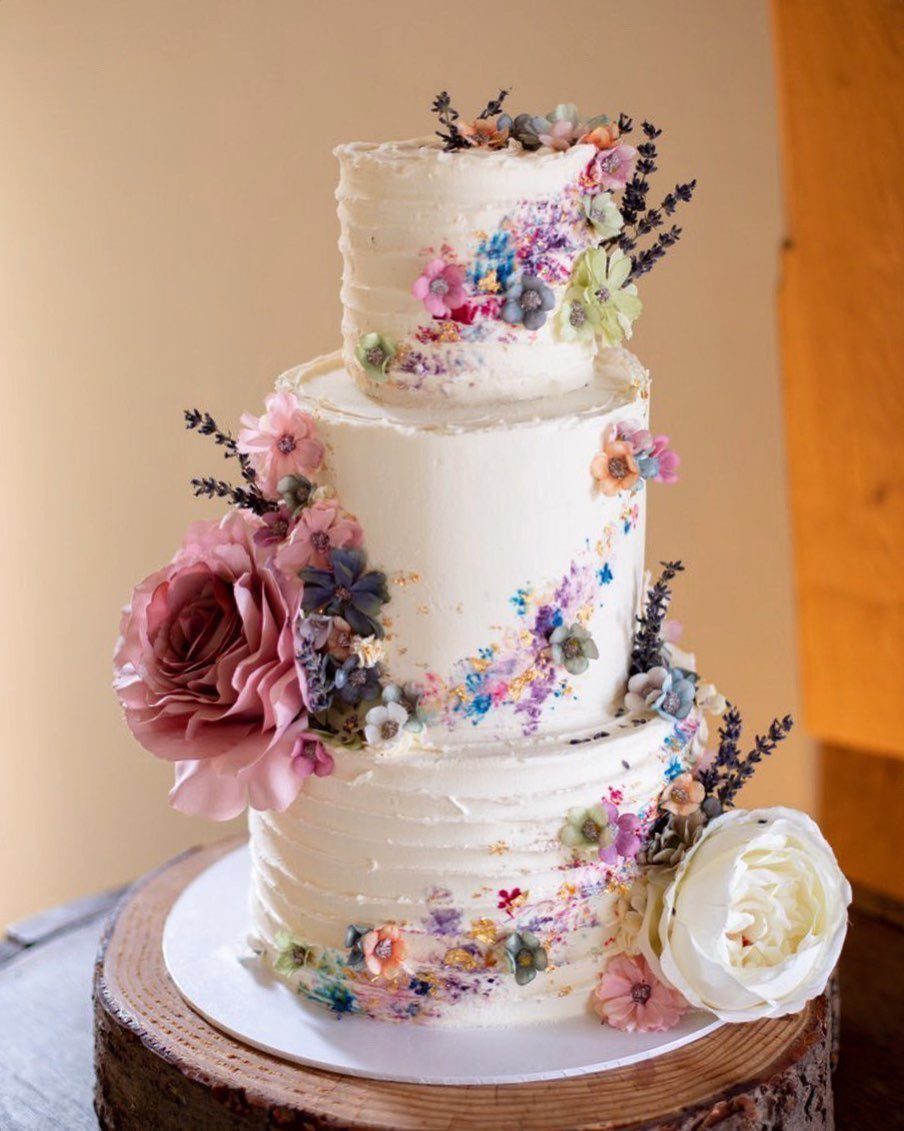
Wildflowers suit the couple who found their venue first and it turned out to be a barn, a field, or a family cabin.
Lavender, daisies, and small colorful blooms on a wooden slice stand continue that story without trying to dress it up.
The risk is looking scattered. I would limit myself to three flower types and keep one color dominant; pink roses can do that work while smaller accents fill in.
Order from a local grower if your timing is late spring through early fall, and ask which blooms hold up out of water through the ceremony and photos.
4. Large Pastel Sugar Flowers
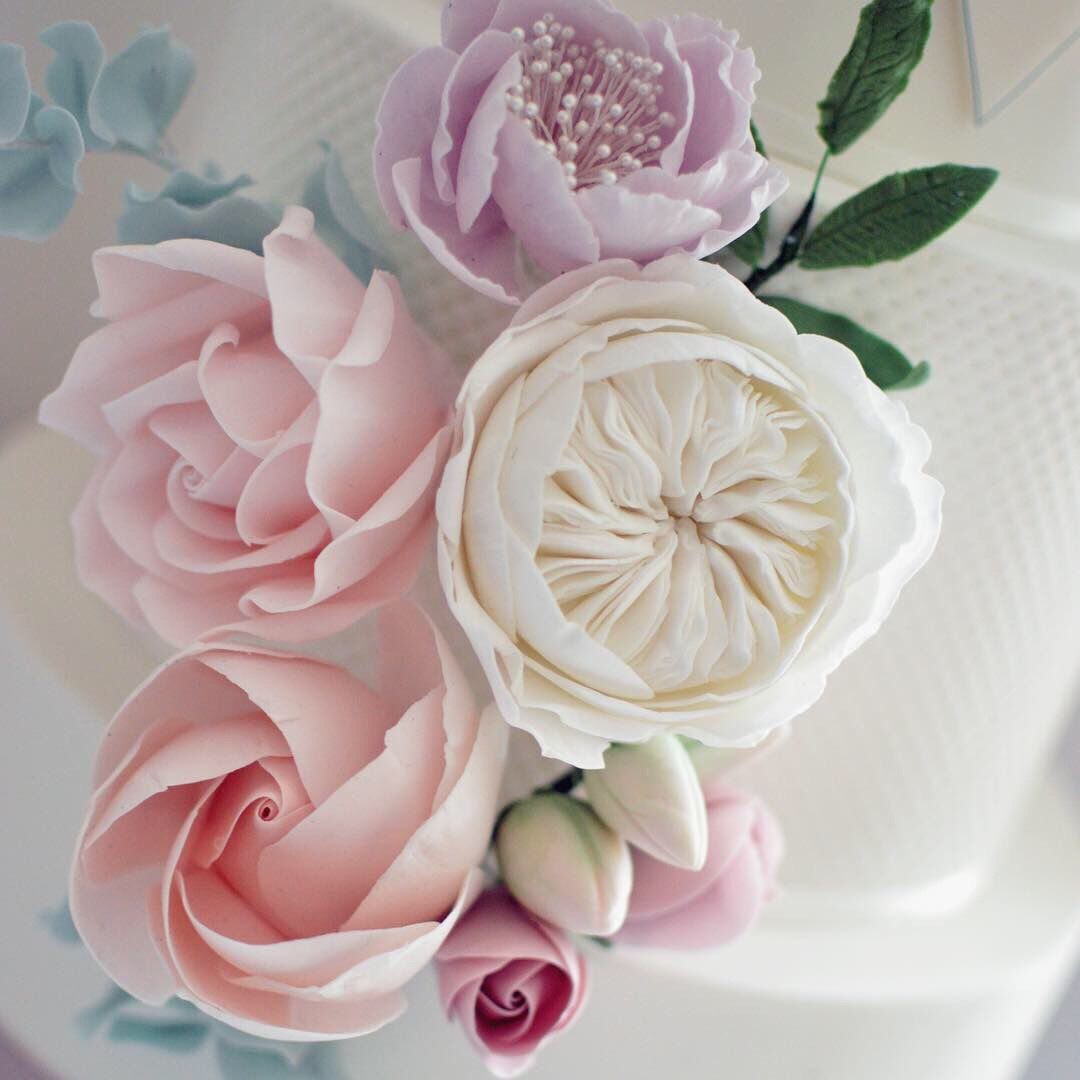
Sugar flowers cost more than fresh and last forever, which makes them one of the few wedding details you can keep.
Pastel pinks and ivories shaped petal by petal need something real nearby; eucalyptus leaves do that work so the effect reads botanical, not confectionary.
This is the choice for a formal indoor reception where the cake will be photographed in detail. I would not spend here if the cake is served immediately after a quick cutting; the workmanship disappears into slices.
5. Fresh Flower Clusters
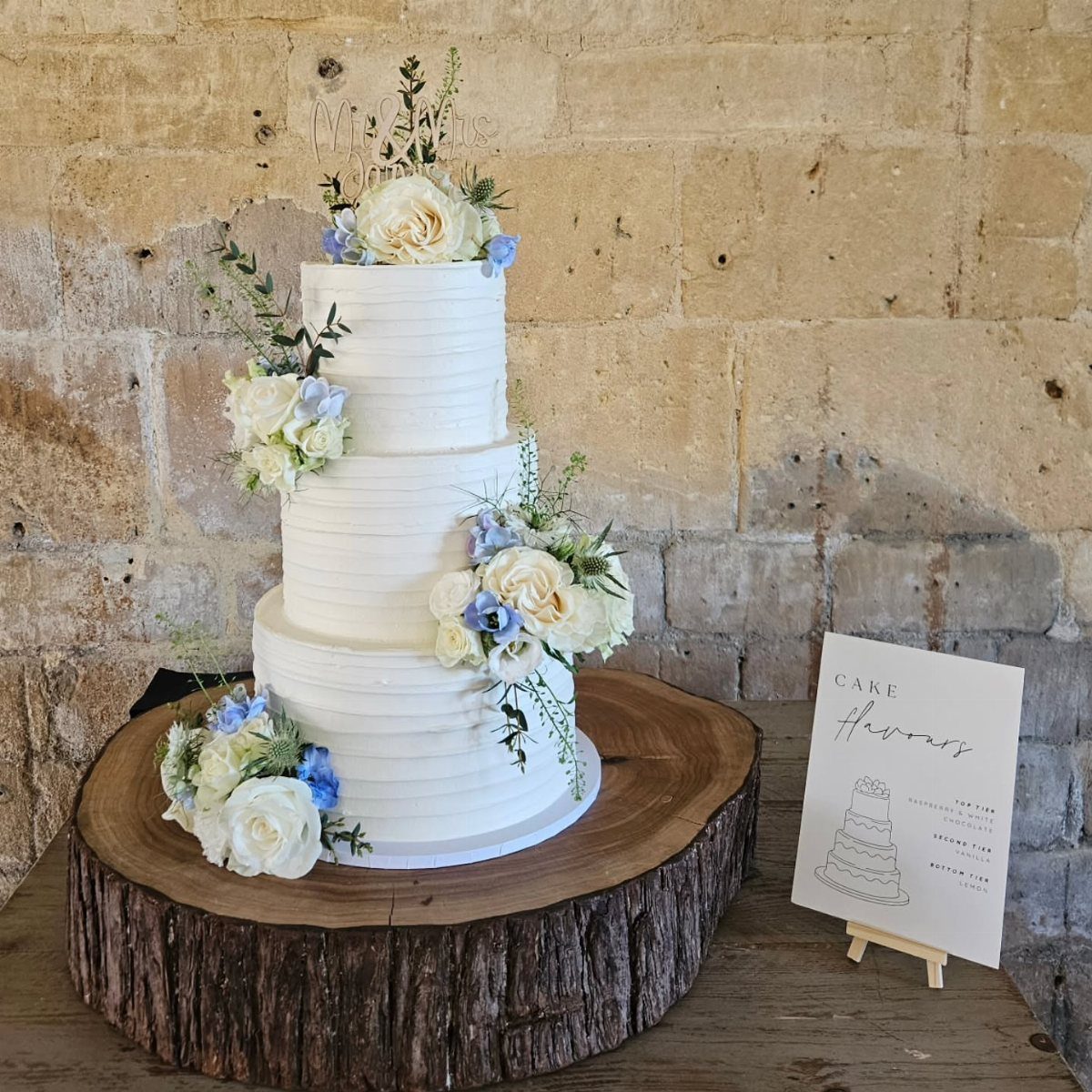
Clusters give you the look of a fully decorated cake with fewer stems, which matters when florals are priced per piece.
Pink and cream roses with ranunculus, grouped at the corners of each tier rather than wrapped around, leave breathing room.
The scroll piping visible in some versions adds cost without adding much; I would skip it and let the flowers carry the interest. This suits a couple who wants freshness without the cascade’s drama.
6. Green Ruffled Base Tier Accent
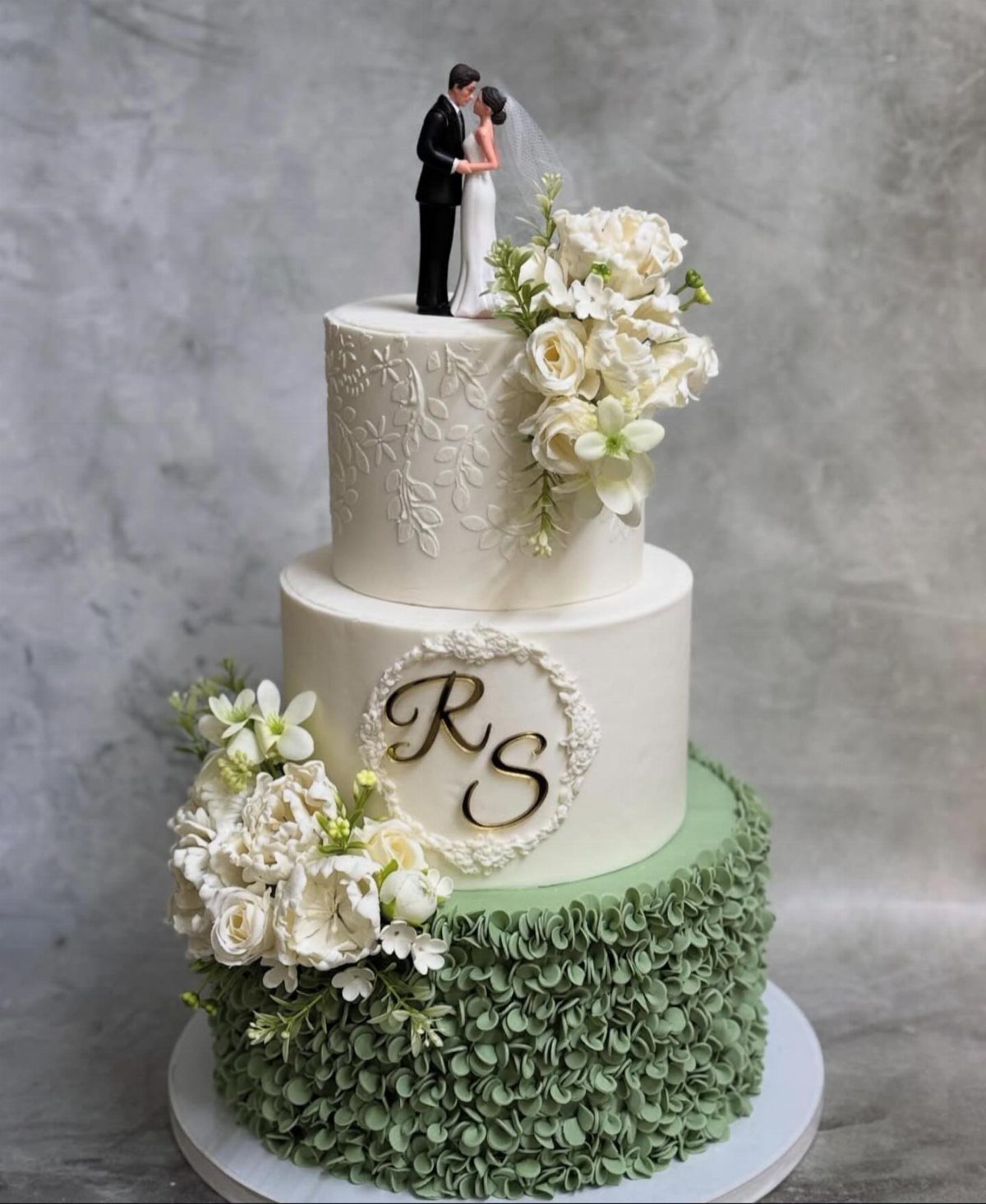
The green ruffled base tier does the work of decoration so the flowers can stay minimal.
I would keep the upper tiers white and textured, add white roses at one or two points, and let the ruffle read as foliage from across the room.
Best Flowers for Wedding Cakes
Roses, ranunculus, and wildflowers remain the most common choices for cake work.
Roses hold up longest out of water and their layered petals give depth even in small clusters. Ranunculus runs smaller and more delicate; it suits tight groupings where you want texture without bulk.
Wildflowers add color but vary wildly in stem strength. Daisies, poppies, and lavender can wilt within hours if the room runs warm.
I would ask the florist which blooms they have wired onto cakes before, not just which ones photograph well. Gerbera daisies, for instance, have heavy heads that pull away from soft buttercream unless the wiring is exact.
Creative Cake Designs
An asymmetrical cascade of wildflowers, roses and ranunculus across textured buttercream reads more current than a centered arrangement, and a three-tier build still serves around 92 people.
A diagonal cascade of wildflowers, pink and peach roses, or sugar roses set at an angle draws the eye across the tiers instead of straight up.
The baker needs to know this direction before the frosting goes on.
Textured buttercream catches light differently depending on which side faces the room, and an asymmetrical flower load can make the cake look off-balance if the texture is uniform everywhere else.
I would have the florist and baker speak directly, not relay messages through me.
Placement of Flowers
Top placement reads ceremonial; it is what guests see when the cake is wheeled in. Corner clusters at each tier keep the decoration lower and more intimate, suited to a cake that guests approach for cutting photos.
The diagonal cascade, whether of burgundy and blush fresh roses or cream and lavender sugar work, needs support at every point where weight shifts.
I would not ask a florist to attempt this on a cake they have not seen in person; the angle of the tiers changes the stress on stems.
Color Combinations
Blush pink, cream, and green remain the combination I see most often.
The softness comes from keeping saturation low; dusty rose rather than true pink, ivory rather than white. Green enters through foliage, not flowers, which keeps the palette from turning too sweet.
Peach and yellow accents warm the whole thing up for a summer reception. For something less expected, burgundy against cream adds depth without the formality of red.
I would bring fabric swatches from the wedding party when meeting the florist; cake flowers look different under reception lighting than they do in daylight, and a blush that reads gentle in morning sun can disappear entirely after dusk.
Frequently Asked Questions
What is a reasonable price for a 3 tier wedding cake?
Prices vary widely by region and design, so the best move is to get quotes from 3 local bakers and compare what each includes.
Buttercream with fresh flowers usually costs less than sugar flowers, which take far longer to craft and price accordingly.
Your final cost depends on the baker’s location, the flower types, and whether you add details like scroll piping or custom toppers.
What are the best flowers to use on a wedding cake?
Roses, ranunculus, and wildflowers like daisies and lavender hold up well and show up often on three-tier cakes.
Roses and ranunculus hold up well for clustered arrangements; wildflowers need more restraint, three types maximum with one dominant color, so the cake does not look scattered.
Not every bloom survives hours out of water, so ask your florist which ones will still look fresh through the ceremony and photos.
What are some creative designs for a 3-tier wedding cake?
Asymmetrical flower placement and cascading arrangements are the designs that read as intentional rather than safe. For something bolder, a green ruffled base tier lets you keep the flowers minimal while still registering as decorated from across the room.
How many does a 3 tier wedding cake feed?
A standard three-tier wedding cake typically serves around 92 people. That count assumes you are cutting standard wedding slices, not generous party portions.
If your guest list runs smaller, talk to your baker about adjusting tier diameters rather than dropping a tier, since the three-tier silhouette is what most couples want for the display.