Gender-neutral wedding outfits can run from a suspenders look to a fully tailored three-piece, and the right pick depends on whether your venue demands formal structure or lets you stay loose.
A grassy field makes leather suspenders the practical call, while a ballroom might ask for the clean line of a tailored suit.
Leon Wu’s body-first measuring method at Sharpe Suiting is the detail that separates a suit that wears you from one that actually fits.
1. Gender-Neutral Wedding Outfits

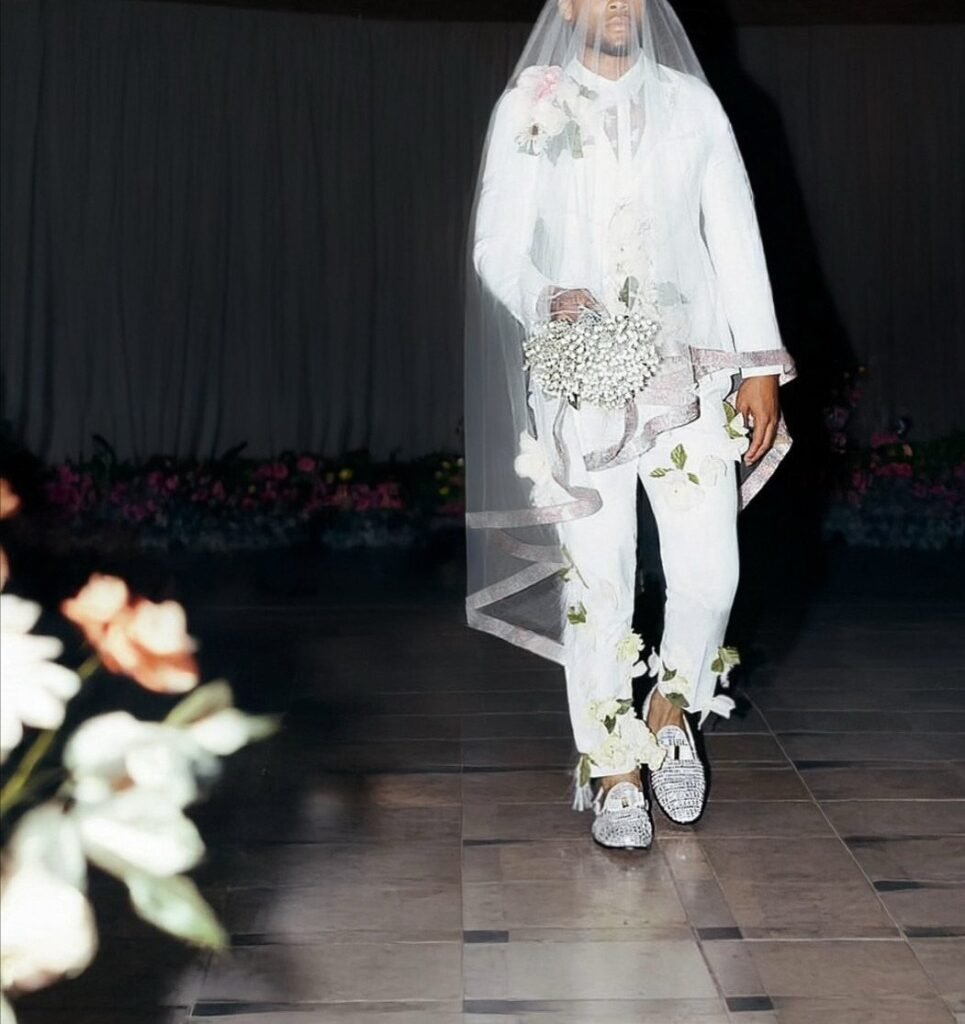
An all-white or softly colored three-piece with a floor-length overskirt reads formal without picking sides.
I’d steer anyone toward separates: a blazer, vest and trousers in matching fabric, with the overskirt layered on top so you can lose it for the reception.
A pale pink-to-white gradient reads clean on camera against most backdrops, and it sidesteps the old rule that white belongs to only one person in the room.
This works for a couple where one or both of you want the drama of a train or full skirt without the dress itself.
Budget-wise, commissioning a skirt overlay costs less than a second outfit, and you get two looks in one day.
Best for outdoor ceremonies where the skirt catches light; skip it if your venue is tight quarters or the aisle is narrow.
2. Tailored Suits

A three-piece suit in a warm brown with a striped blazer breaks the black-navy-gray rut without going costume.
Leon Wu built Sharpe Suiting on the idea that fit, not gendered sizing, is what gives confidence; I’d put money on a tailor who measures your body, not your gender, and builds the structure from there.
Color is where you get to move. Earth tones read grounded in outdoor light, but a saturated solid works if your personality leans louder.
The vest underneath matters: it lets you drop the blazer after the ceremony and still look finished. Two-piece cuts the cost and the formality; three-piece holds up for a full evening.
This is the choice for anyone who wants the suit silhouette without borrowing from a menswear rack that doesn’t fit.
3. Button-up + Suspenders

A printed button-up with leather suspenders and a bow tie hits rustic without the full suit commitment.
The suspenders do the work of pulling the eye vertical, which flatters most frames, and they let you wear a pant with some room in the waist since the suspenders carry the fit.
I’d pick a floral or small-repeat print in a color that nods to your partner’s outfit without matching exactly. Brown leather suspenders age better than black for outdoor weddings; oxfords ground it, but a clean boot works on grass.
This is the budget win of the three, and the fastest to pull together.
Best for a daytime wedding or a couple where one of you wants to read casual while the other goes formal; the suspenders keep you from looking like you forgot the occasion.
Embracing Individuality
Your wedding outfit should read as you, not as a costume pulled from a rental rack.
Gen Z couples have made this ordinary: the first dance happens if you want it, the cake gets cut if you feel like it, and your clothes answer to nobody’s rulebook but yours.
Gender sits on a spectrum, and your clothing can too.
Sister Jane builds suits and shirts with bows and ruffles built in, then photographs the same pieces on different bodies so you see how the garment moves rather than how the model performs a gender.
The price sits in reach for most budgets, which matters when you are already paying for a venue and a caterer.
I’d tell anyone to start with what they already wear confidently. A wedding amplifies what works, not what transforms you into someone else.
Breaking Traditional Norms
The old split, white dress against black suit, is a format, not a law. Light wool or linen blends work across seasons and across whatever silhouette you choose; brushed cotton or silk blends read elegant indoors without announcing a gender.
The fabric does the job, not the label sewn inside.
What changed is access. Fluid collections from brands that photograph on varied bodies mean you can order online with some hope the cut survives your actual measurements.
It is still worth finding a tailor, but the starting point is better than it used to be.
For couples where one of you wants a dress and the other wants anything else, the contrast now reads as personal choice rather than role assignment. The ceremony looks like two people who dressed themselves.
Customizing Outfits
Milla Nova’s Atelier Collection runs unisex with mix-and-match pieces shot on male and female models. Structured capes and corset tops over flowing silk skirts give one way to mix tailoring with movement.
Both let you build an outfit from parts rather than buying a whole look you did not choose.
A bespoke designer costs more but removes every compromise. Bring a Pinterest board, photos, sketches, or the one garment from your closet that fits like it grew there.
The first consultation sets the shape; your references do the talking when words about drape and hand feel fail.
Milla Nova made waves, therefore, with its 2024 couture collection, previewed this fall. The Ukrainian brand offered an impressive range of unisex styles—capes adorned with pearls, baroque-inspired corsetry, fitted trousers, and floral organza jackets.
— Vogue
Accessorizing
Hats and scarves layer in for outdoor settings; watches and lapel pins nod to whatever you follow without explaining it.
Capes and cloaks do more than read dramatic. In actual weather they keep you warm while photographs run, and they move better than a coat that buttons closed.
Shawls, crowns, scarves, even a blanket if your venue runs cold: the no-rules approach applies here too.
I would lean slightly more formal than the day demands, then let one accessory carry the informality. The outfit should look intentional, not like you stopped halfway.
Frequently Asked Questions
What do nonbinary people wear to weddings?
Nonbinary people wear whatever feels authentic: a dress, a suit, or something that sits between.
Separates cut from the same cloth, a blazer and trousers with a long overskirt layered over, give the structure of formalwear without locking anyone into a single silhouette. The fit matters more than which department the clothes came from.
What is a good gender-neutral outfit for a wedding guest?
A three-piece suit in warm brown or an earth tone carries its own weight; it looks intentional on its own terms, not like something pulled from a rack built for a different frame.
The vest does the heavy lifting once the blazer comes off after the ceremony, so the look stays pulled together through the reception.
I’d ask the couple or planner about the dress code if you’re unsure, since their vision matters more than old rules about who wears what.