These sixteen ideas run from greenery centerpieces you arrange yourself to lounge seating with green drapes that needs ceiling clearance to work, with white cakes draped in leaves, hanging arrangements, and champagne towers with green ribbons in between.
What separates one from another is not how much green you use but where the money goes: draping overhead for a white backdrop with green drapes, blooms on tables for a classic white wedding, or ribbons tied by hand for a champagne tower.
A coupe tower with dark green satin at each stem can eat an afternoon of assembly; the same color on a single tablecloth asks only that you check the venue’s evening light before committing.
1. Greenery Centerpieces
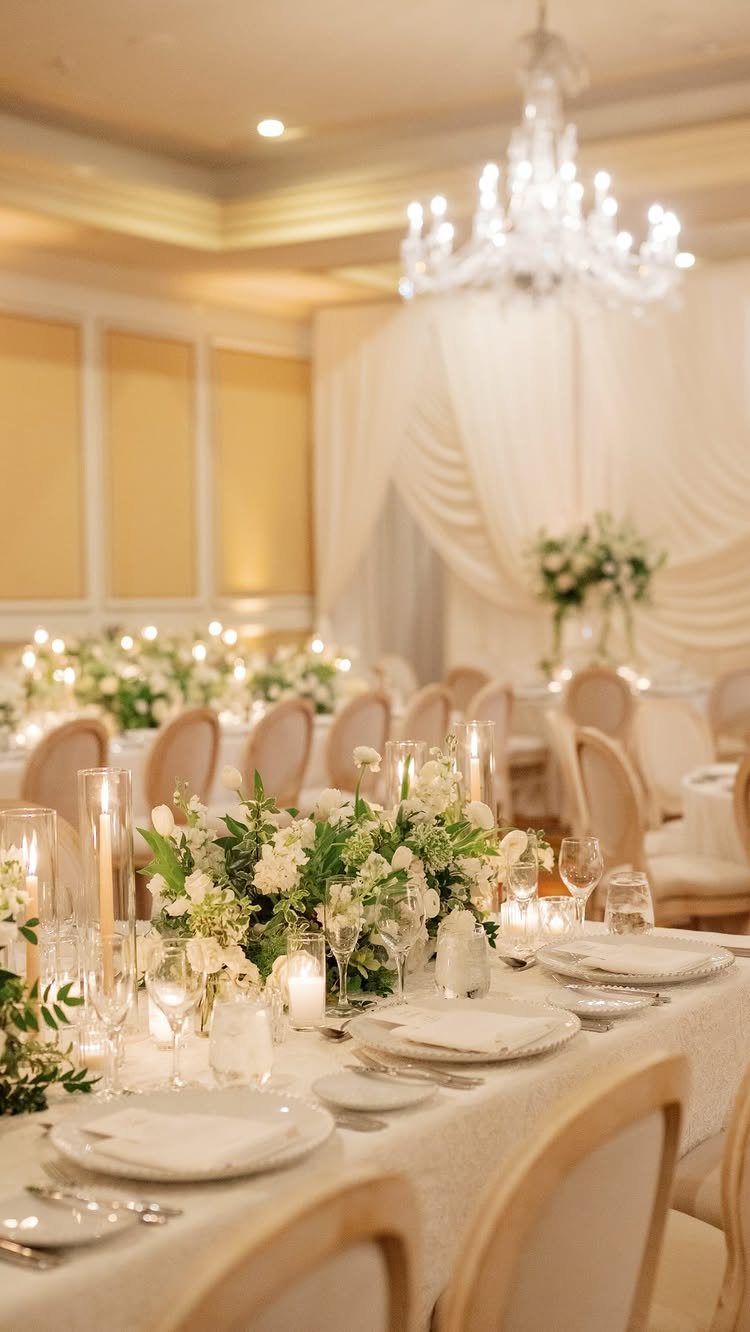
Tall eucalyptus branches rising from low gold vases, or compact clusters of fern and white rose sitting below conversation level; the choice depends on whether your tables are round or long.
Round tables favor one piece in the center, while farm tables need runners of garland with scattered votives to carry the length.
I would keep the linens white and let the green do the work. Gold flatware or charger plates warm the look without adding a third color that competes.
For couples working under a tight budget, this is where your florist’s budget goes farthest: greenery costs less per stem than blooms, and the impact fills the room.
Skip the tall option if your venue has low ceilings or crowded tables; the drama collapses when guests cannot see across.
2. Classic White Wedding
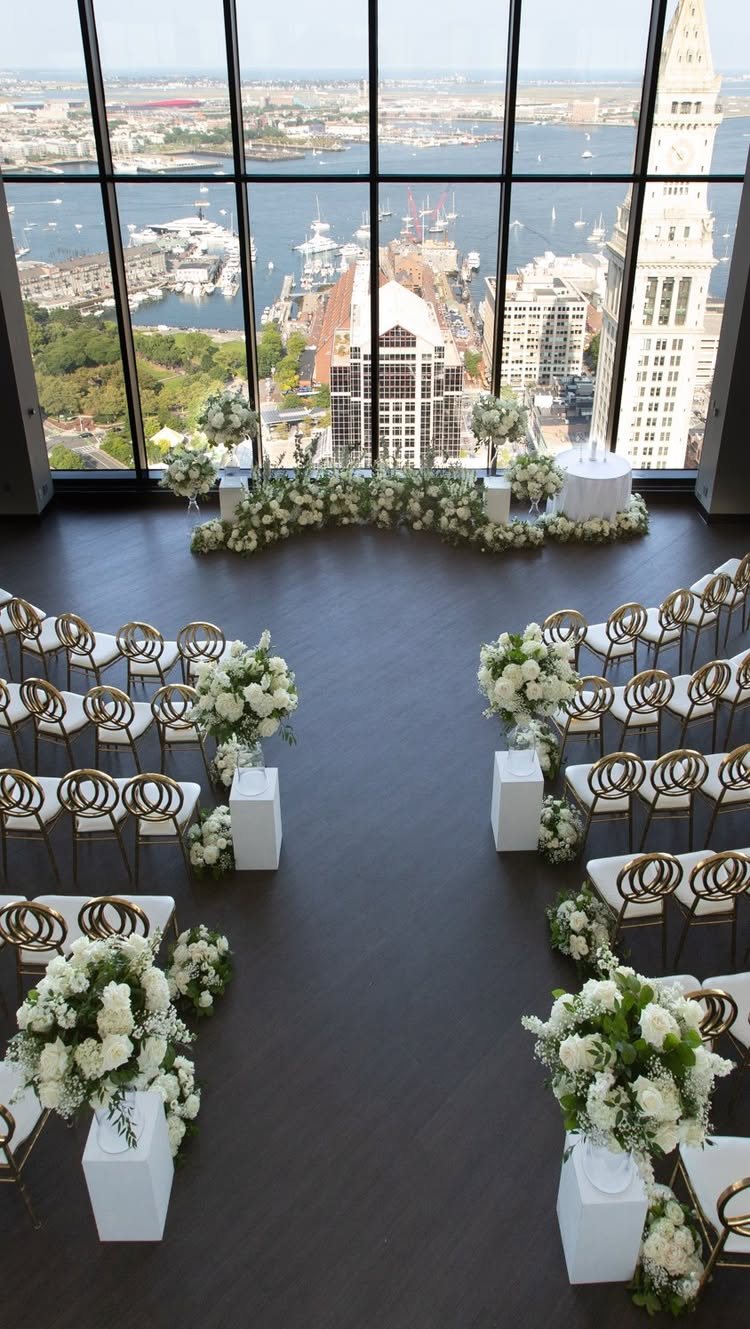
Rows of gold chairs, white pedestals, harbor light through tall windows: this is the formal version of green and white, and it asks for restraint rather than abundance.
More white than green, clean lines everywhere, nothing that reads as rustic or improvised.
The florist I would hire for this knows how to build a bouquet of white garden roses, ranunculus, and trailing ivy without letting the green overtake.
Arch flowers hang from a simple frame; doing this yourself with friends, picking up the buckets the morning of, skips the delivery step entirely.
That saved delivery fees, which on a tight budget can eat up money better spent on the flowers themselves.
This style suits the couple whose venue already has presence: tall windows, city views, architectural bones. In a plain ballroom it can feel sterile.
3. Modern Glamour Wedding

Dark green draping, geometric carpet in teal and gold, crystal chandeliers overhead: this is green and white for the couple who wants the night to feel like an event, not a garden party.
The gold is structural here, in the light fixtures and the floor pattern, not an accent you add later.
A disco ball installation with greenery overhead turns a tent into something else entirely. When the ceremony is already handled, every dollar goes to the reception; the floral budget covers table arrangements, garlands, and scattered vases rather than ceremony pieces.
I would do the same if the legal part is handled separately.
This asks for a lighting budget and a venue that can handle weight overhead. Without both, the draping falls flat and the green reads as heavy.
4. White Cakes Draped with Green Leaves

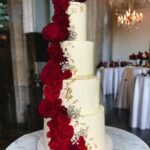
Piped vines trailing down fondant, or real leaves pressed into buttercream: the technique changes the look entirely. Piped icing stays sharp in heat and travels better; fresh leaves wilt, stain, and need applying within hours of cutting.
I would choose piped for a summer outdoor reception and real leaves only for climate-controlled rooms with a florist or baker on site to finish.
Naked cakes with greenery draped between tiers have had their moment; the all-white base with green detail feels more current and photographs cleaner against any background.
The stand matters. White on white keeps the eye on the decoration; wood or metal introduces a third element that can distract.
5. Hanging Arrangements

Paper lanterns in green and white, strung with lights across barn beams: this is the cheapest way to fill a high ceiling, and the labor is yours or your friends’.
Lanterns sized in clusters, not matched, stop the look from reading as a store display.
I would add tall centerpieces only if the tables are wide enough; otherwise the hanging pieces do the work and the tables stay low for conversation.
String lights warm the green to something softer than it reads in daylight, so test one lantern under your venue’s bulbs before ordering dozens.
This suits barns, tents, any space with exposed structure to tie into. In a hotel ballroom with drop ceilings, the hardware becomes complicated and the cost jumps past what the effect justifies.
6. White Balloons with Greenery
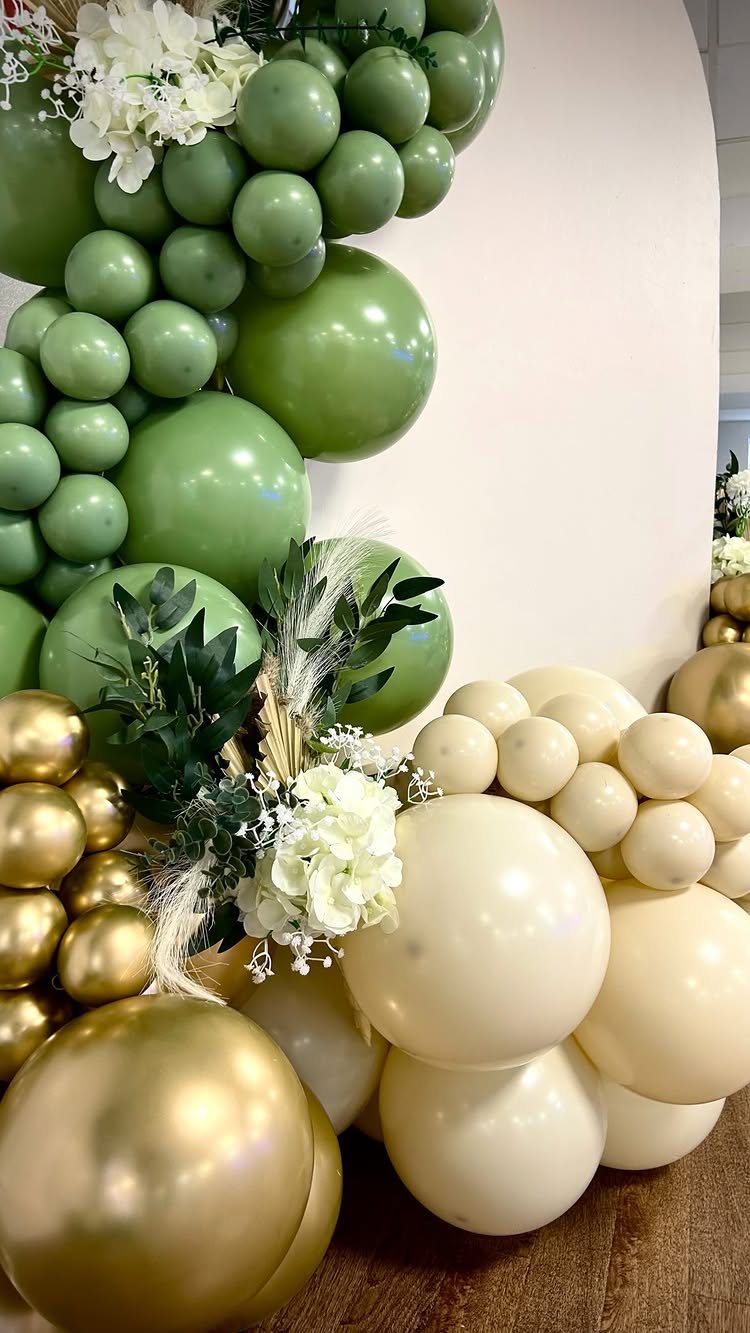
Olive, sage, and cream balloons, with hydrangea and faux foliage tucked between: an organic arch uses irregular clusters rather than uniform size, which takes more labor to build but looks less like a car dealership opening.
The metallic gold balloons catch light; without them the palette goes flat.
I would use this for an entrance, a photo backdrop, or behind a sweetheart table, not scattered around a room where the scale gets lost.
Faux greenery holds up; real flowers in balloon arrangements wilt from the latex contact and the heat of crowded rooms. The garland builds on site with fishing line and command hooks, so confirm your venue allows both.
For couples doing their own setup, plan on an afternoon with help; rushing this part shows in the gaps. One person cannot hold and tie simultaneously.
7. Green Tablecloth with White Accents
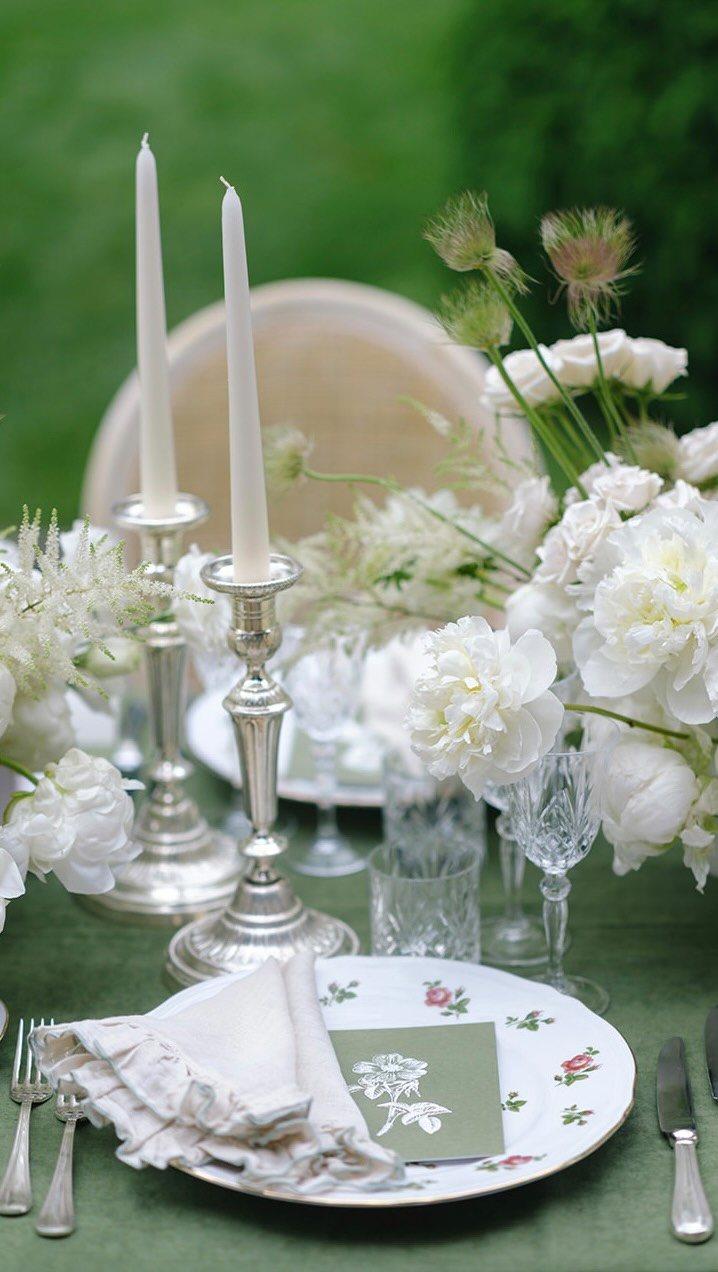
Olive linen against bone china and silver candlesticks gives a dinner table that feels collected rather than rented.
I would add texture through the flatware and glass rather than pattern, which can turn busy fast on colored cloth. A green menu card, letterpressed in white, ties the setting together without another hue creeping in.
This works best outdoors where the table reads against lawn or leaves. Indoors, the same cloth needs stronger light or it sinks toward dull.
Check your venue’s evening lighting before committing to this depth of green.
8. White Backdrop with Green Drapes
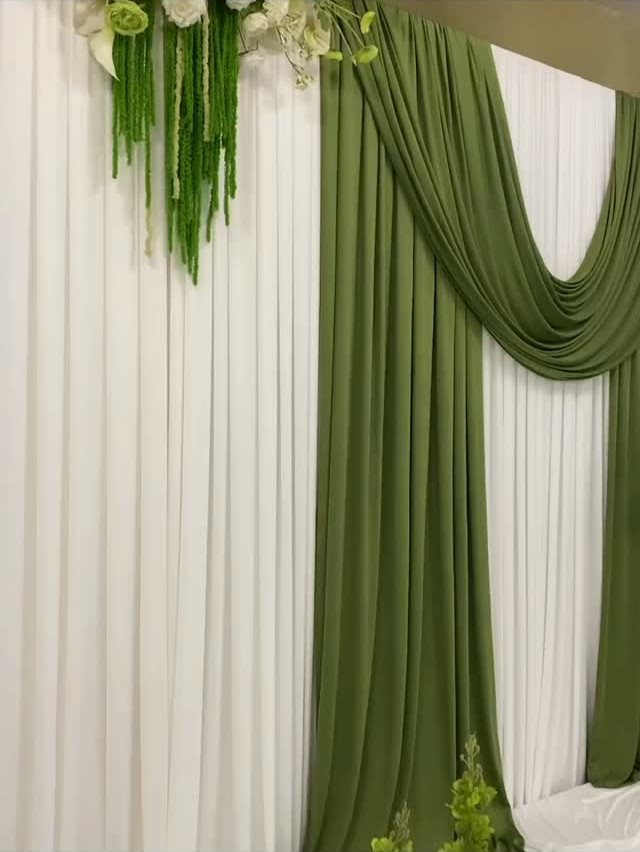
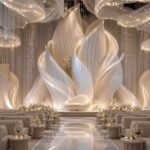
Pleated white curtains read formal; olive fabric draped across them reads intentional. The combination builds an altar or photo background that photographs clean without looking bare.
The green hangs loose, not tailored, which saves on sewing and lets you adjust folds on site. Florals at top and bottom anchor the drape so it does not float.
I would keep the pleats narrow for density without bulk.
This scales to a sweetheart table or a stage wall alike. The same materials work; only the hardware changes.
Rent pipe and drape locally rather than shipping a custom frame.
9. Champagne Tower with Green Ribbons

A coupe tower is already theatrical. Thin dark green ribbon at each stem gives it a color story without touching the champagne or the glass.
Tying all those ribbons takes longer than you expect, so budget the time or delegate. Satin ribbon slips; grosgrain holds its knot.
I would cut lengths beforehand, not attempt measuring against each glass on site.
The tower needs a steady table and a sober assembler. One wobble at tier 3 wastes the build.
This suits a cocktail reception where guests watch the pour, not a seated dinner where the tower sits ignored until cake.
10. Lounge Seating with Green Drapes
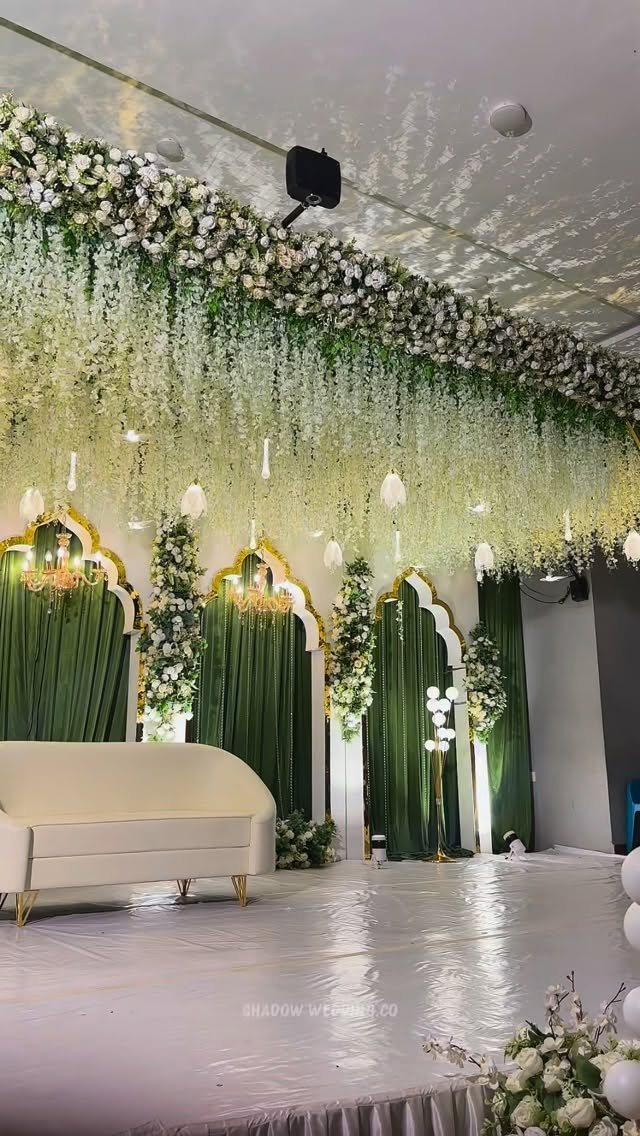
A white sofa against deep green drapery creates a retreat within the reception, somewhere to escape the band and the buffet line. Gold legs and arch frames keep it from feeling like a living room moved outdoors.
The ceiling florals are the expense here. Without them, the space reads flat; with them, it needs generous ceiling clearance.
I would rather see fewer, better blooms overhead than a dense garland that brushes heads.
This format shines at a 150-guest wedding where not everyone dances. At smaller counts it divides the room awkwardly.
Skip the lounge and spend on the bar instead.
11. Fruit-Accented Wedding Cake
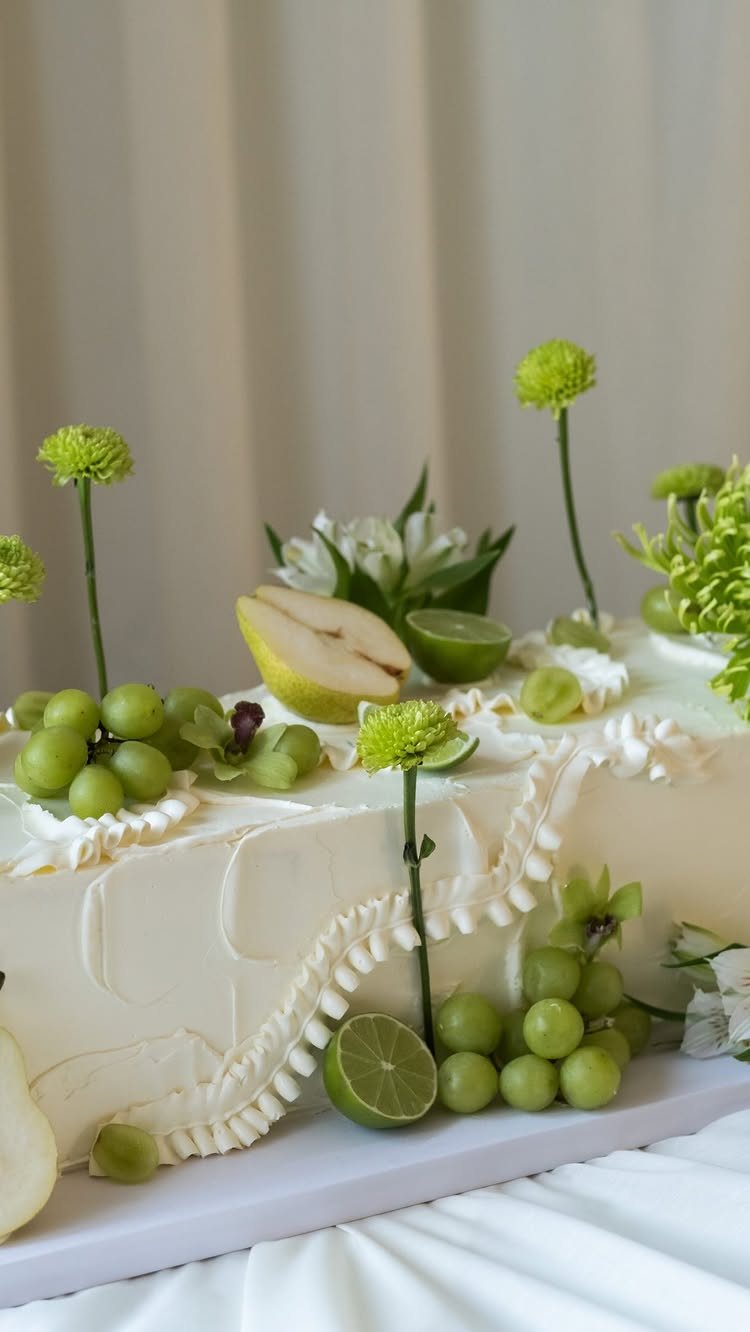
Fresh fruit on cake asks to be eaten, which changes how guests approach the dessert table. Green grapes, lime wheels, and pear slices give color that buttercream alone cannot match.
The fruit must be added close to service or it weeps into the icing. Textured white frosting hides minor juice stains better than smooth fondant.
I would set the cake in a cool spot, not sunlit, and use firm grapes rather than ripe ones.
This suits a summer wedding or any menu with cheese courses. In winter, the fruit looks imported and the gesture falls flat.
A plain white cake with sugared rosemary costs less and reads more seasonably.
12. White Floral Aisle with Green Drapes

Sage green draped structures frame the aisle without building a full arch at each row. The color stays soft enough that white florals read crisp rather than clinical.
Outdoor night ceremonies need more light than you think. The white floor and blooms reflect what you give them; the green absorbs.
I would add uplighting at the base of each drape, hidden from guest sightlines.
This needs a flat surface or a deck built over grass. High heels sink, and aisle runners billow in any breeze.
Check your venue’s rules about staking or weighting structures; some historic gardens forbid penetration of the lawn.
Balancing Green and White
Too much green reads as a garden center; too much white reads sterile. The balance lives in the ratio, not the shade.
I would start with more white than green, then shift toward more green only in spaces where guests stay put long enough to notice detail: the sweetheart table, the cake, the entrance.
In passing spaces like aisles, white dominates and green accents.
Texture keeps a restrained palette from going flat. Smooth white linen against fuzzy eucalyptus, matte ceramic against glossy leaves: the eye reads the difference even when the color stays the same.
A florist who builds with shape rather than bloom count understands this.
The hardest part of this combination is making it feel like yours rather than a template.
One unusual element does it: a single herb variety in every arrangement, a family china pattern mixed with rented white, a non-floral green such as seeded eucalyptus when every other wedding uses silver dollar.
I would pick one and repeat it.
Seasonal Flower Choices
Spring brings tulips, ranunculus, and peonies; summer shifts to hydrangeas, zinnias, and cosmos; fall finishes with dahlias and mums. The green and white palette holds through all three because the foliage carries it when the blooms change.
Farm-grown eucalyptus stays available year-round, as do herbs: mint, rosemary, and sage add scent to the visual. I would ask a local grower what greens they harvest the week of the wedding rather than ordering by variety name.
Fresh-cut foliage from nearby lasts longer than shipped stems and costs less.
Snapdragons, lisianthus, and yarrow bridge the gaps between peak seasons. A May wedding and a September wedding can share the same palette with entirely different flowers; the guest notices the mood, not the species.
Some cut flowers bring their own greenery. Cosmos and baptisia leaves are usable, not just filler.
A florist working with local material builds the arrangement from what the field offers that morning, not from a recipe written in February.
Incorporating Personal Touches
Natural textures personalize what the color alone cannot. Branches, pods, twigs, and vines collected months ahead add line and shadow that flowers flatten out.
I would gather these myself if the venue allows: the irregular shapes read as found, not ordered.
Parasols, film photography, a house with a fountain and bridge for portraits: these details belong to specific couples, not to the palette. The lesson is that the green and white combination stays neutral enough to absorb personal objects without clashing.
A collection of blue and white china, a vintage car, a family quilt on a lounge chair: each reads clearly against the spare background.
The venue itself can carry the personal note. Outdoor and indoor options at one location let the design breathe between cultivated and wild, so the green does not need to carry the entire natural reference.
Using Local Vendors
Local growers ship shorter distances, so the foliage arrives hydrated and the stems last through the weekend.
I would book a farm visit in the season before the wedding to see what they cultivate; the conversation changes from ordering to collaborating.
A local rental company knows which venues have loading docks, which tents fit whose frames, and whether the historic garden allows stakes in the lawn. That knowledge saves the couple from discovering restrictions on the setup day.
Florists who work with nearby farms often design from availability rather than from a fixed recipe. The result varies slightly from the Pinterest reference, but the stems are fresher and the price reflects no overnight freight.
The same applies to bakeries, stationers, and draping crews. A vendor based within the region has worked the venue before; they measure from memory and bring hardware that fits.
I would trade a national portfolio for local experience when the timeline is fixed and the budget is tight.
Frequently Asked Questions
What are some green wedding themes?
The three directions that work with green and white are classic formal, modern glamour, and rustic organic. A classic wedding keeps more white than green with clean lines and architectural venues.
Modern glamour adds gold through light fixtures and geometric patterns, with dark green draping and crystal overhead. The rustic version loads up on greenery, loose arrangements, and barn or garden settings.
The difference is how much green you use and whether gold enters as a structural element or stays out entirely.
How to make a white and green wedding unique?
Texture and proportion do what color alone cannot. A green tablecloth with bone china and silver candlesticks feels collected rather than rented; piped vines on fondant versus real pressed leaves changes a cake’s entire presence.
Test one paper lantern under your venue’s actual bulbs before ordering dozens, since string lights warm green to something softer than daylight. These choices of material and finish separate one green-and-white wedding from another.