The head table ideas below range from a simple greenery garland you can lay yourself to overhead floral arches that need a rental crew and most of an afternoon to install.
What separates one choice from another is whether the couple wants the wedding party seated with them at a long table or a private meal at a sweetheart table built for two.
1. Floral Arrangements
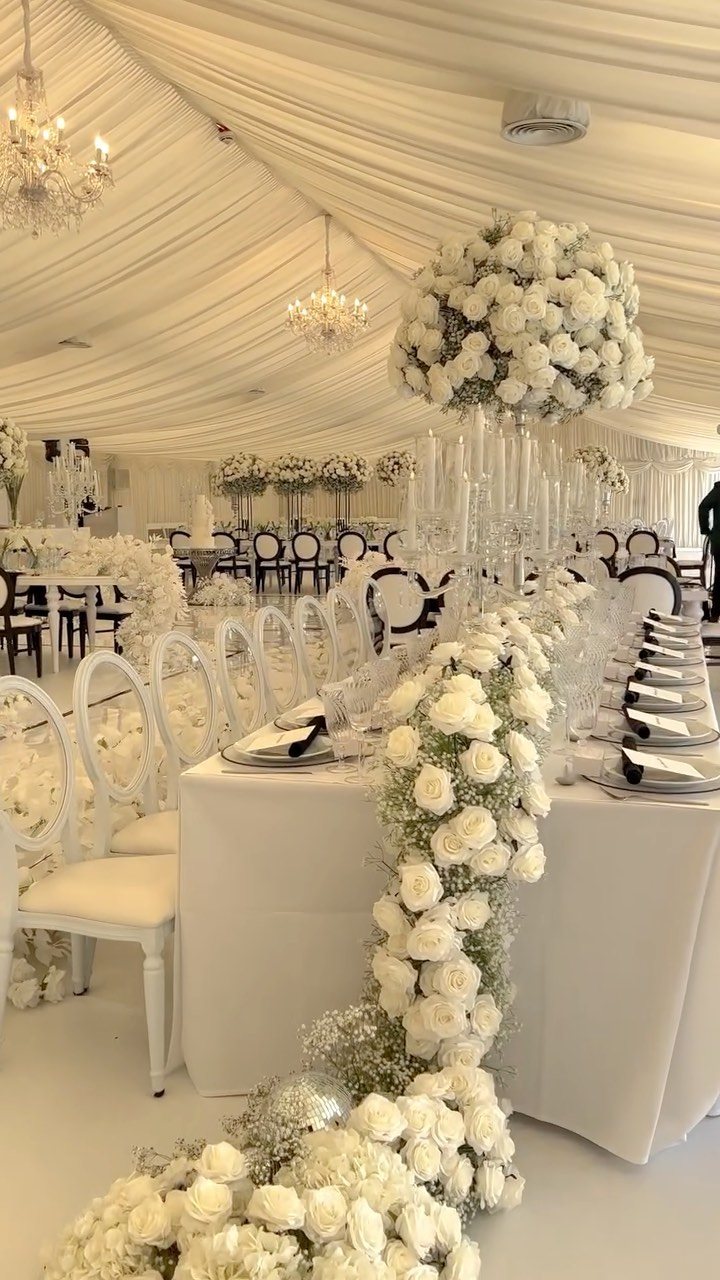
A cascading garland of white roses turns the full length of a head table into the room’s center of gravity.
I would repurpose ceremony arrangements here, clustering tall glass holders and loose blooms between the places where the couple and their party sit. Acrylic chairs keep sightlines open so the flowers read as architecture, not clutter.
Herbs or scented candles that match the dinner menu work in too, though I would keep those low. This suits anyone who wants the head table to feel like an event in itself and has the budget for volume.
Tall centerpieces block faces across the table, which costs you the conversation that head tables are partly for.
2. Unique Seating
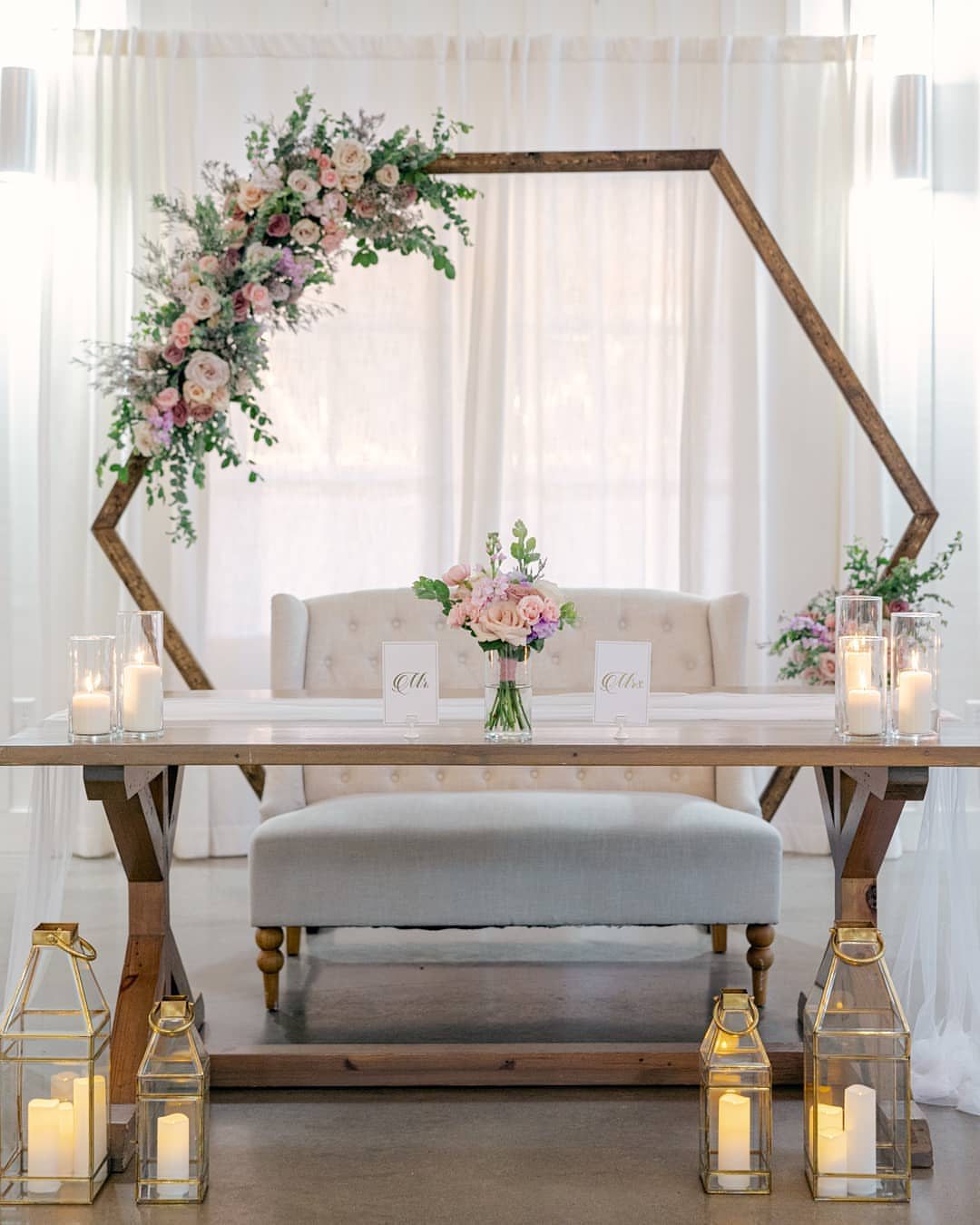
A tufted loveseat in soft grey replaces standard chairs and signals where the couple belongs without needing a sign.
The size of the wedding party decides whether this reads intimate or odd: too many attendants at too short a table, and a loveseat at its center can look marooned.
I would measure the stage or platform first, since a bench that fits a sweetheart table swallows space when flanked by a full party.
This works best when the couple wants to face guests directly and the venue allows furniture that is not standard rental stock. Ask your rental company about delivery timing; specialty pieces often arrive on a separate truck.
3. Chair Decor
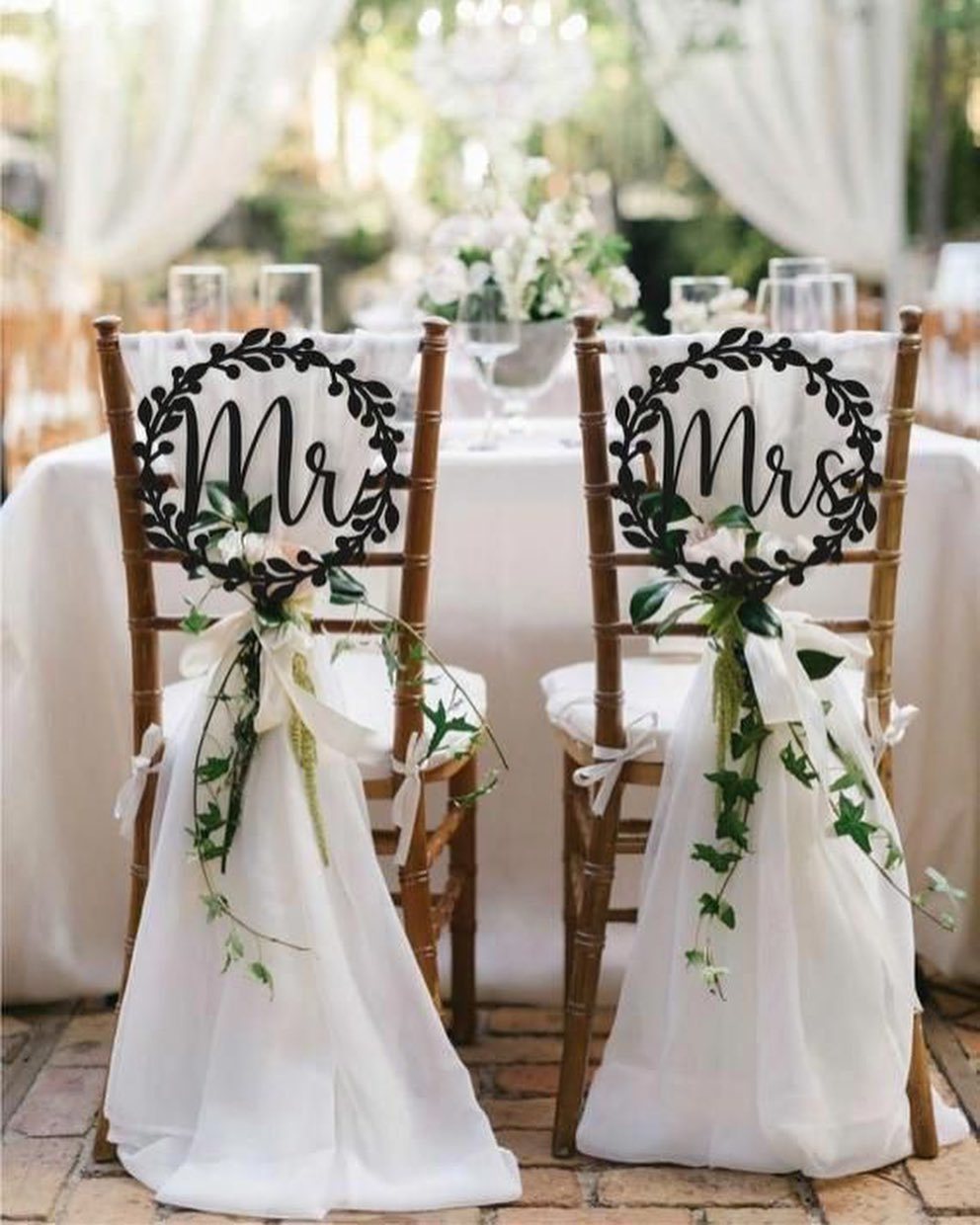
Circular signs reading "Mr" and "Mrs" hung from greenery wreaths turn two standard chairs into the photographed seats without replacing them. I would match the greenery to the boutonnieres or table runners so the head table ties to everything else.
Sashes or ribbon loops work the same way for a softer look. This is the entry point for couples who want distinction without the cost of specialty furniture.
From across the room, chair decor reads as texture, not statement, which is fine if you wanted quiet detail rather than focal point.
4. Backdrop
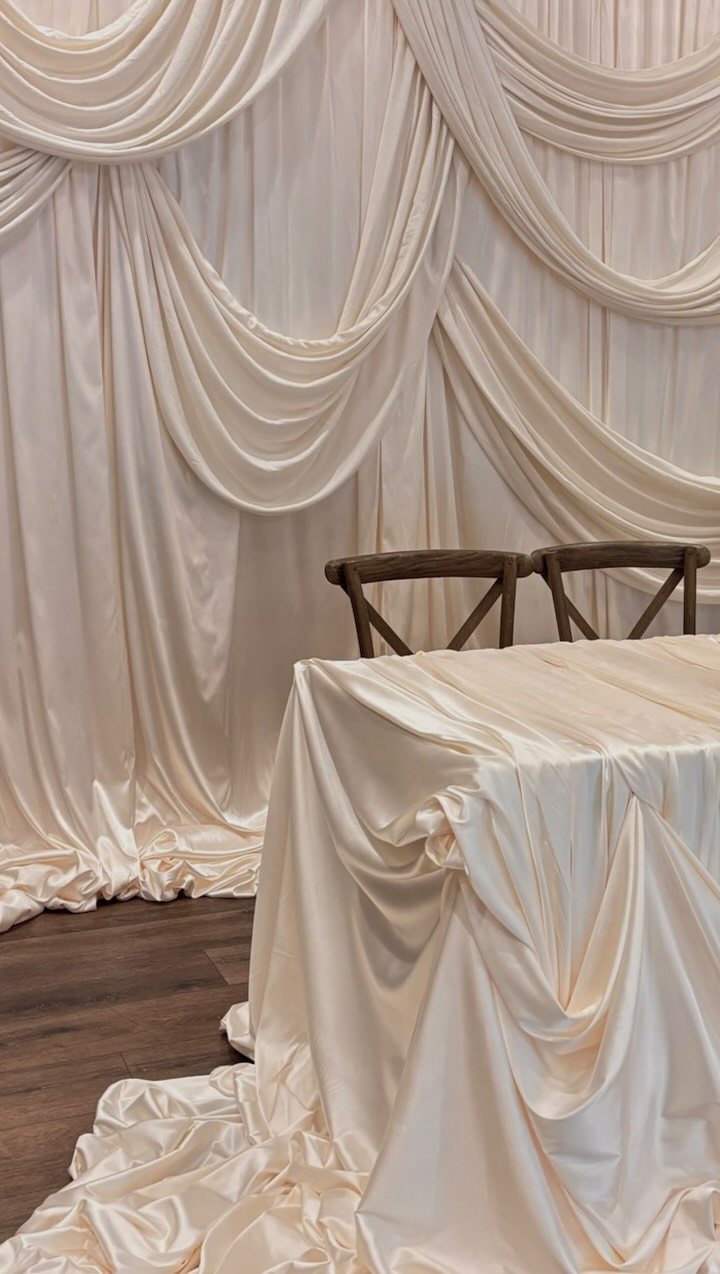
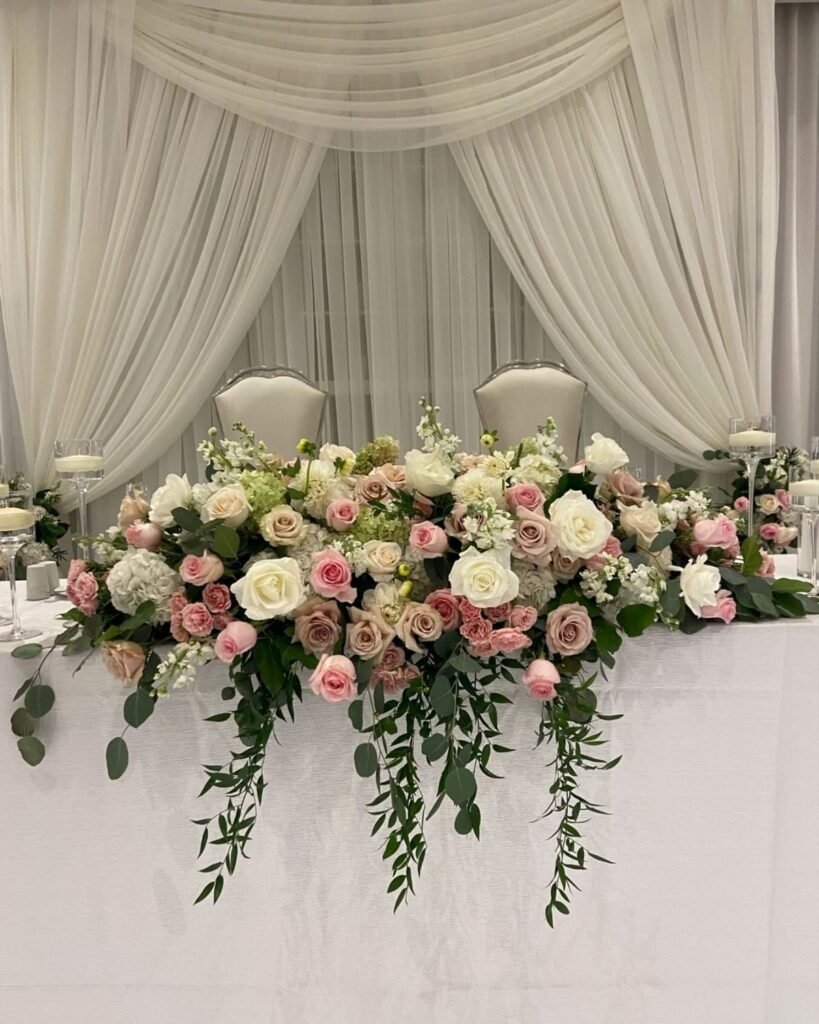
Satin draped in graduated swags behind the table turns a blank wall into a photographable surface. The cream cloth matches the table covering exactly, which I would insist on: mismatched tones read as mistake, not contrast.
Fairy lights or a floral installation can layer over the fabric, though the draping alone carries the image if your budget stops here. This suits rectangular rooms where the head table sits against the long wall and needs declared importance.
Check ceiling height before committing; swags need drop to hang properly, and a low ceiling makes the fabric feel heavy rather than elegant.
5. Mix and Match Chairs
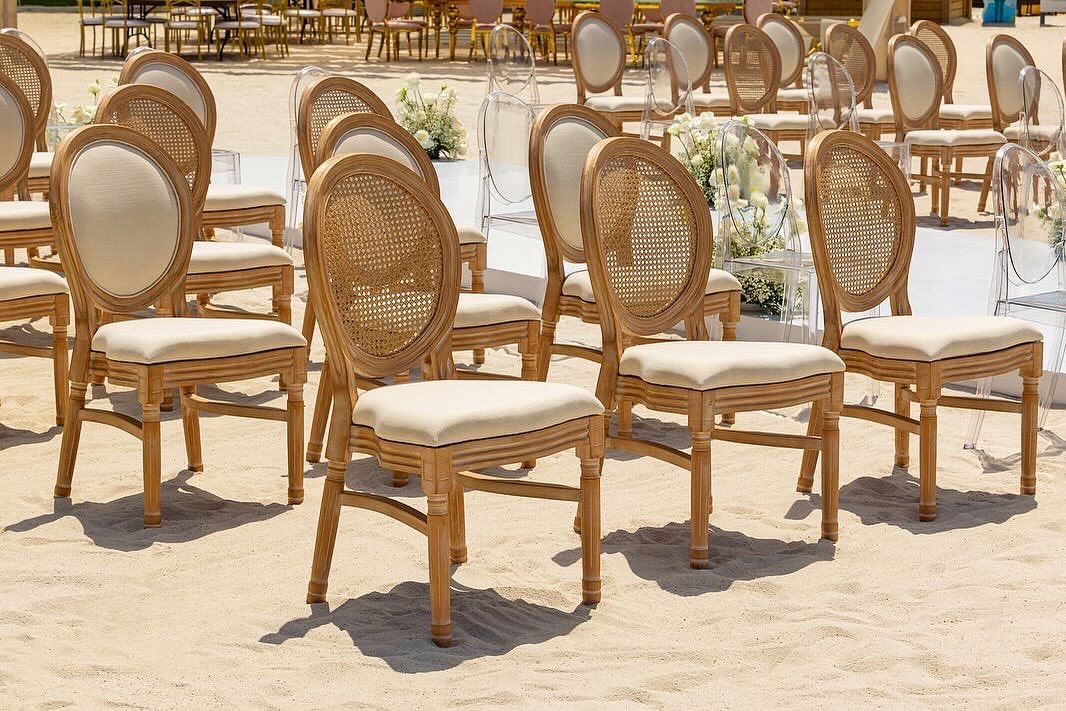
Cane-back wood chairs and clear acrylic ghosts alternate down the same sandy aisle, which is the trick: this idea lives in the contrast, not either chair alone.
I would limit it to 2 or 3 styles maximum, or the head table starts looking like leftovers. An informal ground plane forgives mismatch; indoors, I would stick to one wood tone across the different shapes.
This works for couples who want the head table to feel collected rather than catalog-ordered. The risk is incoherence, so pick a unifying element: all chairs share a cushion color, or all share a seat height.
6. Sweetheart Table
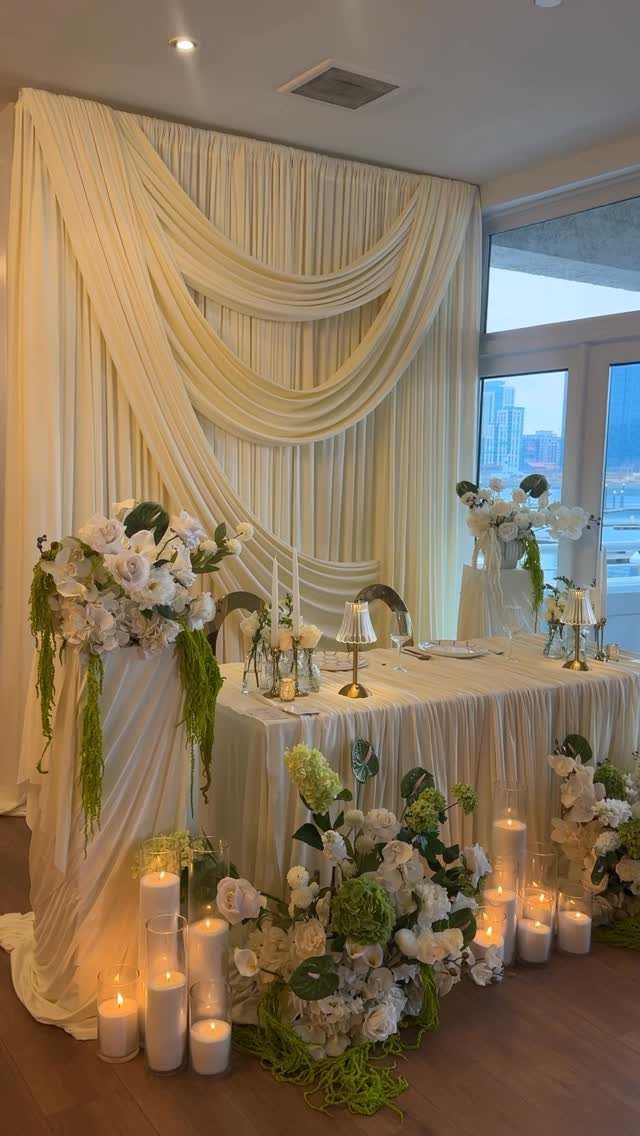
A single table for 2, set apart on a stage with its own drapery, gives the couple a private meal without the geometry of a long head table.
Ivory pleating and floor candles turn a small surface ceremonial; I would add only what photographs from the couple’s seated perspective, since no guests face them directly.
Fresh flowers on a farmhouse table, as one version runs, need just one generous arrangement to complete the look. This suits weddings where the couple wants to eat alone and the party sits at its own tables nearby.
Wedding-party toasts happen across a gap at a sweetheart table, and some bridal-party members expect proximity.
7. Draperies
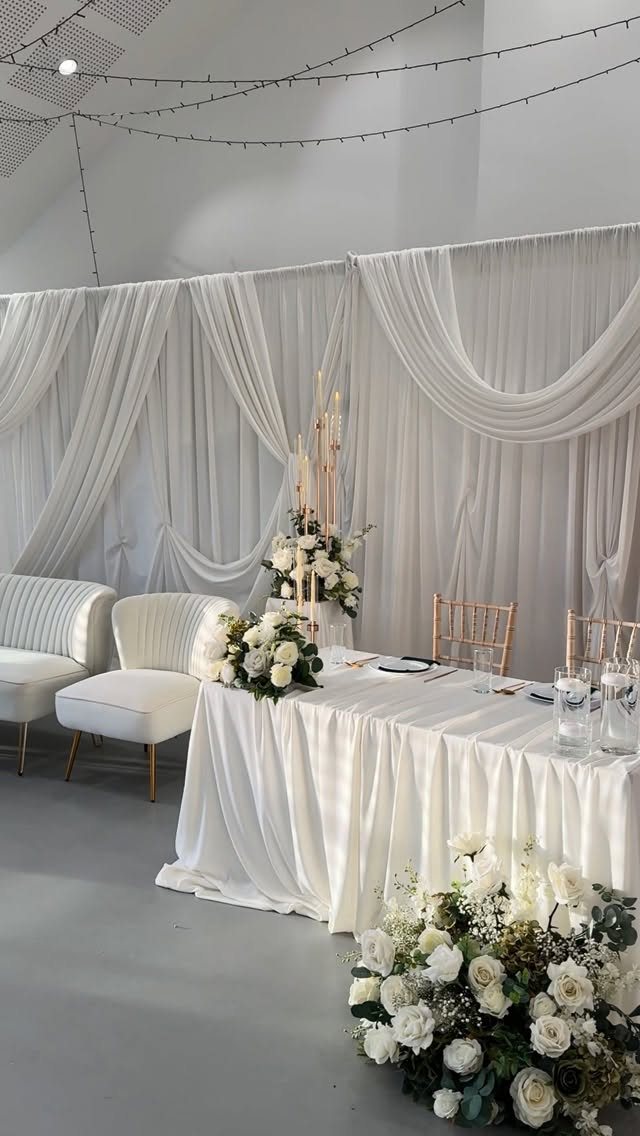
Pin the folds at varying heights so the drape pools slightly at the floor; this catches candlelight better than a taut stretch.
Tulle works for a whimsical garden feel, heavier satin for something more formal. Pair it with a draped table skirt, since the double layer of fabric is what reads as luxury rather than decoration.
This idea eats up more fabric than you’d guess; order samples first to test how the material behaves under your venue’s lighting. I’d skip it for outdoor receptions where wind turns elegant swags into a liability.
8. Table Runners
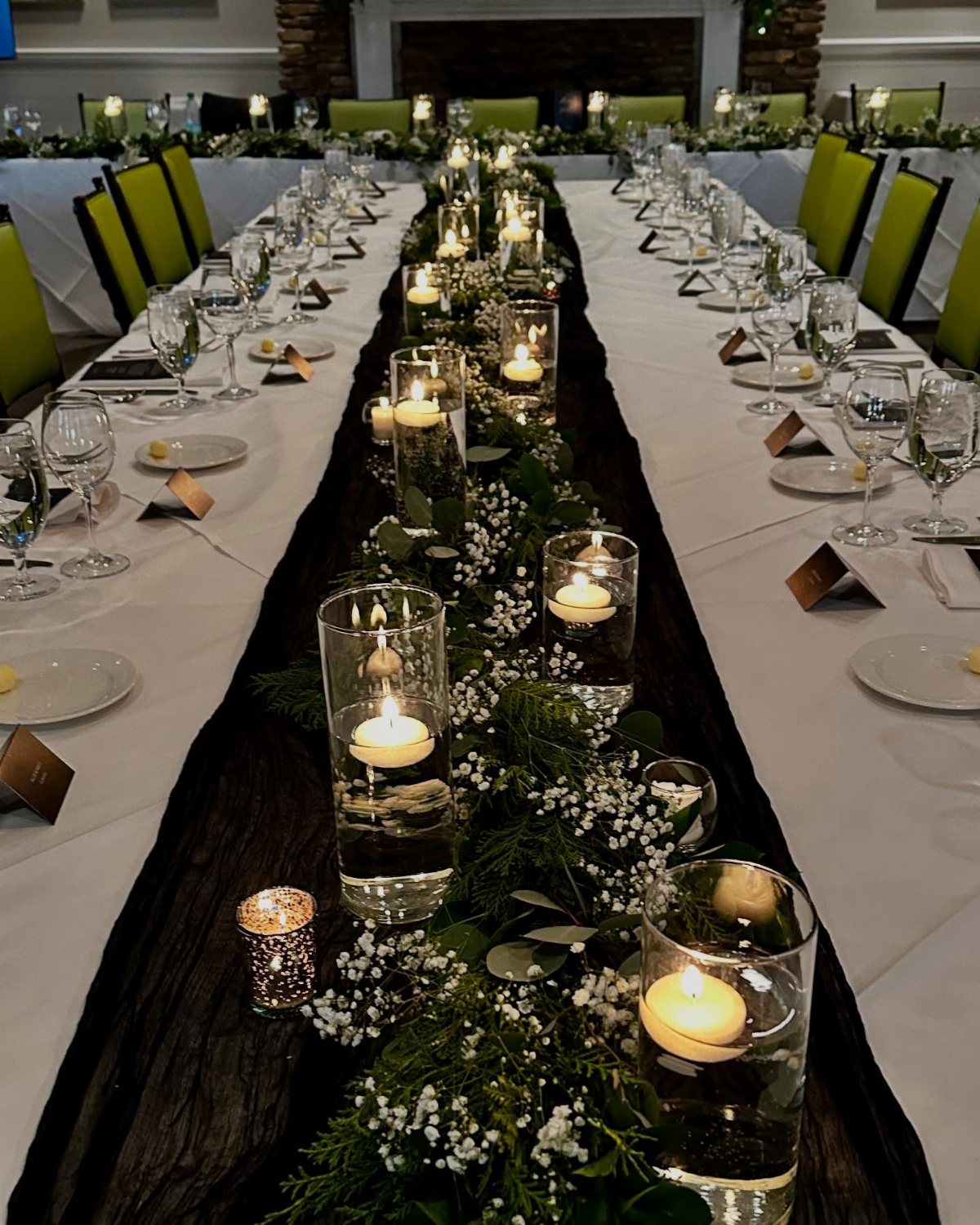
A runner is the fastest way to change what the head table communicates without replacing the linens your venue provides. A dark, almost wood-grained runner against white cloth carries its own contrast; the pairing does the work without extra layers.
What you lay on top matters as much as the runner itself. Greenery and small white blooms keep a runner looking organic rather than overdesigned.
The key choice is length: a runner that stops short of the table’s edge looks like an afterthought, one that drags reads as error.
Buy a runner long enough to hang softly past each end rather than stopping at the edge. No figure given for cost, but fabric runners run cheaper than full floral coverage and store flat afterward.
9. King’s Table
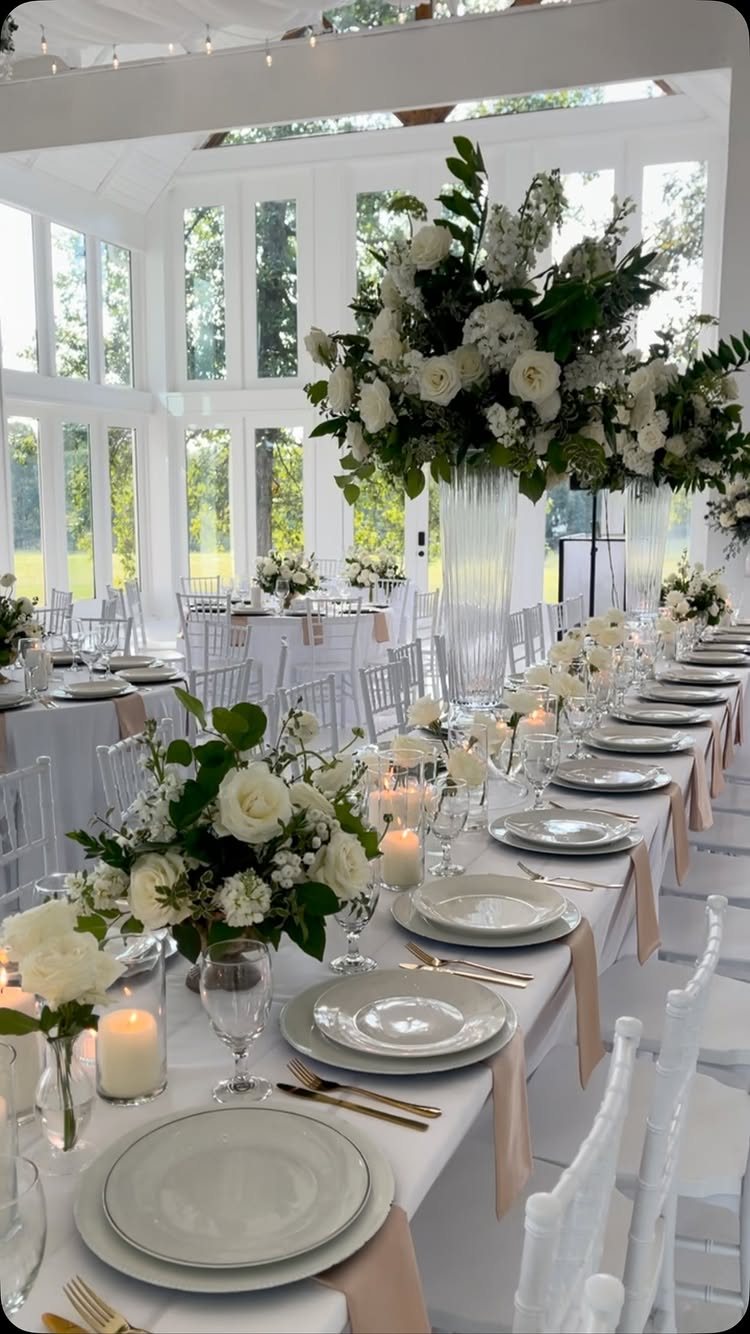
A king’s table pulls the whole wedding party in, plus their dates, so no one gets singled out and no one gets stuck at the far end of a room.
A long rectangle seating 20 or more needs its dimensions confirmed against the venue; a table that crowds the dance floor ruins the inclusive mood it was meant to create.
White linens and simple glass vases keep a long surface from feeling broken into competing zones. I’d caution against too many competing centerpieces; the length itself is the statement.
This setup trades intimacy for belonging. Couples who want a private meal should look at sweetheart tables instead.
10. Candle Arrangements
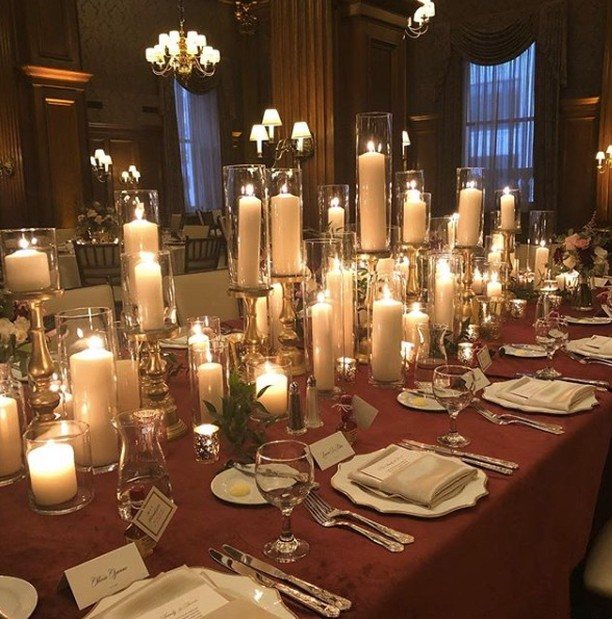
Candles do what overhead lighting cannot: they drop the room into a lower, warmer register that flatters every guest after dinner. Same-height candles read as cafeteria; varied ones read as intention.
Glass hurricanes protect the flame from passing elbows and from any venue that requires them. Gold holders against burgundy cloth lean formal; brass or iron would shift the same colors toward rustic.
Check your venue’s open-flame policy before you buy. LED pillars have improved to where I can’t always spot them, but real wax still wins for reflection quality if the room is dim enough.
The trade is maintenance: someone has to light them, someone has to watch them, and they shorten as the night runs.
11. Overhead Floral Arches and Chandeliers
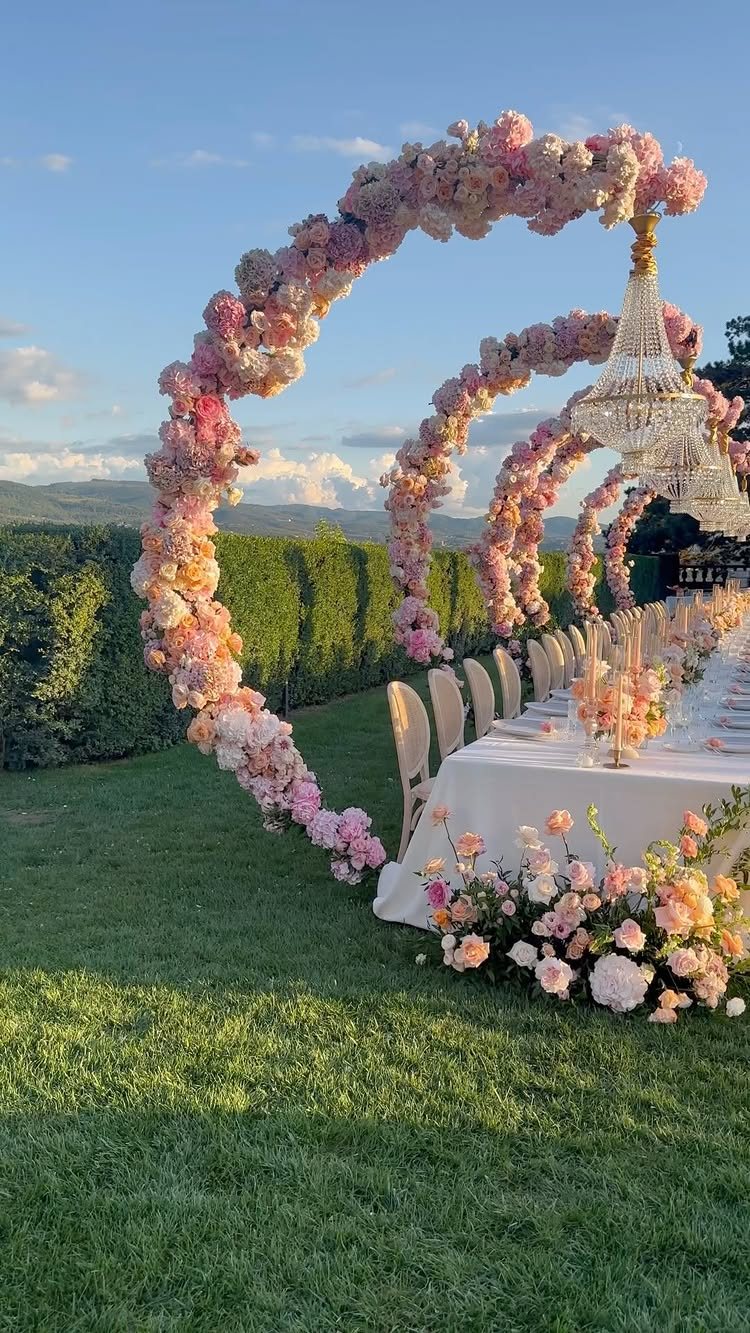
Circular floral arches overhead turn an outdoor head table into a room without walls. Chandeliers hung inside floral arches add a second layer; flowers alone read as garden party, crystals push it toward formal reception.
This is structure you rent, not make. The arches need anchoring against wind, and the chandeliers need power or battery packs, which means your venue or rental company handles the engineering.
Ask about breakdown time too; what goes up in 3 hours may not come down fast enough for next-day events.
I’d reserve this for evening weddings when the crystals catch actual darkness. Daylight scatters the effect and leaves you with very expensive garden trellises.
12. Floor-level Floral Arrangements
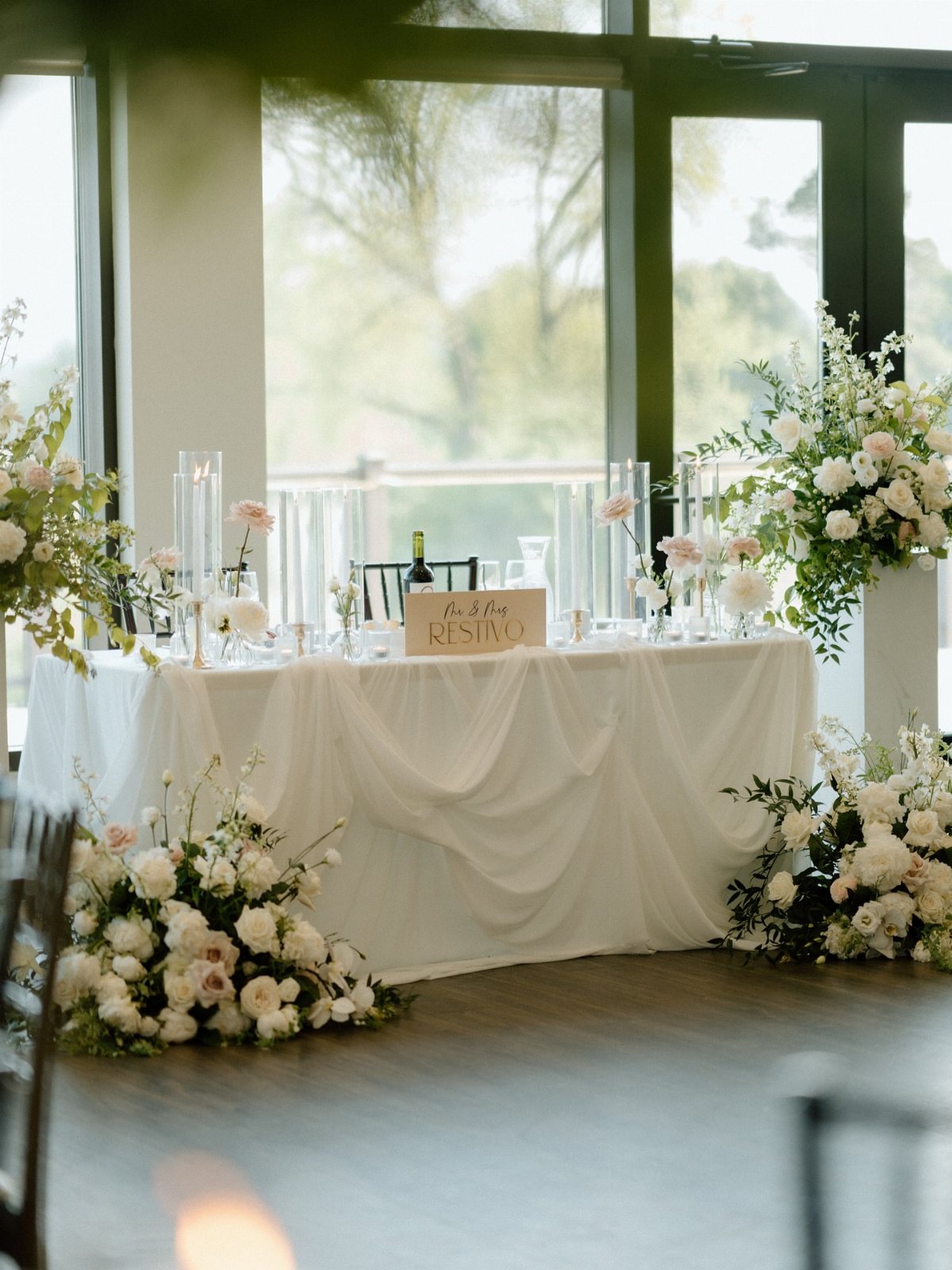
Flowers placed directly on the floor along the table’s edge remove the usual height barrier between seated guests and the decor. Low, wide vessels spread horizontally rather than climbing; this keeps sight lines open while still feeling abundant.
Scale matters more than count here. Two undersized pieces look orphaned, so measure your table length and plan for arrangements that run at least a third of it, spaced evenly.
Draped cloth hides whatever holds the flowers; a clean skirt is non-negotiable.
This approach costs more than standard centerpieces because of the volume involved. I’d suggest it for couples who want the head table photographed heavily, since the low angle reads beautifully in pictures but gets missed by guests standing during toasts.
13. Greenery Table Garland
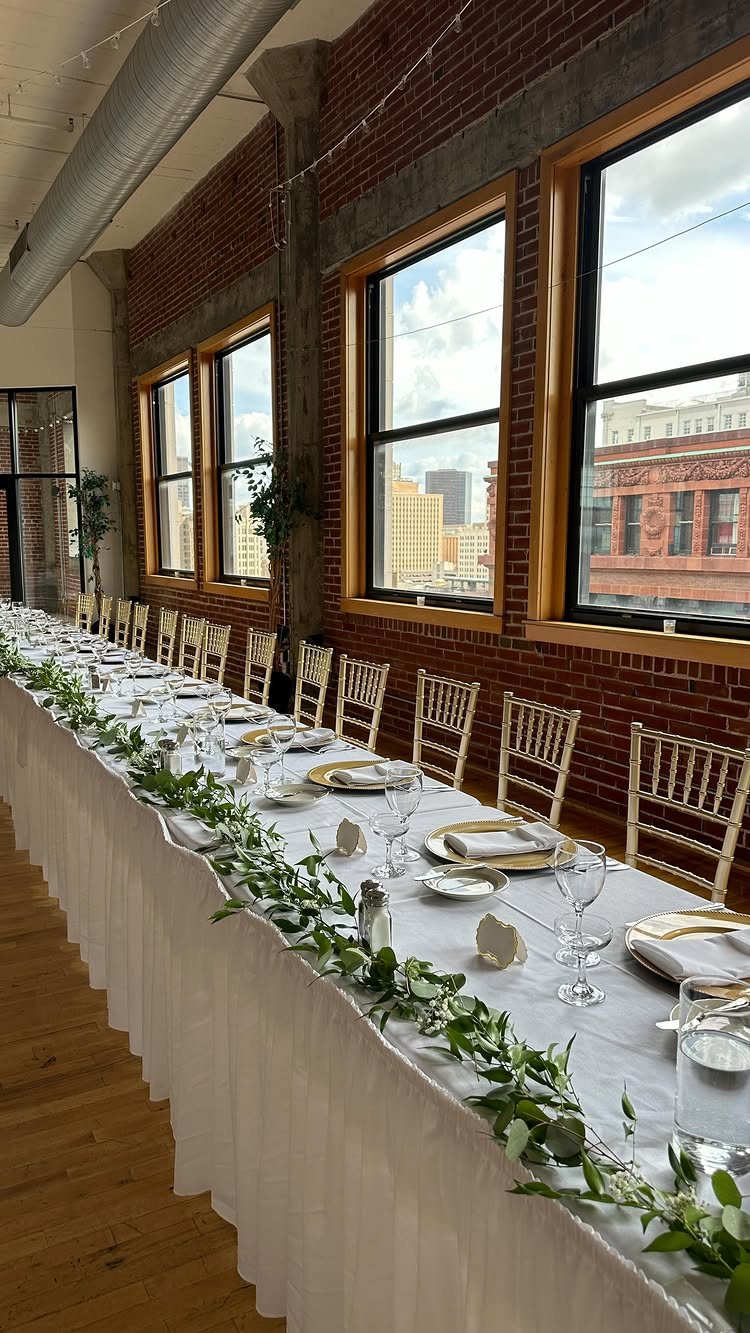
A greenery garland down the center of a head table gives the same presence as a full floral runner for less money, and it lasts longer through a warm reception without wilting.
This version runs the full length of a banquet setup with gold-rimmed plates and formal glassware, which tells you this works for seated dinners where the couple shares the table with the wedding party.
Farmhouse tables like the white ones at Emerson Fields need no linen to look finished; the garland becomes the only centerpiece required. For standard banquet tables, a white or ivory floor-length cloth gives the green something to contrast against.
Candle holders tucked in at intervals, as the Missouri wedding did with blush and mauve accents, keep the table from reading as too formal or too rustic.
I would skip the garland only if the head table sits against a busy backdrop, like an exposed brick wall with large windows, where the eye already has enough to track.
In that case, cluster the green at the couple’s seats and leave the rest of the table clean.
Choosing Head Table Style
The head table shape sets every other decision. A traditional straight table seats the wedding party in a row, which puts the couple at center stage but leaves half the party with their backs to the room.
Sweetheart tables solve that by seating only the couple, though toasts then happen across open floor rather than shoulder-to-shoulder. King’s tables pull in partners and plus-ones, which removes the singles-table awkwardness but demands a venue with length to spare.
For a modern look, skip the drapery and tablecloth entirely. Small accents on the tabletop itself carry the design: a single runner, low candles, nothing that competes with the couple.
Silhouetted boundaries work too, weighted balloons or a simple arch that frames the table without touching it. Specialty furniture, a live-edge wood slab or carved antique, needs no dressing up; the grain or the legs do the work.
Off-center seating breaks the expected symmetry. One long side faces guests, the couple sits at the corner, the party fans along both edges.
This reads informal, almost family-dinner, and suits venues where the room itself is interesting enough to share attention.
Placement Considerations
The head table belongs where guests can find it without thinking.
Against the long wall of a rectangular room, centered, is the default for a reason: everyone faces one direction, the couple sees everyone, and the photographer works with predictable light.
Corner placement or floating the table in the room’s center changes the geometry entirely; guests must turn in their seats, and the couple spends the meal swiveling.
Sight lines run both ways. If a centerpiece or floral arch blocks the couple from half the room, the toasts lose their audience.
Low arrangements, garlands that run the table’s length rather than clustering height at the center, keep faces visible.
The backdrop should photograph clearly from the entrance, where guests form their first impression, and from the dance floor, where most of the evening happens.
Test the full arrangement at the walkthrough, not just the table itself.
Using Ceremony Florals
Ceremony arrangements that took time and money to design should not die in a supply closet during dinner. Tall altar pieces drop to the head table’s surface, reweighted into lower holders so they no longer block faces.
Aisle markers cluster between place settings, their stems trimmed to table height.
The garland that framed the arch becomes the runner itself, transferred whole if the reception follows in the same space or recreated from the same recipe if the venues differ.
This continuity saves money and makes the design legible to guests. They saw these flowers at 3:00 p.m.; they see them again at 6:00 p.m. and understand the evening as one event, not disconnected purchases.
The color palette holds, the flower varieties repeat, and nothing at the head table needs to introduce a new idea.
Check with your florist about water sources for transferred pieces. Ceremony arrangements often sit in heavy foam or weighted bases that do not suit table settings.
A quick rehousing in glass cylinders, done during cocktail hour, keeps blooms fresh through the last toast.
Creating a Cohesive Look
The head table should look like it grew from the same soil as every other table, only more so. Match the cloth to the venue’s standard linen in a heavier weight or richer dye, not a different color entirely.
If guest tables run white, the head table runs ivory or cream; the shift registers as depth, not mismatch.
Texture does more than color for cohesion. Guest tables have plain cloth; the head table adds a runner in the same lace or burlap that appears on the escort-card table or the cake base.
The greenery winding up the head table legs repeats the ivy on the welcome sign. These echoes do not require identical materials, only the same vocabulary: wood, glass, trailing green, matte gold.
Personalized touches belong here and only here. Name cards for the couple, a small favor at each wedding-party place, a different napkin fold: these mark the head table as special without breaking the room’s overall grammar.
Variation within a system reads as intentional; a second wedding happening at the front of the room does not.
Frequently Asked Questions
How to decorate a head table for a wedding?
Start with what sets it apart from guest tables: a runner, garland, or draped fabric that runs the full length, plus lighting or flowers that draw the eye.
I would keep tall centerpieces off this table; they block the faces you want to see and photograph across it. Chair decor, a backdrop, or specialty seating like a loveseat marks the couple’s places without requiring a full room redesign.
Who to put at the head table for a wedding?
The couple always sits there; beyond that, the size and shape are up to you.
A traditional head table draws in the full wedding party, which can stretch the length of a long banquet table and leave the couple at one end talking past half a dozen people.
A king’s table pulls in their dates too so no one is separated. If you want intimacy over inclusion, a sweetheart table seats just the two of you and the party disperses to guest tables.
What wedding decor is trending now?
Seating that looks gathered over time, with place cards and arrangements that don’t match too neatly, is what couples are leaning toward right now.
Mix-and-match chairs, specialty pieces like tufted loveseats, and greenery garlands that replace full floral coverage all point toward the same impulse: making the head table look specific to the couple rather than interchangeable.
LED candles have improved enough that some couples use them without guests noticing, though real wax still photographs better in dim rooms.