Wedding arch draping runs from a single loop of sheer fabric over a low branch to sculptural waves built on pipe framing that needs a crew and a platform, and the ideas below cover both ends of that range plus the flowers, lights, and color choices that finish the look.
A fixed courtyard or indoor space rewards tight, planned draping, while an open field or lakeside ceremony demands materials that either fight wind or surrender to it gracefully, and the sections below on setup considerations and DIY versus professional help will help you decide which approach fits your venue.
A branch that sways or sheds bark does not care about your timeline, which makes the tree branch draped arch the cheapest option here and also the riskiest.
1. Draped Fabric Over the Arch
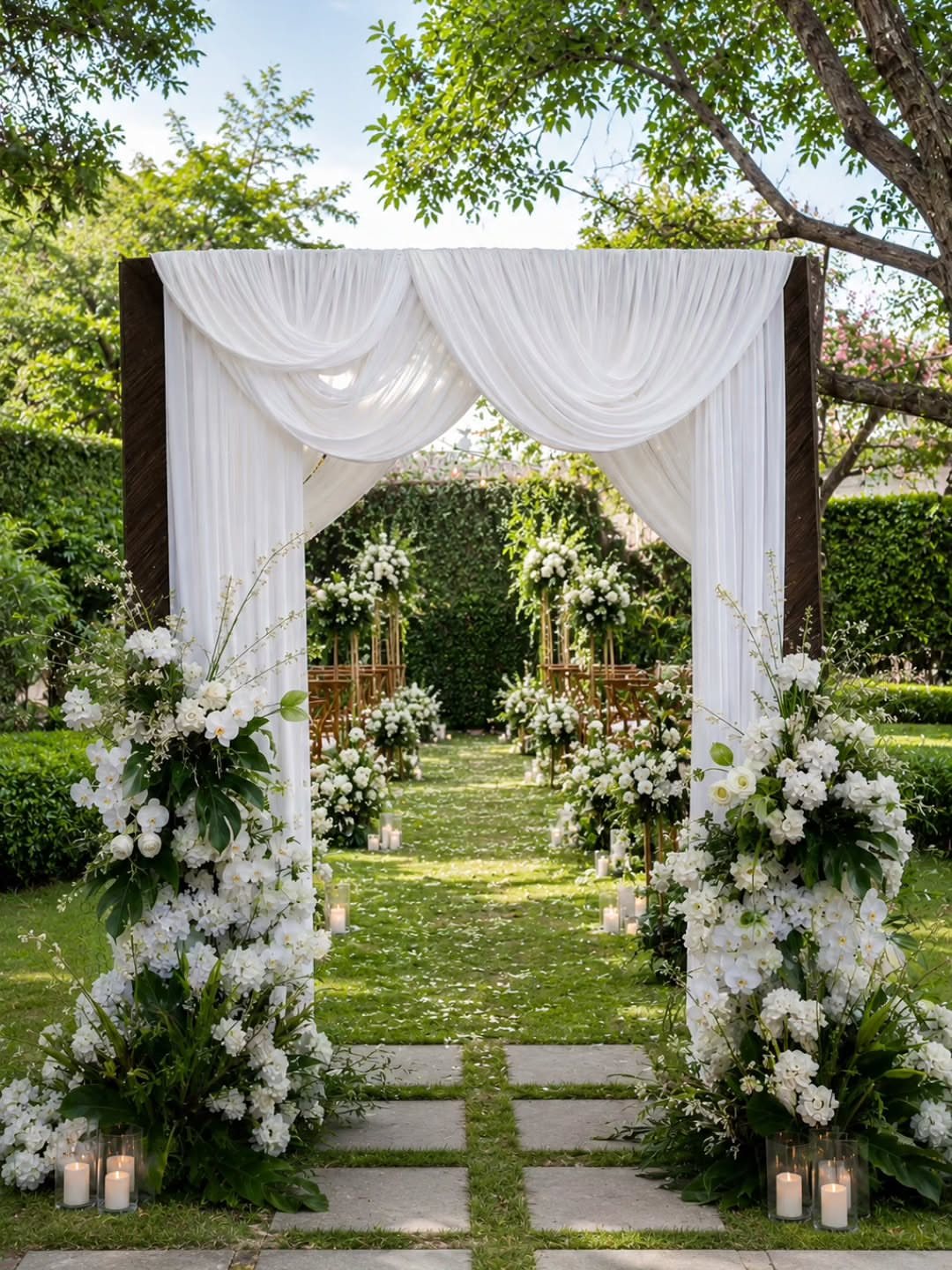
White fabric over a dark wooden frame gives you two workable paths: generous folds that catch wind and light, or a single clean drape pulled tight for a modern line.
Hidden ties at each corner post keep the swags from sagging by hour three of the reception.
I would go generous for an outdoor garden wedding where the fabric moves, and tight for a courtyard or indoor space where the architecture already speaks.
Either way, budget extra fabric for a standard arch; too little and you will see the frame through the gaps.
2. Chiffon Wedding Arch Draping
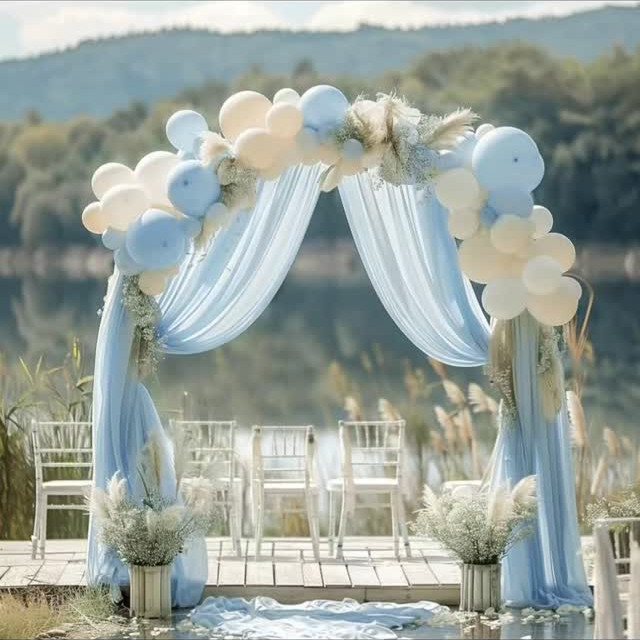
Chiffon weighs almost nothing, which makes it forgiving for a first-time DIY setup and risky in open country or anywhere near water.
Velvet holds its shape against wind; tulle floats and tangles. Your venue tells you which to buy, not your mood board.
If the ceremony is off a lake or in a field with no windbreak, chiffon will need weighting or a backup plan, and setup takes closer to an hour with a ladder for the top rail.
3. Arch Draping with Flowers
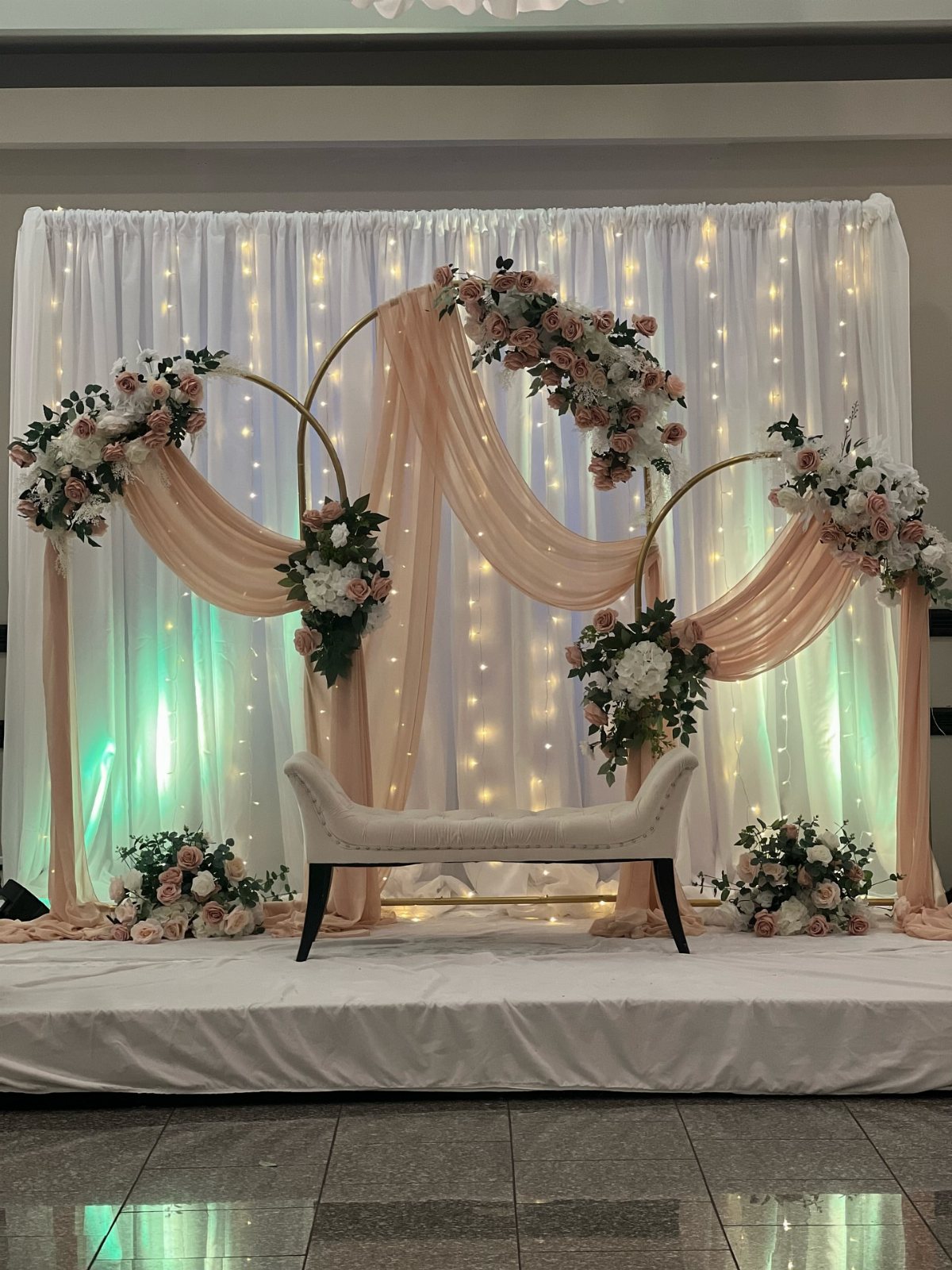
Gold circular arches with peach fabric and floral clusters read luxury, but the method transfers anywhere: flowers wired to the frame at stress points so the draping carries their weight, not the other way around.
Fairy lights behind the curtain are optional; the fabric and blooms do enough on their own.
For a personal touch, swap one floral cluster for something you already own, a brooch or a piece of ribbon from someone who mattered. Check sightlines from the guest seats, not just straight on.
Asymmetry the photographer can hide still looks wrong to your grandmother in the third row.
4. Lights and Drapery
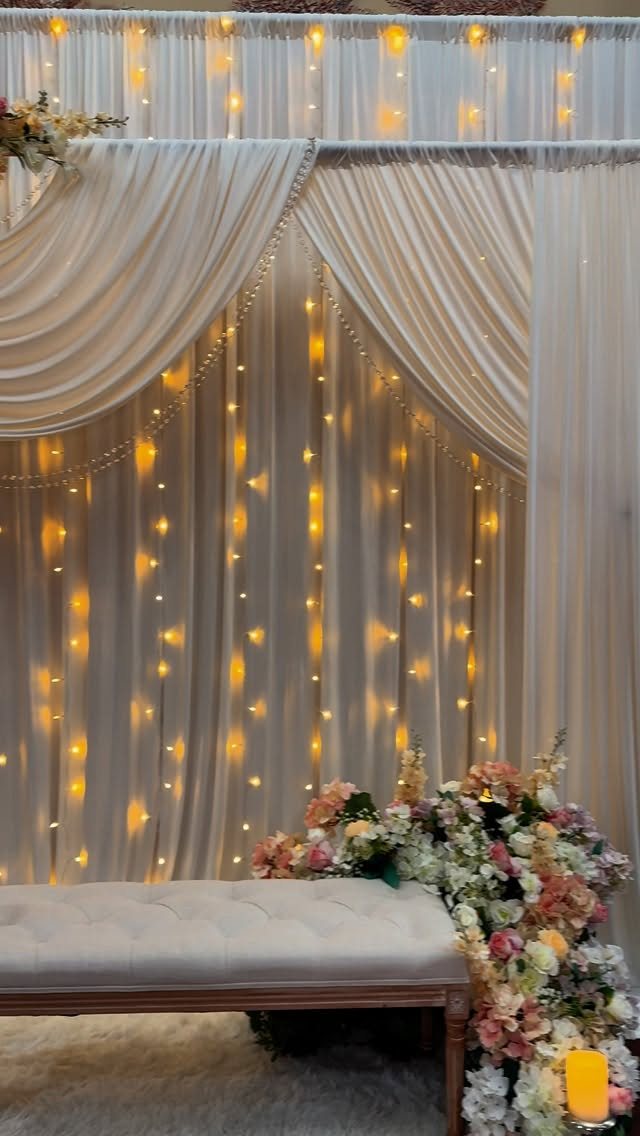
Sheer fabric with string lights behind it turns the arch into its own lantern, which matters when your evening ceremony runs late in fall and the light drops fast.
Cream curtains with warm bulbs read romantic; the same setup in white with cool LEDs would feel like a different wedding entirely.
Layer the lights between two panels of fabric, not directly against bare frame, or the wires show in photographs. Chiffon and organza both work here because they let light through without going flat.
Pull the drapes slightly off-center so the glow is uneven; perfect symmetry reads static in photos.
5. Tree Branch Draped Arch
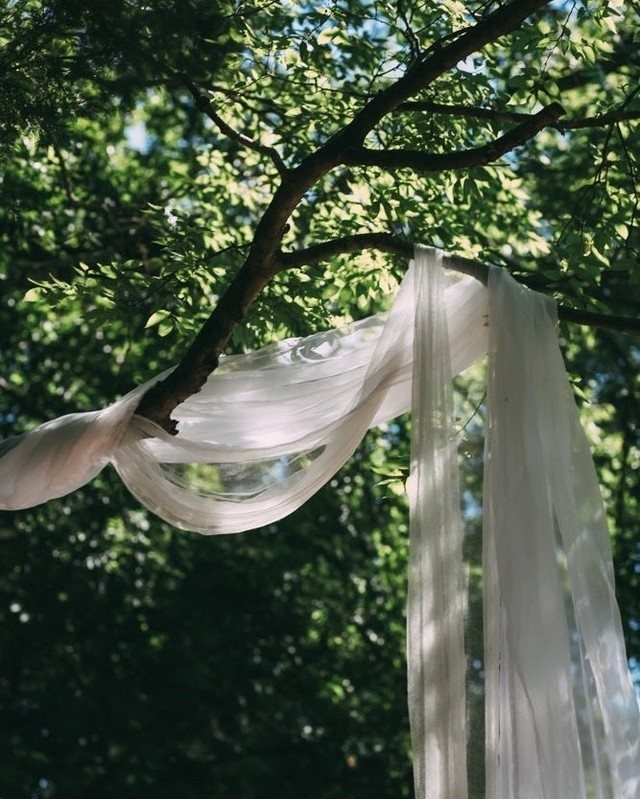
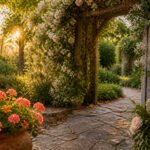
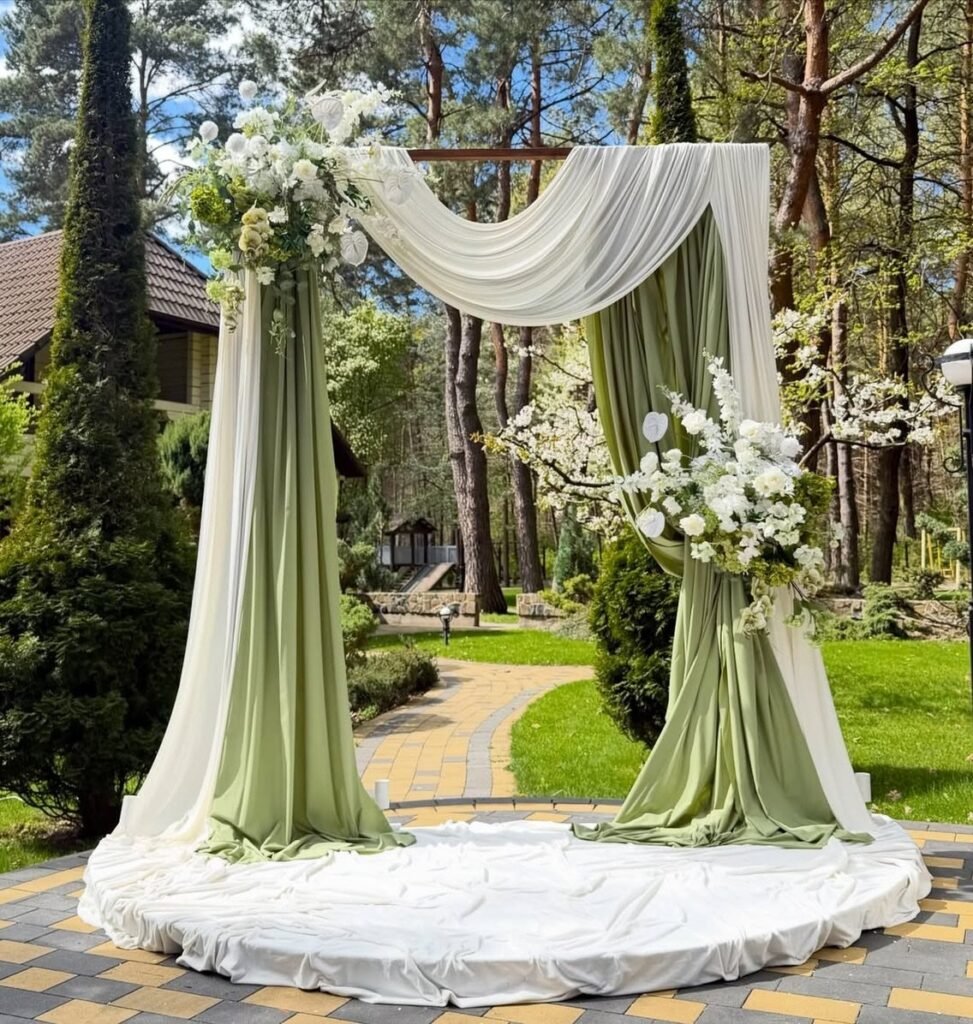
A low branch in leaf dappled with afternoon sun is the cheapest arch you will find, and the hardest to guarantee.
The branch needs to sit high enough off the ground where you stand, and you will need to test it days before for sway in wind and whether the bark sheds.
Sheer white fabric loops over once and hangs; the weight of the ends keeps it in place without nails that would scar the tree. This suits a small guest count and a forest you know well, not a rented meadow.
Rain turns the fabric translucent and heavy, so a backup indoor space is not optional.
6. Sculptural Wavy Fabric Arch
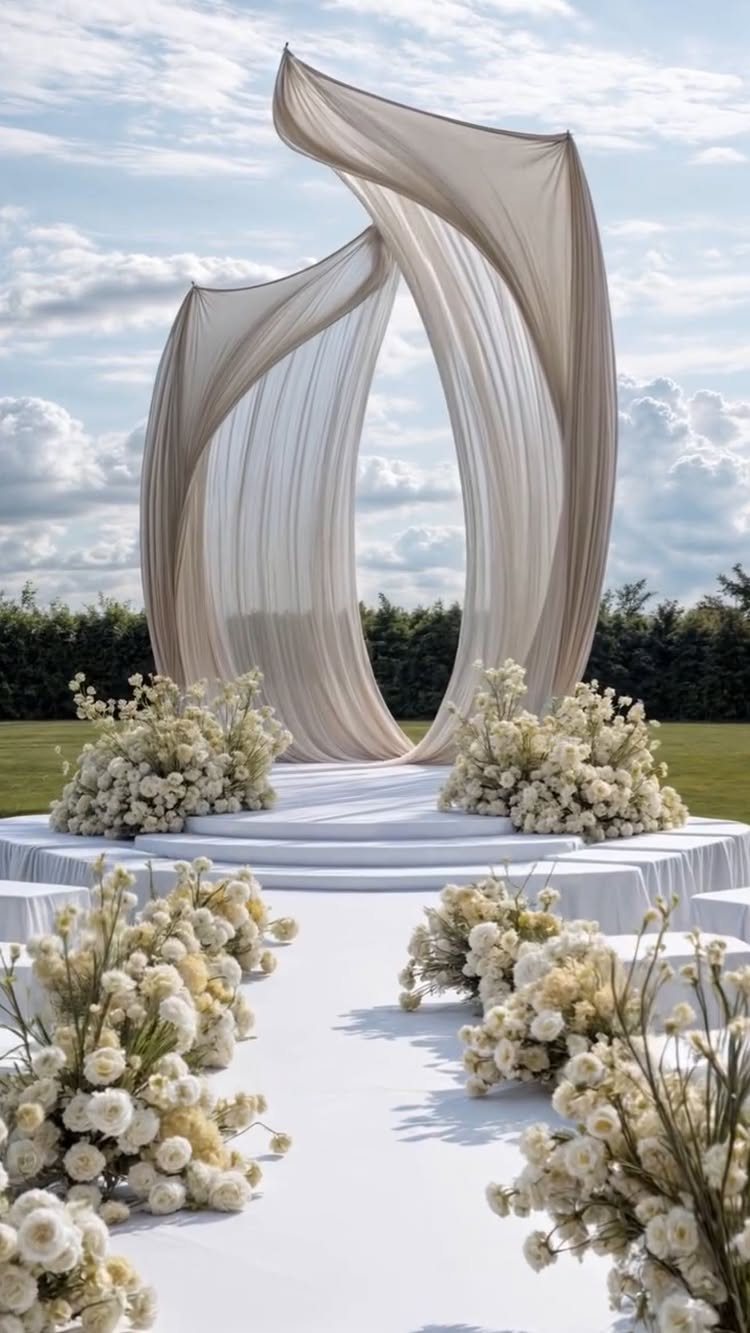
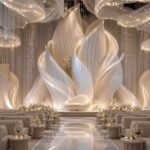
Sculptural waves of fabric on a white platform look commissioned, and often are: this is the entry where I would hire help unless you have experience with tension and framing.
The crescent shapes require internal structure, pipe or flexible rod, to hold the curve without collapsing.
Beige reads warm against green lawn; white would disappear into a cloudy sky. This option needs more fabric than any other here, plus a crew to set it up, so weigh the labor cost against renting something prefab.
An altar that dominates the space without flowers or lights added saves money downstream if the overall look matters more than the material cost.
Choosing Colors
White and ivory still read classic because they disappear against daylight and let flowers or greenery carry the color. Coral works against neutral venues where the arch needs to supply its own warmth.
Beige sculptural waves against lawn, peach fabric on gold: these pairings came from someone choosing what the surrounding space already holds, not from a rule.
Chiffon sheers when light hits it directly, so a morning ceremony with sun behind the arch turns the fabric into a screen. In that case, pick a tone darker than you think you need, or double the layer.
The color you see on the bolt in a warehouse is not the color outdoors.
Setup Considerations
If the arch belongs to the venue and not to you, permission comes first and in writing.
Setup time needs confirmation too; some venues book the same pergola for a morning and evening event, and the window you counted on for hanging fabric may be tighter than you planned.
Wind off a lake can pull draping sideways faster than ground-level gusts. Base plates at 12 pounds each hold standard tension; more wind means stacking extra weight, not hoping.
Friends who agree to help should know this is labor, not decoration, and they should hear that before they volunteer.
DIY Vs. Professional Help
Doing the hanging yourself saves the labor cost a vendor builds in, which runs $500–$1,000 for arch draping alone.
That money buys the extra fabric and hardware you will need anyway: 25-foot panels for a standard arch, more for a pavilion span, plus base plates, zip ties and pipe cleaners in surplus.
Running out of fasteners at setup is the mistake that costs you time, not money, and time is the tighter budget on a wedding day.
Hire help for sculptural work with internal pipe or flexible rod unless you have built tension structures before. The rest, a team of two can manage in under an hour with a ladder and a plan.
Symmetry and Balance
Center one panel across the top rail and down both sides, then flank it left and right with matching lengths. Step back after each panel goes up; the eye catches imbalance from across the room faster than up close.
Adjust while the fabric is loose, not after everything is tied off.
Asymmetry the camera can frame still reads wrong to guests seated at an angle. That matters more in a wide guest arc than a narrow aisle.
Pull one side slightly longer, drape one swag deeper, and check the view from the farthest seat, not just the center row.
Frequently Asked Questions
How to do draping for a wedding arch?
I start at the top of the arch and work downward, letting the fabric fall in its own folds before I anchor it at the corners and anywhere the wind might grab it; fishing line and small safety pins hide better than zip ties and hold through the whole ceremony.
Generous folds work best outdoors where wind and light move through the fabric; a single tight drape suits indoor spaces where the architecture already speaks.
Is draping for a wedding expensive?
DIY draping saves money over hiring help, though professional installation for sculptural or tension-based designs can run $500 to $1,000.
A dramatic drape in a bold color or heavy silk can carry the whole altar without any added florals, which is where the real money goes.
Weigh labor against renting prefab; sometimes the rental is cheaper than the fabric and crew combined.