The ideas below run from free pallets and copper pipe you can carry in a sedan trunk to multi-arched structures that need open floor space and a flat sightline to read as architecture.
What narrows the choice is whether your ceremony happens at noon under full sun or after dark when a twinkle light arch can do the heavy lifting.
I built the wooden triangle frame in an afternoon with a circular saw and a miter box, and that same afternoon’s effort sits at one end while the trellis arch asks you to plant climbing roses a full season ahead.
1. Wooden Triangle Arch
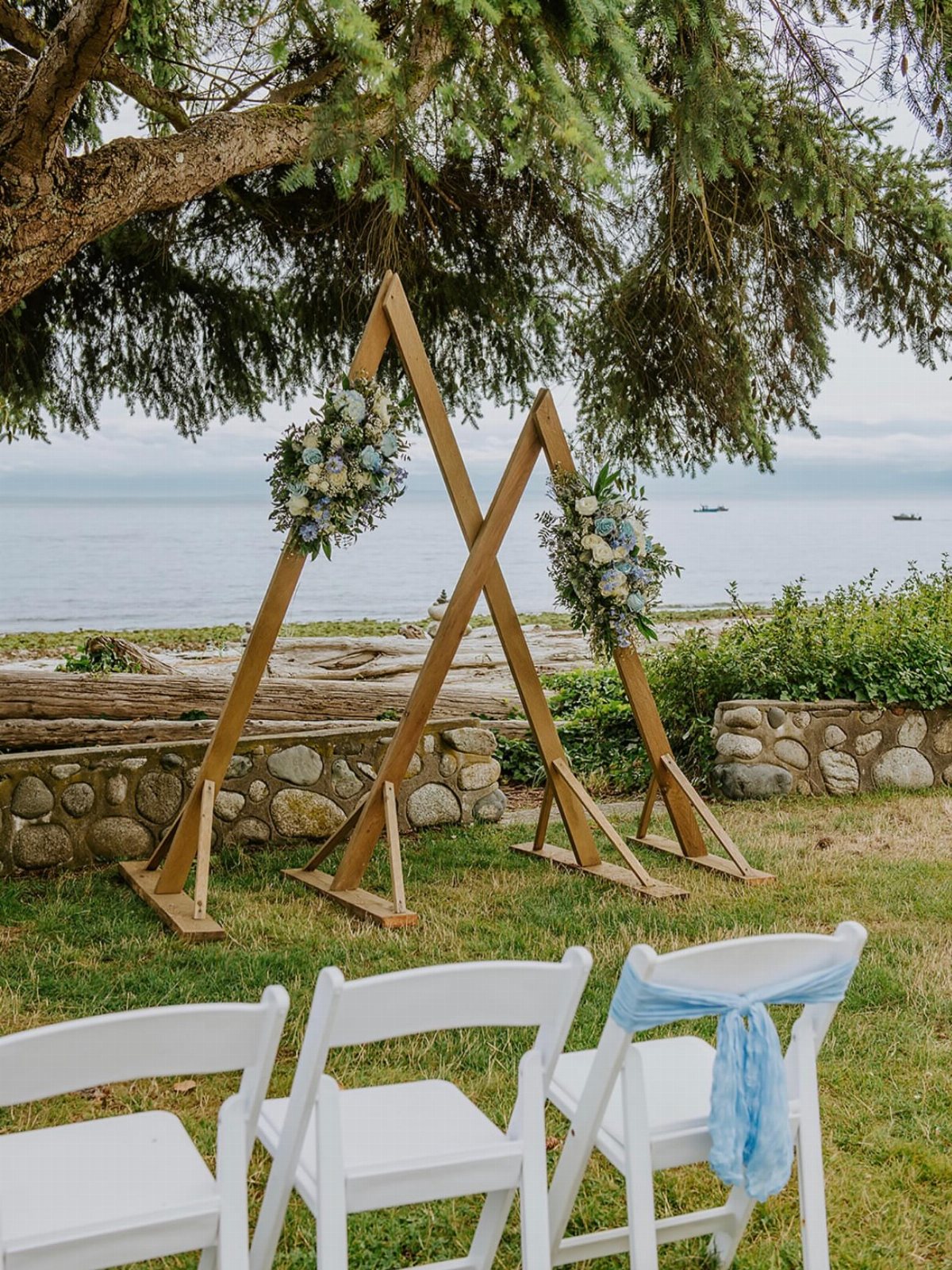
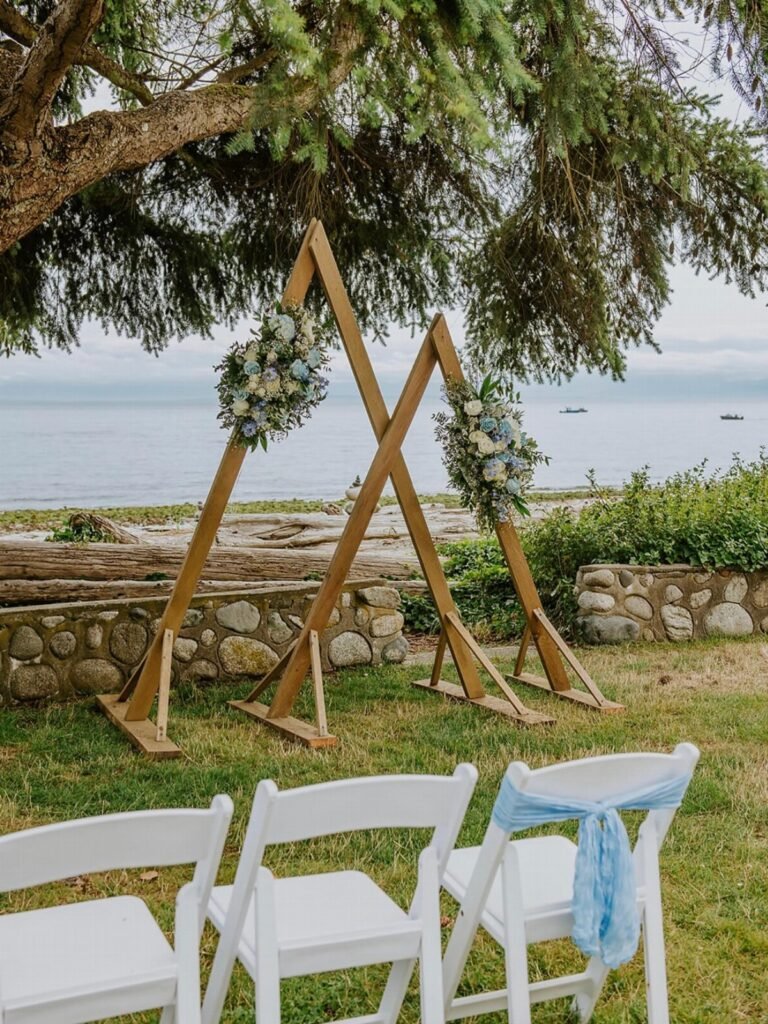
Two triangle frames built from 2x4s give you a geometric backdrop that photographs clean against open sky or a packed garden.
I built one for a friend in Maine using lumber, basic brackets, and a circular saw; the whole frame came together in an afternoon with wood screws and a miter box for the angles.
At 7–10 feet tall, it stands above a crowd without blocking the view behind it, and the flat planes take flowers or fabric without competing.
Stain it dark for modern weddings, leave it raw for rustic, or paint it to match your palette.
Asymmetrical blooms across one corner look better than balanced arrangements on this shape; a single macramé panel or a sweep of chiffon in your color does the rest.
Two triangles side by side stretch the architecture across a wider aisle; a single one suits a smaller ceremony just fine.
2. Rustic Wedding Arch
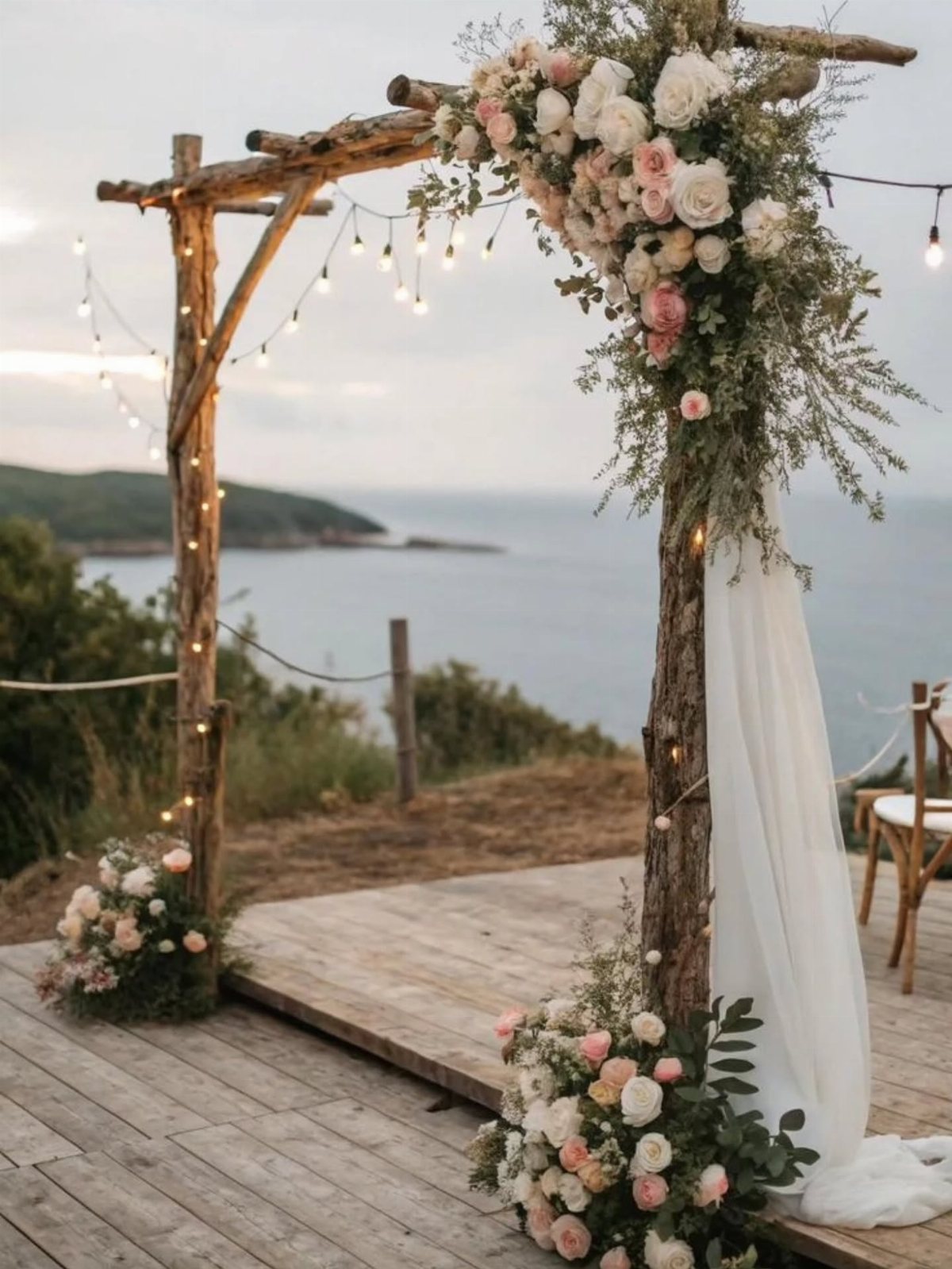
Raw branches or reclaimed logs give you structure and story at once.
Finding pieces close enough in diameter to lash or bolt together without wobbling takes some hunting; scout construction sites, fallen wood, or rural classifieds where someone is clearing land.
Sand the contact points so they seat flat, and drill holes rather than splitting the grain when you fasten the peak.
Lightweight fabric, muslin or burlap, catches the wind best. Cluster roses and wildflowers at the joints where the eye lands anyway, and tie with twine instead of wire for the look.
Hanging candles in glass holders work after dark; battery-powered ones save you from open flame permits. This style suits backyard weddings and outdoor venues where polished would feel out of place.
It trades precision for character, so pick something else if your taste runs symmetrical.
3. Upcycled Door Frame Arch
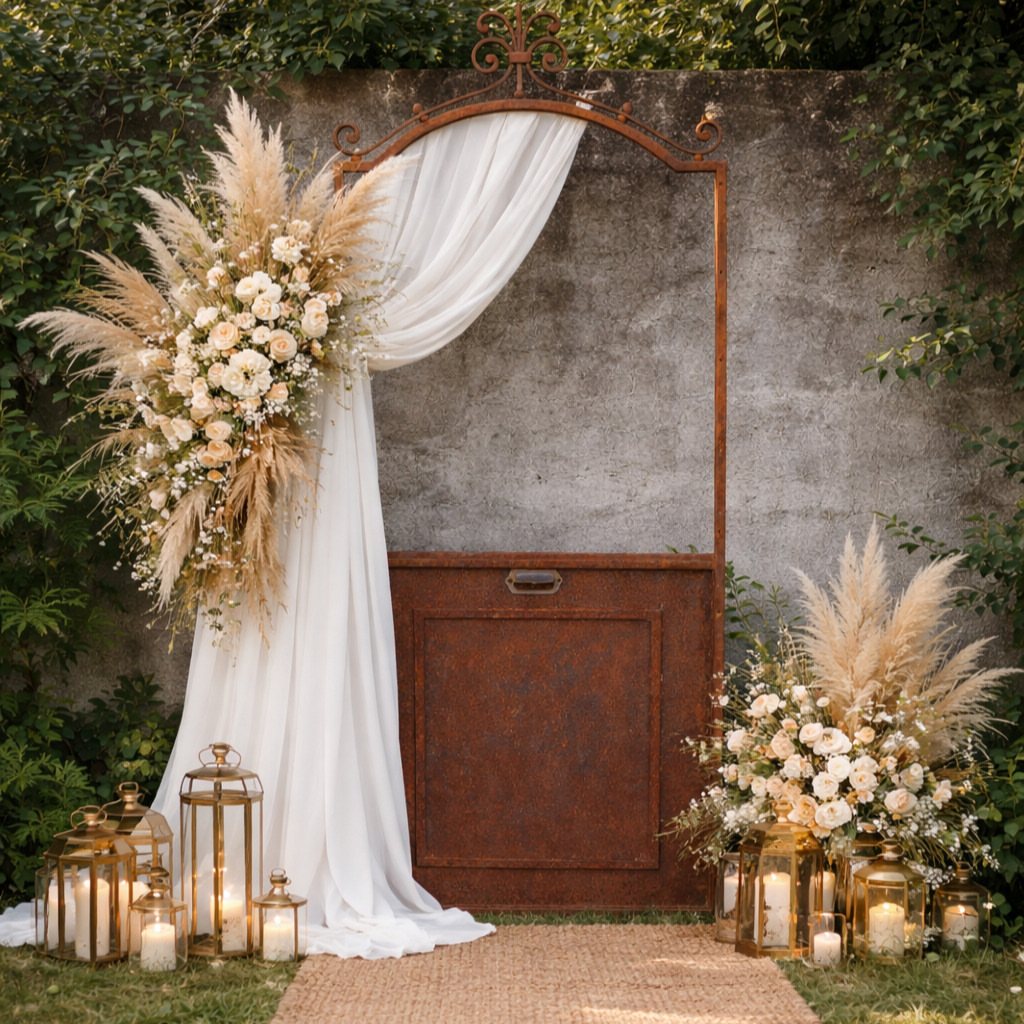
A salvaged door frame, metal or wood, brings instant history to the ceremony spot.
I have seen rusted steel read industrial against stone, and painted wood read cottage-garden against grass; the door’s original era sets the tone more than anything you add.
Source at demolition yards, antique shops, or estate sales where hardware gets pulled before the walls come down.
Angle two doors to form a shallow V, or hinge a single door to a lumber frame that stands on its own. Sand and paint if the finish fights your palette; leave it weathered if the rust or patina works.
A floral wreath at center or a chalkboard sign with your greeting fills the doorway without cluttering the lines. Pampas grass and cream roses, like the visible arrangement, keep the palette quiet enough that the frame still reads.
This one costs what the door costs, plus lumber for a freestanding base if you cannot sink posts into the ground.
4. Copper Pipe Arch
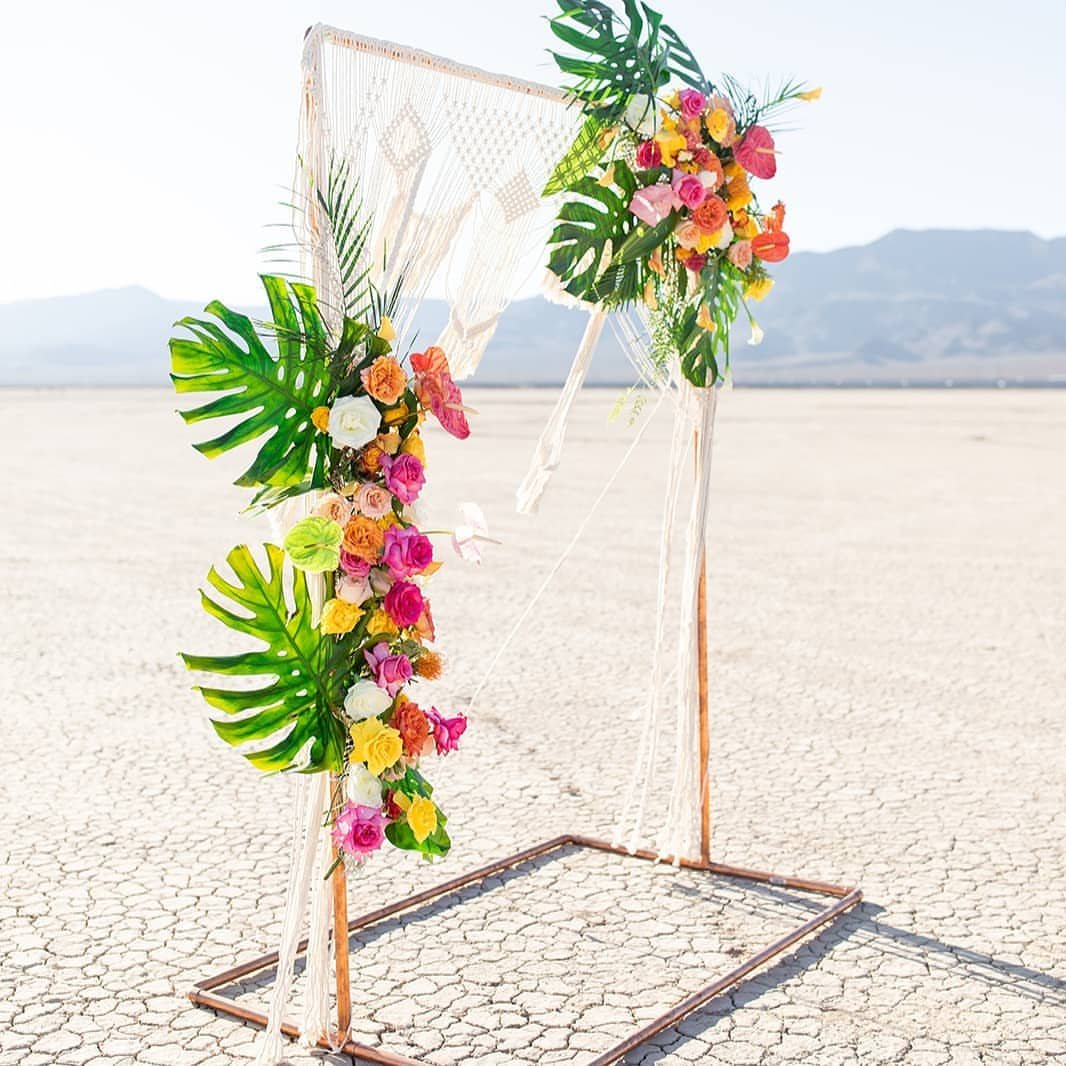
Copper pipe builds a frame that weighs almost nothing and breaks down for transport in a sedan trunk.
Fit the pieces with standard plumbing joints and tighten by hand; the metal is soft enough to cut with a cheap pipe cutter from any hardware store.
The warm tone does its own decorating, so you need less coverage than with raw wood.
The shine reads modern indoors and picks up sunset outdoors. Eucalyptus or ferns cascading from the top rail gives you the contrast the material wants; tropical leaves and bright blooms, paired with macramé and monstera, push it toward boho.
Secure the base with sandbag covers disguised in fabric, or sink short posts into grass if the venue allows. Wind will push this frame harder than wood, so test your joints and weight the feet before guests arrive.
5. Twinkle Light Arch
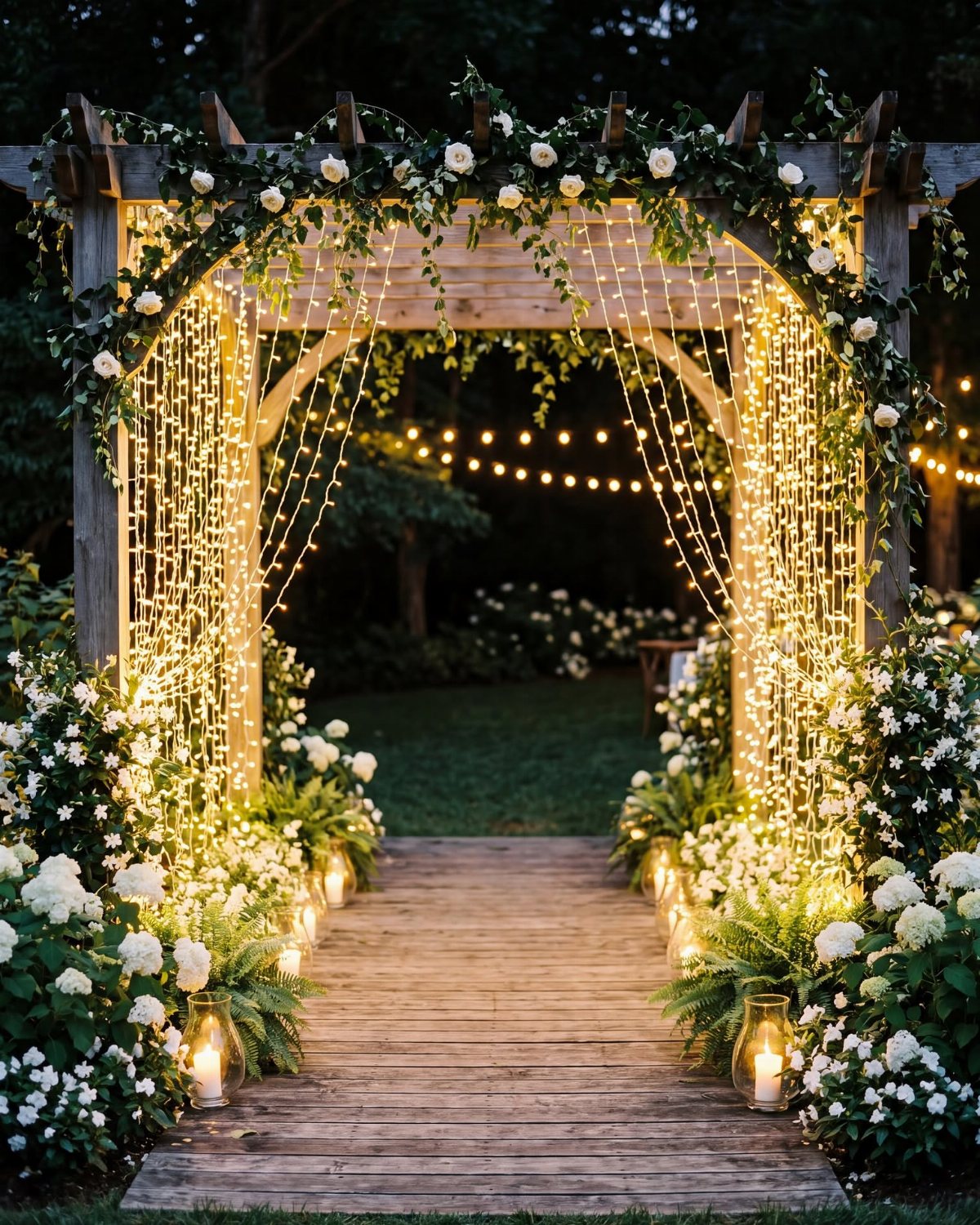
String lights turn any existing structure, a pergola, a gate, even two posts in the ground, into a ceremony backdrop once the sun drops.
Start wrapping from the bottom of one leg and spiral upward so the plug ends at ground level; warm white or soft yellow reads romantic, cool white reads crisp.
Secure the wire at close, even intervals with zip ties or floral wire so wind does not shift your pattern by ceremony time.
Line the path with lanterns or matching blooms so guests arrive at the glow rather than discovering it suddenly.
Battery-powered strands solve the outlet problem in gardens and remote lots; buy twice the length you think you need, darkness swallows light faster than you expect.
This idea trades daylight drama for evening atmosphere; if your ceremony is at noon, pick something else.
6. DIY Modern Arbor
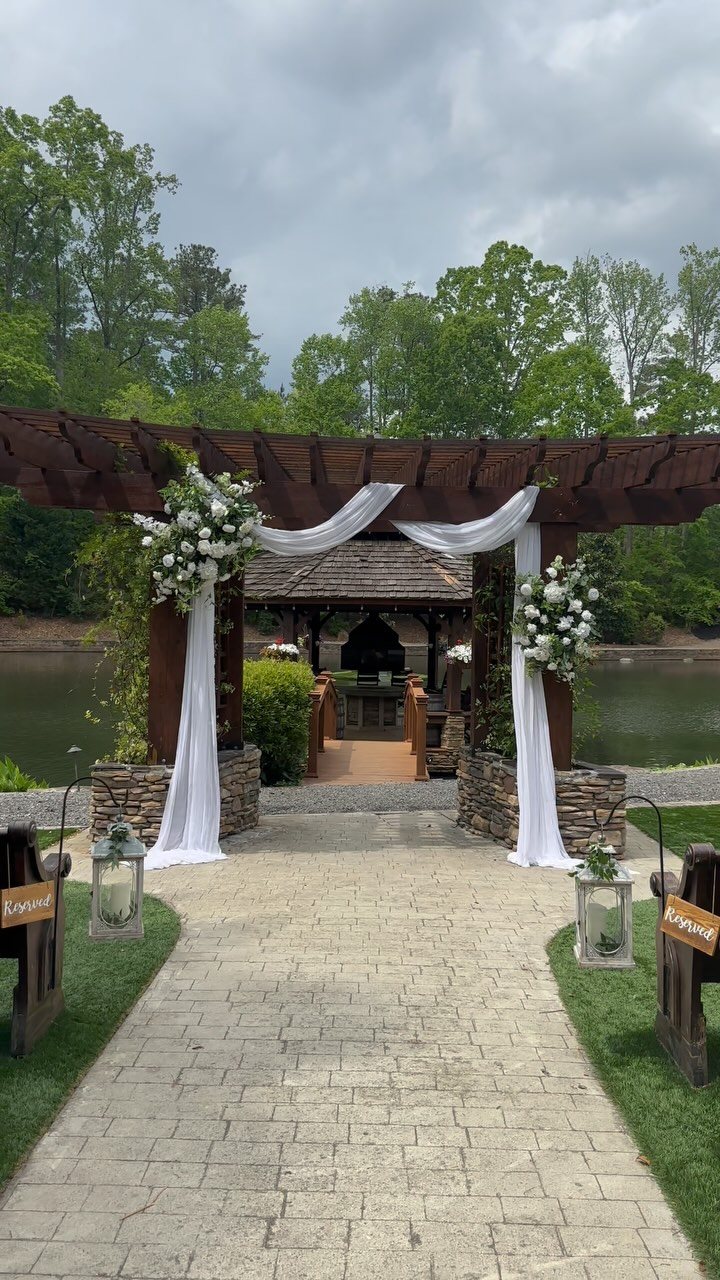
A clean-lined pergola in dark wood, draped white and set against water, proves that modern does not mean cold.
The structure runs on posts and a roof grid with the rafters spaced wide; the negative space does the decorating until you add fabric and flowers.
Build from cedar or pressure-treated lumber, seal it for outdoor seasons, and keep the lines straight with a post-level as you set each leg in concrete or on bolt-down brackets.
White fabric panels, hung from the outer rafters and drawn back with tiebacks, frame the couple without enclosing the view. Large white arrangements at the posts, like the visible setup, anchor the color where the eye enters.
This style suits lakeside venues, modern lofts with outdoor access, or any couple who wants architecture first and decoration second. It takes longer to build than a pipe frame and stores worse, but it lasts decades if you keep it.
7. Boho Dreamcatcher Arch
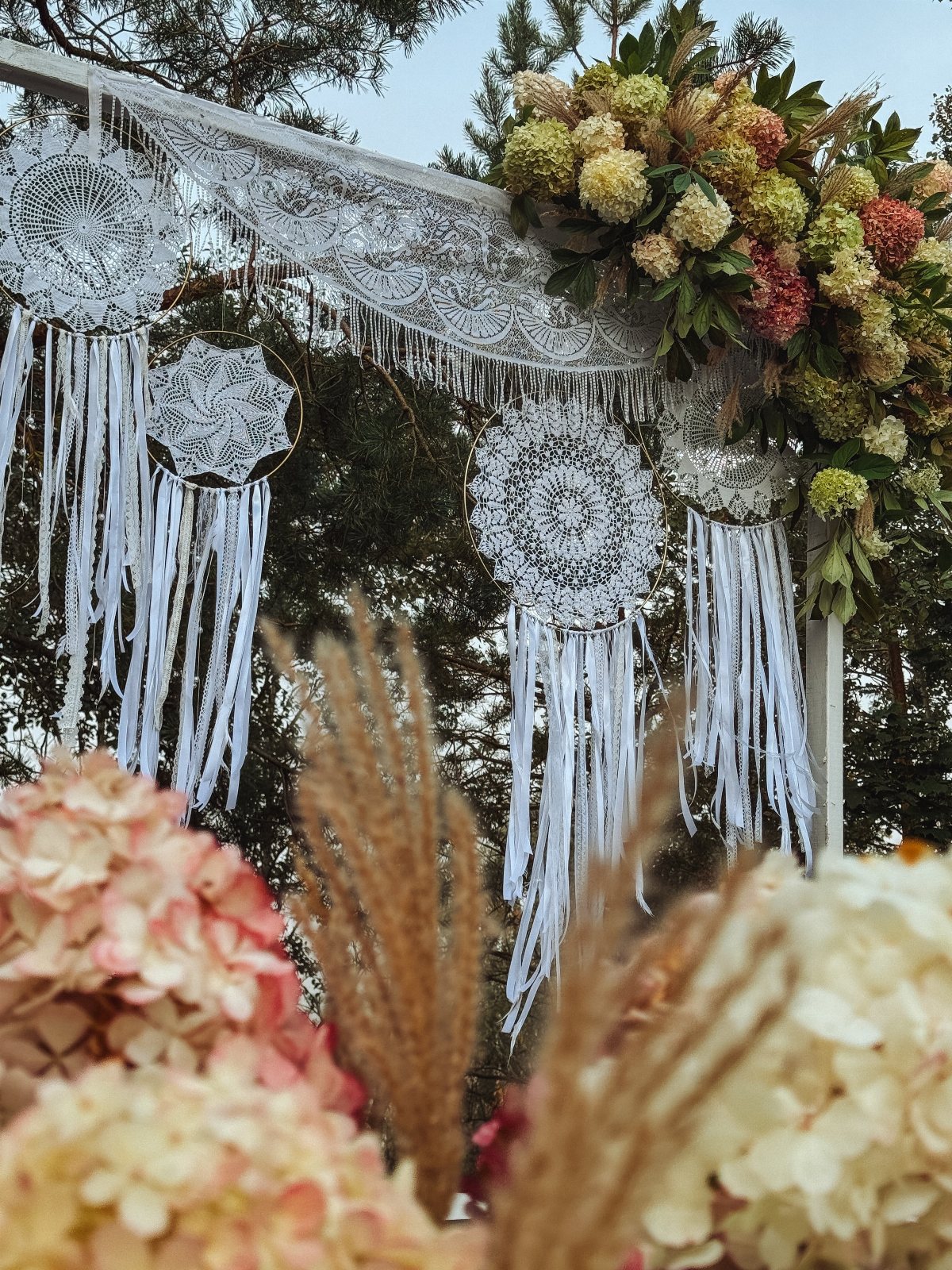
Dreamcatchers turn a simple wooden frame into something that feels collected rather than built.
I would start with a 2×4 frame stained in a warm tone, then hang dreamcatchers in graduated sizes from the top beam so they read as one piece rather than clutter.
Long ribbons and lace in cream or soft sand colors fill the space between them, catching any breeze. The same frame works with feathers, beads, and dried flowers when fresh hydrangeas and pampas grass push the budget too far.
This one suits a couple who already owns a few dreamcatchers or has the patience to thrift them.
8. Trellis Arch
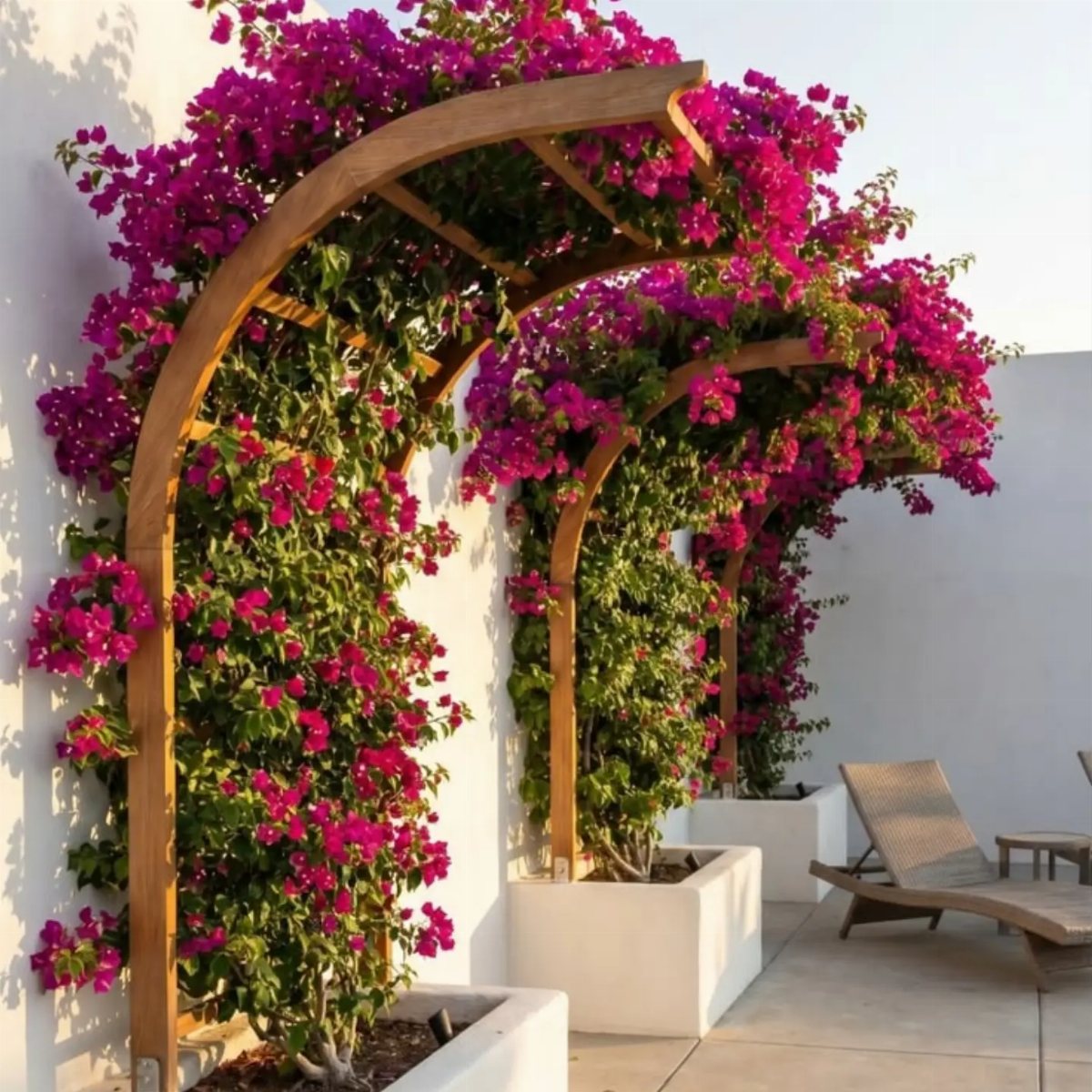
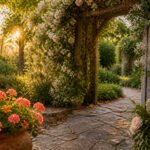
A trellis arch solves the problem of fresh flowers by letting plants do the growing for you. Bougainvillea that full and mature takes months of lead time to grow in; plan the planting season backward from your date.
If your wedding is next spring, plant climbing roses or ivy at the base of a wooden trellis this season and let nature handle the decoration.
For a faster turnaround, artificial vines clip on cleanly and photograph well in late afternoon light. The trellis itself can stand in a planter for portability, which matters if your venue does not allow ground planting.
I would check the soil depth and sun exposure before choosing a live plant; some climbers need direct light most of the day to perform.
9. Lush Greenery Garland Arch
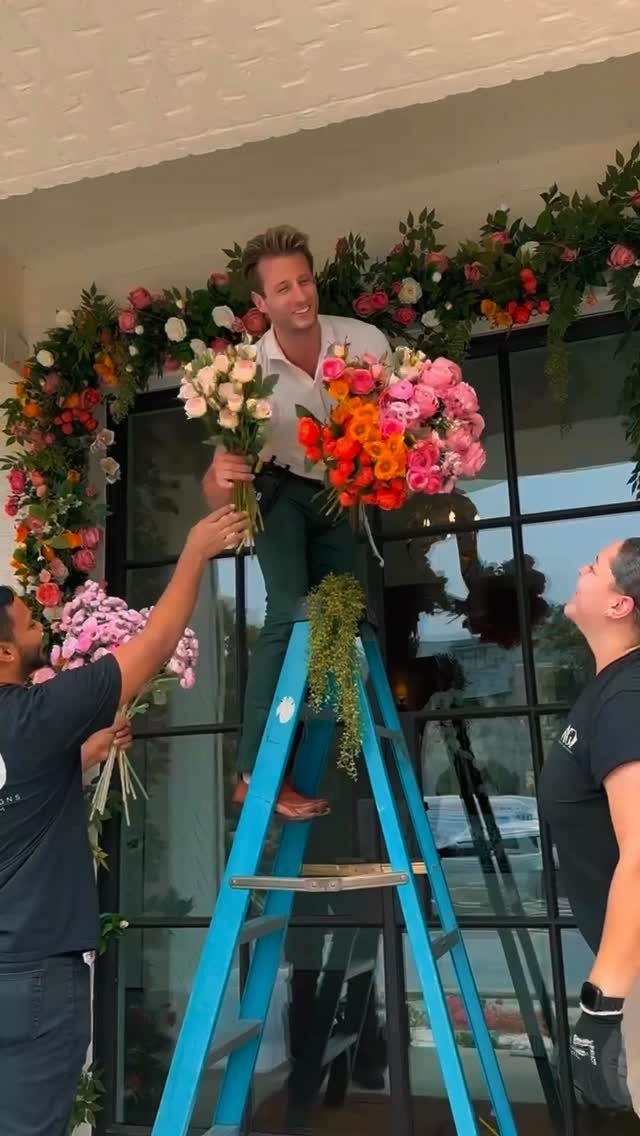
Greenery garlands give you the impact of flowers with less spending and none of the color stress. Eucalyptus drapes well and holds up outdoors in heat that would wilt roses by the processional.
A garland of silk florals around a door frame tells guests the wedding begins the moment they arrive.
For a ceremony arch, weave eucalyptus, ivy, or fern garlands around the frame and wire in a few white blooms where the eye naturally rests.
This approach reads as intentional rather than spare, and it transitions cleanly from garden to industrial venue without looking lost.
10. Draped Fabric Arch
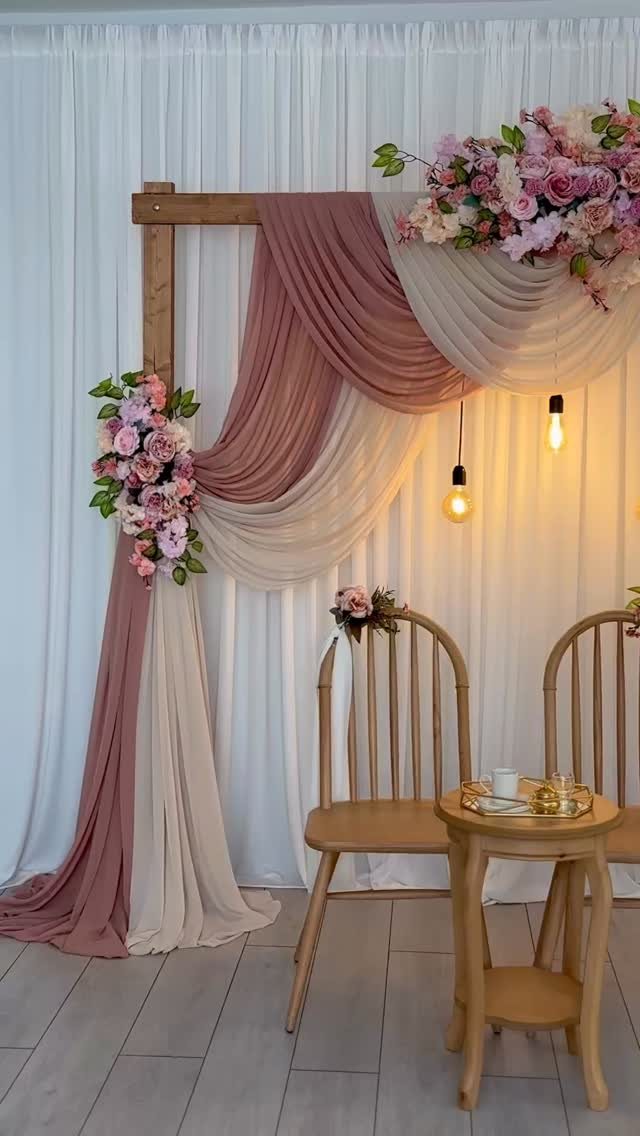
Chiffon or tulle turns a plain wooden frame into something that photographs like a set piece. I would secure the fabric at the top center and let it cascade in uneven panels; symmetry reads as stiff in person.
The bulbs need a power source, so this arch belongs near a venue’s outlet or requires a battery pack. For a tighter budget, skip the lights and let the fabric movement carry the effect.
Pre-made arbors from garden centers work well here and save a weekend of carpentry.
11. Ladder Arch
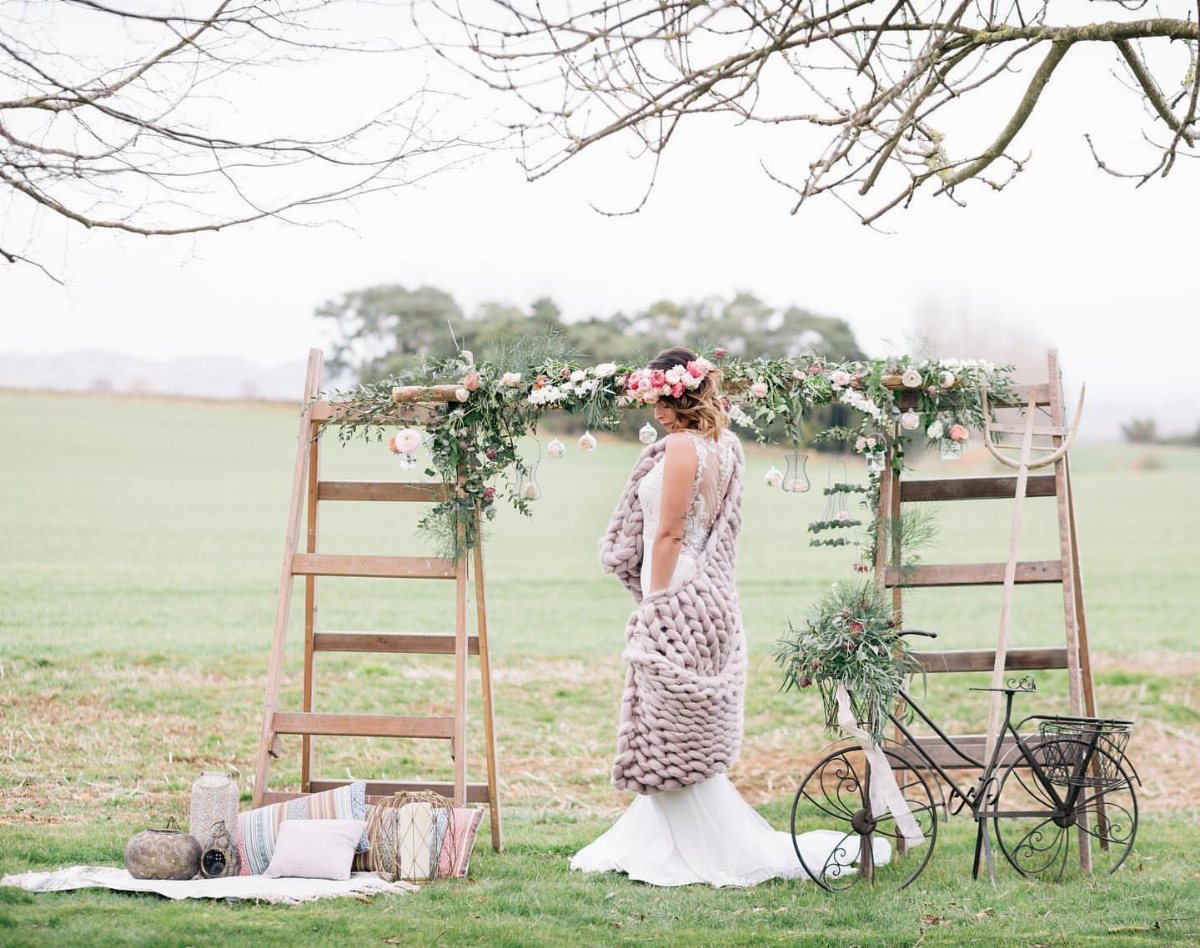
Two ladders joined by a plank create an arch that reads as found-object rather than crafted, which suits a couple who wants the handmade look without actual woodworking.
Pink and white flowers wired across the horizontal piece, with greenery softening the joints where ladder meets plank, turn hardware-store finds into ceremony backdrops. I would choose ladders with some age to them; new pine looks like a rental.
The base needs weighting, especially on grass, or the whole thing leans during vows. Sandbags hidden under trailing fabric work.
This setup breaks down fast after the ceremony, which matters if your venue charges by the hour.
12. Circular Wedding Arch
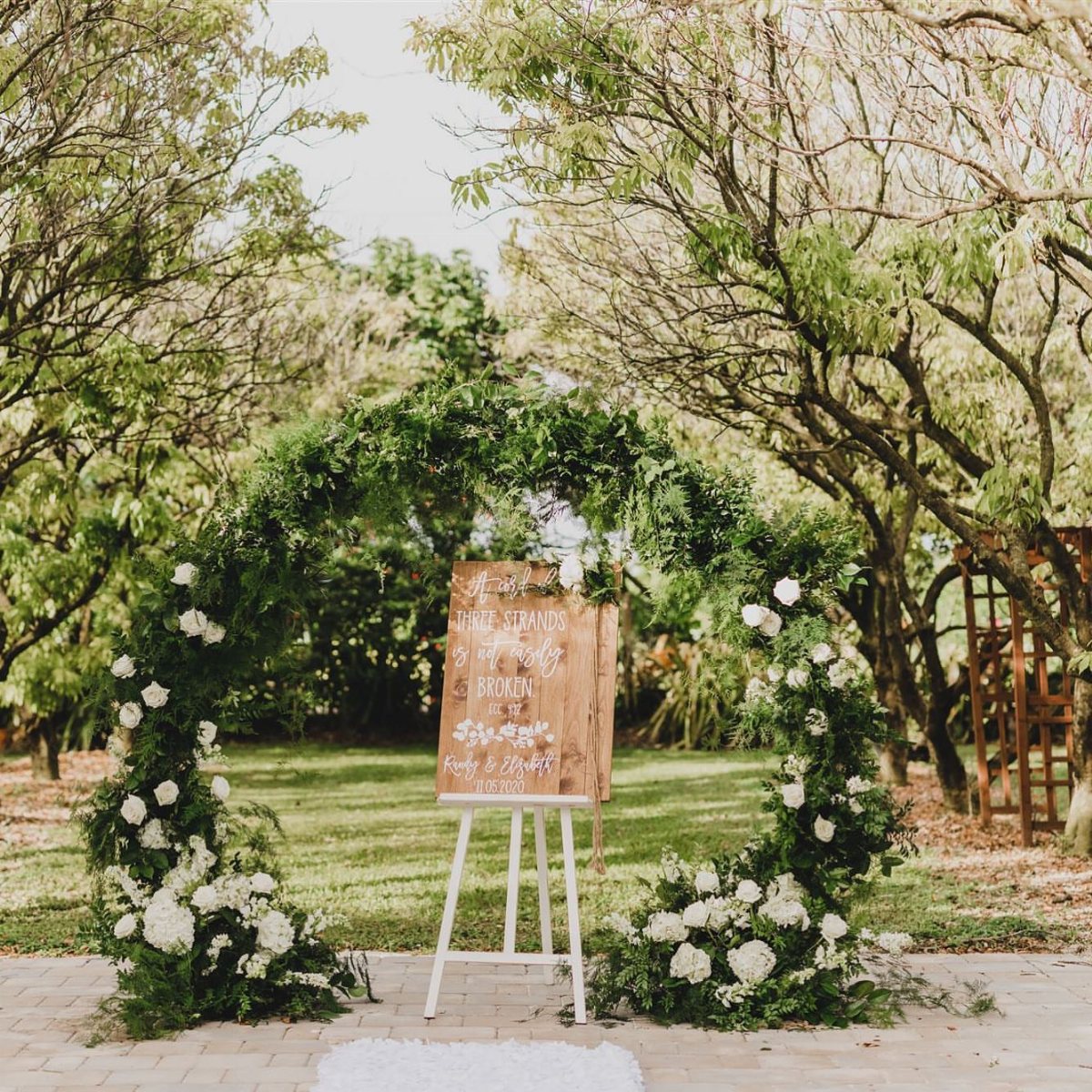
A circle frames the couple without boxing them in, and the negative space at the center lets a good backdrop do its job.
An open center frames whatever view sits behind it, while white roses and greenery tracing the ring itself keep the focus on the couple. Building this requires bending wood or ordering a metal hoop, neither of which is beginner carpentry.
I would rent the frame and focus effort on the floral placement, which follows the curve rather than fighting it.
The symbolism of eternity is present but not loud; guests notice the shape first and the meaning second if they notice it at all. This one rewards a venue with a view worth keeping visible.
13. Macrame Arch
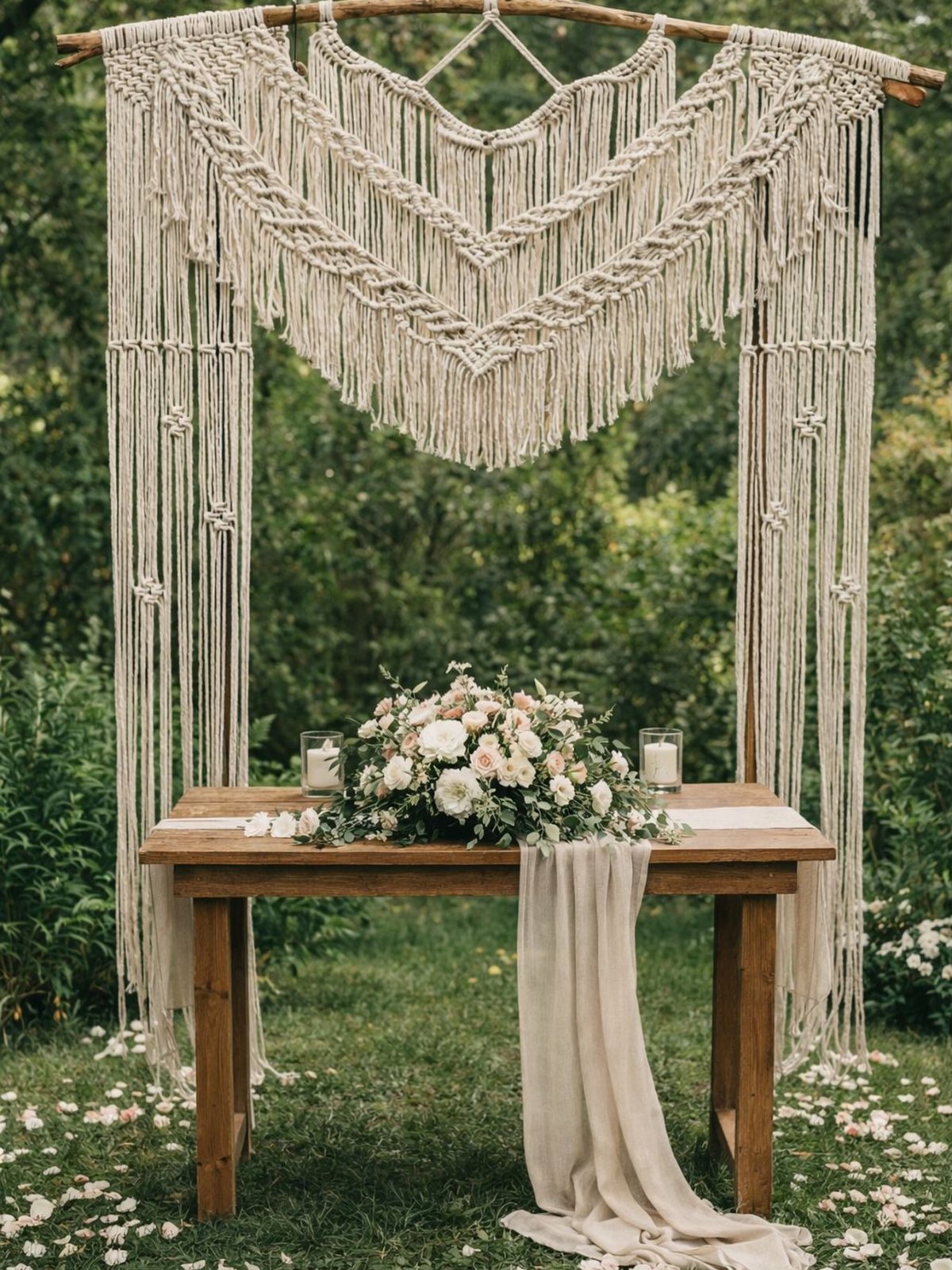
Macrame turns a plain wooden frame into something handmade without asking you to weave the knots yourself. I bought my piece from a maker on Etsy and lashed it to a birch branch arch with jute rope.
The texture does the work; skip the flowers unless you want them.
The knotwork comes in a range of widths, so measure your frame before you order. A smaller hanging centered on a wider arch looks intentional; an oversized piece bunched at the sides looks like a mistake.
This suits couples who want boho atmosphere without foraging for driftwood or learning a craft. Wet macrame from morning rain can sag, so anchor the top corners well.
14. Wooden Pallet Arch
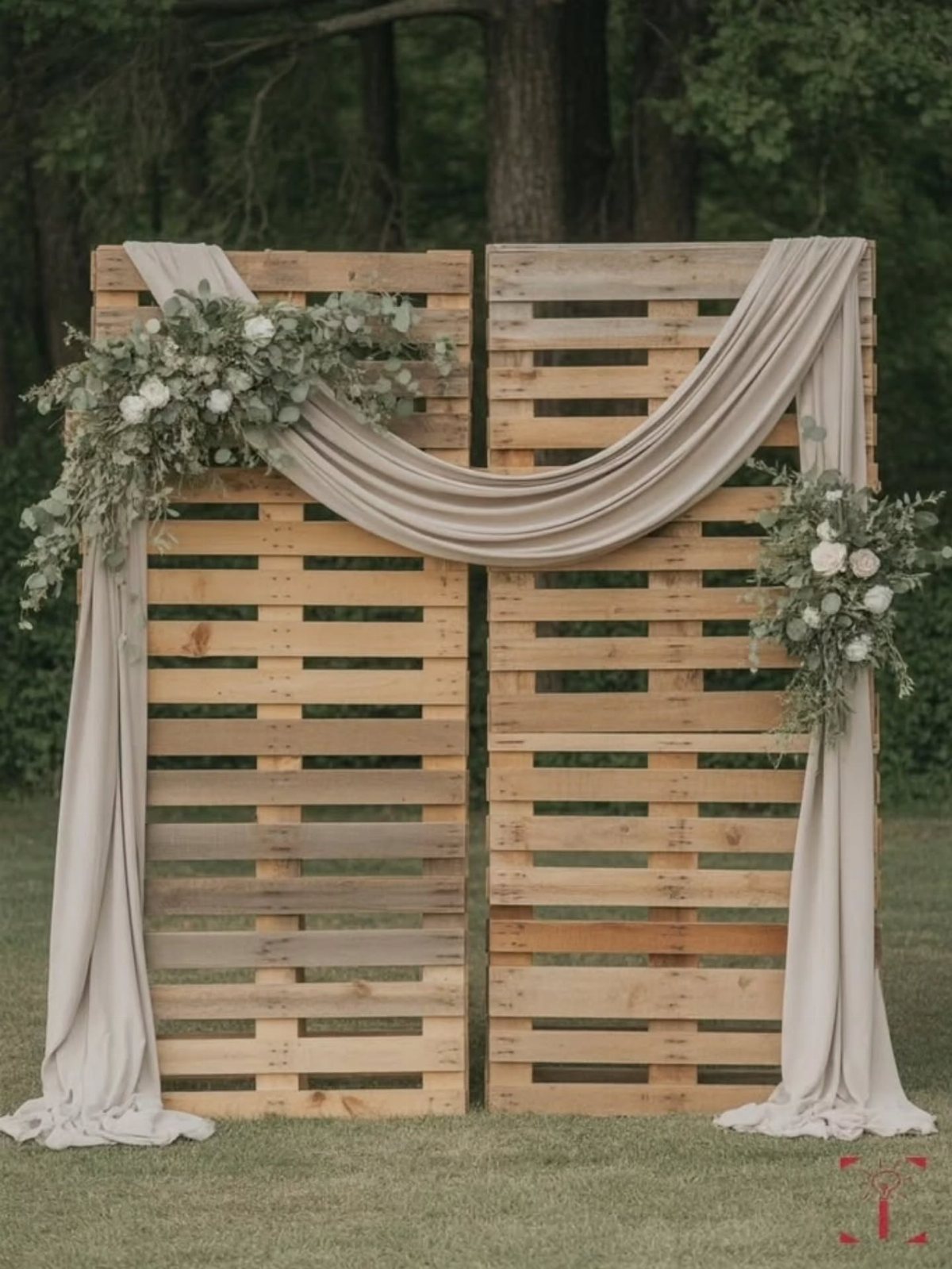
Two standard pallets stood on end give you usable height without cutting anything. Face the slats out for a cleaner wall, or in if you plan to drape fabric through the gaps; the inward slats make the job easier.
The pallets need no structural support beyond their own weight, though I would stake them on grass or brace with sandbags on hard surfaces.
Beige fabric draped between them softens the industrial lines, and clusters of white flowers pinned at the corners hide the seams where pallets meet.
This is the cheapest arch on the list if you can source pallets free. It trades refinement for speed: you will spend time filling gaps and hiding nails, not building.
Best for backyard weddings where rustic reads as charm, not compromise.
15. Multi-Arched Backdrop Structure
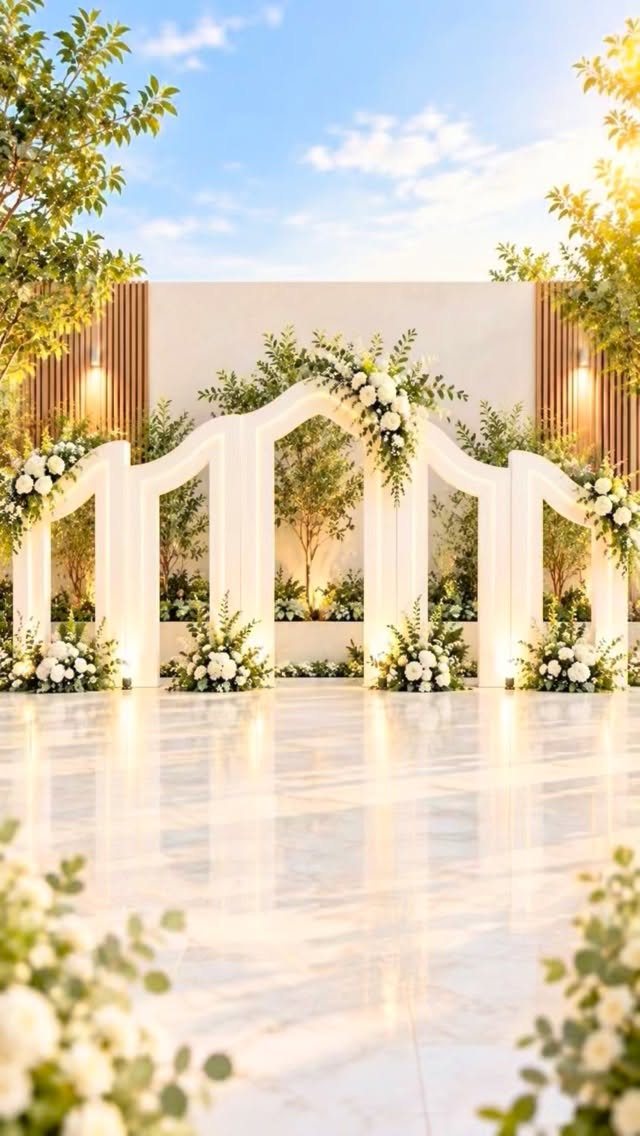
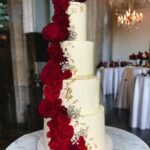
Nested arches create depth that a single frame cannot, especially on a reflective floor where the structure doubles visually.
White paint unifies the structure and reads as architecture rather than craft. Florals go at the joints where arches connect, not scattered across every surface; the rhythm of the repeats does the decoration for you.
This demands space. A multi-arched structure pushed against a wall loses its dimension and becomes clutter.
I would only attempt this for a larger guest count, outdoors or in a venue with a flat floor and open sightlines. The structure itself carries enough presence to stand alone as the ceremony backdrop.
Materials for Wedding Arches
Wood beams need no extra support beyond their own weight, which makes them forgiving for first-time builders. A circular saw and a miter box handle the angles; brackets and wood screws hold the joints.
Upcycled doors carry their own history, but you’ll need a lumber frame or posts sunk into the ground to keep them upright in wind.
For any of these, a post-level and a second pair of hands matter more than years of experience.
Cost of DIY Wedding Arches
A basic wood beam or copper pipe arch runs $50–$200 depending on lumber prices in your region and whether you already own the tools.
Elaborate designs with welded joints or mitered geometric frames sit at the higher end and demand skills most couples learn as they go rather than before they start.
A beginner-level build keeps the tools simple; no welder or table saw needed for any of these. Factor in floral costs separately, since greenery or silk arrangements often match or exceed the frame’s price.
Height and Size of Arches
Build your arch taller than both of you standing together; 7–10 feet handles nearly every couple, and 5–8 feet across leaves room for the officiant and the gesture of exchanging rings.
For a wooden frame with internal space between the posts, 54 inches of total width gives roughly 3 feet of clear working room inside. Check your venue’s rules before finalizing dimensions.
Some outdoor sites restrict how deep posts can sink, and some indoor spaces have ceiling heights or sprinkler clearance that cap your height.
The build plans for your chosen style should list finished dimensions; compare those against your venue’s constraints before you buy materials.
Decorating the Arch
Silk flowers let you arrange everything days ahead without wilting, which matters for outdoor summer ceremonies and for your own sleep schedule.
Zip ties hold arrangements and drapery to any frame material; wire works too, but plastic ties cinch tighter and clip flush.
Pre-arrange your clusters at home, attach them to the arch on site, and step back to check balance from guest eye level rather than from the ladder.
If you do use fresh blooms, keep them water-tubed until the last hour and assign someone to swap any that flag.
Frequently Asked Questions
What is the typical cost of a wedding arch?
A wedding arch costs whatever the materials cost, plus hardware.
Two standard pallets cost nothing if you ask a local hardware store or find them on a neighborhood board, then budget $30-50 for fabric and a few bunches of grocery-store flowers to finish the look.
A copper pipe frame runs the price of pipe and joints from any hardware store. Renting a circular metal hoop shifts the cost to the rental fee and lets you focus money on florals instead.
How do I make my own wedding arch?
Basic wood and copper pipe arches are beginner-friendly and come together in an afternoon. For a wooden triangle arch, cut 2x4s with a circular saw and miter box, then join with wood screws and basic brackets.
Copper pipe fits by hand with standard plumbing joints and cuts with a cheap pipe cutter. Elaborate designs with welding or complex angles require more skill, so match the plan to your tools.
How tall should an arch be for a wedding?
A wedding arch should stand between 7 and 10 feet tall, taller than the couple with room for the officiant to fit inside. Width runs 5 to 8 feet depending on style.
Check your venue’s restrictions before building, and verify that your plans match these measurements so the math works out on site.
What should I know about decorating the arch with florals?
Silk flowers let you build the arrangement a week ahead, and nothing droops while guests are still finding their seats.
The corners and joints draw the eye first, so that is where flowers do the most work; a few stems tracing the vertical lines are enough, and bare wood in between keeps the cost down.