Imported peonies can overrun a modest budget, while roses and carnations sit at the other end of the price range, and the right choice comes down to when you are getting married more than what you love on Pinterest.
Sweet peas hit their summer-solstice peak in June, while November weddings lean toward roses or anemones unless hothouse stems or freight fits the budget.
Height stretches the same stem count further than volume ever could; delphinium and carnations read twice their size when the eye travels upward instead of outward.
1. Peonies

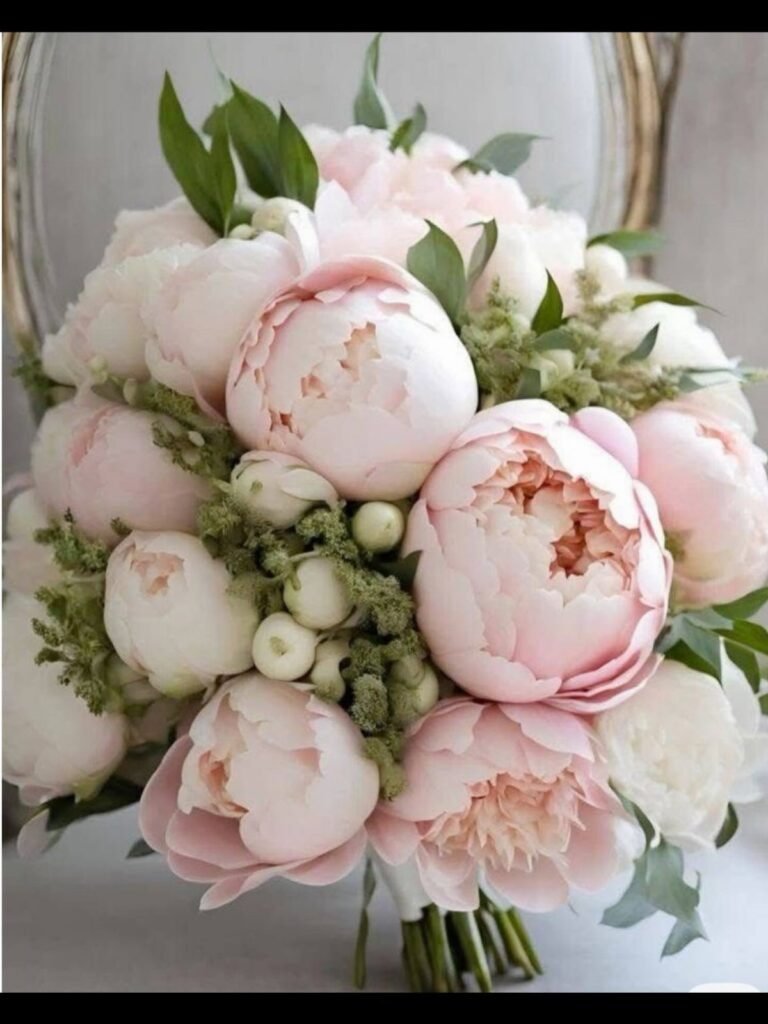
A bridal bouquet of peonies in pale pink and white, dotted with small berries and green foliage, carries the rounded, cloud-like shape that makes this flower unmistakable.
The season runs April through June, so a spring or early summer wedding gets the best selection and the fullest blooms; outside those months, florists can import them, but the cost jumps enough that I’d suggest building around garden roses instead.
Peonies work as the single flower in a bouquet or massed into an arch, where their size fills space without needing many stems.
For a tight budget, use them where photographs will matter most: the bride’s bouquet and 1 or 2 statement pieces at the altar.
Their fragrance is strong and sweet, which suits an outdoor ceremony where air circulates; in a small enclosed chapel, the scent can overwhelm.
2. Roses
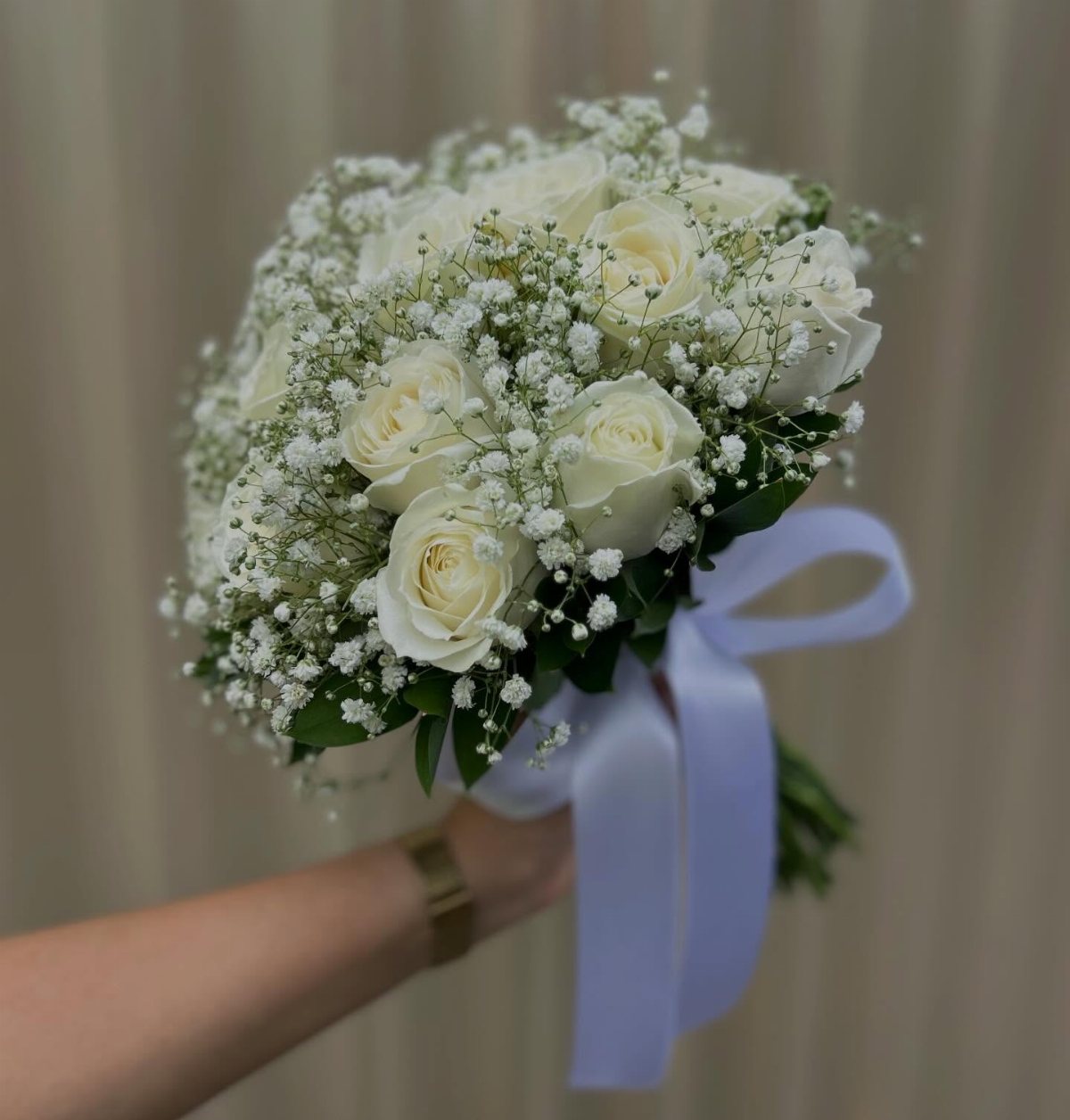
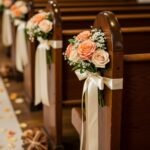
White roses paired with baby’s breath and tied with a wide satin ribbon give a clean, traditional look that works for almost any ceremony style.
Roses stay available year-round, which matters when you are setting a date in November or February and watching every line item.
Garden roses carry more fragrance and looser, layered petals; spray roses give smaller blooms on branching stems that bulk out a bouquet for less money per stem.
David Austin varieties, with their full, old-fashioned shape, cost more but photograph with the same depth as peonies. Hybrid tea roses, the classic florist’s type, hold a formal shape longer through a hot afternoon.
White stays the most versatile choice, though blush and deeper tones let you match a palette without dyeing anything. Pair with baby’s breath for airiness, or skip it for a more modern, dense bouquet.
3. Ranunculus
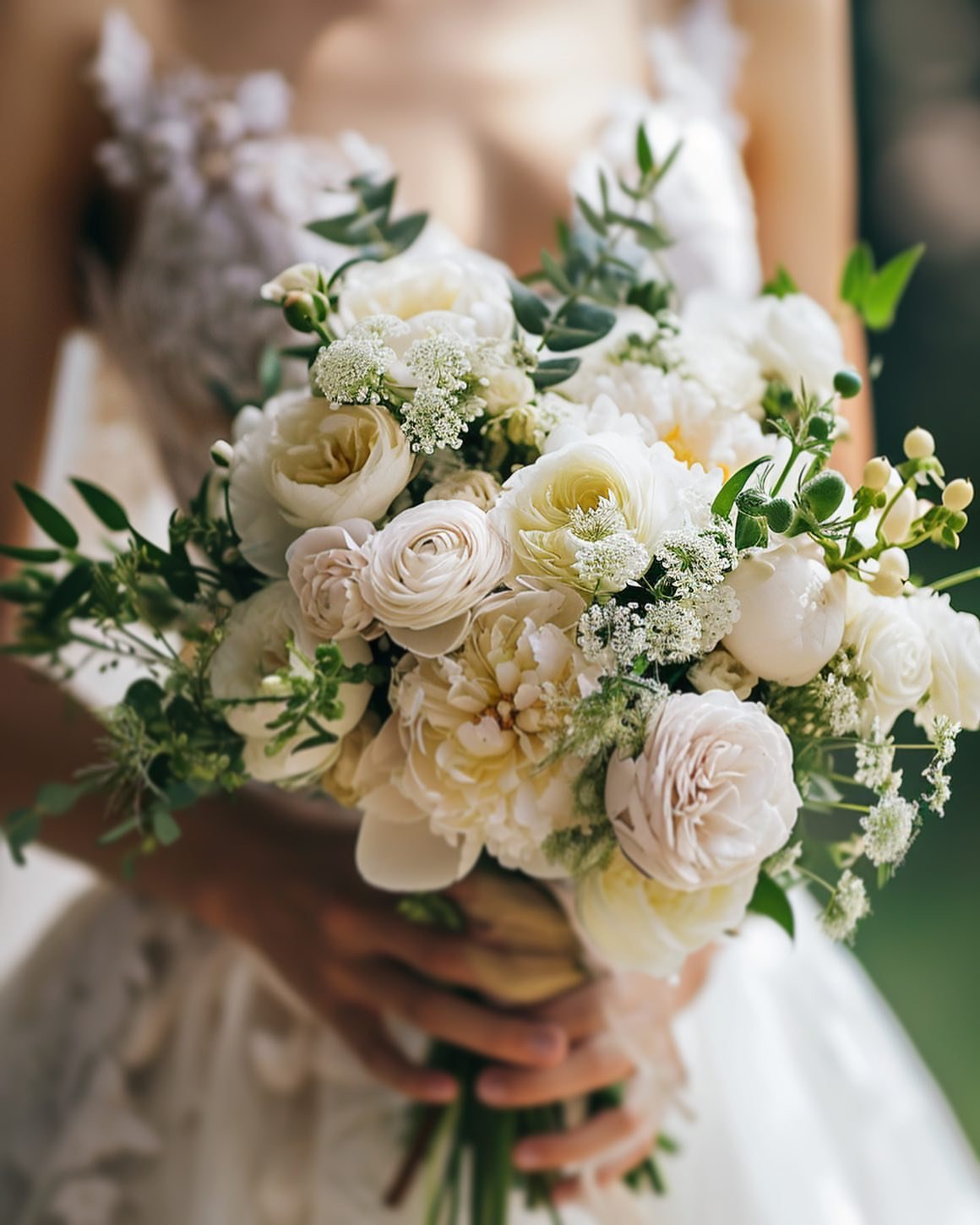
Ranunculus layers its petals so tightly that a single stem reads as a small rose from a distance, up close as something more intricate. Cream and white ranunculus mixed with roses and greenery adds texture without demanding the whole budget.
They come in blush, peach, burgundy, and brighter tones, so the flower works across color schemes from muted to vivid.
Ranunculus is at its best in spring, so plan around March through May for the fullest blooms and fairest prices.
Early spring weddings get the best prices; for a June date, your florist may need to order from hothouse growers, which raises the stem cost.
Ranunculus stems are thinner and more delicate than roses, so they suit handheld bouquets and boutonnieres better than tall altar arrangements exposed to wind.
I’d use them where guests will see them up close: the bridal bouquet, table settings, and corsages.
4. Hydrangeas
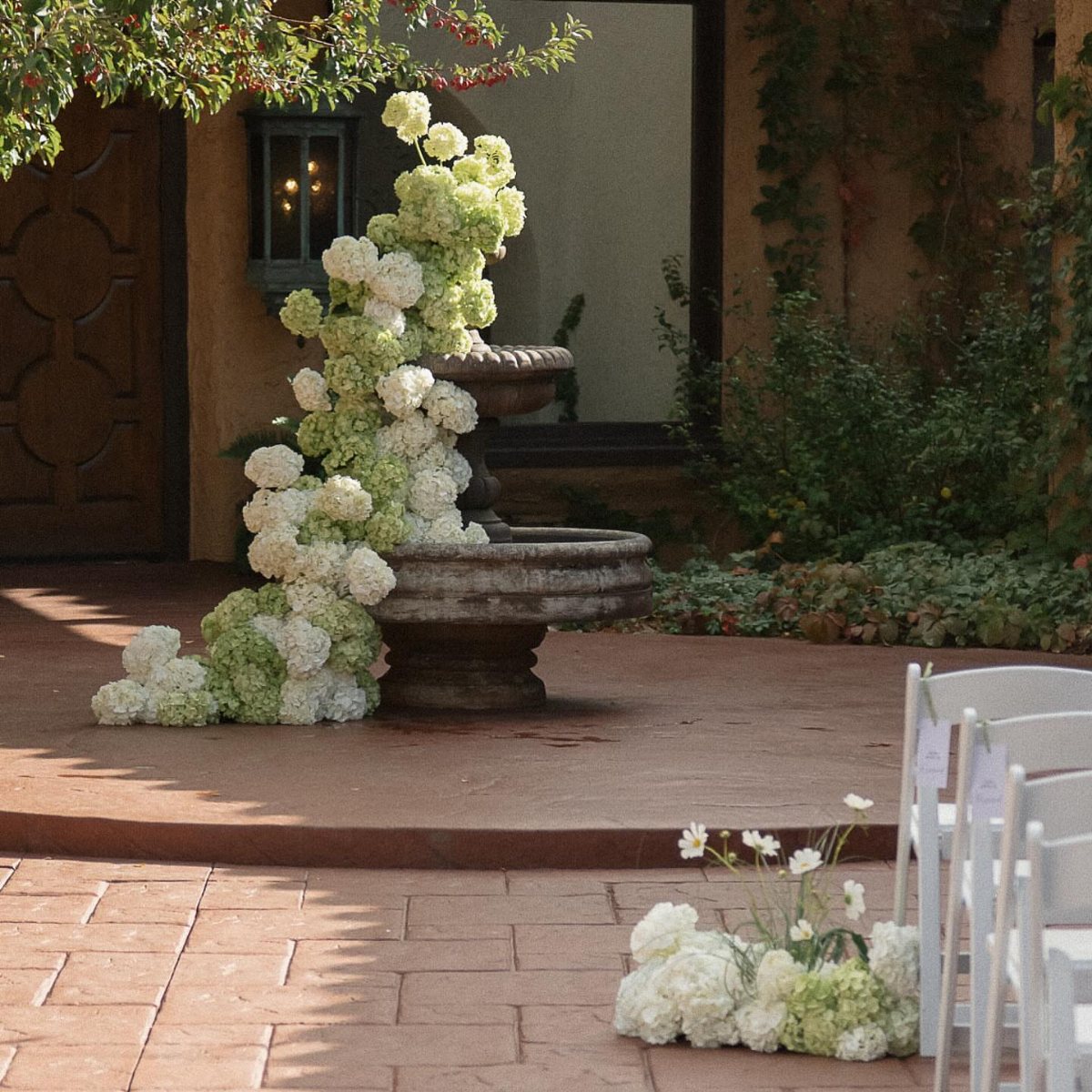
Hydrangeas fill architectural space without looking arranged; set them against stone, brick, or columns and they hold their own.
The bloom heads are large enough that a few stems create volume that would take dozens of roses, which matters when you are covering a wide arch or long tablescape.
Hydrangeas drink water heavily; in direct sun or warm air, they wilt faster than most wedding flowers, so shade and water sources matter for outdoor ceremonies.
White and pale green stay the most reliable shades; blue hydrangeas shift tone based on soil chemistry, and florist-dyed versions can look flat in photographs.
For a summer or early fall wedding, hydrangeas give the most visual weight per dollar spent on ceremony flowers.
I’d use them where scale matters: fountains, entryways, and the base of an arch, paired with finer stems like roses or ranunculus above.
5. Dahlias

Dahlias in pink, peach, and yellow, mixed with roses and eucalyptus against weathered wood, carry the saturated color and geometric petal structure that separate them from softer spring flowers.
The dinner-plate varieties span 8 inches across, so a single stem becomes a bouquet’s focal point; smaller pompon and ball types mix more evenly with other blooms.
Dahlias are at their peak from late spring through fall, making them a natural anchor for weddings when peonies are done and roses feel expected.
Their stems are hollow and brittle, so tall arrangements need structural support; I would not use dahlias in hanging installations without testing a sample first.
I’d concentrate them in the bridal bouquet and a couple ceremony pieces where the bold color carries photographs, then fill reception tables with simpler greenery. Striped and bi-color varieties add interest without requiring additional flower types.
6. Calla Lilies

White calla lilies, their trumpet shapes clean against baby’s breath and satin ribbon, suit a modern ceremony where the flowers read as sculptural rather than romantic.
The architectural line of a single stem works in minimalist bouquets; grouped, they create mass without the garden softness of peonies or roses.
Available February through August, with white most common and cream, yellow, pink, and purple as options if your palette demands color.
Calla lilies carry a contradictory symbolism, youth and fertility alongside mourning, though most couples choose them for the shape alone. Their smooth surfaces photograph well in strong light, where ruffled petals might lose detail.
For a contemporary venue, concrete or white gallery space, I’d use calla lilies alone in tall, narrow vases; for a softer setting, mixing with baby’s breath adds texture without breaking the clean line.
The sap can irritate skin, so handle stems with gloves during any DIY arranging.
7. Sweet Peas

Sweet peas carry a scent that no other wedding flower quite matches, and their ruffled, butterfly-shaped blooms thread through arrangements on trailing stems that look picked from a garden wall.
Sweet peas vine best with something to climb; in a tall urn beside hydrangea, the stems gain height to spill from, though for a hand-tied bridal bouquet I would keep them simpler, bound with ribbon and left loose.
Their season runs March through June, with that peak on the summer solstice itself.
For a spring or early summer date, sweet peas deliver vintage romance on a moderate budget; later than June, you would be importing them at a cost that I would redirect toward garden roses or peonies instead.
8. Orchids
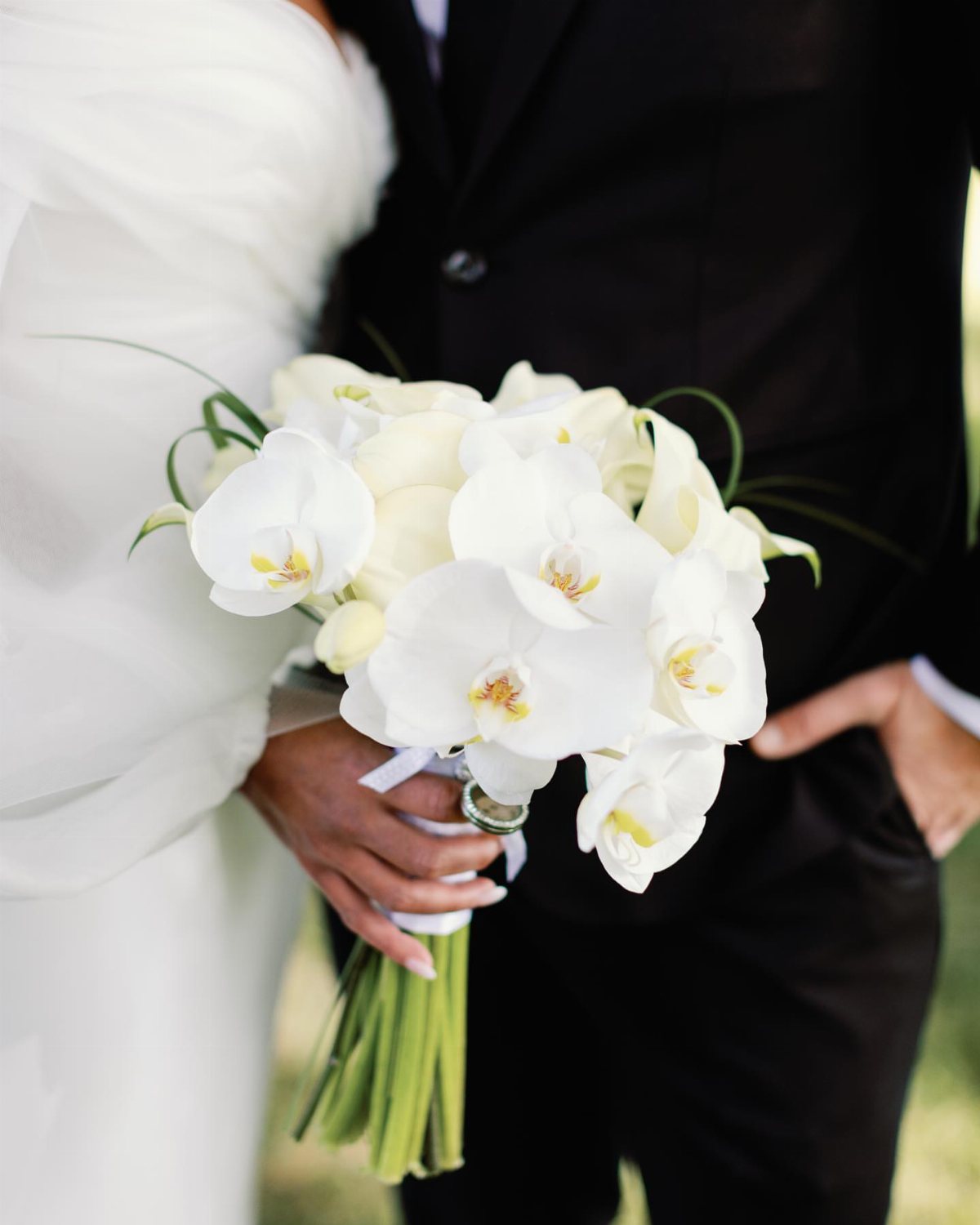
Phalaenopsis orchids carry their blooms on long, arching stems that read as clean and architectural rather than soft or gathered.
White orchids held as a hand-tied bouquet suit a modern or minimalist wedding where the flowers should look deliberate, not rustic.
Their season peaks in May, though varieties like Dendrobium and Cymbidium run April through September. Orchids demand more from a florist; they bruise easily and need structural support in large arrangements.
I would use them for a destination or tropical celebration where their exotic look feels at home, or for a city wedding where the venue itself has glass, concrete, or strong lines.
For a garden or barn setting, I would choose something with more movement and less polish.
9. Anemones

The dark centers of anemones give them a graphic quality that reads as contemporary even in a mixed bouquet, where purple blooms sit against yellow roses and eucalyptus.
That contrast is the point; I would not soften it with too much filler greenery.
They are in season through autumn, winter, and spring, though not summer, which makes them one of the few options for a bride marrying outside the typical May-to-September window.
The black-and-white variety is the most striking, but the color range runs to pink, red, violet, and blue.
For a modern or art-directed wedding, anemones are my first choice; for a romantic or traditional one, their boldness can feel too sharp, and I would suggest ranunculus or sweet peas instead.
10. Tulips
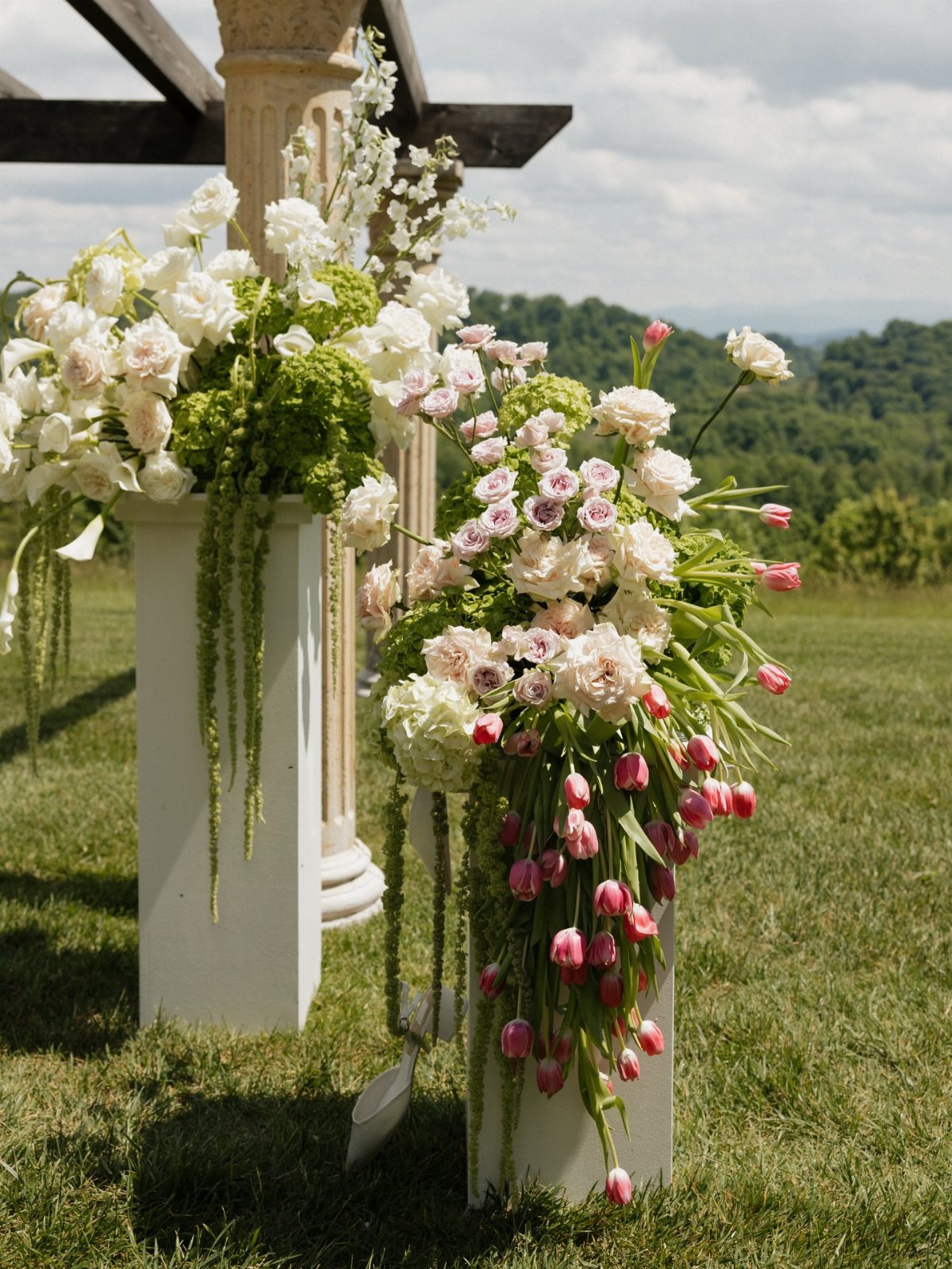
Tulips work in almost any palette because the color range is so wide, from white and cream through apricot, bronze, and maroon to purple and red.
Parrot tulips, with their fringed and feathered petals, add texture that the more common cup-shaped blooms do not; softer pink ones in cascading ceremony arrangements suit an outdoor spring wedding.
Their natural season is spring and early summer. Forced tulips are available year-round, but they continue growing after cutting, which means stems bend and blooms open wider in the vase than you planned.
I would use them for a celebration where that movement feels appropriate; for a formal or tightly controlled look, I would choose roses or calla lilies that hold their shape.
11. Chrysanthemums

Mums add volume and texture at a cost lower than most flowers of comparable size, which makes them practical for couples filling large ceremony or reception spaces.
White chrysanthemums set low beside draped fabric and ceremony chairs keep the look clean rather than autumnal; the color choice matters more with this flower than with others because its cultural associations run strong.
In the United States they signify well-being, loyalty, and friendship; in some European countries they carry mourning associations. For a domestic wedding, I would use white or soft-pink mums without hesitation in late summer through autumn arrangements.
For a wedding with international guests or a European venue, I would check with the florist and likely substitute hydrangeas or roses to avoid the wrong signal.
12. Carnations
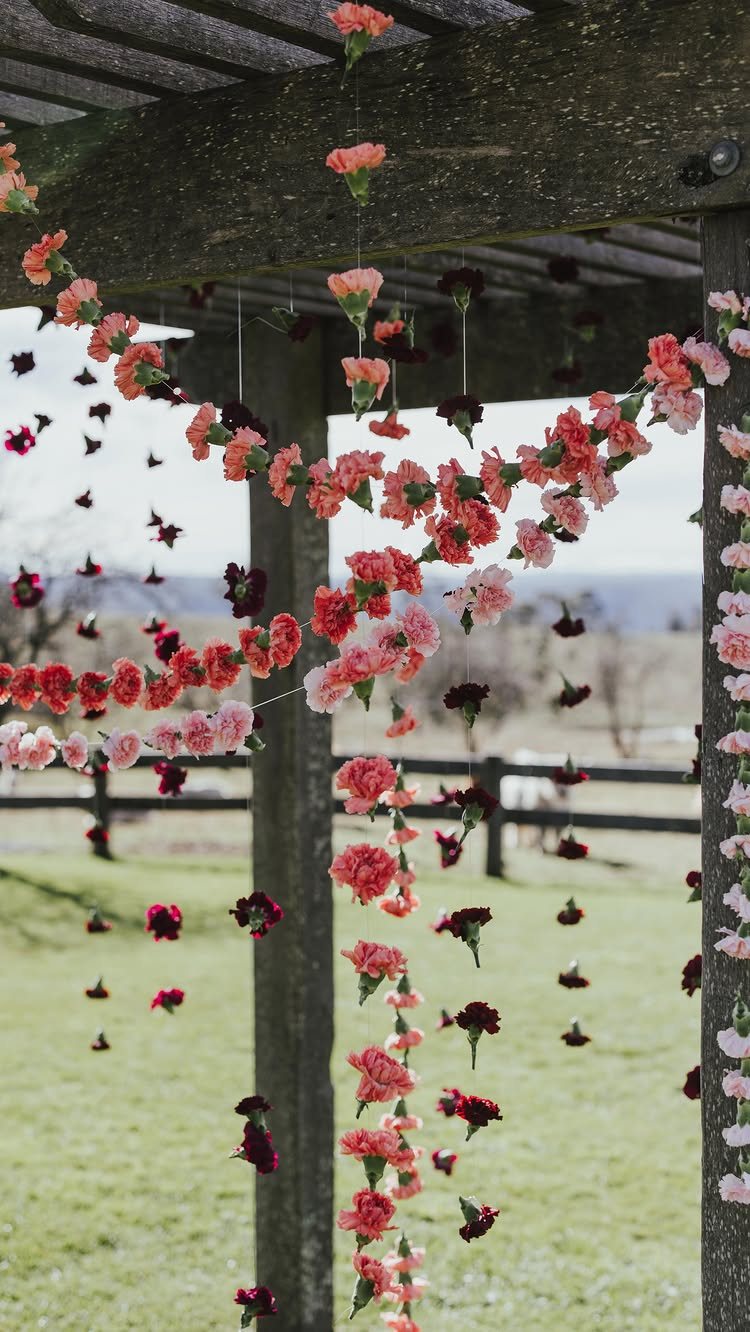
Carnations strung in vertical lines and swags from a wooden pergola turn an inexpensive flower into something that reads as intentional and large-scale.
A florist once told me that you do not need thousands of rose stems to make an impact, and this is the proof; carnations hold their color and shape for days, which matters for outdoor setups or Friday-to-Sunday celebrations.
Carnations come in almost any color, and their ruffled heads pass for peonies or garden roses at a much lower price per stem.
I would use them for draped installations, garlands, or any piece where quantity matters more than individual bloom perfection.
For a bridal bouquet held close, I would spend the savings elsewhere; the texture is right, but the symbolism of commitment aside, there are flowers with more presence in small numbers.
13. Delphiniums

Tall spires of blue delphinium can carry a whole bouquet upward without costing the price of out-of-season peonies.
I saw them paired with carnations and soft pink roses in one arrangement that looked twice its size because the delphinium stems added height instead of volume, stretching the same flower count further.
They wilt fast in heat, so I would not plan them for an outdoor July ceremony unless your florist mists them right before the walk.
For indoor spaces or spring and fall dates, they give that something-blue tradition to a bride who does not want a garter or shoes in the color.
Choosing Flowers for Your Theme
Your color palette should lead the flower choice, not fight it. An exact match to a swatch often looks flat; varying the tone two or three shades deeper or lighter gives depth that reads as intentional.
If your palette runs warm, peach dahlias against butter-yellow roses carry the theme without looking matched by machine.
For a monochromatic scheme, an all-white ceremony with varying textures, matte against glossy and ruffled against smooth, avoids the clinical feel that single-color arrangements can slip into.
The style of your venue matters as much as the color. Rustic settings want flowers that look gathered, not arranged: sweet peas spilling from a urn, tulips with stems still curved from the ground.
Modern spaces need the clean line of calla lilies or orchids, stems tall and spacing deliberate. The vase or holder should repeat that same vocabulary; a galvanized bucket under sculptural callas reads as confusion, not contrast.
Seasonal Flower Availability
Flowers in season peak in quality and drop in price because they travel less. Peonies in May, dahlias through September, sweet peas until the solstice: the timing is fixed, and a date set for August will not bend it.
If your date is a year out, notice what blooms locally that month. The same varieties return, and you may find a flower that never made your short list because it does not photograph for bridal magazines.
A florist can tell you which weeks a flower hits its local peak and which will be hothouse or imported, with the cost that carries.
Budgeting for Wedding Flowers
DIY flowers cut costs by half or more against a traditional florist. The savings come from your own labor: ordering, processing, arranging, and often transporting.
A kit that mixes high-cost and low-cost stems, peonies with carnations or garden roses with chrysanthemums, gives the look of abundance without the uniform price per stem.
Silk flowers, rented rather than bought, run roughly 70% below fresh florist pricing. They ship ready and return after the event, which removes the wilting risk for outdoor summer ceremonies or Friday-to-Sunday timelines.
Symbolism of Flowers
Roses carry the broadest vocabulary of meaning, which is why they persist. Red signals romance, white purity or silence, peach genuine feeling, yellow friendship rather than passion.
A bride adding white rosebuds nods to girlhood without stating it. Peonies carry luck, prosperity, and the hope of a long marriage, layered meanings that suit a ceremony without requiring explanation.
Ranunculus, often called buttercups, speak of friendship and joy; their youth association makes them apt for a wedding with children present. The language is old and optional, and most guests will not read the bouquet for code.
I would choose by appearance first and let any meaning attach as grace note, not directive. A flower picked because it photographs well in your light beats one chosen for symbolism that clashes with the palette.