A copper pipe build you assemble yourself runs about $50, while a custom welded metal frame needs a fabricator and a planner’s contact list; this list covers both ends of that range and most of what falls between.
Your venue may already supply the drama, or you may be building it from flat ground; either way, the shape and material you choose has to solve for what is actually there.
Sheer drapery can turn a parking lot into a contained room, and a plain wooden rectangle can let mountain trees do the work instead; the difference is knowing which problem you are solving before you pick the material.
1. Floral Wedding Arch

Fresh blooms turn a simple frame into the centerpiece guests photograph first.
I have seen arches where flowers cluster only at the top and corners look half-finished; padding the base and letting vines trail down the legs fixes that without extra cost.
Hardy varieties matter more than color for outdoor ceremonies: roses hold up, hydrangeas wilt by hour two in direct sun, and your florist will know which buds stay closed until the last minute.
For a tighter budget, I would forage greenery from a willing backyard and tuck in a handful of statement blooms bought that morning. Asymmetry works here: let one side carry weight while the other trails loose.
2. Circle Wedding Arch
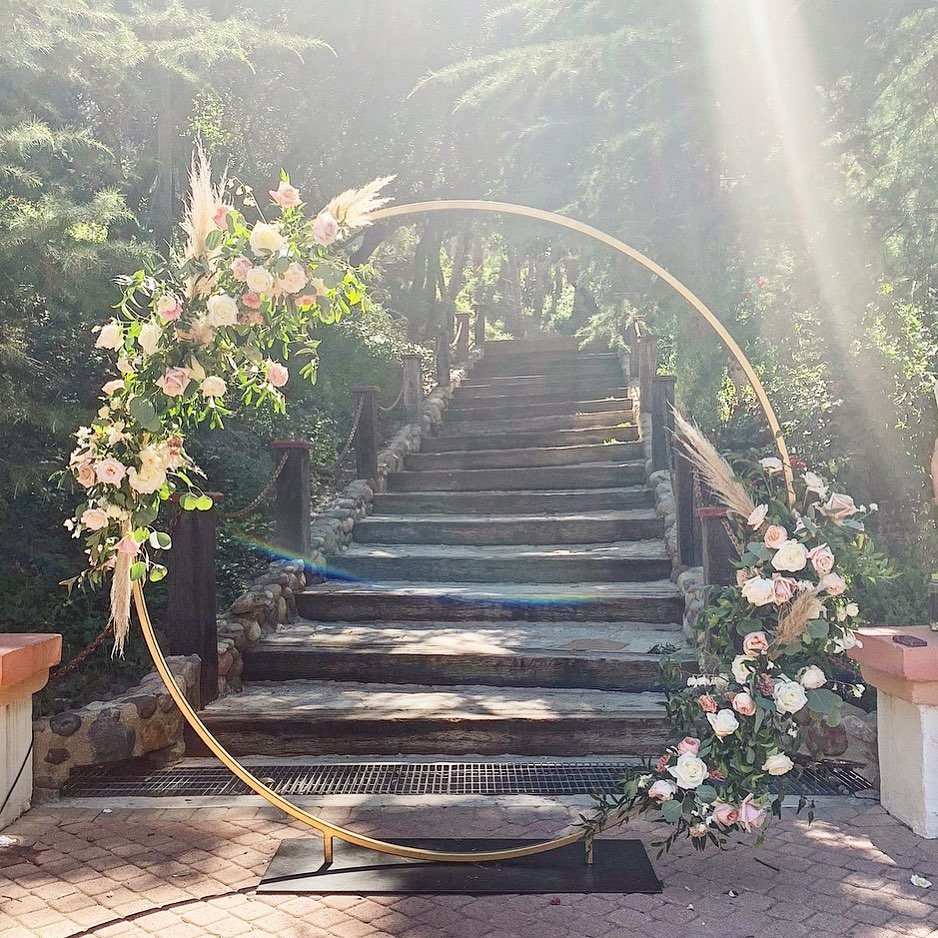
A circle reads as a wreath you can stand inside, which is exactly the gesture couples want at the moment they join lives.
Wire forms the lightest base and travels well for a destination wedding; thicker gauge holds vines and dried grasses without sagging. I would keep the decoration to one or two textures, since the shape itself does the work.
Pampas grass and roses pair naturally here, both softening the geometry without fighting it. This shape suits a small wedding party best: 2 attendants on each side, no more, or the line blocks the view through the ring.
3. Greenery Wedding Arch

Foliage alone costs a fraction of what fresh flowers run and photographs nearly as rich in outdoor light.
Foraged mixed greenery, piled dense and allowed to drip toward the ground, reads as intentional rather than cheap if you vary the leaf shapes: broad tropicals against wispy ferns, something with a silver underside catching breeze.
A few blooms tucked in, scattered in small clusters, keep it from reading as a hedge.
I would check a foraged haul the day before for wilting; stems cut too early go limp, and water tubes hidden in the weave help on hot afternoons. This suits couples who want the garden look without the florist bill.
4. Triangle Wedding Arch
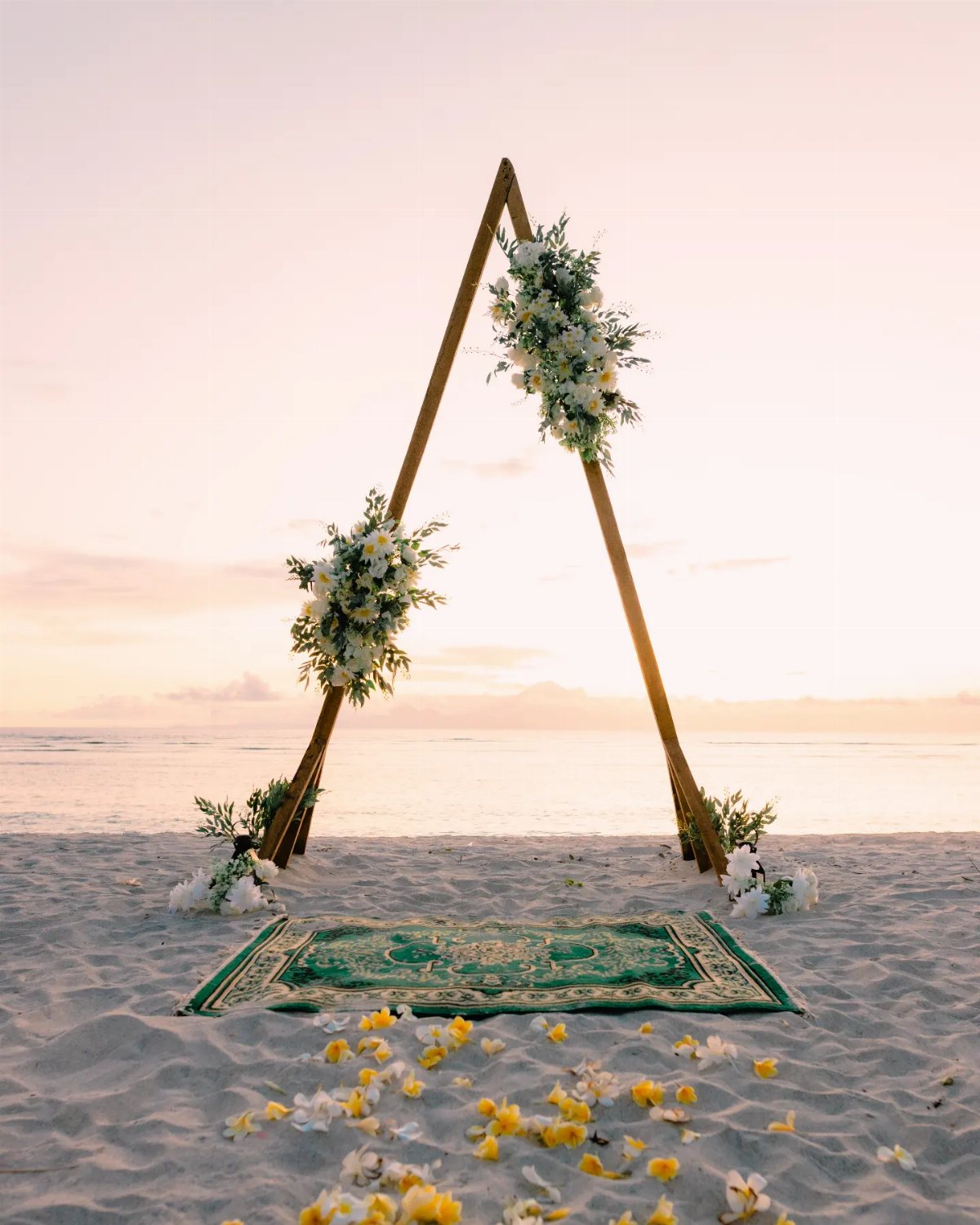
Two wooden beams and a crosspiece form a triangle in an hour with basic tools, which is why this shape spread so fast among barn and beach venues alike.
The geometry reads modern without coldness; paint it matte black for an evening ceremony, leave it raw for sand, or stain it to match the reception tables.
Pampas grass and dried flowers suit the angles better than soft round blooms, which fight the lines. I would anchor the legs deep: a triangle has less natural stability than a rectangle, and wind off water catches it broadside.
This one trades traditional softness for structure, and guests remember the silhouette.
5. Metal Wedding Arch

Metal takes any silhouette you can weld: circles, diamonds, doubled rectangles nested inside each other.
The material shines on its own, so I would resist overloading it; a few orchid stems and taper candles in hanging votives do more than a wall of bloom would.
Sculptural arches lining an aisle create a corridor effect that fabric or wood cannot match, though that takes budget and a planner with fabrication contacts.
For a single ceremony arch, standard pipe in an unusual bend, powder-coated, runs less than custom forging. Check the finish against your venue’s existing metalwork; a warm gold against cool silver fixtures photographs muddy.
6. Drapery Wedding Arch
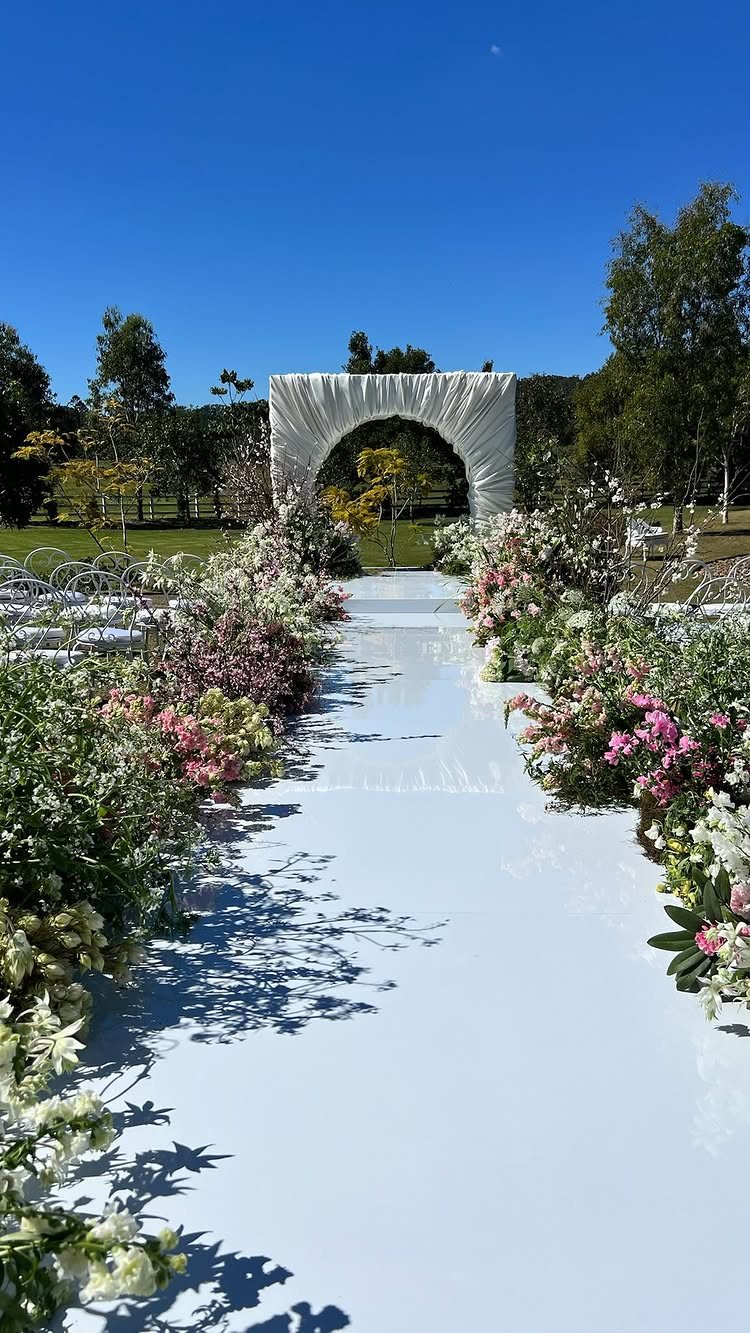
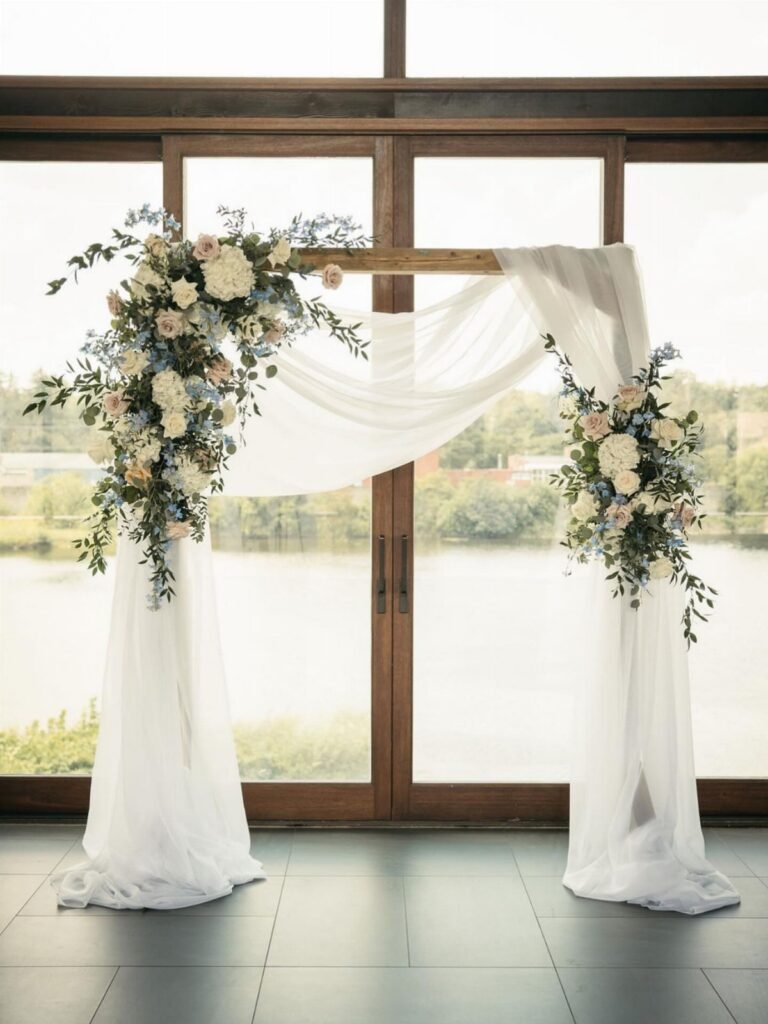
Fabric softens any frame into its own room, which matters when your ceremony site is a parking lot or a lawn with no architectural feature to borrow.
Sheer white layered in folds catches light and moves in breeze; heavier linen in a color blocks sun and hides the structure entirely. I would use twice the yardage I estimated, since drapery compresses when hung and looks skimpy fast.
Secure the top thoroughly: a swag that drops during vows is the nightmare that keeps planners awake. This suits couples whose venue lacks a focal point; the arch becomes the architecture, and the ceremony feels contained.
7. Copper Pipe Wedding Arch
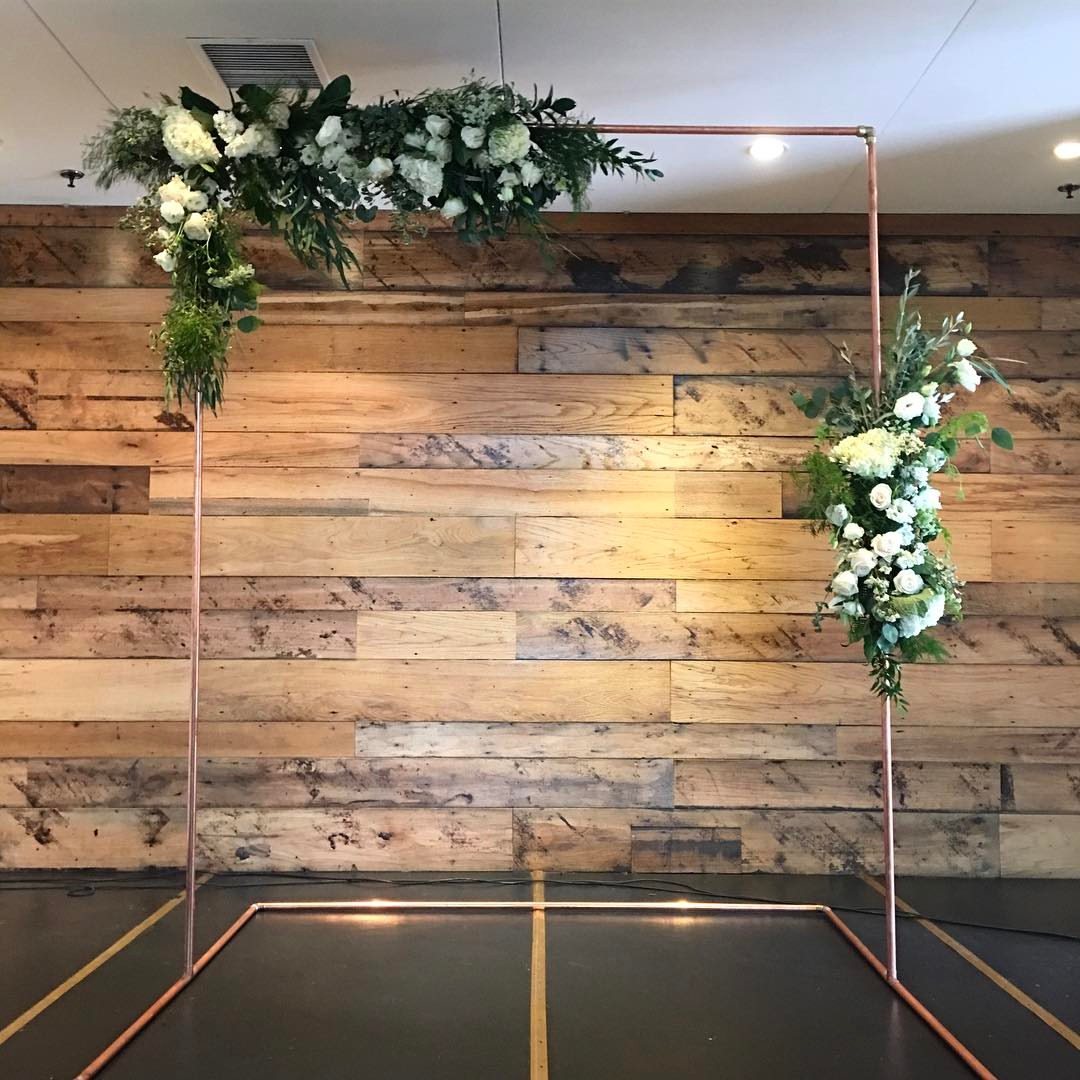
Copper pipe bends into clean angles that look more expensive than they are, and the warm metal tone flatters white flowers against almost any wall.
I like this build for couples who need one project to feel personally theirs without the whole wedding becoming a craft marathon.
Standard copper pipe runs $50 to $300 depending on how tall you build it; fittings push the price up more than the pipe itself.
Plan a full weekend between sourcing parts and assembly, plus another evening for staining or sealing any wood accents. The finished piece breaks down flat, which matters more than people think when the venue needs clearing before the night ends.
If you already own a pipe cutter and a level, this is your arch.
8. Hexagon Wedding Arch
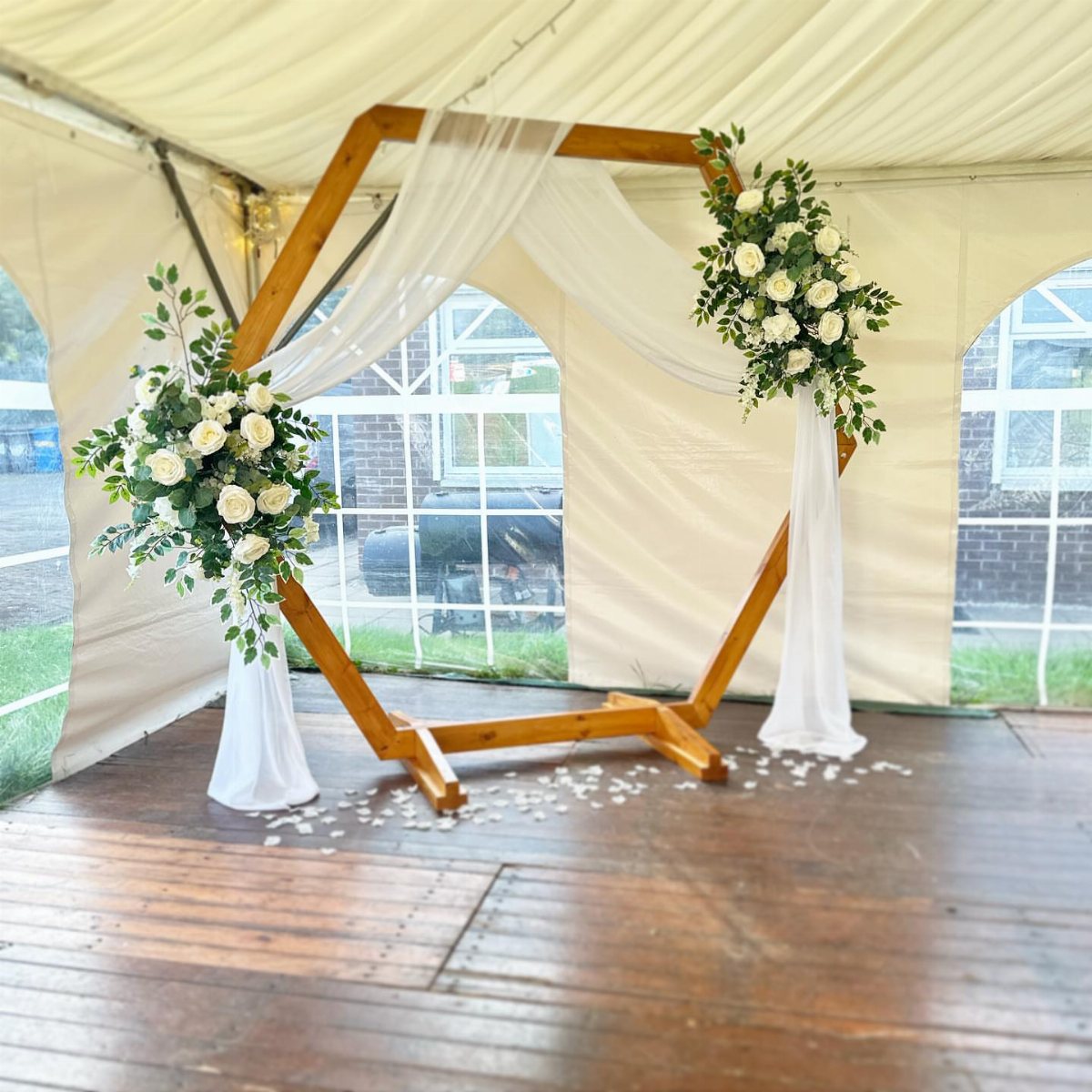
That geometry gives a ceremony backdrop clean lines that photograph without fighting the couple for attention. Wood construction keeps the weight manageable; a hexagon frame can be moved once the legs are detached.
I have seen these work best outdoors where the shape reads against open sky rather than competing with patterned wallpaper or draped tent lining.
The visible version uses sheer fabric at the joints and restrained florals at the posts, which is the right restraint: the hexagon itself is the statement.
For a tent wedding, check that your ceiling height clears the top point with room to spare; for a garden ceremony, sink the legs below the surface or stake them.
A rental company can source the frame if you do not want to build, though the custom ones from shops like Marsh Made Design set the standard for proportion.
9. Wooden Wedding Arch

A plain wooden rectangle does not ask for attention, which is why it gets so much of it. Paint it, stain it, or leave the grain bare; drape it, flower it, or let the trees behind it do the work.
This is the arch you choose when the venue already has character and you need something that will not argue. Bespoke furniture makers can build to your dimensions, though a standard width suits most aisles.
The visible version runs white fabric and restrained florals at the corners, a combination that reads timeless without reading period-drama. For a rustic wedding, leave the wood natural and skip the draping entirely.
The frame stores well; a sister or friend will borrow it for their own ceremony before long.
10. Chuppah Wedding Arch

Poles and a canopy make the simplest structure carry the heaviest meaning: the open house the couple will build together, with walls left absent so guests enter as witnesses.
Tradition calls for a cloth roof, often a tallit or family textile, but the visible version fills acrylic columns with calla lilies and piles white blooms overhead until the canopy becomes a garden suspended in air.
I would not attempt that fullness without a florist who has built weight-bearing chuppahs before; wet foam and fresh flowers add pounds fast.
For a simpler version, wrap the poles in soft greenery alone, the way one recent ceremony did with wood and vine. The platform beneath matters as much as the structure; guests should see the couple elevated, not sinking into grass.
11. Wedding Pergola
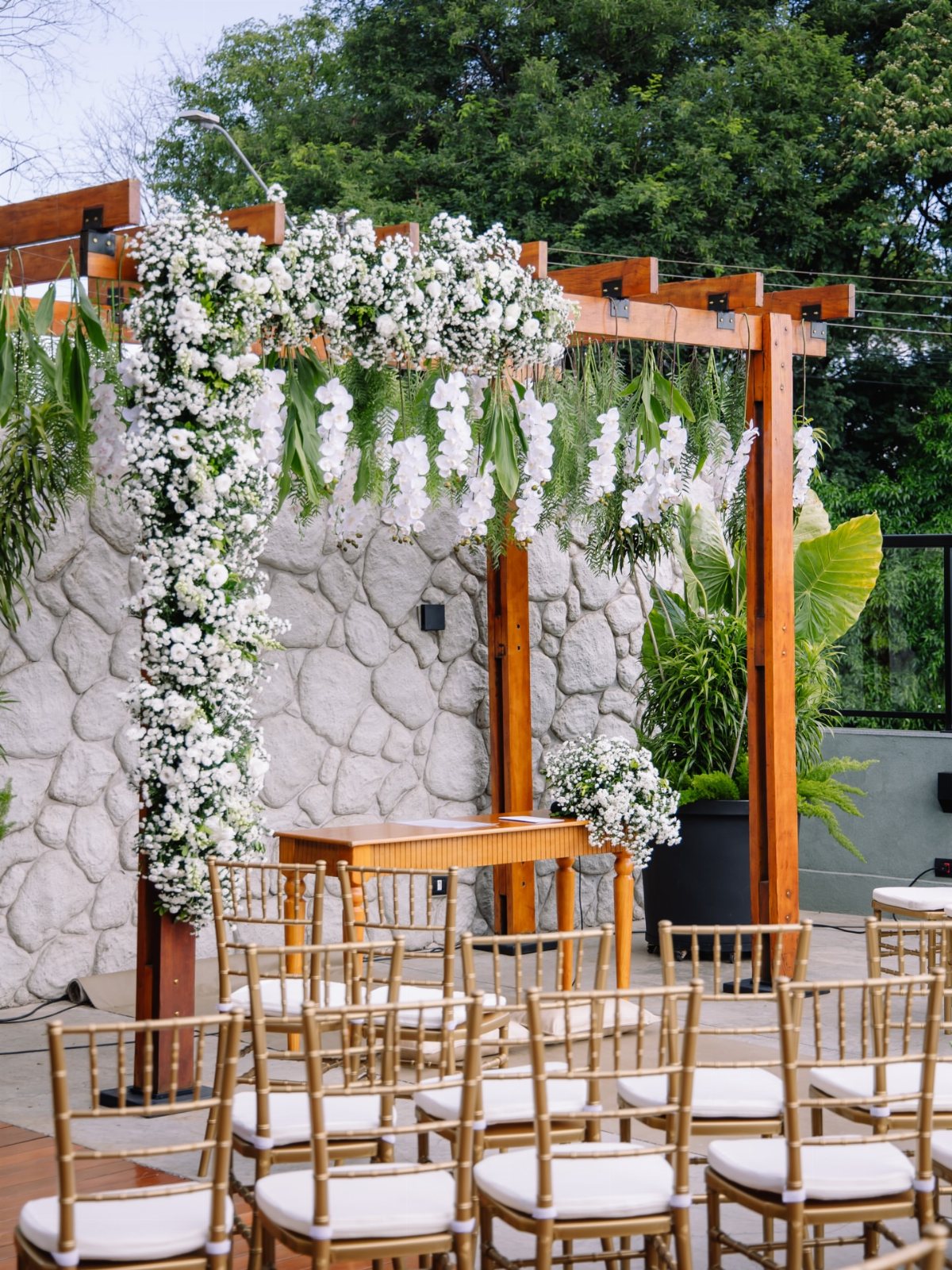
A pergola is an arch with ambition: enough depth for the officiant to stand inside it, sometimes enough width for a small signing table beneath the beam.
The visible version runs cascading white flowers along the front edge and sets gold chairs in rows that read formal against the rustic wood.
You can buy a prefab garden pergola and reinforce the joints for transport, or build from vintage ladders braced into corners with the rungs carrying draped fabric or hanging greenery.
The ladder version suits a backyard or barn where imperfection reads as character; the bought version fits a stone terrace or vineyard where the structure needs to look permanent.
Either way, anchor the legs: a pergola catches wind like a sail.
12. Balloon Wedding Arch
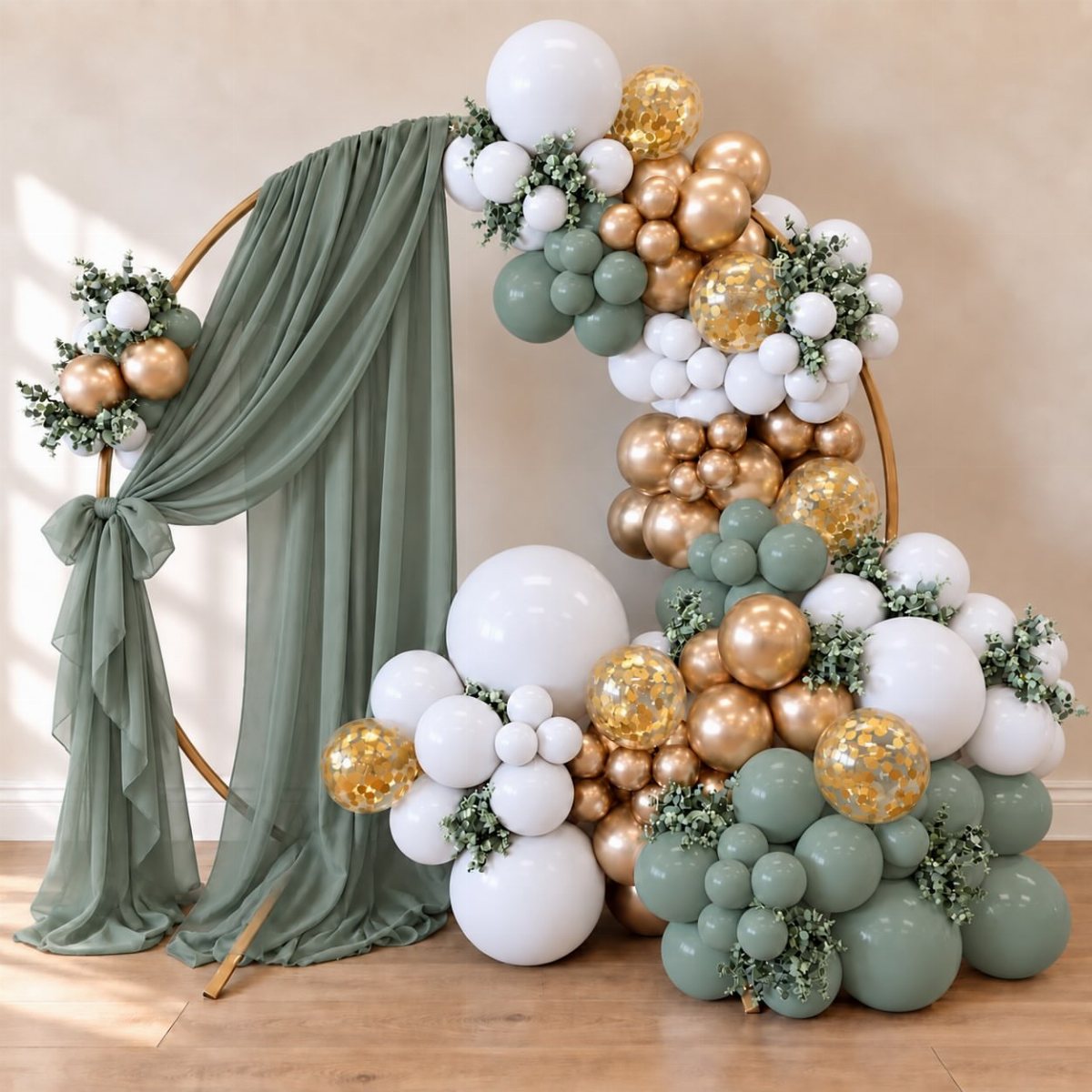
Balloons read playful in a way that fabric and wood cannot, and the cost per square foot of visual impact beats almost any floral arrangement.
The visible version clusters white, metallic gold, and sage green orbs around a gold hoop with fabric draping between them; confetti-filled balloons add depth without demanding more helium.
A hoop arch needs one continuous ring, which rental companies now stock in a range of sizes.
Pillars with a banner between them cost less and store flat, though the effect is more party than ceremony unless you scale the balloons oversized and keep the color palette tight.
Helium lasts a morning in heat and an afternoon in shade; plan inflation within 2 hours of the processional, and bring a tank for last-minute replacements.
I would use this for a late-morning garden wedding or an indoor ceremony with concrete floors, where the lightness answers the hardness.
13. Pampas Grass Wedding Arch
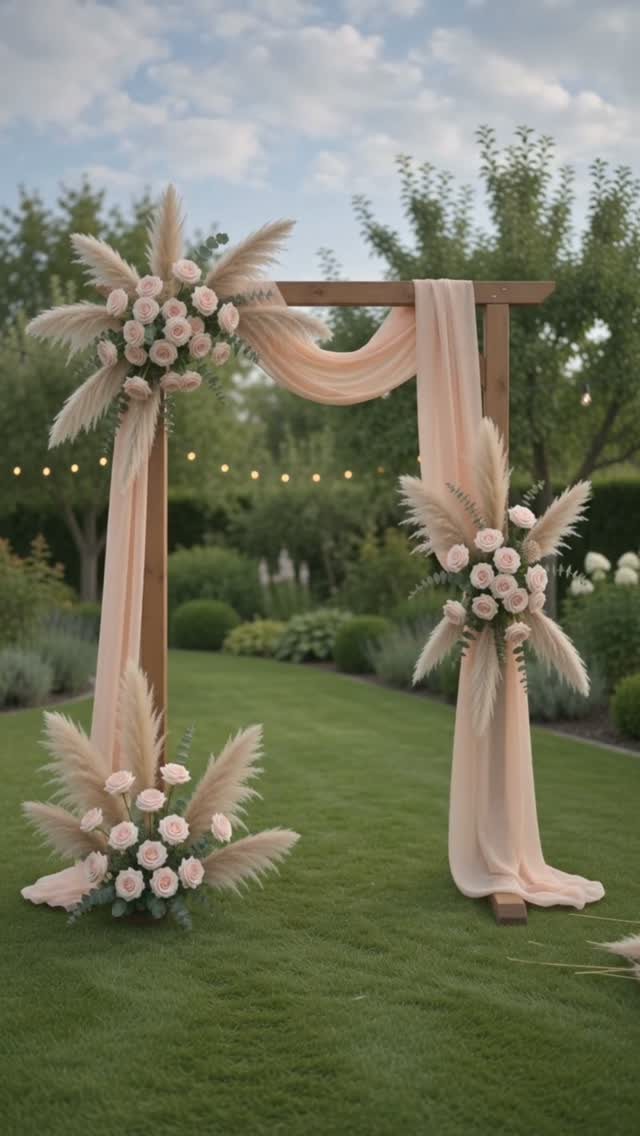
Fluffy beige plumes turn a simple wooden frame into something that photographs like a dream against late-afternoon light.
I would keep the grass as the star and add flowers only as accents; too much color competes with that silvery movement.
The dried stems last forever, which means you can build the arrangement days ahead and repurpose it in your home afterward.
Soft peach draping works best on a rectangular arch, where the fabric can break up the straight lines without fighting the frame.
The plumes shed, so spray them lightly with hairspray before transport and shake them outside once more before the guests arrive.
This suits couples who want bohemian warmth without the florist bill that fresh garlands demand, though anyone with allergies in the wedding party should stand downwind during the ceremony.
Symbolism of Wedding Arches
Hindu and Jain ceremonies use four pillars to honor the parents whose labor raised you both. Christian weddings borrowed church doorways and garden trellises as thresholds long before outdoor ceremonies became common.
The shape itself does the symbolic work: a doorway needs no translation.
After the vows, the structure can shift to frame a sweetheart table or a lounge corner for cocktails, which saves spending twice on focal-point decor and keeps the thread of the day intact.
Materials for Wedding Arches
Wood, metal, and fabric each carry a different visual weight, and mixing them saves either element from doing all the work.
Wrought iron or copper pipe gives a frame that stands on its own; wood or lattice softens into the background of a garden or barn. Macrame adds texture for a bohemian lean without competing with flowers.
Pendant lights or fairy lights hung from the structure matter most at evening ceremonies, where they extend the usable light by an hour.
DIY vs Professional Arches
Building your own arch trades money for time and gives one element that feels personally yours.
A professional brings fabrication contacts for welded shapes and powder-coated finishes, and handles the weight math that keeps a chuppah of wet foam and fresh flowers from collapsing mid-ceremony.
Most arches run 8 to 10 feet tall; outdoors, beefed-up legs keep the structure from disappearing into open space or tipping in wind.
Seasonal Considerations
Seasonal flowers stay hardy longer, which matters more on an arch than in a bouquet because the scale is larger and the arrangement has no water source.
Delicate blooms that hold their shape in a handheld bunch may wilt by hour two in direct sun on a frame.
The Knot’s monthly guides map which varieties keep closed buds until the last minute; your florist will know the same from local delivery schedules. For outdoor ceremonies, prioritize wind resistance and sun tolerance over color matching.
Measure your space before you buy: the arch should frame you both with room to spare, not crowd the officiant into the front row.
Frequently Asked Questions
What is the archway at a wedding called?
Most couples and vendors just call it a wedding arch or arbor.
The name changes with tradition: a chuppah is the canopy in Jewish ceremonies, held up by poles and open on the sides so guests witness the vows, while a mandap serves the same purpose in Hindu and Jain weddings with four pillars representing both sets of parents.
Even a simple wooden frame or metal hoop does the same work of marking where one chapter ends and another begins.
What to use instead of arch for a wedding?
A pergola gives you depth enough for the officiant to stand inside it, sometimes with a small signing table beneath the beam. A chuppah carries the same meaning with even simpler parts: four poles and a cloth roof.
A balloon hoop or a geometric frame, a triangle or hexagon, gives a modern look without the usual curves.