The ideas below run from rituals you script months ahead to moments no one can predict, from the groom’s face when the doors open to the last sparkler fading out.
What lands in your album depends on one thing: whether your venue locks you into fixed sightlines or leaves room to move.
A balcony permit requested at booking, not the week of, turns a flat group shot into the scene with depth that justifies the months you spent choosing the place.
1. Guests Arriving

Your guests arrive with their own anticipation, and that energy is worth keeping.
I ask photographers to station themselves near the ceremony entrance well before the start, when people are still finding seats and greeting relatives they have not seen in years.
A bride in a garden setting like this one, with wooden chairs and overhead lights, will miss these moments herself; she is behind a door somewhere, breathing deliberately.
The photos become her only view of who cried, who danced to their seat, which cousin brought an unexpected date. Small weddings and large ones both produce these fragments of feeling, scaled to their size.
I would prioritize this if your guest list includes people who traveled far or elders you rarely see assembled.
2. Wedding Detail Photos

Rings, invitations, the small dish with initials: these objects outlast the day and carry weight beyond their size. I lay them out before anyone enters the space, when natural light still falls cleanly across the table.
Ribbon, extra petals, a spritz of the fragrance you will wear; these additions build a small still life that reads as yours rather than generic. The work is in gathering the pieces the night before, not in the photography itself.
Skip this if you rented standard decor and brought nothing handmade; it suits couples who chose details with intention.
3. Getting Ready Photos
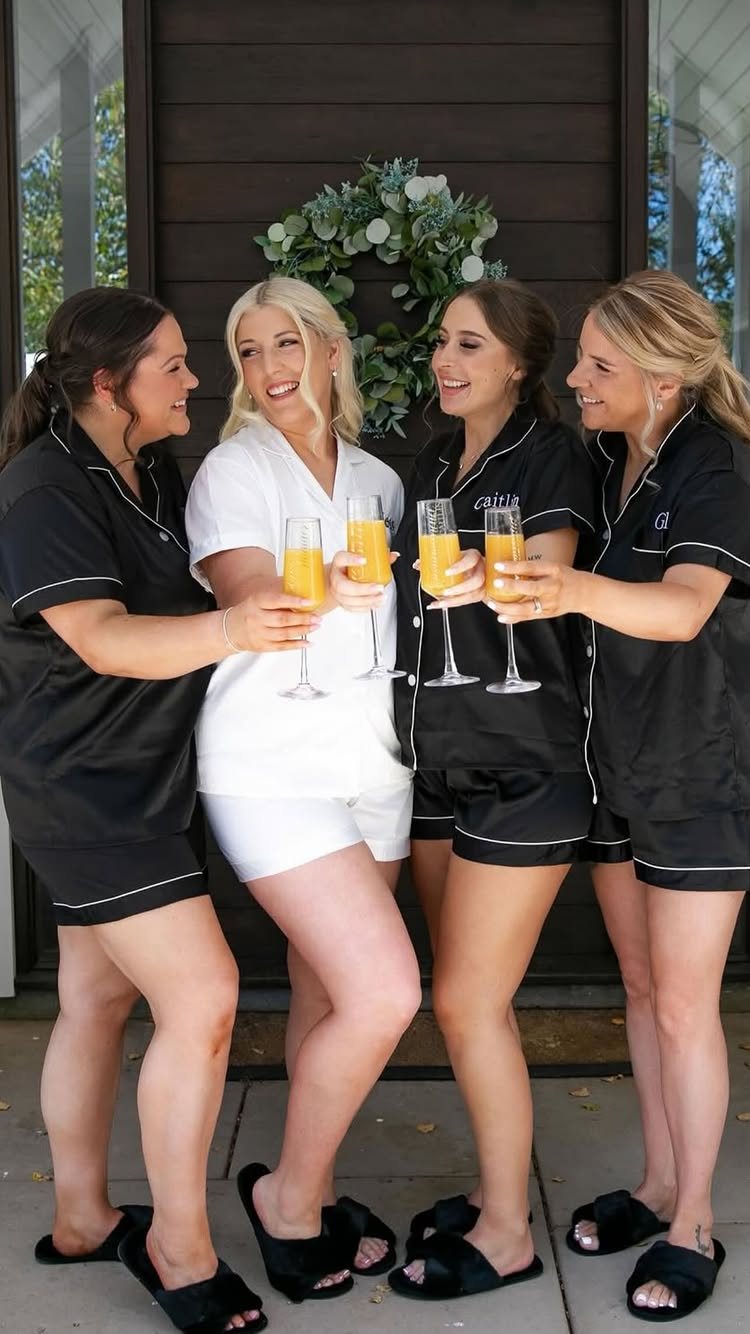
The hours before the ceremony run on different rhythms for each party. I have photographed women in matching pajamas toasting with orange juice, as visible here, and men in separate rooms adjusting ties they never wear.
One side is often louder, the other more contained; neither is the true mood, only that group’s version of arrival. A photographer moving between both builds a fuller story for the album, though not every budget allows two shooters.
If you must choose, I would follow the side whose preparations involve more people and more motion, typically the bride’s, and trust a groomsman with a phone for a few candid shots of the other.
One photographer gives you a single complete view; two give you partial coverage from different angles.
4. The First Dance
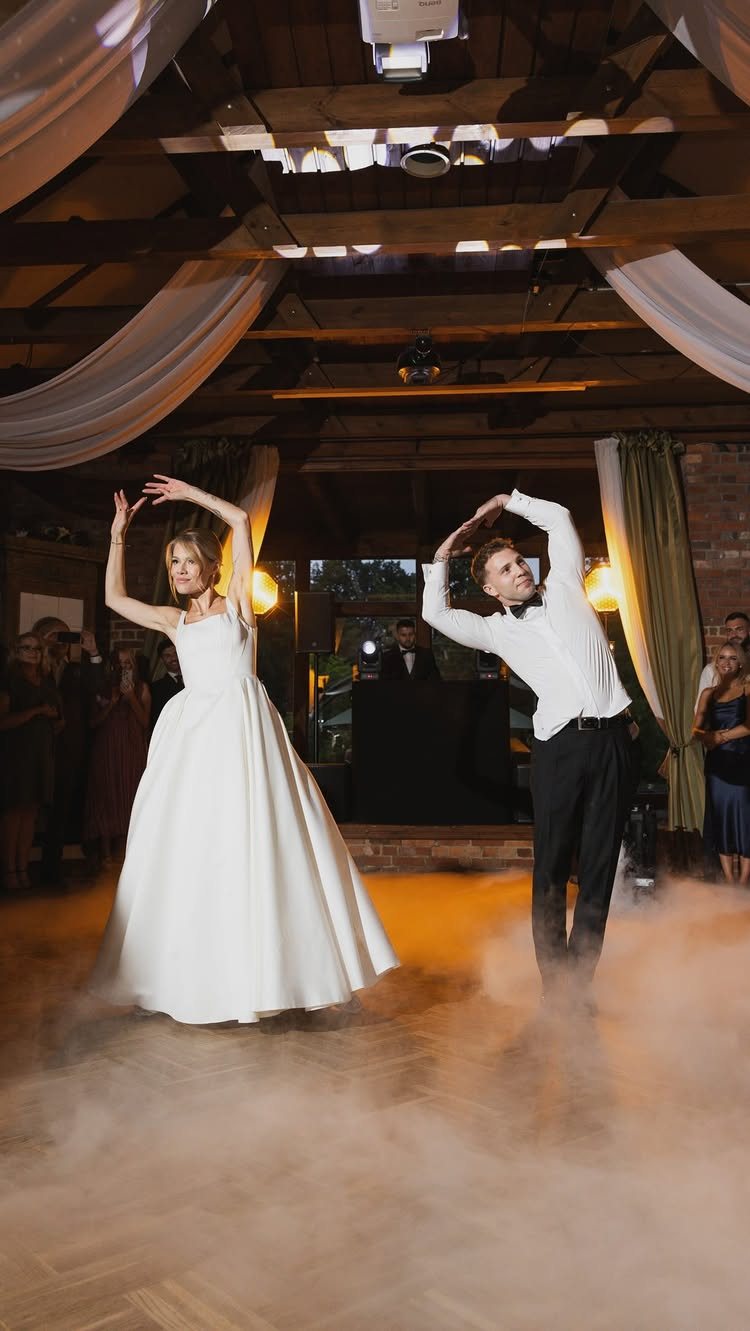
A first dance on a wooden floor hazed with fog and warm light gives you one image that will reappear in frames for decades.
The technique belongs to your vendor; your job is to select a song that does not feel endless to guests watching, and to actually dance rather than shuffle in a held position.
I have seen couples add a last dance, private and unannounced, after the guests have departed or turned to their coats. That variation costs nothing extra and produces a different intimacy, though it sacrifices the crowd’s witness.
Choose the first for the record, the last for yourselves, or schedule both if your venue allows the time.
5. Sparkler Exit
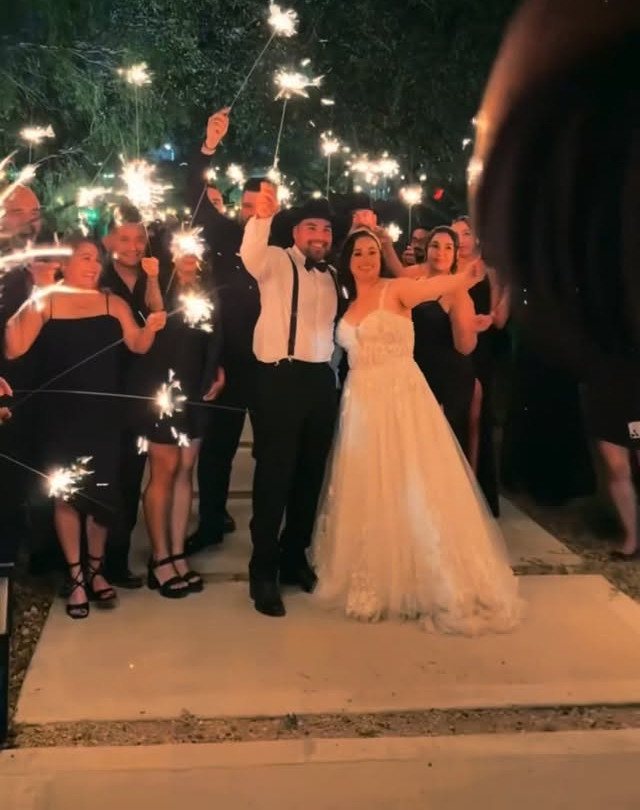
Sparklers require darkness, and darkness in summer arrives late enough to complicate the exit.
By the time a sparkler exit rolls around, guests have danced through multiple drinks, and corralling them into two lines demands coordination your planner should arrange in advance.
The visible tunnel of light, with guests in suspenders and formal dress holding lit wands, works best with 40 or more participants; fewer gaps show and the effect thins.
I would plan this for fall or winter weddings naturally, or for summer celebrations with a cutoff time that feels deliberate rather than rushed. Confetti substitutes cleanly if weather or venue bans open flame.
6. Walking Down the Aisle

The walk down the aisle is not the aisle itself but the approach to it, the first visible step, the faces turning, and the arrival.
I position photographers to catch the bride from behind as she begins, from the front as she advances, and at the guests’ eye level for their reactions, all within a minute that cannot be repeated.
The angle that matters most is the one your officiant blocks from the groom’s view: his face when he first sees you.
Ask your photographer to prioritize this if you must choose among positions, and accept that you will not see his expression until the proofs arrive.
7. Wedding Ceremony Exit
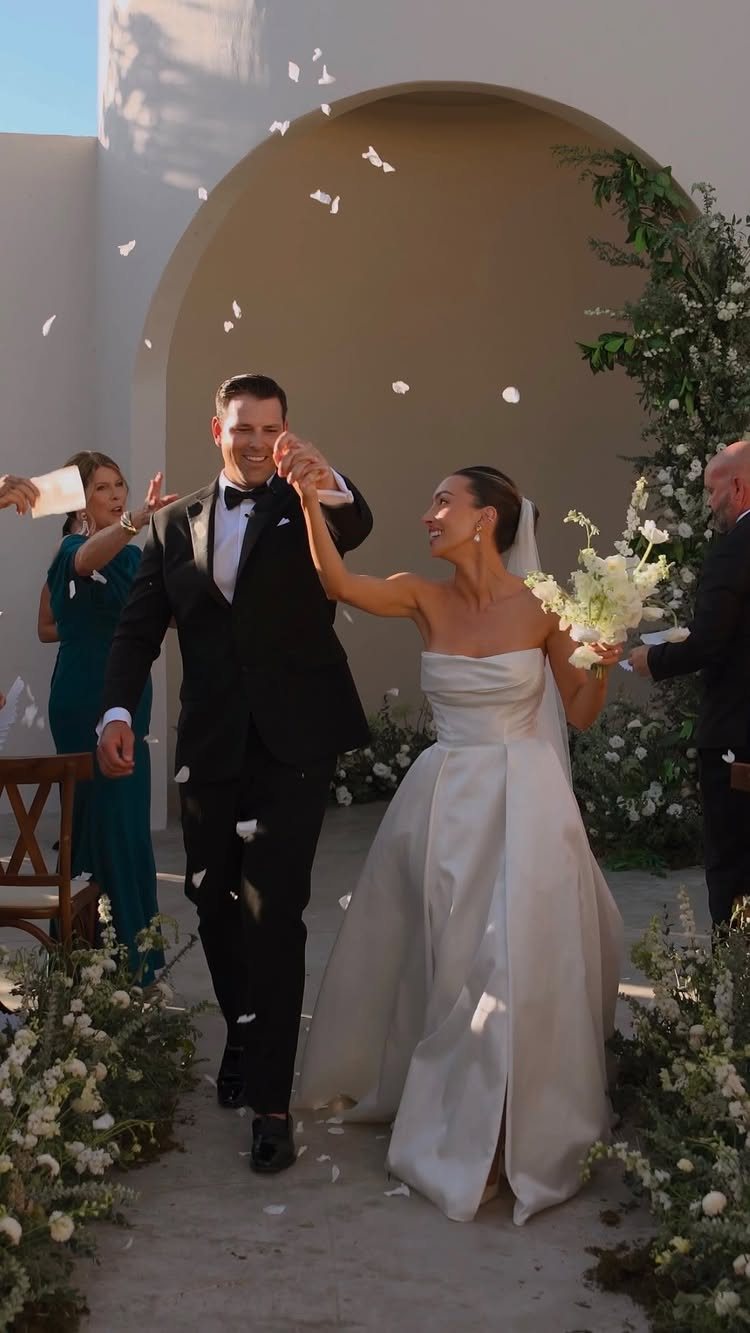
The walk back down the aisle hits different than the walk up. You are married now, and it shows in your shoulders.
Bubbles travel better for church exits, and sparklers need dark enough to read. Whatever you choose, tell your photographer explicitly; this is the shot most likely to get missed in the shuffle of recessional timing.
I would hold hands rather than kiss. You have already kissed.
The hand hold is the first gesture of your marriage, and it photographs cleanly with guests on both sides.
Check your venue’s rules before buying anything. Many churches ban rice, petals, and open flame alike.
8. Ring Exchange
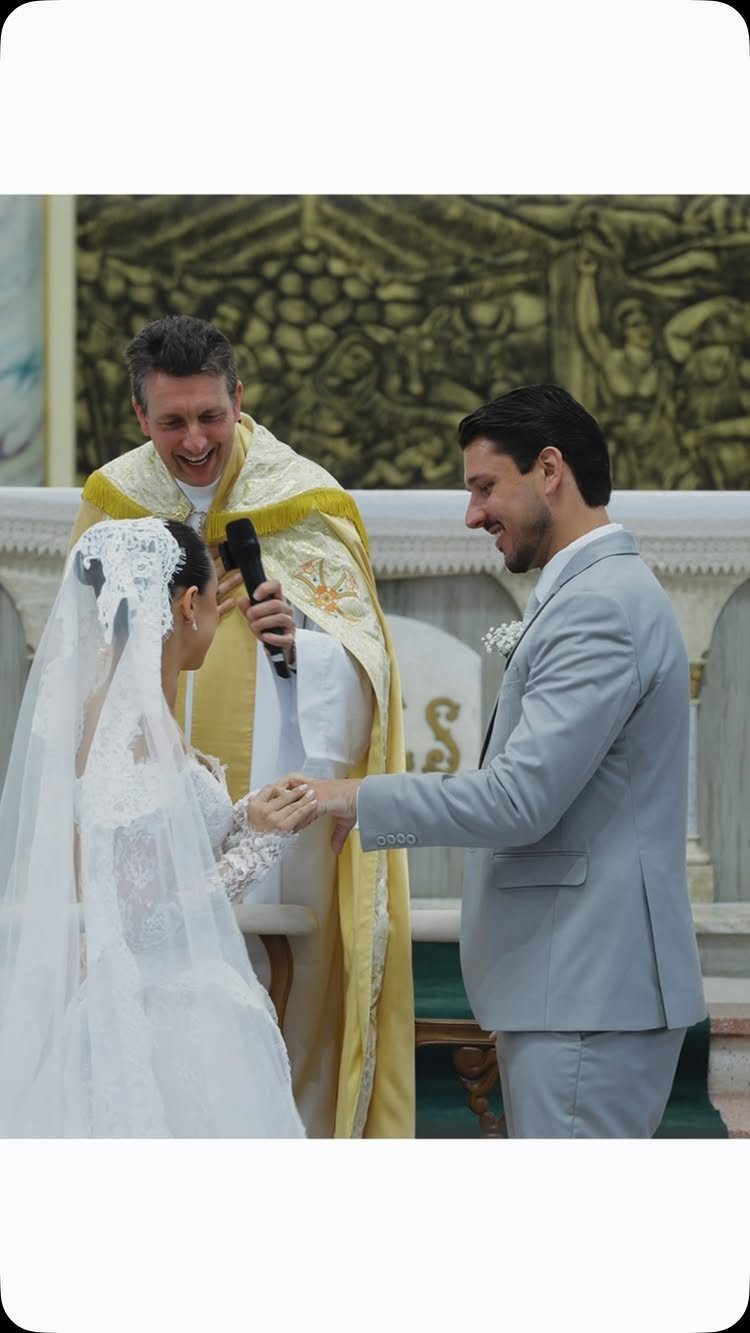
The ring exchange happens fast. A priest in yellow and white vestments might be speaking through it, or music swelling, and your hands are shaking.
Ask your photographer to shoot the hands and the faces both. The hands get you the detail: lace cuff against grey suit sleeve, the ring catching light as it slides on.
The faces get you the gulp, the grin, the look that says this is real now.
If your ceremony is in a church with fixed pews, the angle may be from the side only. A secular venue with open seating lets a photographer move for the straight-on shot.
Close-ups after, not during. The moment itself is too quick to stage.
9. Candid Guest Moments

Guests outnumber you heavily at your own wedding. Their faces carry half the story.
The guests you invited will do something worth shooting while they wait: the clap, the stillness, the glance toward the aisle. Those small reactions slip away fast.
You will remember your own vows. You will not remember your mother’s friend wiping her eyes, or your college roommate’s laugh catching in his throat.
Tell your photographer you want candids prioritized over posed table shots. The posed shots age faster.
A sneaky pint between ceremony and reception, a tear during the vows: these become the photos you return to.
Candid shots mean waiting through nothing-moments for the one that lands. Candids require a photographer who arrives early and stays loose, not one running a tight shot list.
10. Unity Ceremony

Lighting a unity candle together, taper to taper, turns a ritual into a photograph. The brick wall behind you, guests seated close: this is intimate scale, not cathedral distance.
The candle itself is your prop. Choose a height that lets you both reach comfortably; a low pillar works better than something you dwarf or something that dwarfs you.
The tapers should match in color, white or ivory, and burn evenly enough to last the minute you need.
This suits indoor ceremonies where wind is not a factor. Outdoor unity candles exist but require glass shields that catch reflections and clutter the shot.
Sand or wine blending trades the flame for reliability; the photograph loses vertical drama but gains color contrast.
Your officiant should rehearse the wording so you are not holding tapers awkwardly long.
11. Funny Moments During the Ceremony

The unplanned moment carries more weight than the planned ones because it is yours alone. No other couple got this.
A dropped ring, a flower girl mid-meltdown, a microphone feedback squeal that makes everyone flinch: your photographer should be watching for the reaction, not the incident.
I would rather have the laughter than the perfect aisle. The perfect aisle looks like a catalog.
The laughter looks like a marriage.
You cannot plan for this. You can hire a photographer who stays alert through the long middle of the ceremony, not just the opening and closing beats.
12. Bridal Portraits

The quiet minutes before the crowd arrives are when the dress and the flowers read clearest.
These portraits need a short window, not a long one. Hair and makeup fresh, dress just zipped, the jitters not yet arrived.
Your photographer should know the light at your location for that time of day; open shade near greenery, as here, flatters without flattening.
The bouquet is part of the composition. Hold it at waist height or lower; higher hides the waistline you chose the dress for.
The laugh, not the smile at camera: the laugh reaches your eyes.
Your partner should get the same block of time, separately. The asymmetry of only one formal portrait set is a regret I have heard more than once.
13. Couple Celebrating After Saying I Do

The walk from altar to exit hits different once the vows are spoken. Some couples raise a fist, some break into a run, and a few shake a bottle of Champagne until it sprays across the lawn.
Ask your photographer to be ready for this shot before the recessional starts. The moment passes fast, so I tell couples ahead of time: decide your move, or you will default to a stiff walk and a polite wave.
A fist pump reads cleaner in photos than the Champagne spray, which soaks the dress and stains the suit, but the spray wins for couples who brought a second look for the reception.
This shot belongs between ceremony and cocktail hour, before the crowd swallows you. Skip it if your venue forces a long indoor corridor with bad light; the lawn or garden version is the one worth planning for.
14. Cute Cake Cutting Photos

South Asian weddings have long treated the cake feed as a moment of play between families, and that energy works in any format.
A restrained cut, where she offers and he accepts without leaning into the smear, keeps the photo elegant.
I ask couples to decide beforehand: clean or messy. Clean saves the makeup and the outfit; messy gives the photo everyone shares the next day.
The photographer needs to know which camp you are in, because the lighting setup differs. A clean feed wants soft, even light across both faces.
A smash moment needs fast shutter speed and a flash that can freeze frosting in mid-air.
The table behind you matters more than most couples check. A plain cloth and a cake with some height, even 2 tiers, give the photo structure.
Skip the cake topper if it fights your flowers or your colors.
15. The Late-Night After-Party

The after-party photo lives on timing, not planning.
I have seen this work at 150-guest weddings and fail at 40. The threshold is not head count; it is whether enough people stay past the cake.
If your crowd skews older or travels with kids, the dance floor thins early and the photo becomes a portrait of empty space. In that case, stage the look during the last set of the band, not midnight.
A second dress or jumpsuit helps, but the real signal is the drink in hand and the arm in the air. Tell your photographer to stay through the final hour, not pack at the bouquet toss.
16. Groom’s Reaction

The groom’s face as the bride appears is the single most requested shot I hear from couples after the wedding, and the most often missed.
One photographer cannot cover both ends of the aisle simultaneously; a second shooter solves this, or a guest with a phone as backup.
The emotion varies. Some grooms cry, some grin, some lock up entirely and show nothing until she arrives.
The photographer should shoot through all of it, not just the peak. The stronger shot is the moment before the turn, when he is still searching the crowd and his shoulders drop an inch.
Indoor ceremonies with fixed seating give the cleanest angle. Outdoor aisle curves or guest overflow on both sides block the sightline, so scout the groom’s position during rehearsal.
If the setup forces a side view, the shot becomes shoulders and half a face, and that is the version to skip.
17. Flower Girl and Ring Bearer

Very young children perform their duties with either military precision or total chaos, and the photos are better for the chaos.
A boy gripping his pillow and a girl clutching her basket, both staring straight ahead like small adults playing dress-up, makes the formality feel earned.
That composure lasts until someone drops a petal, spots a grandparent, or decides the basket is a hat.
Assign a parent to the back of the aisle, not the front row. The child who freezes needs a familiar face behind them, not a crowd of strangers smiling encouragement.
The parent at the front creates a sprint target, which ends in tears or a tackle.
Younger than 3, you are carrying them or chasing them; older than 8, the cuteness factor drops and the role feels like a chore. Two children balance the frame; one alone reads as an orphan, three as a crowd.
18. Wide Shot of Ceremony

A wide shot justifies the venue choice you spent months on.
This shot needs height or distance, and most couples forget to check for both. A balcony, a drone permit, or even a stepladder behind the last row changes the photo from a flat group shot to a scene with depth.
I ask venues for drone rules at booking, not the week of; many outdoor sites ban them over noise or insurance.
The timing is the ceremony itself, not posed afterward. Posed wide shots look posed: guests turned, faces found the camera, the magic gone.
The real version catches the kiss or the vows, with the audience in their natural slouch. Your photographer needs a remote trigger or a silent shutter; the click that interrupts the vows ruins both the photo and the moment.
19. Couple During the Vows

Your vows are the one part of the ceremony you wrote yourselves, and the face your partner makes while hearing them is worth a second shooter’s entire day rate.
I ask my couples to print their vows in a small booklet, something they can hold without a phone stealing the moment, and I tell the photographer to lock onto the listener’s expression, not the speaker’s mouth.
Natural light helps here: if your spot faces a window or open sky, the tears show up sharper.
This matters most when you have written long vows; a short promise reads fast, but raw honesty needs someone watching both of you the whole way through.
20. Photos of Grandparents

Grandparents at a wedding are not guaranteed, and that is exactly why their walk down the aisle deserves its own frame.
Seat grandparents where they must walk the aisle slowly; the fabric catches light differently on shoulders that have seen more summers than yours, and the arm-in-arm passage past seated guests is the shot you want.
Ask your photographer to stay wide for this one; the context of the full aisle, the heads turning, the pews, is half the story. Best for church weddings with a long center aisle.
Outdoor ceremonies on grass trade the grandeur for intimacy, which is a different photo, not a worse one.
21. First Kiss at the Altar

The first kiss reads as automatic, but 3 seconds of poor placement can bury it behind an officiant’s shoulder. Ask your celebrant to step back, not forward, after the pronouncement; a mid-bow freeze blocks everything.
Now I tell every couple to ask their officiant, explicitly, to step left or right after "you may kiss," not back. Outdoors under a floral arch, the photographer has room to circle; indoors with fixed pews, there is no circling.
22. Traditional Cultural Ceremony Rituals

A Shinto ceremony in montsuki and shiromuku carries weight that Western white dress and black tuxedo cannot replicate, and the photographer’s job shifts from directing to documenting.
The seated position, the wataboshi hood, the wooden table: these are not props to rearrange for a better angle.
I would hire someone who has shot this specific ritual before, or at least who arrives early to learn the sequence from your priest.
Reportage-style coverage of a ritual you do not understand produces beautiful accidents and missed blessings in equal measure. For couples blending traditions, one honest frame of each ceremony beats a dozen forced composites.
23. Ribbon Wand Ceremony Send-Off

Ribbon wands solve every problem sparklers create: no fire permit, no burns on rented suits, no darkness requirement, and they still give guests something to wave while you kiss on the church steps.
White reads clean against stone architecture, though pale blue and sage work for spring weddings. The wands themselves cost little if you buy ribbon in bulk and hot-glue it to dowels; assign this to a craft-minded bridesmaid well ahead.
Best for daytime exits where sparklers would read as gray sticks.
24. Ceremony Backdrop and Setup Details
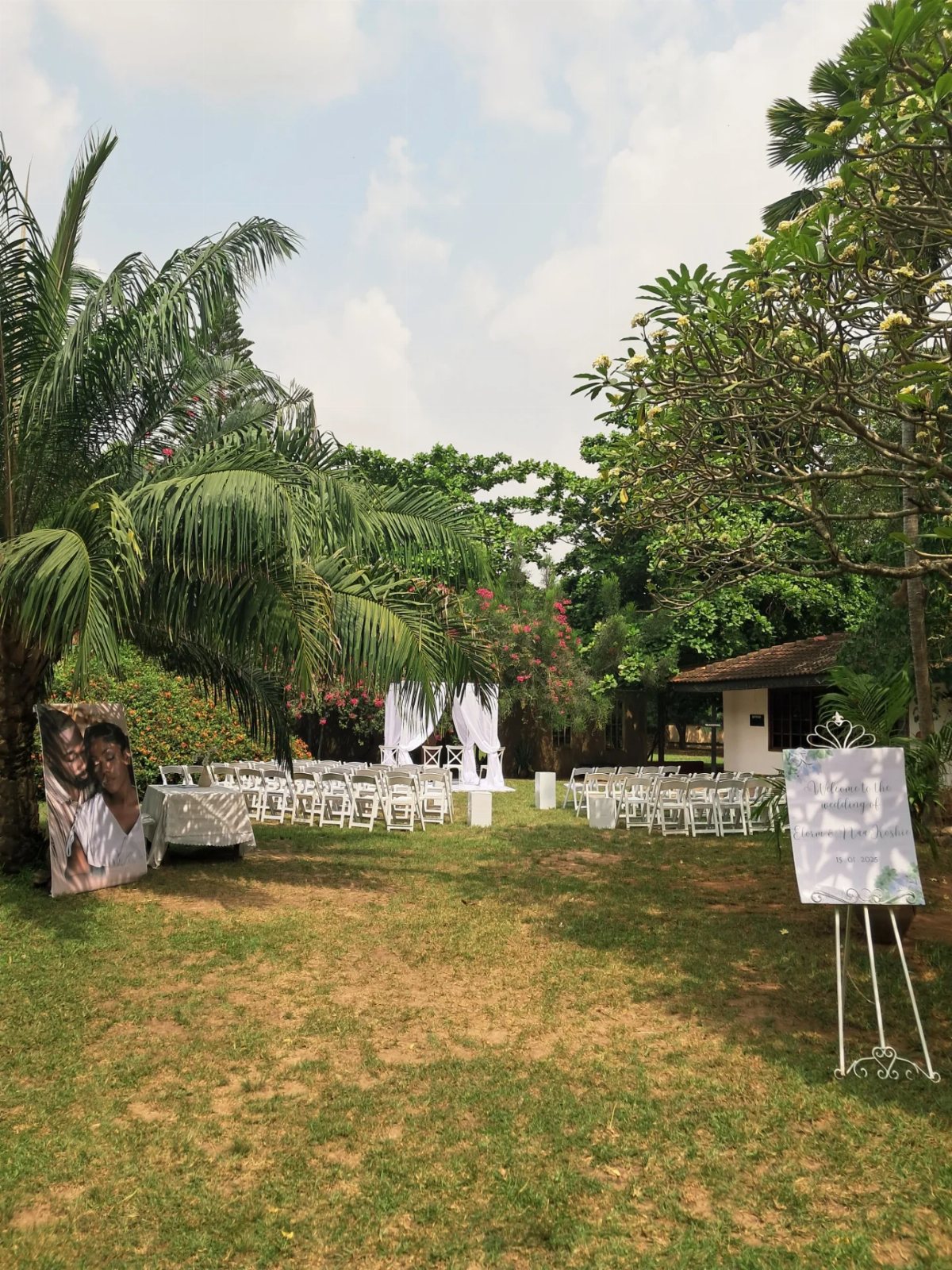
The ceremony setup is where your budget meets daylight, and the photo of empty chairs facing a draped altar is your receipt for every decision you fought over.
Arrive before hair and makeup, when dew still holds the grass and the florist’s delivery van is just pulling up; that quiet hour is when the setup photographs cleanest.
Palm trees frame without extra cost; white chairs against green lawn give contrast that needs no filter. Your photographer should shoot wide enough to show the full geometry, then tight on the draping texture, then the welcome sign’s typography.
These are the photos you send to vendors for credit, the ones that outlive the flowers by years.
25. Back of the Church Perspective

A single photographer planted at the rear of the church catches what the couple themselves never sees: the full length of the aisle, the altar ahead, and the two of them standing before it together.
This angle needs an unobstructed center aisle and a photographer willing to miss the front-row moments. A long nave with a clear sightline to something worth framing, a stained-glass window, a crucifix, or tall candles, gives this shot its power.
The couple stands close enough that shoulders overlap, which keeps the composition tight rather than two isolated figures.
The trade is real. You lose the close-up of a tear or a smile, and you need a second shooter up front if you want those too.
For couples marrying in a family church with generations of history in the pews, this shot often becomes the one the parents frame.
Importance of Natural Light
Light in the room is not decoration; it is the material your photographer works with. A space with tall windows on two sides gives even, dimensional light that flatters faces without flattening them.
A single window creates hard shadows that require compensation, and a windowless room forces artificial light that reads flat even when expertly handled.
I would visit your venue at the same hour your ceremony will occur, not at midday when you first toured.
A barn that glows at 2 PM falls into shadow by 4, and a church with clear glass in morning becomes amber and directional by late afternoon.
The ceremony time you set determines what the camera receives; adjust one to serve the other if you can.
Discuss Photography with Officiant
Your officiant controls the sightlines and the rules. I ask couples to raise photography at their first meeting, before assumptions harden on either side.
Most officiants permit quiet movement during the ceremony, though some restrict the ring exchange and vows to a fixed position at the front. Know this before you hire someone who promised a shot the officiant will block.
The kiss is the moment most often ruined by hesitation at both ends. A minister in motion across the frame becomes the subject instead of you.
Rehearse this verbally; the gesture looks simple but timing collapses under pressure.
Plan for Timing
An outdoor ceremony ties you to the sun’s schedule, which shifts dramatically by season.
In fall and winter, sunset arrives early enough to threaten post-ceremony portraits; start the ceremony with plenty of light left, and finish while the sun still sits above the horizon if you want couple shots outdoors without flash.
Trees accelerate sunset by half an hour or more as the sun drops behind their canopy.
A first look in afternoon light buys back the evening. Without one, your portraits compete with cocktail hour and darken by the minute.
I would schedule 10–15 minutes of couple time immediately after the ceremony, protected in the timeline the way speeches are, or risk losing it to the crowd’s gravity.
Rain plans matter for timing too. Clear umbrellas photograph well; a borrowed patio umbrella does not.
Confirm your indoor alternative before the week of the wedding, not the morning of.
Capture Candid Moments
Candid photography is not luck; it is the result of a photographer who arrived early and stayed alert through the slow middle of your ceremony.
Unexpected failures produce the best candid material. A lighter that fails on a unity candle, a glass that refuses to break: the reaction to these, not the incident itself, is what belongs in the album.
A photographer watching only the couple misses the guest who saves the moment with laughter.
Frequently Asked Questions
What are some good ideas for wedding photos?
Station your photographer near the ceremony entrance before the start to catch guests arriving and greeting each other, since you will miss these moments yourself.
Prioritize the groom’s reaction when he first sees you walking down the aisle, and ask for candids of guests during the vows rather than posed table shots.
Detail shots of rings and invitations work best when you have chosen items with intention, not standard rentals.
What are the trends in wedding photography for 2026?
More photographers are prioritizing candids over posed shots, since the posed ones age faster while a tear during vows or a sneaky drink between ceremony and reception become the photos couples return to.
Natural light matters more, with open shade near greenery flattering without flattening, and couples are adding unannounced private last dances after guests depart for intimacy without the crowd’s witness.
What are the top poses for a photoshoot?
The walk down the aisle offers multiple angles: from behind as you begin, from the front as you advance, and at guest eye level for reactions.
For the ring exchange, close-ups of hands and faces both matter, with the lace cuff against grey sleeve and the gulp or grin as the ring slides on. During vows, the listener’s expression carries more weight than the speaker’s mouth.
In what order should wedding photos be taken?
Getting ready photos come first, capturing different rhythms for each party, then ceremony moments from guest arrivals through the recessional.