All-inclusive wedding packages bundle venue rental, catering, and coordination into a single contract, but the definition of "included" shifts dramatically depending on where you book.
A Sandals stay of seven nights in a Club-level room or higher unlocks a free ceremony; fall short and you pay package rates instead.
Destify advertises $3,000–$4,999 for Mexico or Jamaica, yet guest count alone can push the same property to the top of that range.
1. Sandals Resorts Free Wedding Packages

Sandals Resorts built their reputation on the promise that a Caribbean wedding does not have to drain the savings you are trying to protect.
Their free wedding package becomes available to couples who book a minimum seven-night stay in a Club-level room or higher, a threshold that applies across properties including Sandals Grenada, Sandals Barbados, and Sandals Royal Barbados.
The stay requirement is the gatekeeper: miss it, and you are paying full package rates instead of walking into a ceremony that costs you nothing beyond the vacation itself.
What the free tier actually covers stays fairly lean, which is where the resort makes its margin.
You get the basics, a ceremony with an officiant, a bouquet and boutonniere, and some standard decor, enough to make the beach feel like an occasion rather than an accident. The upgrades stack quickly from there.
Premium floral arrangements, private receptions, photography packages, and additional events like rehearsal dinners all carry separate fees that can push the final bill well past the initial zero.
The calculus for a budget-conscious couple is straightforward. If you were already planning a week-long Caribbean honeymoon in a mid-tier room, the wedding is basically a bonus.
If you were hoping for a quick three-night escape with a ceremony attached, Sandals will not be the deal it appears to be.
The seven-night minimum filters out the casual inquiries and rewards the couple treating the trip as the main event.
2. Coconut Bay Beach Resort Themed Packages

Coconut Bay Beach Resort sets its entry wedding package at $3,999, which lands it in the same bracket as the most affordable Caribbean destination options.
That price covers the ceremony setup at either the beach or the ocean-front gazebo, plus a personal wedding planner rather than a shared one.
The themed packages build outward from there. One route adds bridal spa treatments and a signature champagne turndown service; another folds in sailing on a catamaran at sunset or a private island tour.
The resort treats these as modules you swap rather than locked bundles, so a couple who cares more about the catamaran sail than the spa can usually trade.
What actually stays fixed versus flexible matters more than the brochure list. The ceremony location, the core reception structure, and the planner’s hours appear to be the non-negotiable base.
Everything else, the experience suggests, is where the negotiation happens, which is how a $3,999 starter price can still produce something that does not look like everyone else’s wedding.
I would push hardest on the private island tour timing. Resort packages often schedule these mid-week when boats run anyway, and a Saturday wedding might mean your tour lands on Thursday with half your guests still arriving.
Ask directly whether the tour date moves, because that single detail separates a usable package from a pretty brochure.
3. Florida All-Inclusive Venues

Florida built its reputation on sunshine and sand, but the all-inclusive wedding market there runs deeper than beach resorts.
Couples from the Midwest and Northeast have started treating the state as a domestic alternative to Caribbean packages, keeping guests inside the US while still handing off the planning headaches.
The range matters more than most expect. Miami and South Florida draw the destination crowd with ceremony-to-reception packages that cover the Keys, Miami Beach, and Fort Lauderdale in one planning relationship.
Orlando and Tampa Bay lean toward the Classic-to-Elite tiered model, where a venue handles catering, coordination, and rentals in bundled increments. Palm Beach occupies its own tier, with guest capacity and floral upgrades moving the number fast.
What separates Florida from true overseas all-inclusive is the wedding package and guest rooms stay separate. A resort might quote $3,000–$5,000 for the ceremony itself, but that covers officiant, setup, cake, and basic flowers for a couple-only or micro group.
Guest lodging, food, and drinks during the stay bill independently. For 20–30 attendees, total spend often lands between $8,000 and $15,000 once rooms are folded in, which is competitive with Cancun or Montego Bay before anyone buys a passport.
You do give something up. Florida eliminates international travel logistics and the symbolic-vs-legal ceremony confusion that trips up Caribbean bookings.
What you give up is the single receipt: you are still negotiating room blocks and counting heads yourself, just on domestic soil.
4. Destify Affordable Destination Weddings

Destify built its business around a price point most destination-wedding planners treat as impossible. Their advertised range runs $3,000 to $4,999, and the lower end covers core ceremony elements at an all-inclusive resort in Mexico, Jamaica, or the Caribbean.
That typically means the venue, an officiant, a basic floral package, and a small reception setup. The planner costs nothing; Destify makes its money from resort commissions.
What pushes couples toward the higher end is usually guest count. The base package assumes a small party.
Add twenty relatives and the per-head costs for the reception dinner, open bar, and extra room nights stack fast. Upgraded décor, a private dinner instead of a restaurant seat, and weekend peak-season dates all nudge the final figure upward.
Destify works with over three hundred vetted properties, so the variation between a Tuesday package at a three-star Cancun property and a Saturday slot at a higher-tier resort can easily span that full $2,000 band.
The value depends on how willing you are to keep the guest list tight and the flowers standard.
5. The Mill Lakeside Manor

The Mill Lakeside Manor bundles venue rental, catering, and coordination into one quote, which sounds simpler than it is.
Venue rental covers the lakeside ceremony space and the converted barn reception, so you are not paying two site fees or shuttling guests between locations.
Catering runs through their in-house kitchen, not an outside list you vet yourself, which means tastings happen on their schedule and substitutions for dietary restrictions go through one contact.
The coordinator handles vendor load-in times, the flip from ceremony to reception, and the evening timeline, but couples still book their own photographer, florist, and officiant.
That split caught me off guard when I priced it out; the package looks complete until you realize those three outside vendors are where most budgets actually land.
Transportation and lodging for guests are also outside the bundle, and with the manor sitting about 20 minutes from the nearest hotel block, that shuttle bill adds up fast. The coordination is solid, but only for what the manor directly controls.
6. Stone Chalet Intimate Weddings

Stone Chalet built its reputation on weddings that stay deliberately small, and their definition of "intimate" covers anything from an elopement to a small ceremony with a handful of guests rather than the industry cutoff you might expect at fifty or seventy-five.
The packages scale down from there: minimonies, micro weddings, and full elopements each get their own tier, with coordination, decor, floral design, and photography bundled into one quote rather than itemized across separate vendors.
The florist works in-house, which keeps the bouquet, boutonnieres, and aisle petals on a single ledger instead of three.
For winter bookings the stone architecture and candlelit interiors do most of the decorative work already, so couples who marry between December and March often find the base package carries further before add-ons become necessary.
Photography folds in too, capturing the seasonal backdrop that turns the property, in their phrasing, into "a fairyland when it is blanked in white snow."
Smaller guest lists mean the venue opens dates that larger weddings cannot book, and the reduced headcount drops the final figure without stripping the experience to bare bones. What you lose is the logistical theater of a 150-person reception.
What remains is the ceremony, the portraits, and a dinner that does not require a spreadsheet to seat.
7. Wedgewood Weddings Customizable Tiers

Wedgewood Weddings arranges its all-inclusive wedding packages in four tiers that move from preset to fully custom.
The Classic, Premier, and Elite packages each bundle a specific set of services at fixed price points, while the Build Your Own option lets couples pick only what they need and pay for each piece separately.
The tier system works like a staircase. Classic covers the fundamentals: venue space, basic catering, and standard bar service.
Premier adds upgraded linens, expanded menu choices, and a longer reception window. Elite brings in premium bar packages, enhanced floral arrangements, and usually exclusive access to ceremony spaces or extended time.
Each step costs more but also removes the item-by-item decisions that slow planning down.
Most couples I have talked to who chose one of the preset tiers did so because the math felt cleaner. A single number, one contract, and the venue coordinates vendors from there.
But the Build Your Own package makes sense in two situations.
The first is when a couple already has outside vendors they want to keep, like a family friend who bakes or a photographer whose work they have followed for years.
The second is when they genuinely do not need what a tier forces in.
A small afternoon reception with beer and wine does not require Elite’s premium open bar, and paying for it just to get the ceremony space bundled inside wastes budget that could go toward guest experience elsewhere.
The risk with Build Your Own is scope creep. Without the guardrails of a preset list, it is easy to add a service here, an upgrade there, and end up spending more than the next tier up would have cost.
Wedgewood’s planners price each option line by line during the first walkthrough, so couples see the running total before they commit. That transparency matters.
A preset package caps your spending; a custom one only caps it if you hold the line yourself.
8. The Platinum Hotel Las Vegas Packages

The Platinum Hotel in Las Vegas structures its all-inclusive wedding packages around three tiers named Ruby, Diamond, and Sapphire, each scaling up the ceremony and reception footprint rather than piling on unrelated extras.
The Ruby tier keeps things tight, usually a single-room ceremony with a small standing reception suited to guests already in town for a weekend.
Diamond opens the floor plan to separate ceremony and seated dinner spaces, and Sapphire adds the full buyout of a larger suite or terrace with views toward the Strip or the desert mountains behind the property.
What the Vegas setting does to the typical all-inclusive formula is worth weighing before you book.
Most resorts bundle photography, florals, and an officiant into a single price because the location itself is the draw, think beachfront in Jamaica or a vineyard in Napa.
In Las Vegas, the hotel handles the room block, catering minimums, and basic décor, but you are still in a market where entertainment, transportation, and outside vendors compete for your budget at every turn.
The package simplifies the venue piece without sealing off the city around it, which can feel like freedom or like leakage, depending on how disciplined your guest list is about impulse show tickets and extended bar tabs.
I have watched couples arrive thinking the all-inclusive label would wall off surprises, then find the resort fee, the Strip-view upgrade, and the after-party suite each billed separately.
The Platinum’s tiered approach at least makes the line clear: buy the package for the space and the food, and treat everything else as Vegas doing what Vegas does.
9. Rose Hall Event Center

Rose Hall Event Center books one wedding per day, which means the venue, the staff, and the timeline belong entirely to that couple. The all-inclusive package wraps venue rental, floral design, catering, and a three-and-a-half-hour reception into a single rate.
That half-hour increment matters more than it sounds: the catering rhythm, the bar pace, and the photography window all tighten around 210 minutes, and the team has run enough of them to know where the slack lives.
The reception clock starts when guests move from ceremony to cocktail hour or straight to the room, depending on your layout. Extending past the three-and-a-half-hour mark is possible, but it costs extra and requires advance notice so staffing stays legal.
Bar service runs $575 as an add-on, with beer, wine, or signature drinks charged on top; the typical couple lands around $1,065 total for alcohol and service at a hundred-guest count.
That number is useful for comparing against venues that quote open-bar packages that look cheaper until you add the service fee.
10. Honeymoons Inc Free Resort Packages

Honeymoons, Inc. bundles free wedding packages at Caribbean resorts under a different math than the Sandals model couples usually see first.
Their Grenada lineup asks for a 7-night minimum in a club-level room or higher at Sandals Grenada, or 14 diamond-club room nights at Royalton Grenada, with an alternative path of booking 35 total room nights across your guest block.
That second option matters if you are bringing family who want their own bookings counted toward your threshold.
Sandals itself tends to run simpler: stay long enough in the right room tier, and the ceremony is complimentary.
The Royalton structure through Honeymoons, Inc. spreads the obligation across more people, which helps if your guests are already planning to attend but stings if you imagined a tiny elopement.
Before putting down a deposit, verify whether your room category qualifies and whether your travel dates fall inside any blackout window.
The "free" package also typically covers a basic ceremony; upgrades for flowers, reception dinners, or photography sit outside that threshold and get billed separately.
Ask for the itemized list of what the complimentary tier actually includes so you are not budgeting off a brochure assumption.
11. Illinois All-Inclusive Venues

Illinois all-inclusive venues run from under $1,500 to nearly $19,000 for fifty guests, and that spread is the whole story. Pine Manor Estate in Carbondale opens at $950 for fifty, while Caffe Oliva on Chicago’s lakefront hits $18,900 for the same head count.
The median sits around $6,500, but the real competition is not against other Illinois venues; it is against flying everyone to a resort.
Cooper’s Hawk Winery in Arlington Heights and Chop Shop in Chicago trade on experience, not acreage. A Chicago River cruise with First Lady starts at $6,549, which buys the skyline as decor and eliminates floral budgets.
Stoney Creek in Quincy drops to $3,532, proving that central Illinois can undercut even modest destination packages once airfare and lodging are tallied.
The Midwest math favors guests. No one flies O’Hare to Cancun for less than $400 round-trip in 2026, and that is before a room block.
A Carbondale or Quincy guest drives, sleeps at a chain hotel, and still spends less than the airfare alone. What you give up is atmosphere: Illinois venues sell food and a room, not a week.
For couples with fifty to eighty local relatives, that trade often wins.
12. Miami Wedding Center Micro Options

Miami Wedding Center builds its all-inclusive packages from a $799 elopement base that covers the ceremony itself on the beach. That price gets you the officiant, the sand, and the license filing; everything else layers on top.
The jump from elopement to micro wedding happens fast. Adding even a small guest count, chairs, or a photographer moves the number into the mid-thousands, and the reception dinner at a nearby restaurant is priced separately from the ceremony package.
The center’s structure assumes most couples want the beach for the vows and a different venue for the meal, which keeps the base low but fragments the budget across two locations.
For a couple under $10K, the $799 entry point is real enough to book, but the full micro wedding with a dozen guests and basic documentation typically runs closer to $2,500–$4,000 once the add-ons settle.
The center’s own framing emphasizes the ceremony-only package as the budget move, and that is where the honest savings live: say your vows, sign the papers, and handle the party elsewhere on your own terms.
13. Red Ridge Receptions Planning and Entertainment

Red Ridge Receptions caps its all-inclusive wedding packages at 100 guests, and that number is where the pricing lands too.
The package folds planning and coordination, DJ service, event lighting, linens, in-house decor, bartender, security, full setup and breakdown, table bussing, trash service, venue cleanup, yard games, and a sparkler or bubble exit into the rental fee.
You also get the hilltop ceremony site with an indoor rain plan, a reception room with vaulted ceilings and exposed beams, a cocktail deck with bistro lighting, bride and groom suites, parking attendants, farmhouse-style head and cake tables, guest tables and chairs, wooden buffet tables, an outdoor bar with whiskey barrel coolers, and a custom DJ booth built into a second-story Juliet balcony.
Alcohol is BYO, with bartenders and security included as needed.
The venue books with a small percentage of the rental fee plus a security deposit.
For guest counts above 100, you would need to ask directly; the package structure is built around that ceiling, and larger weddings likely shift into custom territory.
What All-Inclusive Actually Includes
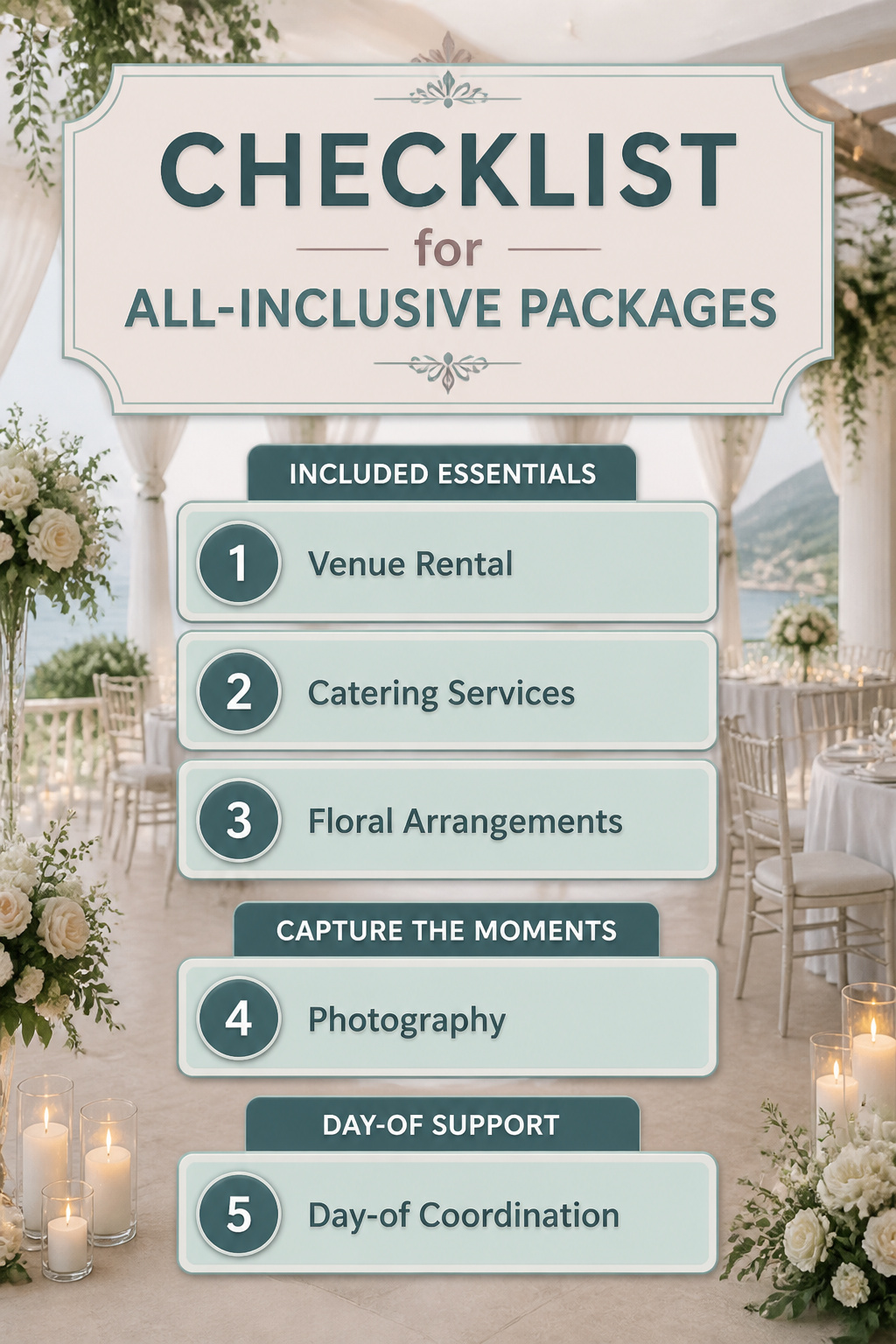
Most all-inclusive wedding packages bundle venue rental, catering, floral arrangements, photography, and day-of coordination into a single contract. That sounds like everything handled, and for some couples it nearly is.
The venue provides the space, the food, the centerpieces, the photographer who knows where the light hits at 4 p.m., and the coordinator who keeps the timeline moving.
What stays on your plate depends on the package tier. A classic tier might cover décor basics and a standard menu, while an elite tier adds luxury linens, premium bar service, and more dedicated planning hours.
Neither tier typically includes your attire, invitations, or guest transportation. Officiant services and DJ sometimes appear, sometimes sit as add-ons.
The real distinction is between coordination and full planning. Day-of coordination means the venue team runs what you have already decided.
They do not choose your color palette or chase RSVPs. If you want that level of hand-holding, ask whether the package includes planning meetings or just the final execution.
Price Ranges and What Moves the Number

All-inclusive wedding packages start around $3,000 for a couple-only ceremony and climb past $12,000 once you pass thirty guests or move into peak season. The gap between those numbers is mostly headcount.
A package that covers ten to twenty guests at the base price will charge per-person for anyone beyond that limit, so a guest list of thirty or more typically pushes you into the $5,000–$9,999 tier.
Location and timing do their own damage. Mexico and Jamaica run cheaper than most Caribbean alternatives because of flight volume and resort density, but even there, November through April prices out faster than summer or early fall dates.
A Saturday in April costs more than the same package on a Friday in July.
What the brochure price never captures are the upgrades that turn necessary once you see them in person. Symbolic ceremonies versus legal ones carry different fees.
Premium flowers, photographer add-ons, and spa credits all sit outside the base package.
One resort adds a 24 percent service charge and 8.38 percent state tax on top of the per-person rate, and another tacks on $250 for a second bartender when your headcount justifies one.
Vases, even for centerpieces, sometimes must stay behind or trigger replacement fees.
The real work is asking for a full cost breakdown before you commit and comparing what "all-inclusive" actually means across venues.
Customizing Without Breaking the Package
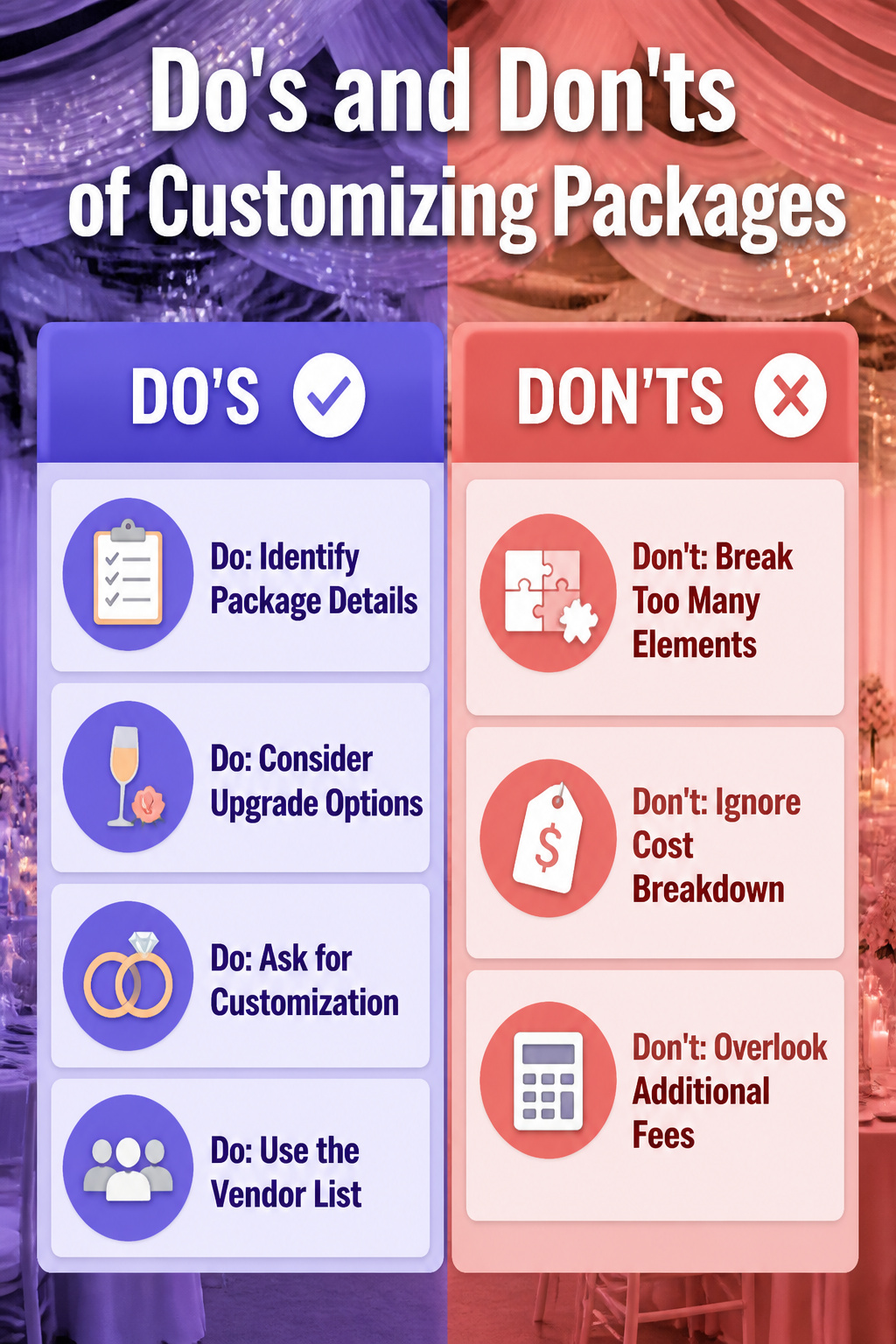
All-inclusive pricing works best when you know which pieces move and which ones lock. Most venues treat their core services as fixed: the rental, tables, chairs, linens, and the day-of coordinator usually stay bundled.
That is where the savings live, because pulling one item out rarely drops the price proportionally.
Where the negotiation actually opens is in the upgrades and the gaps. Bar service, for instance, often sits outside the base package entirely.
One venue charges an additional $575 for the bartender, setup, security, and plastic cups, with beer, wine, or signature drinks priced on top. The average total for bar service and alcohol at 100 guests runs $1,065.
Florals, the DJ, and the cake are typically inside the bundle. Photography, officiants, and hair and makeup almost never are, though most venues keep a vendor list ready.
If you already have a photographer booked or a family friend who officiates, ask what a custom package looks like for the remainder. Some venues will piece together only what you still need.
The risk is letting too many substitutions break the volume discount. My rule: swap out no more than two major categories before the package stops behaving like a package and starts pricing like à la carte.
Destination Spots That Compete on Setting
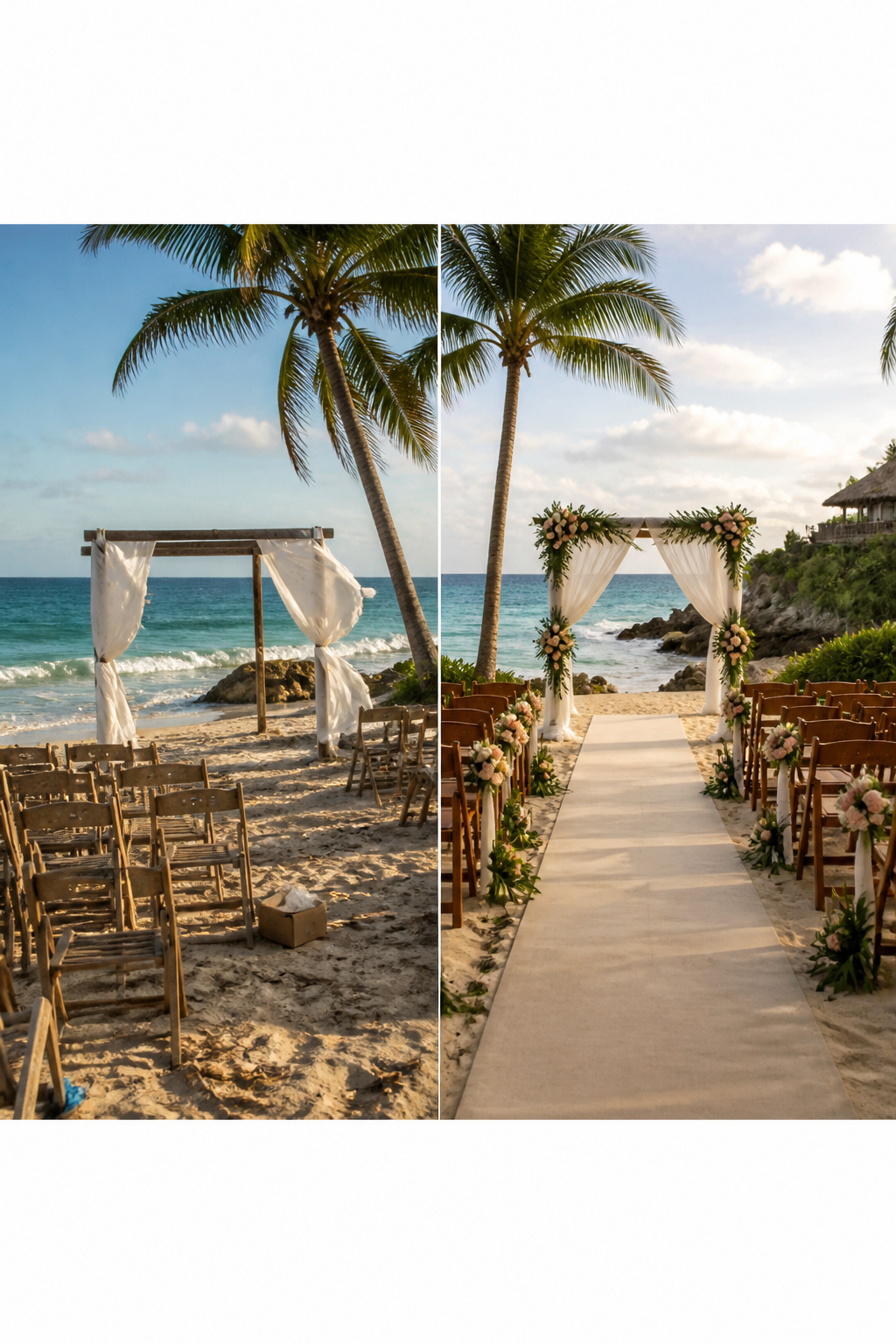
Mexico, Jamaica, and the Caribbean dominate the destination wedding market because the scenery sells itself, but the infrastructure behind it is what separates a smooth weekend from a logistics headache.
Riviera Maya and Punta Cana run on all-inclusive wedding packages that fold the ceremony, reception, and guest meals into one predictable line item, which matters when you are managing RSVPs from two countries and a currency conversion.
Saint Lucia and Antigua pitch the same turquoise-water backdrop with smaller airports and tighter local vendor networks, so your guest count ceiling drops faster than the brochure suggests.
Domestic spots like Miami strip away the passport requirement and the customs line, yet the per-guest price often lands closer to an international resort than couples expect because U.S. labor rates and permitting eat the savings.
Two ways to play this: absorb the flight complexity for a $3,000–$4,999 package abroad, or pay roughly equivalent numbers at home to keep Grandma out of a TSA precheck argument.
The international option wins if your guest list skews young and flexible; the domestic one wins if you are inviting anyone who will treat the travel as a burden, not a bonus.
Micro Weddings and Smaller Guest Lists

The guest list is where most couples first feel the budget squeeze, and venues have started building for that reality rather than pretending every wedding fills two hundred seats.
A package built for ten to twenty guests is not a shrunken version of the ballroom deal; it is a different product entirely, with condensed timelines and simplified pricing that reflects what you actually need.
Stone Chalet, for example, structures its all-inclusive wedding packages around elopements for two and micro weddings up to twenty-eight guests as parallel offerings, not afterthoughts.
The cake tier drops from three to two when the headcount falls below seventy-five, and the tasting still comes included. What changes most is the reception format.
Semi-private or simplified setups replace the full buyout, and base-level décor keeps the starting price low enough that the modest budget, the one under $10K, becomes workable without looking spare.
Upgrades exist, but they are optional, and the base package covers the ceremony, the meal, and the core logistics without forcing you to subsidize space you will not use. The final count matters.
One venue notes that dropping below your anticipated number lowers the price, and adding guests raises it, with the lock-in typically fourteen days out. That deadline matters for planning, but it also protects you from paying for no-shows.
The real advantage of a micro package is not just the smaller check. It is that the all-inclusive promise actually holds when the scope is narrow enough to control.
Frequently Asked Questions
What is included in an all-inclusive wedding package?
Most all-inclusive wedding packages bundle venue rental, catering, floral arrangements, photography, and day-of coordination into a single contract.
What stays on your plate depends on the tier: classic packages cover décor basics and standard menus, while elite tiers add luxury linens, premium bar service, and more planning hours.
Neither tier typically covers your attire, invitations, or guest transportation.
How much does an all-inclusive wedding cost?
All-inclusive wedding packages start around $3,000 for a couple-only ceremony and climb past $12,000 once you pass thirty guests or move into peak season.
A package covering 10–20 guests at base price will charge per-person beyond that limit, so thirty or more guests typically pushes you into the $5,000–$9,999 tier.
Location and timing also move the number: Mexico and Jamaica run cheaper than most Caribbean alternatives, and November through April prices out faster than summer or early fall.
Can I customize my wedding package?
Yes, many venues allow customization.
Wedgewood Weddings offers a Build Your Own option where couples pick only what they need and pay per piece, which works well if you already have outside vendors or genuinely do not need what a preset tier forces in.
Coconut Bay Beach Resort treats add-ons as modules you swap rather than locked bundles. The risk with custom packages is scope creep without preset guardrails, so ask for line-by-line pricing before you commit.
What are the best destinations for all-inclusive weddings?
Popular destinations include Mexico, Jamaica, and the Caribbean, known for resort density and reliable direct flights from most US cities. Mexico and Jamaica specifically offer the largest selection of resorts in the $3,000–$4,999 price band.
Florida has emerged as a domestic alternative, keeping guests inside the US while still handing off planning headaches, though guest rooms and food bill separately from the ceremony package.
Are there any hidden fees with all-inclusive wedding packages?
Some packages carry additional costs not obvious in the base price. Common add-ons include symbolic versus legal ceremony upgrades, premium flowers, photographer add-ons, and spa credits.
One resort adds a 24% service charge and 8.38% state tax on top of the per-person rate; another tacks on $250 for a second bartender.
In Las Vegas, resort fees, Strip-view upgrades, and after-party suites often bill separately even when the venue package looks all-inclusive.
What are some cheap all-inclusive wedding packages under $5,000 in the USA?
Miami Wedding Center offers a $799 beach elopement base covering the officiant, sand, and license filing. Pine Manor Estate in Carbondale, Illinois starts at $950 for fifty guests.
Stoney Creek in Quincy, Illinois runs $3,532. Destify advertises $3,000–$4,999 packages at all-inclusive resorts in Mexico, Jamaica, or the Caribbean, though that assumes a small party and standard flowers.
Is $5,000 a reasonable budget for a wedding?
$5,000 is workable for a couple-only or micro wedding at an all-inclusive resort or domestic venue, but it requires tight guest counts and disciplined choices.
The $3,000–$4,999 band typically covers 10–20 guests at destination resorts, and domestic options like Pine Manor Estate or Miami Wedding Center’s elopement base fit under that ceiling. Add guests, upgrades, or a separate reception dinner and the number moves fast.
What is the 50/20/30 rule for weddings?
The price guidance offered instead is practical: start with the per-person cost at your target guest count, add the service charges and taxes that resorts often bury, and build in a buffer for the upgrades that turn necessary once you see them in person.