A 3-tier wedding cake runs from buttercream icing with diagonal lines to deep red rose clusters on fondant ruffles, and the right choice depends on whether your reception stays indoors or faces summer heat, since buttercream ridges shift by hour three outside while fondant holds and gumpaste flowers stay intact.
The 6-8-10" round combination appears across nearly every style here, from buttercream icing with diagonal lines to monogrammed tiers with gold initials spanning one-third of the middle tier height.
1. Buttercream Icing
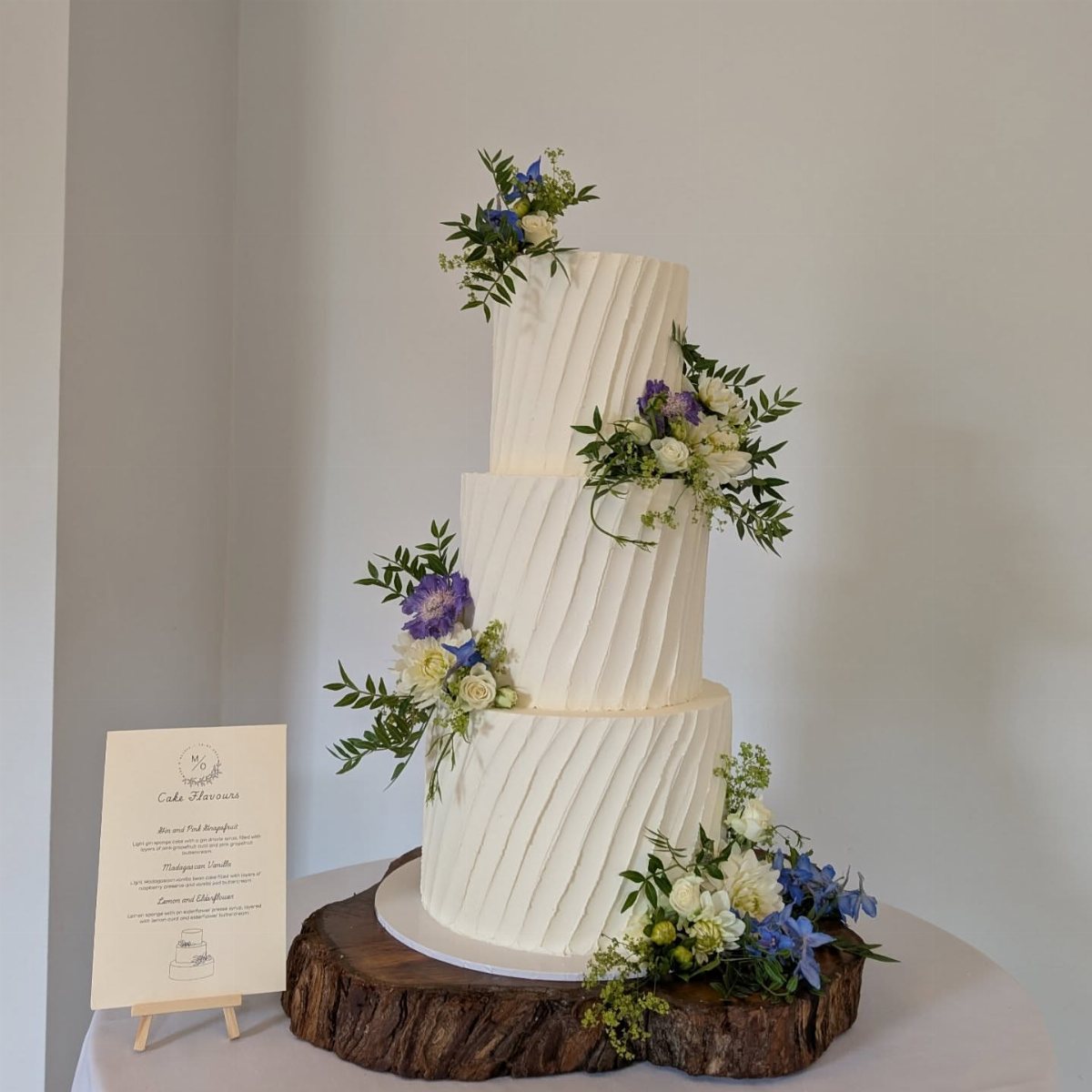
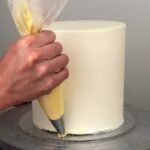
Buttercream ridges run in diagonal lines across each tier, soft enough to catch light without looking factory-made.
A 6-8-10" round combination keeps the shape gentle; square tiers in those same dimensions stand more upright since the size jumps are smaller relative to the width. Hand-iced buttercream guarantees no two cakes match exactly, which is the point.
The finish works best when the flowers are real and the display stays indoors; summer heat can shift the ridges by hour three.
2. Double Barrel Tiers

Double barrel tiers stack two identical layers to read as one tall tier, which stretches a 3-tier cake into something closer to 5-tier presence without the extra structure.
The catch sits in the serving: a 4-layer double barrel with a cake board between the two stacked tiers cuts normally, but a 3-layer version without that board produces slices too tall for standard dessert plates.
Most reception sites I have heard from dislike the taller cuts for exactly that reason. Mention the height when you book so the staff can plan, or choose the 4-layer build and accept the extra cake.
3. Square Tier Designs
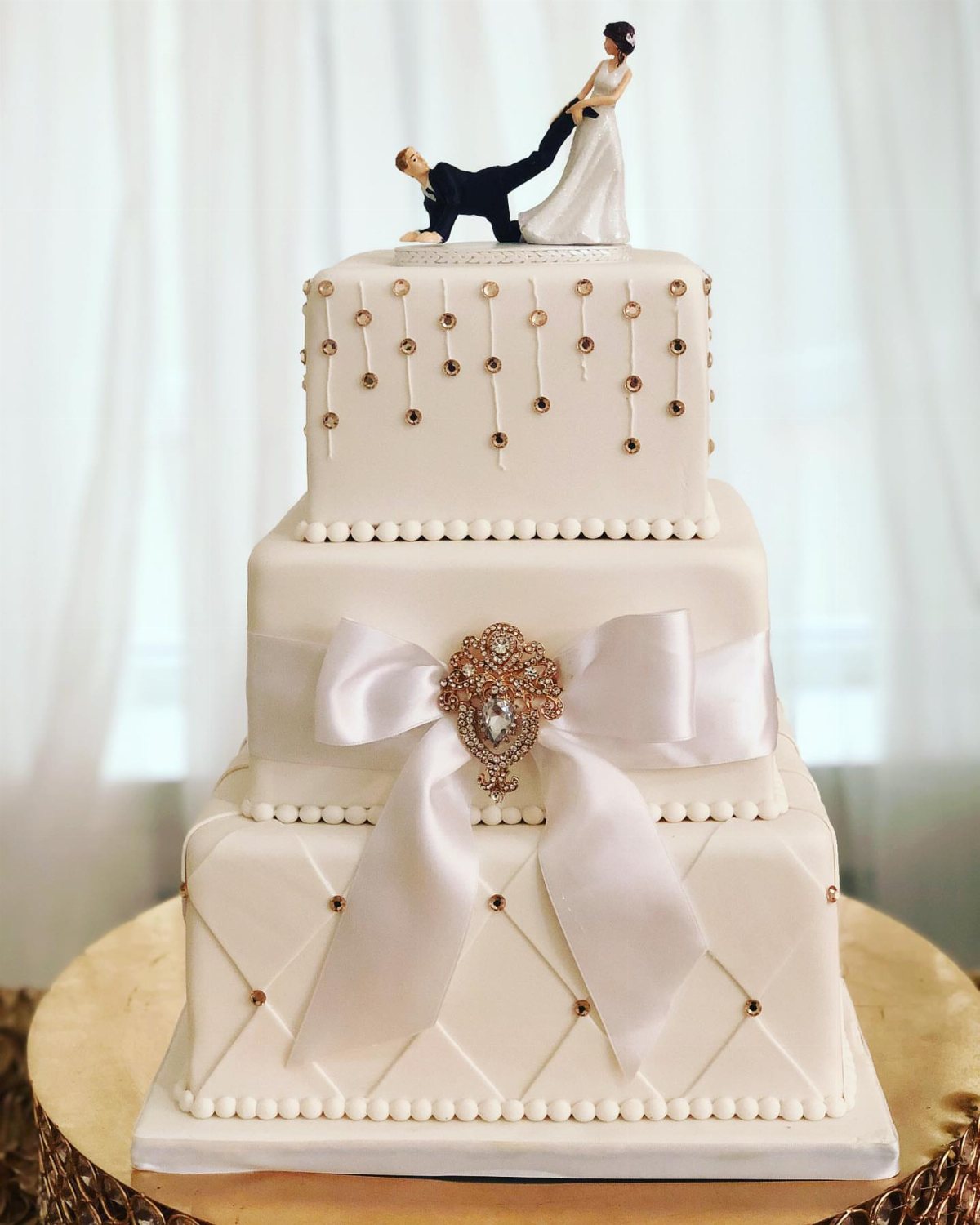
Square tiers read modern against the usual round, and an offset turn between layers adds movement that rounds cannot manage.
Size matters: a 6-9-12" combination turns far enough to look deliberate, while smaller jumps keep the tiers too centered to matter.
A 6-8-10" set stays closer to stacked and pays off only if you want the geometry clean rather than twisted.
Ask your baker to rotate each tier before settling on the final angle; what reads in the sketch may flatten once the fondant weight settles.
4. Fondant Ruffles
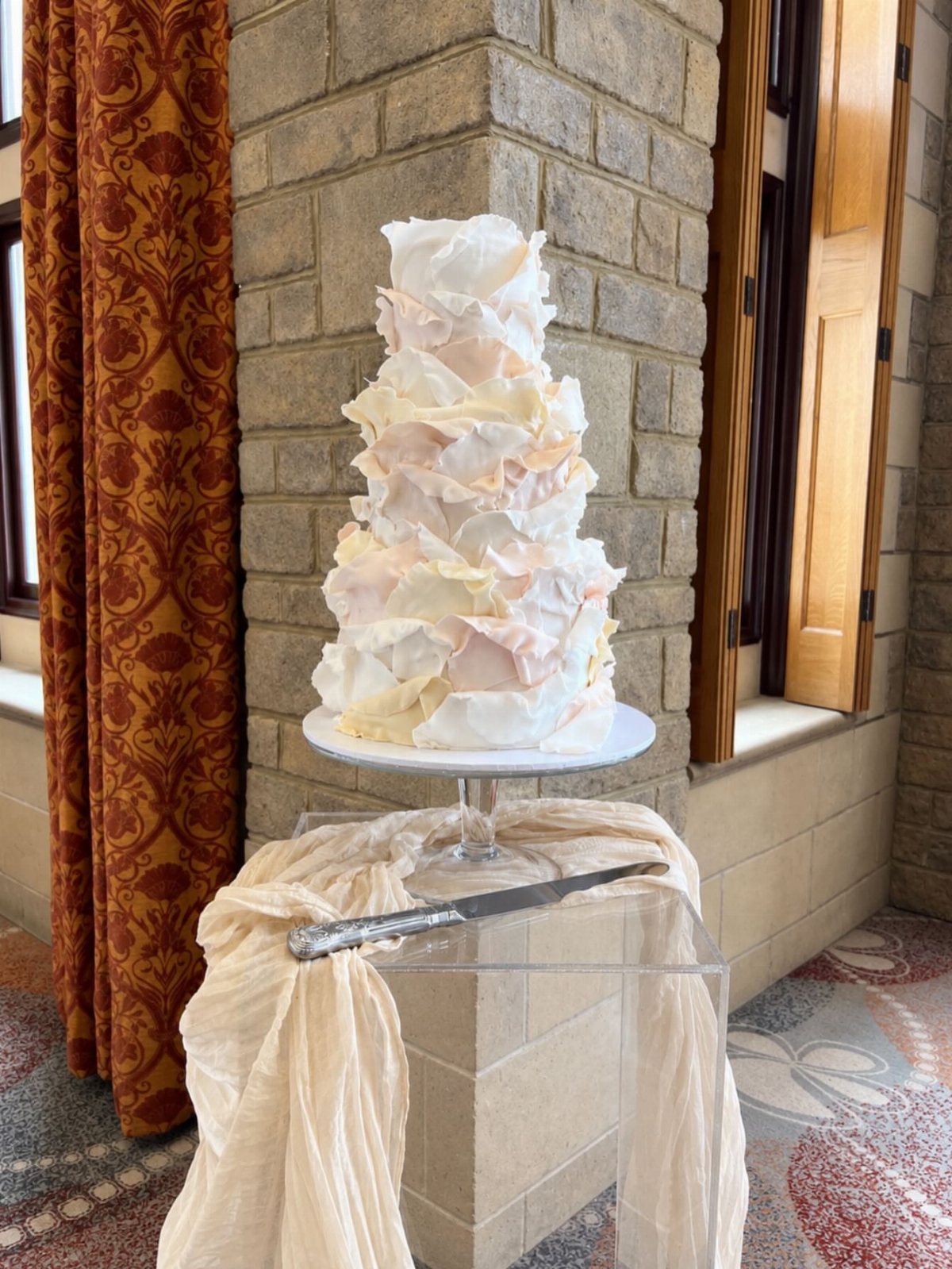
Fondant ruffles widen a 6-8-10" cake visually, the same dimensions that look narrow under smooth icing. Candy clay fondant holds the pleat better than standard fondant in humidity, and gum paste flowers keep the weight off the ruffles themselves.
A single color ruffle works if the reception carries stronger color elsewhere. This much surface texture draws the eye; place the cake where guests pass close rather than at the far end of a long room.
5. Monogrammed Tier with Floral Accents

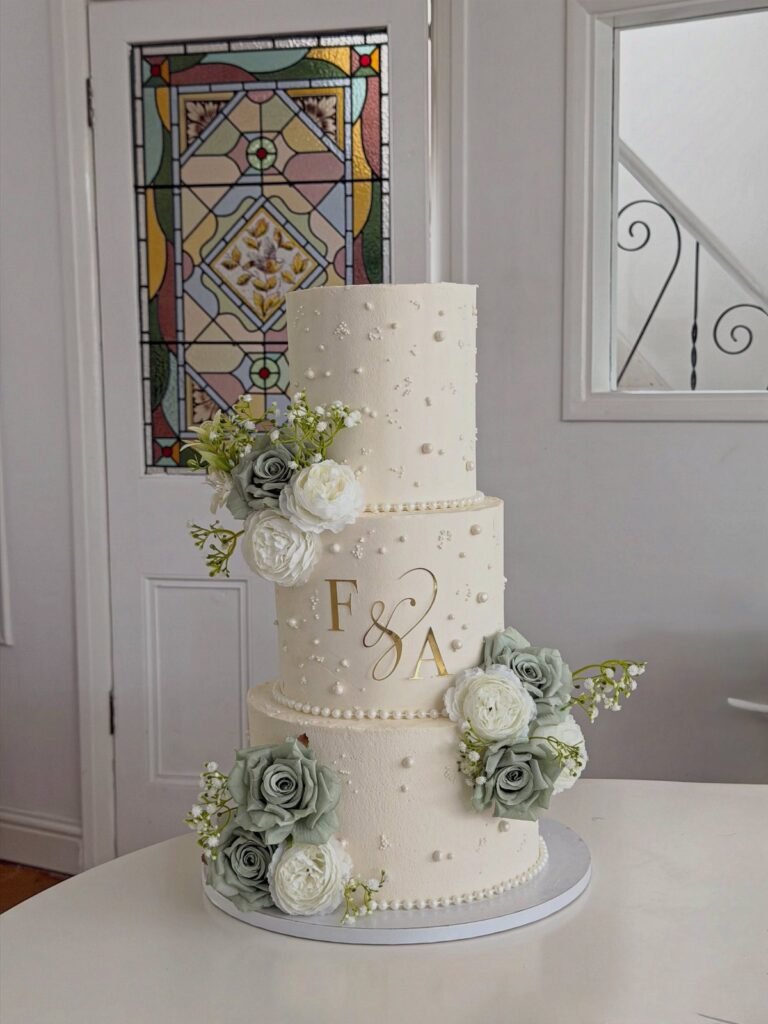
Metallic initials on the middle tier mark the cake as yours without dominating the display. Gold reads warm against white buttercream and cooler against fondant; silver works if your rings are platinum.
The monogram size should span about one-third of the tier height, placed dead center or slightly above the visual middle where the eye lands first. Sugar roses hold up longer than fresh, though fresh give better petal variation.
Either way, the pearls or small blooms around the letter keep it from floating alone.
6. Classic White Florals and Greenery
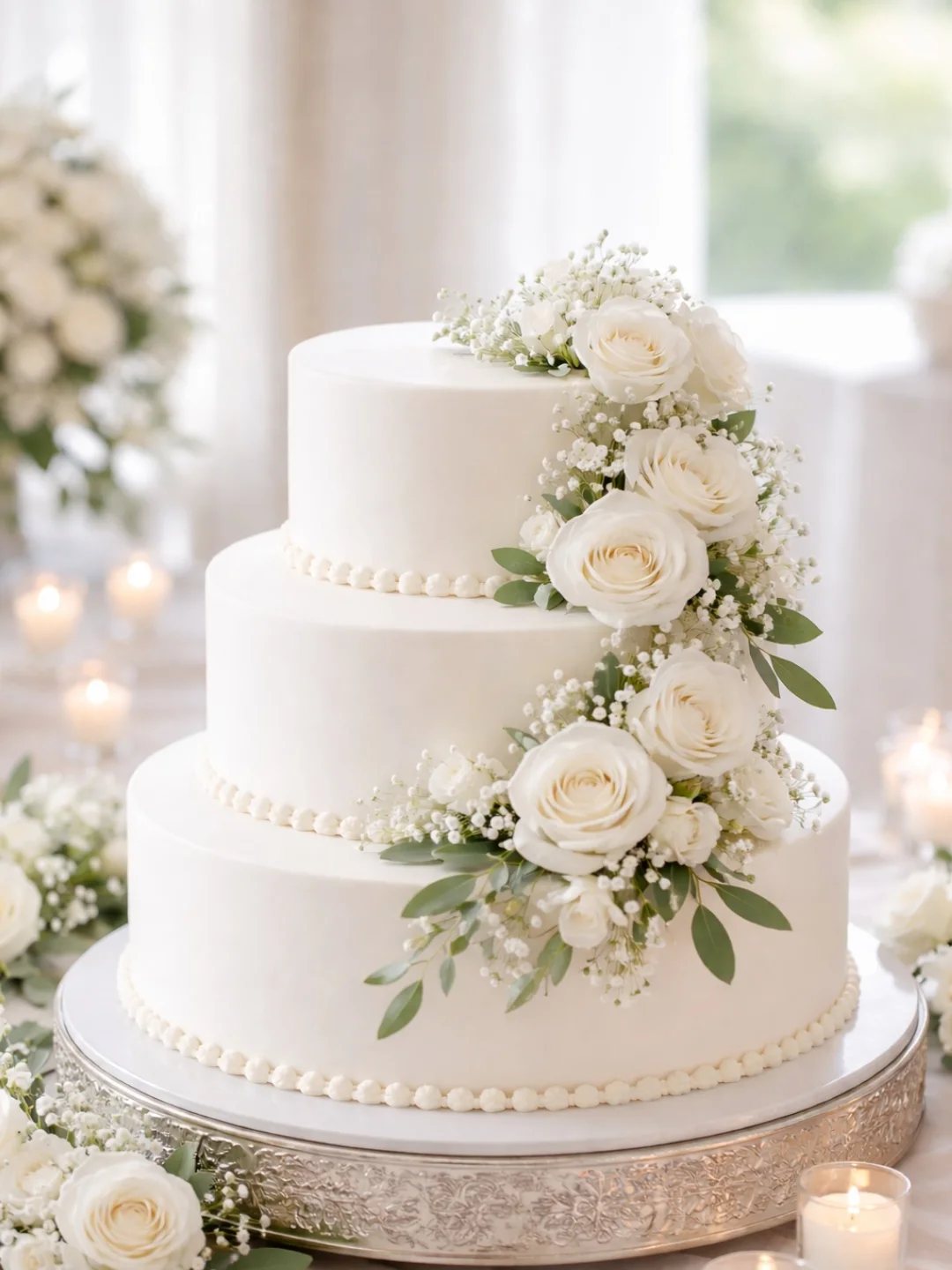
White roses and baby’s breath cascade from the top tier downward, which suits a smooth-finish cake that has no texture of its own to compete. The greenery amount controls the formality: all white reads traditional, more leaf reads garden.
Silver stands raise the cake into the sight line of seated guests, and a candle ring turns the whole display into a centerpiece rather than a dessert station. This combination forgives a simpler venue; the cake supplies its own ornament.
7. Calligraphy Tier with Gold Accents
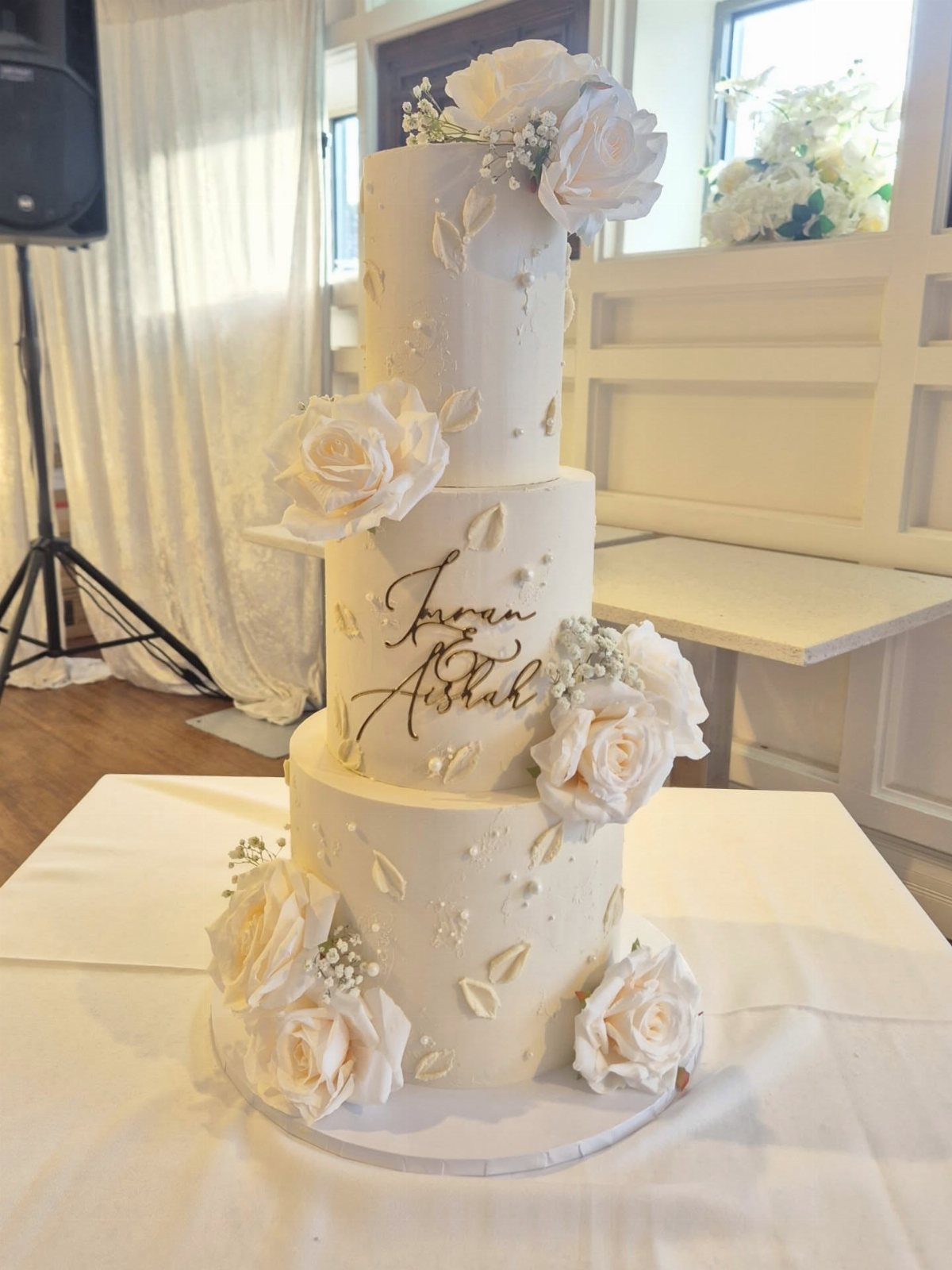
Gold calligraphy on a middle tier turns a standard white cake into something personal without adding another color to manage.
The lettering is piped in metallic royal icing or painted with edible gold leaf suspended in lemon extract; either way, it needs a practiced hand, so this is where your cake budget goes if you want one splurge.
A short name or single word reads cleaner than a long phrase at cake distance. I’d limit it to first names or a date, and I’d place it dead center where guests see it straight on during the cake cutting.
Cream sugar roses and pearl piping keep the palette warm rather than stark. For a cooler feel, swap the roses for white and the gold for silver.
This suits couples who want the cake to carry the personalization so the rest of the table can stay simple.
8. Deep Red Rose Clusters
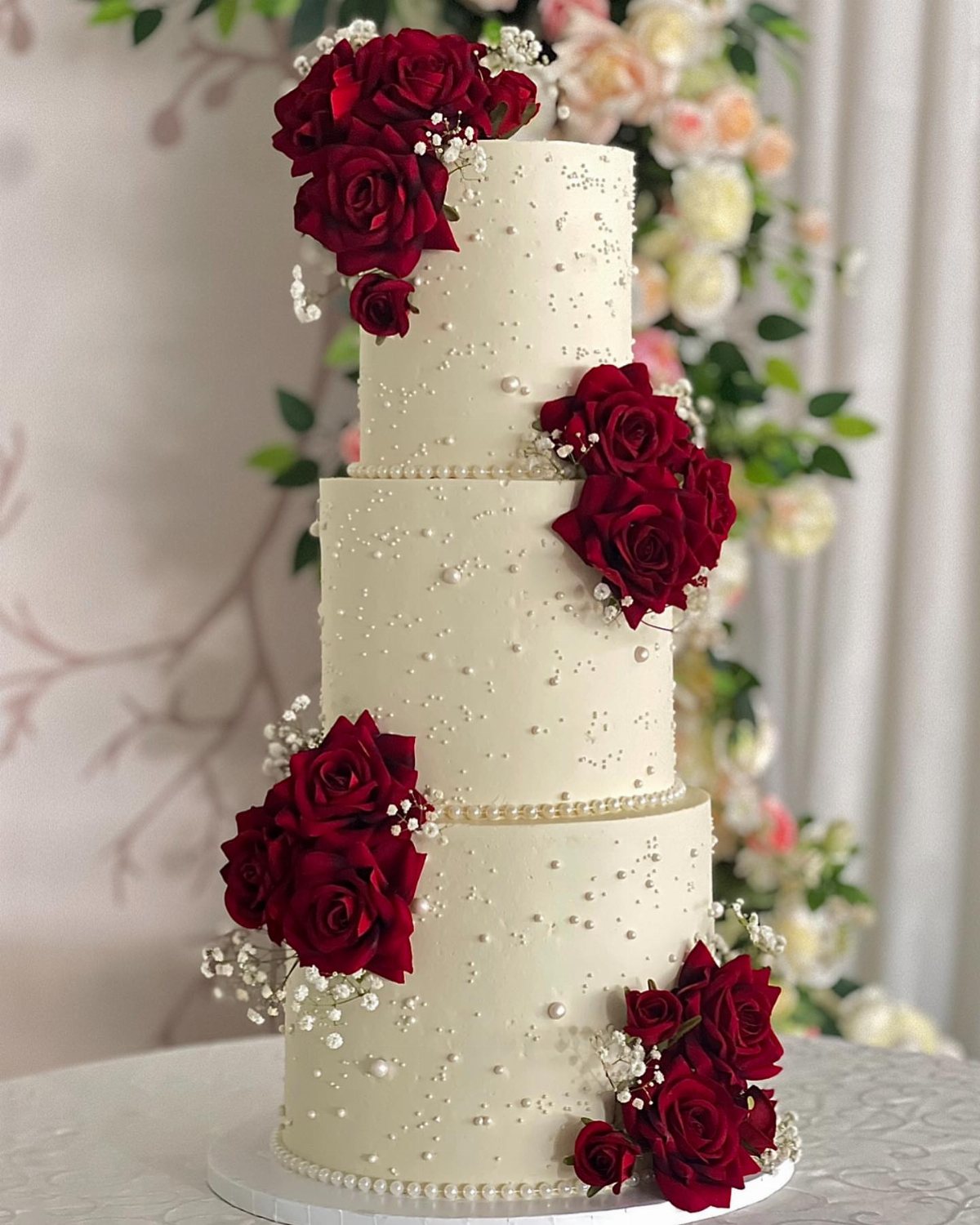
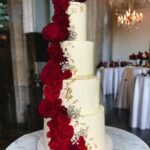
Deep red roses against white fondant or buttercream read formal and a little old-fashioned, which is exactly the tone some receptions need.
The roses are usually gumpaste or silk; fresh red roses work only if your baker sources pesticide-free and your venue allows it, so ask both before you decide.
The small white pearls piped between clusters are what keep this from looking too heavy. Without them, the red drags downward visually; with them, the eye travels the whole tier.
I’d keep the bottom tier heaviest with roses and let the top tier stay almost bare, maybe a single cluster.
Baby’s breath, visible in some versions, softens the formality but also reads dated to some guests. I’d skip it unless the rest of your florals already use it.
This choice trades modern restraint for warmth and ceremony. It suits a winter wedding, a Catholic church reception, or any couple whose guests expect tradition.
Frequently Asked Questions
How many servings in a 3-tier cake?
Serving counts range from about 35 for small rounds like 4-6-8" up to 166 for larger square combinations such as 6-10-14". The most common wedding sizes fall between 60 and 120.
Proportion matters: uneven tier jumps or mismatched heights throw off both the look and the math.
What are the wedding cake trends for 2026?
Buttercream ridges with real flowers, double barrel tiers that add height without extra structure, offset square tiers for modern geometry, fondant ruffles in candy clay for humid summer weddings, metallic monograms and calligraphy, and deep red rose clusters for formal tradition.
The common thread is texture and personal mark over plain smooth white.