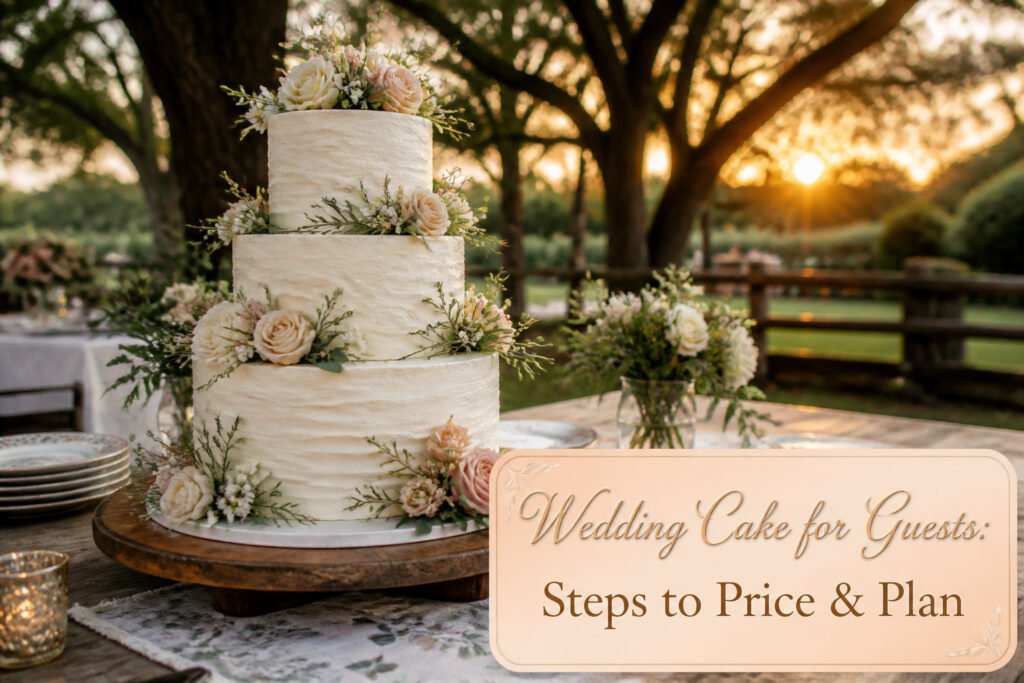
A wedding cake for 200 guests will run most couples between $1,400 and $2,400, though that same four-tier design can nearly double in cost depending on your metro area and whether the baker runs a specialty studio.
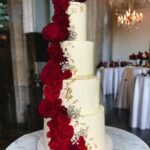
The 14-inch, 12-inch, 10-inch, and 8-inch tier configuration lands at 196 to 255 servings, which brackets your headcount neatly, but fresh flower accents cost a fraction of hand-formed sugar flowers that can add $200 to $500 alone.
1. Calculate Basic Costs
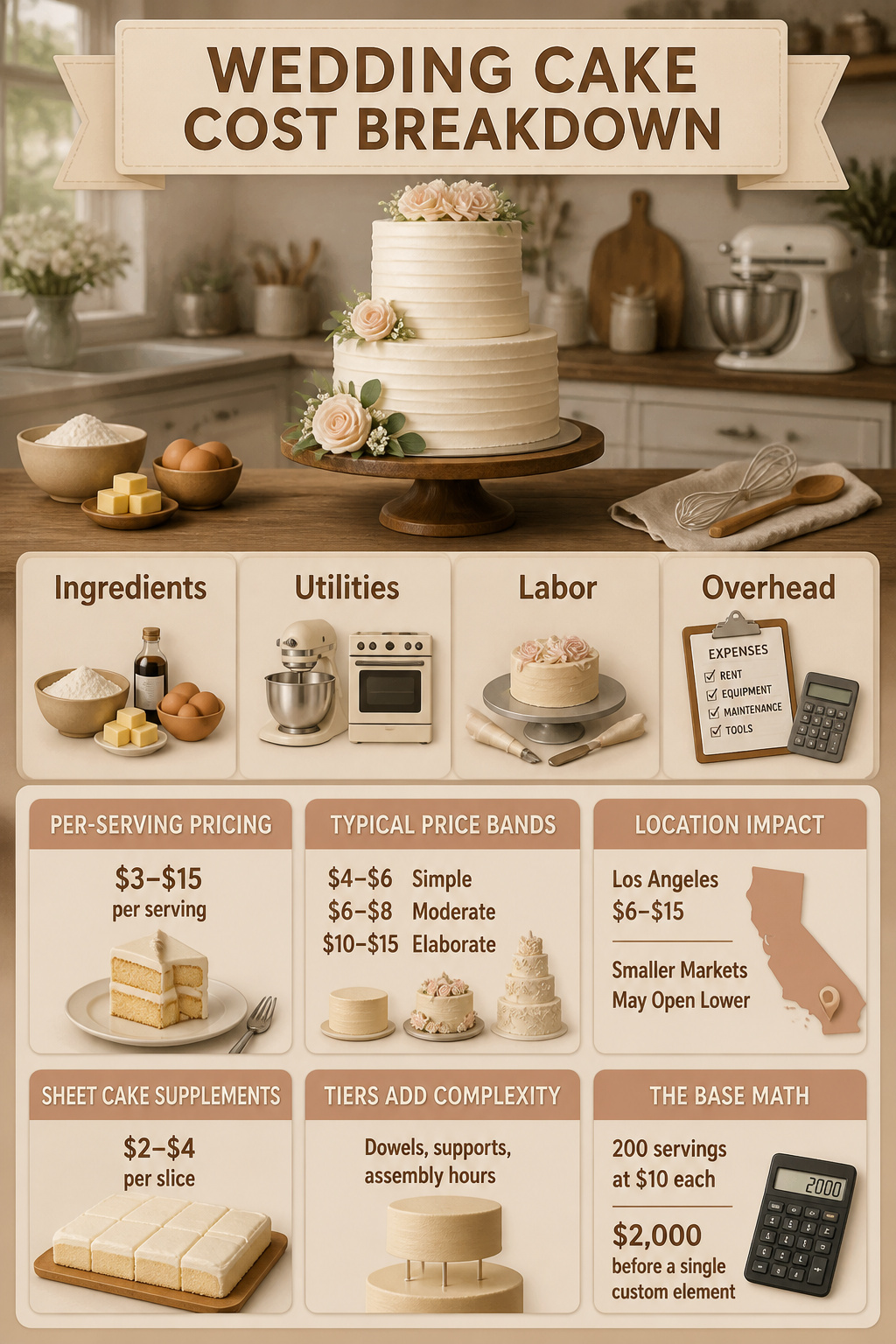
A wedding cake for 200 guests starts with four hard costs that most couples never see itemized. Ingredients run the gamut from standard flour and butter to fondant sheets and gum paste flowers.
Utilities stack up fast: electricity for mixers and ovens, gas for baking, water for cleanup. Labor covers the baker’s time designing, baking, decorating, and consulting; assistants add more.
Overhead swallows rent, equipment maintenance, and the tools that make a tiered structure stable.
Per-serving pricing lands between $3 and $15, though most couples will face the tighter $4 to $12 band in practice. Simple buttercream with minimal decoration sits at $4–$6.
Fondant, moderate detail, and premium flavors push to $6–$8. Elaborate sugar flowers, hand-painted work, or structural engineering for tall tiers hit $10–$15 and climb from there.
Location bends the range too. Los Angeles averages $6–$15 per serving; smaller markets may open lower.
Kitchen sheet cakes used as supplements run cheaper at $2–$4 per slice, though they don’t replace the display piece couples usually want.
Add tiers and you add dowels, internal supports, and hours of assembly. The base math is straightforward: 200 servings at $10 each starts at $2,000 before a single custom element.
2. Determine Cake Size and Design Complexity
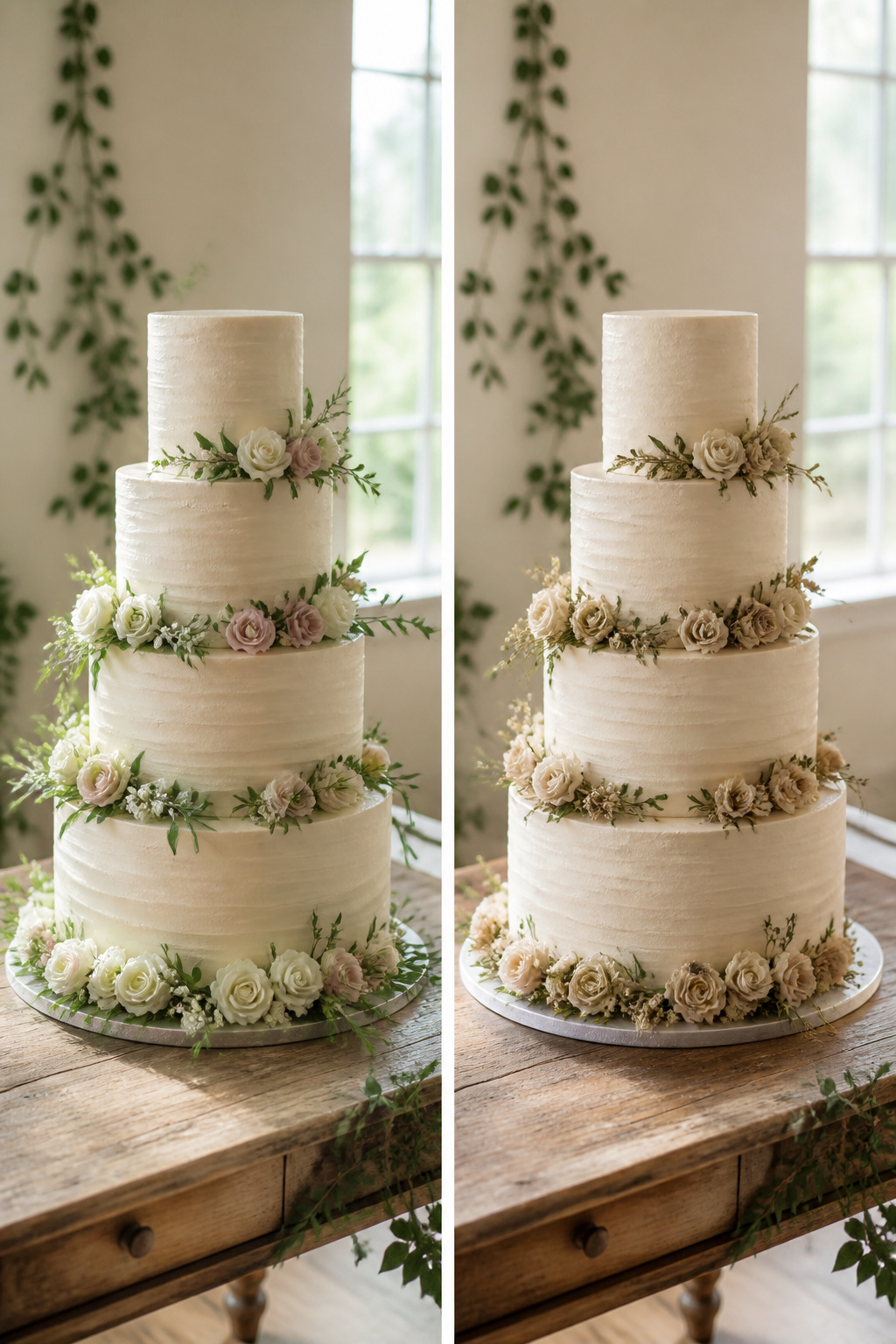
A four-tier cake built 14", 12", 10", 8" lands in the 196–255 serving range, which brackets 200 guests neatly. Drop to three tiers and you are looking at 74–120 servings, well short of the headcount unless you add a kitchen sheet cake behind it.
That combo, a display cake plus sheet backup, is the usual workaround when the budget tightens.
Design complexity pushes the math further. A smooth buttercream finish keeps the tier count honest; once you start stacking fondant bows, gum-paste flowers, or hand-piped lacework, the baker needs more surface area to show it off.
Extra tiers get added less for servings than for canvas, and every tier adds cost in labor hours, not just flour and eggs.
I have seen couples order a four-tier cake purely for the silhouette, then watch half of it come back from the kitchen because the portions were redundant against a full dessert table.
The serving chart is your floor; the design is what decides whether you are building above it.
3. Evaluate Market Rates

A wedding cake for 200 guests runs $1,400 to $2,400 in most markets, though the same four-tier design could cost well over $1,000 or, in some regions, nearly double what a smaller-town bakery charges.
The $300 to $700 range covers typical wedding cakes overall, but 200 servings pushes you into a different bracket entirely.
I start every cake search with the per-slice math. Most standard custom cakes land at $3 to $8 per serving, with designer or fondant work climbing to $8 to $20 or more.
In Los Angeles, I have seen quotes from $4 to $12 per slice depending on finish and detail. That variance is not a markup mystery.
It is geography, season, and whether your baker runs a specialty studio with premium ingredients and detailed consultations.
The reputation of the bakery matters as much as the zip code. A high-end custom studio justifies higher pricing through artistry and sourcing.
A grocery store tiered cake can land at $150 to $800. The question is what you are paying for: the cake your guests eat, or the cake they photograph.
For 200 guests, a four-tier display cake (14-inch, 12-inch, 10-inch, 8-inch tiers) serves 196 to 255 by wedding cut. A budget alternative keeps the three-tier centerpiece for show and sheets the actual servings from the kitchen.
Either way, get three local quotes before you decide what "market rate" means for your date.
4. Set Base Price Per Serving
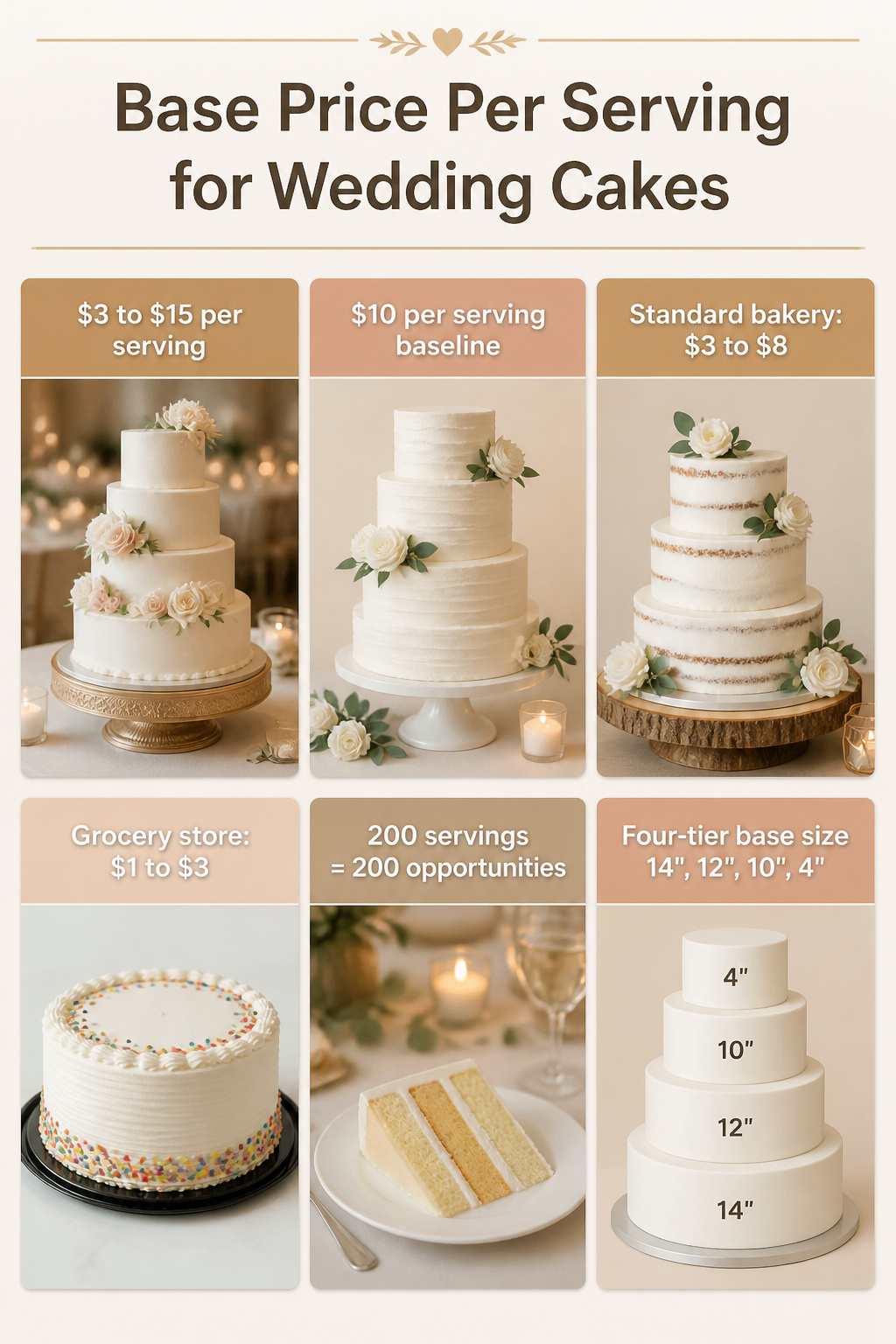
Most US couples planning a wedding cake for 200 guests will land somewhere between $3 and $15 per serving, and where you fall in that range depends on what you’re actually paying for. A standard custom bakery in 2026 typically runs $3 to $8 per slice.
Grocery store cakes with basic buttercream sit lower, around $1 to $3, while designer fondant work in high-cost metros like Los Angeles can push $6 to $15 or beyond.
I start my own math by separating the cake I need from the cake I want. For 200 servings, a base price of $10 per serving gets you to $2,000 before a single gum paste flower or gold leaf sheet enters the conversation.
That figure covers ingredients, the hours of labor for baking and stacking, and the structural engineering that keeps five tiers upright through a reception.
The 14-inch, 12-inch, 10-inch, and 4-inch tier combination that calculators recommend for this headcount runs about $800 to $850 at the low end of the market, which tells you how much design complexity and metro area mark up the final ticket.
My advice: pick your per-serving number before you fall in love with a Pinterest board.
The baker’s time is the cost that scales fastest, and 200 guests means 200 opportunities for hand-piped details you will pay for whether you notice them at 10 p.m. or not.
5. Add Charges for Special Features

Fresh flowers on a cake look generous and cost far less than the sugar version.
Fresh flower accents cost a fraction of what sugar work does in labor, so they are the practical choice when the budget for a wedding cake for 200 guests is already tight.
The gap widens fast once you move past flowers. Hand-formed sugar flowers can take hours per bloom.
Metallic finishes, hand-piped lace, and multi-color fondant all stack time onto the base price.
A three-tier semi-naked buttercream cake with fresh flowers for 100 guests might run $1,000–$1,500, while a four-tier fondant piece with metallics and sugar décor pushes past $1,800 for fewer people. Scale that to 200 guests and the premium features multiply.
Elaborate designs with sugar flowers or extensive handwork reach $10–$15 per serving, against $4–$6 for simple buttercream with minimal decoration.
The judgment call sits right there: fresh flowers deliver similar visual impact without the sugar premium, and for a 200-guest headcount that difference buys a lot elsewhere.
6. Include Delivery and Setup Fees
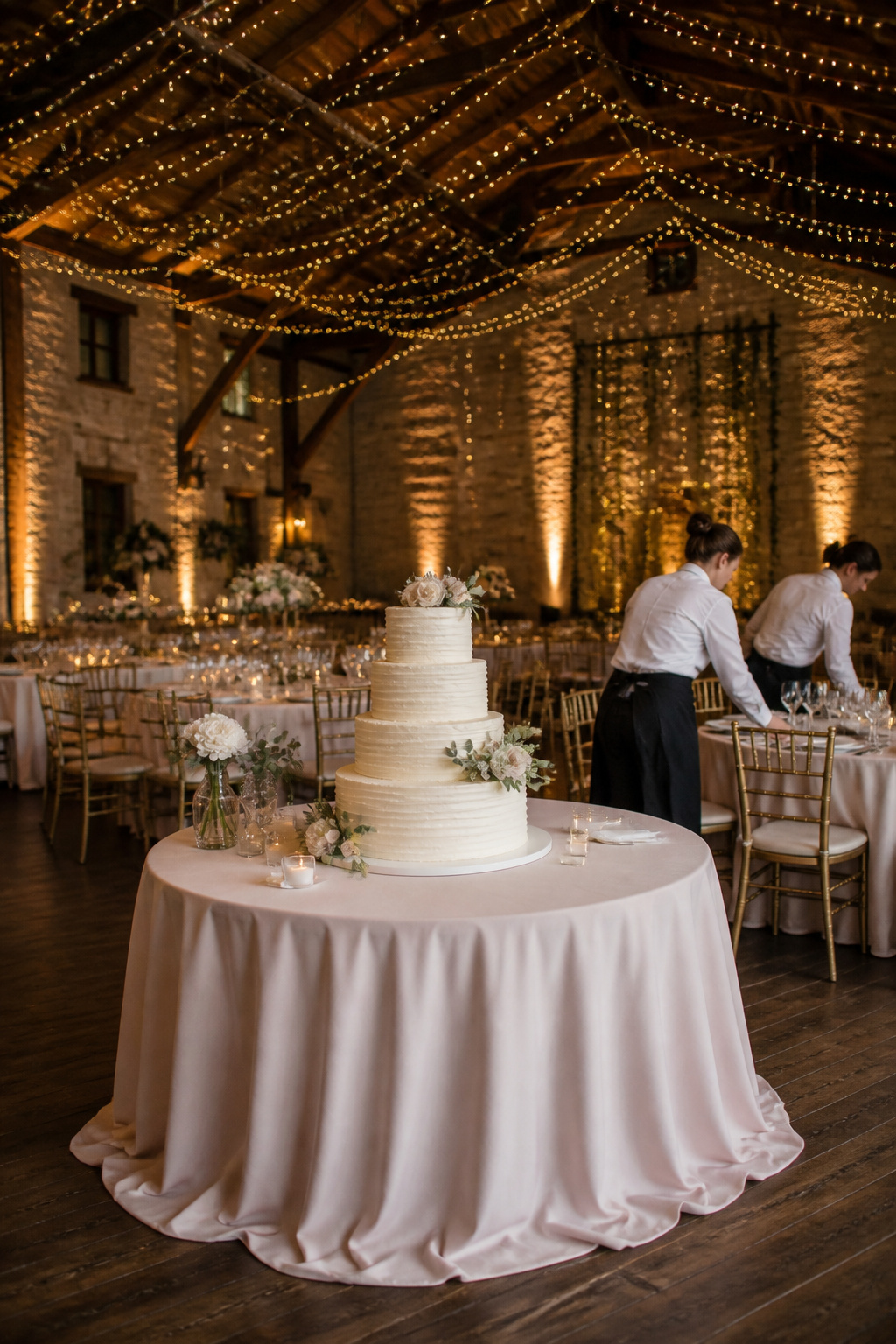
A tiered cake finished in buttercream looks simple until you try moving it. The structure is fragile, the finish marks if you breathe wrong, and a summer trunk turns fondant into a disaster.
That is why delivery and setup are billed as a separate service, not folded into the slice price.
Most bakeries charge $50 to $200 for transport and on-site assembly. The distance matters, but so does the setup itself: a three-tier cake with sugar flowers needs more hands and more time than a single-tier buttercream that sits on a rented stand.
Some venues require the baker to work through a loading dock and up a service elevator, which adds time the quote has to cover.
Ask whether delivery and setup are included when you first get a number. One bakery quotes $10 per serving and leaves the $150 delivery as a line item you discover at the contract stage.
Another builds it in. Comparing the two without knowing that makes the math useless.
The stand or display table can carry its own rental fee, so check whether the baker brings one or whether the venue supplies it.
If the baker installs fresh flowers between tiers on site, that time is part of the setup charge too.
7. Finalize and Present the Quote
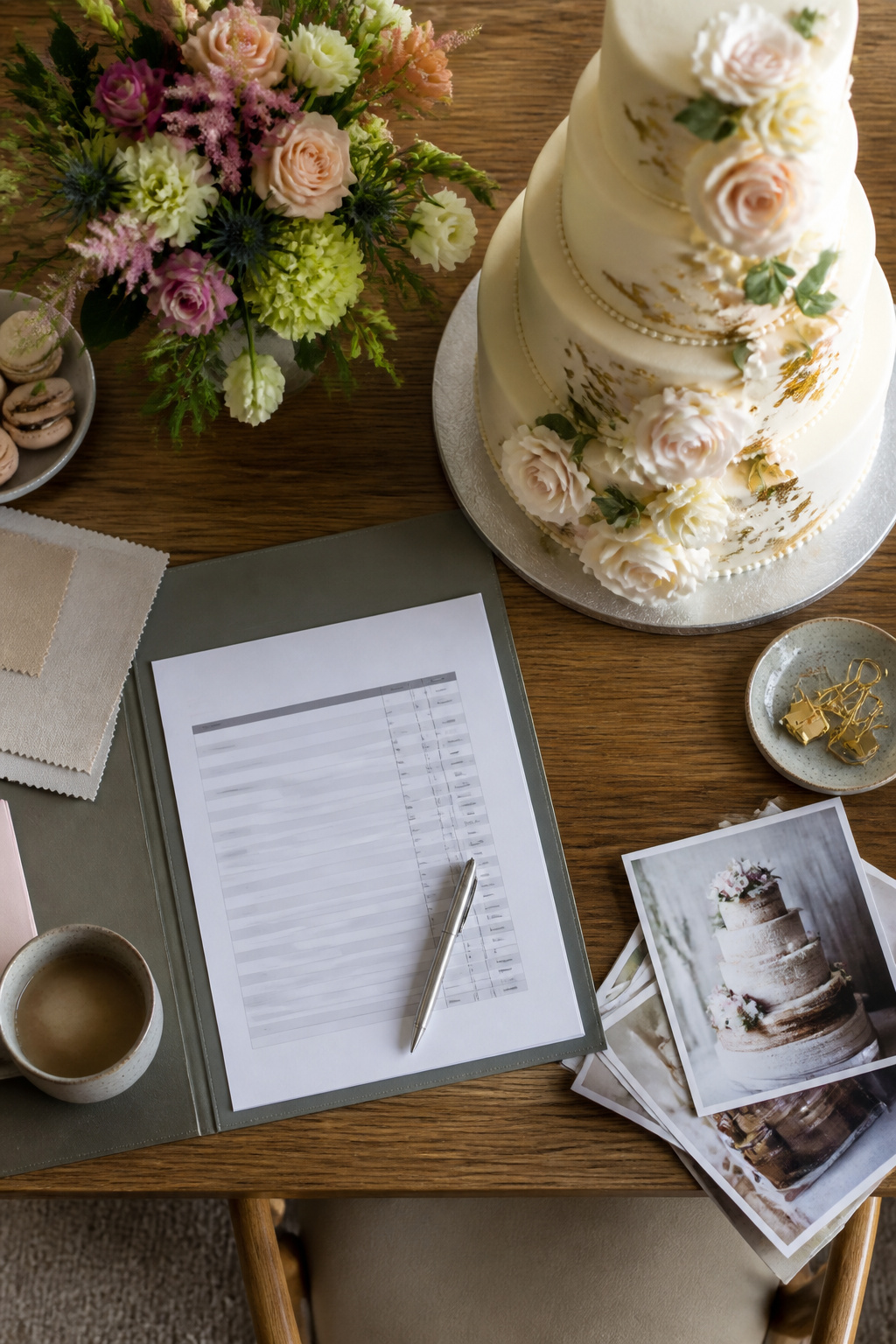
A complete quote for a wedding cake for 200 guests should line up every cost so nothing hides behind a single big number. I start with the base: $10 per serving times 200 servings equals $2,000, then itemize each add-on below it.
Sugar flowers, metallic accents, intricate piping, custom designing ($300 in my running example), delivery and setup ($50 to $200 depending on distance and complexity). The total lands at $2,450.
Two cakes priced identically at the counter can differ by $200 or more once all-in costs are folded in, so the quote must show delivery, setup, and any tasting or consultation fees separately.
A typical payment arrangement runs 30 to 50 percent non-refundable deposit upfront, balance due closer to the wedding date.
Transparency builds trust, but it also protects you: when the bride sees exactly what her money buys, she knows the value and you know she agreed to it.
8. Offer Payment Plans

A tiered fondant cake for two hundred guests can push well past the mid-four-thousands, and that number lands all at once if you are not paying attention.
Bakeries that offer installment plans let you split the total across the months between booking and the wedding, which matters when the cake is one of several deposits hitting the same credit card cycle.
I have seen couples assume they must pay half or full upfront, then narrow their design before they have even priced flexibility.
Ask directly. Not every bakery advertises this, and some structure it only for orders above a certain threshold.
A typical arrangement runs three or four payments: deposit to hold the date, a design-finalization payment, a production installment, and balance due before delivery.
Others will align draws to your wedding-planning milestones, which helps if you are paying vendors in sequence rather than in parallel.
The catch is what happens if you cancel. Installment plans often lock you into stricter refund terms than lump-sum contracts, since the bakery has reserved capacity they cannot rebook at short notice.
Read where your money stops being refundable; usually after the final design approval. If your date is tentative or your guest count still shifting, a payment plan trades peace of mind for commitment.
I would take the plan only after the headcount is fixed and the design is signed off.
Types of Cakes

Most bakers price a wedding cake for 200 guests by the type of finish you choose, and the gap between options runs to several dollars per slice. The main types break down like this.
- Buttercream is piped and smoothed by hand, not rolled into a sculpted shell, so it takes less time and typically starts around $4–$6 per serving. A three-tier semi-naked buttercream cake with fresh flowers for 100 guests might cost around $1,000–$1,500, and scaling that up to 200 keeps buttercream the most budget-friendly polished look.
- Fondant gets rolled and draped, then finished with metallics or sugar décor. The labor pushes mid-range servings to $6–$8 and elaborate designs to $10–$15 or more. A four-tier fondant cake for a large crowd can run $1,800 and up.
- Naked and semi-naked cakes leave much of the sponge visible. Semi-naked uses a thin coat of buttercream; naked uses almost none. Both read as modern and rely on fresh fruit or flowers rather than intricate piping, which usually lands them in the buttercream price band or just above.
- Sheet cakes for kitchen serving are the quiet way to hit 200 without pricing every guest at tiered-cake rates. They run $2–$4 per serving and get cut behind the scenes. A common setup: a medium display cake that serves 75, plus a full sheet cake that serves 100, for 175 total; add a quarter-sheet backup if your final count nudges past 200.
Design Features
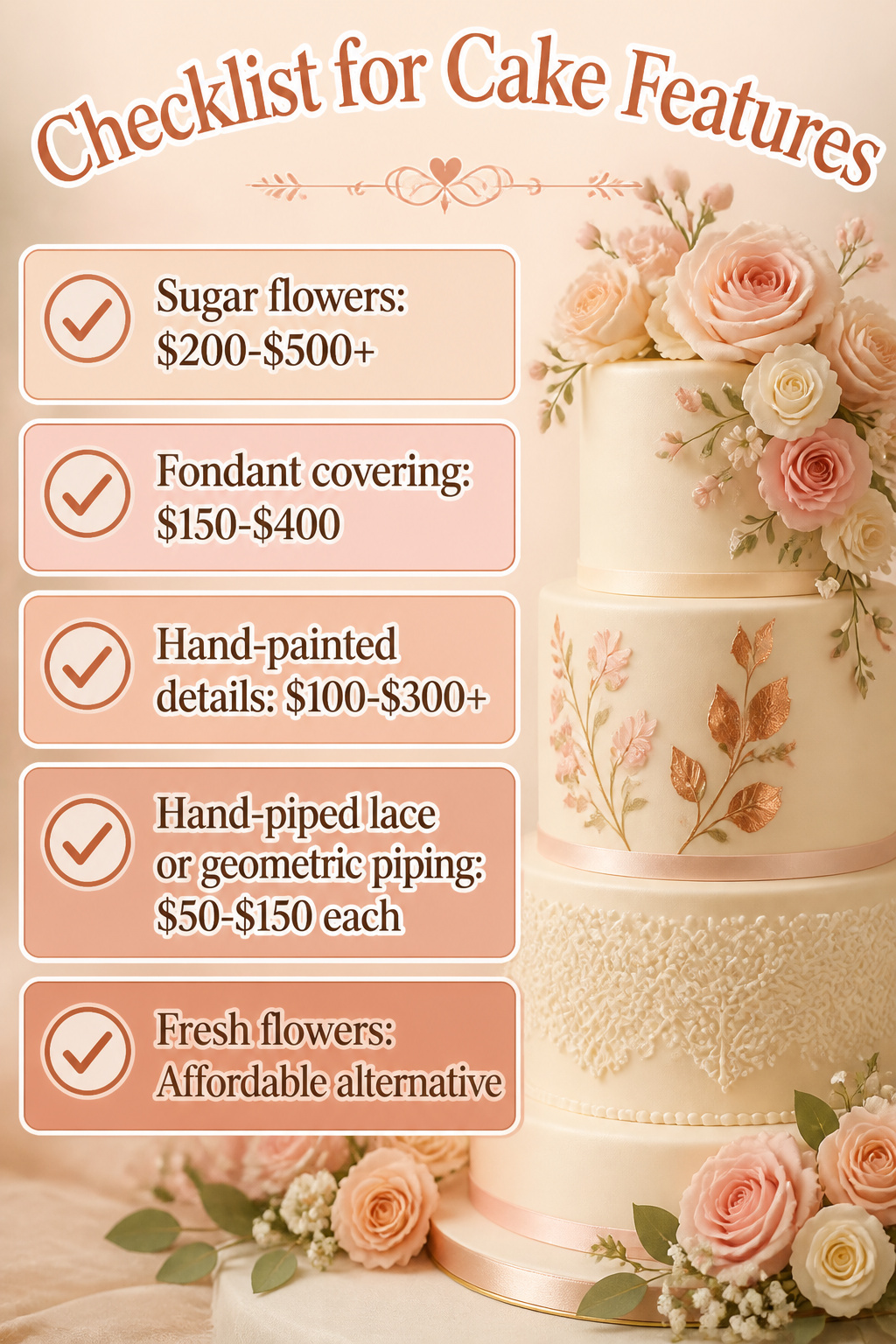
Decorative elements are where two otherwise identical wedding cakes for 200 guests can pull apart by several hundred dollars. The labor hours matter more than the material cost.
- Sugar flowers: Hand-formed gum paste or fondant blooms run $200–$500+ for a full arrangement. Each petal is shaped, thinned, and assembled by hand, which is why this detail alone can double the price of a simpler cake.
- Fondant covering: Expect an added $150–$400 compared to buttercream on a 3-tier cake. The smooth canvas looks crisp, but the covering itself is labor-intensive and becomes the base for further decoration.
- Hand-painted details and metallic leaf: These range $100–$300+ depending on coverage. Metallic accents in particular catch light well in reception photos but require steady, slow application.
- Hand-piped lace or geometric piping: Priced per element, often $50–$150 each. Multi-color fondant work falls in this same time-heavy category.
- Fresh flowers: Your florist can place these the day of for a fraction of sugar-flower labor cost. Confirm with both florist and baker that stems are food-safe and prearranged; the visual impact is similar, the savings real.
Cost Factors

A wedding cake for 200 guests typically runs $4 to $12 per slice in major metro areas, which puts the base cake alone at $800–$2,400 before anything else gets added. Four line items drive where you land in that spread.
Ingredients scale fast at this head count. Premium butter, imported chocolate, and real vanilla beans push the per-serving number toward the top; standard bakery staples hold it lower.
Labor matters more than most couples expect. Each custom cake represents 10 to 20 hours of craftsmanship from concept sketch to final delivery, and hand piping, edible lace, or sculpted flowers add hours that show up in the quote.
Design complexity compounds both of the above. Sugar flowers, metallic accents, and intricate piping carry their own line-item charges on top of the base price.
Delivery and setup are almost always billed separately, running $50 to $200 depending on distance, and multi-tier cakes need climate-controlled transport plus on-site assembly to arrive intact.
| Factor | What Drives Cost Up | Where to Pull Back |
|---|---|---|
| Ingredients | Premium or imported components | Standard bakery-grade staples |
| Labor | Hand piping, sculpted flowers, edible lace | Simpler finishes, fewer hand details |
| Design complexity | Sugar flowers, metallic accents, intricate piping | Buttercream instead of fondant, minimal adornment |
| Delivery/setup | Long distance, complex venue access | Pickup if the baker allows; venue with easy loading |
Serving Sizes and Tier Charts

A standard wedding slice measures 1 x 2 x 4 inches, which is smaller than the chunk most guests picture when they hear "cake." That math is what lets a four-tier cake feed a crowd without becoming furniture.
The tiers stack like this for a wedding cake for 200 guests:
| Tiers | Typical Sizes | Wedding-Cut Servings | Best For |
|---|---|---|---|
| Three-tier | 6"/8"/10" or 8"/10"/12" | 74–120 | Smaller weddings, display focus |
| Four-tier | 8"/10"/12"/14" | 130–200 | Guest lists near 200 |
| Four-tier statement | 14"/12"/10"/8" | 196–255 | Full service with leftovers |
The 14"/12"/10"/8" configuration is the one that lands you at 196–255 servings, enough to cover 200 guests even if your caterer cuts generous slices.
A three-tier 14"/12"/10" display cake plus sheet cake in the kitchen is the budget alternative some bakers quote, though you lose the single-cake moment at the table.
Frequently Asked Questions
How much does a wedding cake cost for 100 guests?
Most couples spend between $1,000 and $1,500 for 100 guests, depending on flavor, frosting type, and decorative elements. A three-tier semi-naked buttercream cake with fresh flowers typically lands in that range.
Scale up to 200 guests and the same style roughly doubles.
What size wedding cake will feed 100 guests?
A three-tier cake with 10-inch, 8-inch, and 6-inch tiers serves 74–95 guests by wedding cut. For a full 100, you need either a four-tier design or a three-tier display plus a small kitchen sheet cake.
How many servings does a 4-tier wedding cake provide?
A four-tier cake provides approximately 130 to 200 servings, depending on tier sizes. The 14-inch, 12-inch, 10-inch, 8-inch configuration specifically lands at 196–255 servings, which brackets 200 guests neatly.
How much cake is needed for 200 people?
A four-tier cake sized 14-inch, 12-inch, 10-inch, 8-inch serves 196–255 guests and covers 200 with room to spare. The budget workaround is a smaller three-tier display cake plus kitchen sheet cakes cut behind the scenes.
What is the 1234 cake rule?
The 1-2-3-4 rule is an old recipe formula, not a sizing guide: 1 cup butter, 2 cups sugar, 3 cups flour, 4 eggs. For deciding how much cake to order, use a servings chart and your guest count instead.