Wedding tables run from a single cake stand to continuous rows that seat every guest at once, and the choices you make shape how the whole evening feels.
What you actually need depends on whether your reception is a seated dinner, a buffet or something between: the same 150-guest count calls for 19 rounds with a sweetheart table and 3 buffet lines, or 16 seats at two joined banquet tables, or one unbroken communal row through a barn.
The linen budget splits the same way, from a single polyester blend cloth to a sequined overlay worth owning for the head table alone.
1. Food Tables
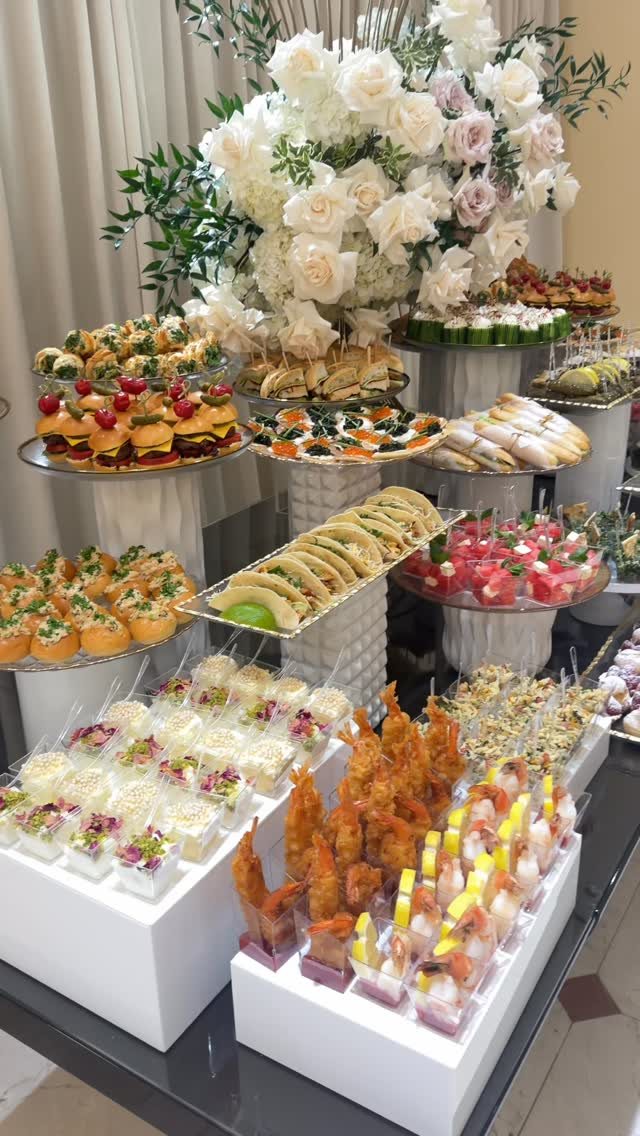
Food tables carry the weight of the whole reception. I have seen couples underestimate how many they need, then watch guests bottleneck around a single buffet line while their hot food cools.
Multiple tables become necessary once your guest count grows past what one buffet line can handle without a bottleneck.
A self-serve spread of finger foods keeps lines moving faster than carved stations or made-to-order dishes where guests wait for a server. I would rather pay for 2 shorter tables set apart than 1 long one that creates a traffic jam.
Ask your caterer how many stations they recommend for your head count. Order linens by the actual table size, and leave enough length between dishes that guests can plate without crowding each other.
2. U-Shaped Layout
A U-shaped layout turns the whole room into one conversation pit. Every guest faces inward, so the couple sits at the open center or the curve itself, visible to everyone without craning necks.
I like this setup for smaller weddings where speeches matter and you want every face visible to the speaker.
The shape gives every seat a clear sightline to the center, which means your photographer stays in one spot for the toasts instead of circling the room.
For larger weddings, the U grows so wide that guests on the far ends lose the intimacy that justifies the arrangement.
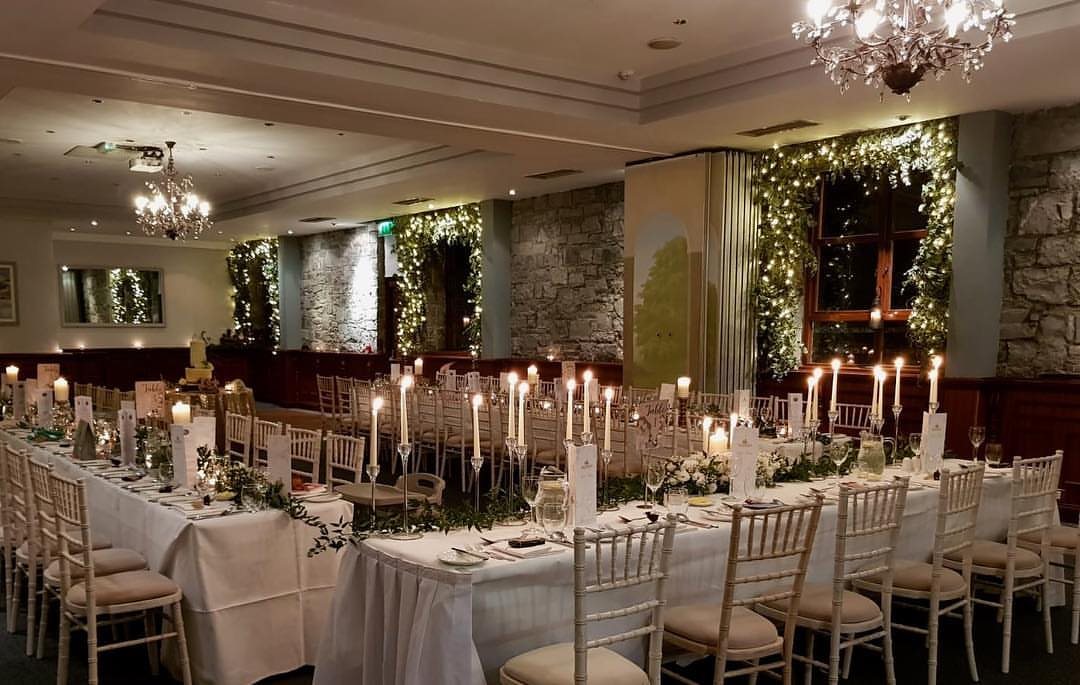
Chiavari chairs and continuous greenery garlands reinforce the formal, communal feel of a shared meal. You lose seating capacity compared to individual rounds, since the inner curve of the U is dead space.
3. Sweetheart Table
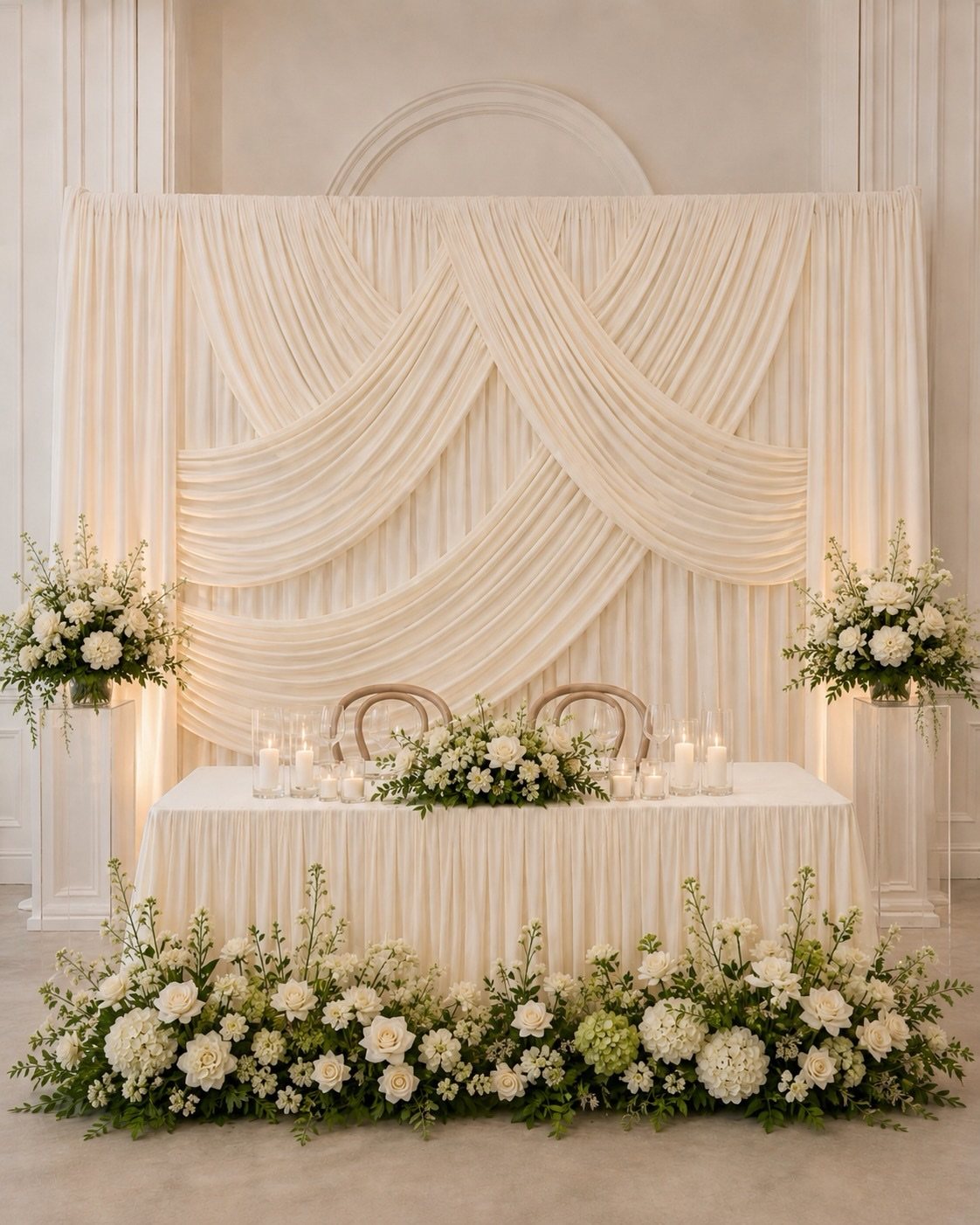
The sweetheart table gives the couple one quiet meal together. Two chairs, a small rectangular table, and no obligation to make conversation across a long banquet surface while food gets cold.
I would choose this for any wedding where the couple actually wants to eat. The head table demands performance; the sweetheart version lets you sit close enough to talk below the music.
Position it where guests can see you for the first dance and speeches, but not so centered that every toast feels like a spotlight.
A draped fabric backdrop with standing arrangements photographs cleanly from the front without visual clutter behind you.
4. Kids Activity Table
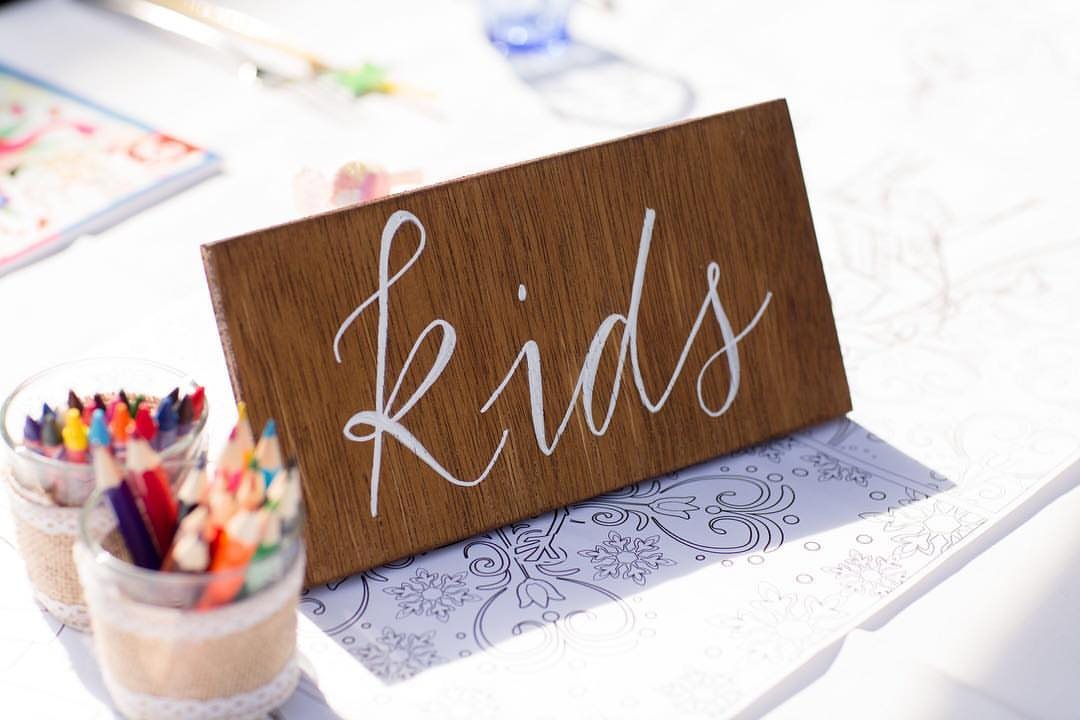
Kids at a wedding need somewhere to land that is not their parents’ laps or the dance floor.
A dedicated activity table only makes sense if your guest list includes enough children to justify the space and supervision. One table seats a small group of kids with materials they can share; overcrowding leads to spilled glue and tears.
Coloring supplies and a wooden sign suggest ages 4 to 10; younger children need supervision, older ones may resist being seated at all.
Check your guest list for the count and ages before you rent anything. I would skip this entirely for a handful of children, who can sit with their families and skip the separate programming.
For 8 or more, a second adult to monitor is worth the cost.
The materials matter less than the location: near enough that parents can check in, far enough that a crying child does not stop the speeches.
5. Memory or Photo Table
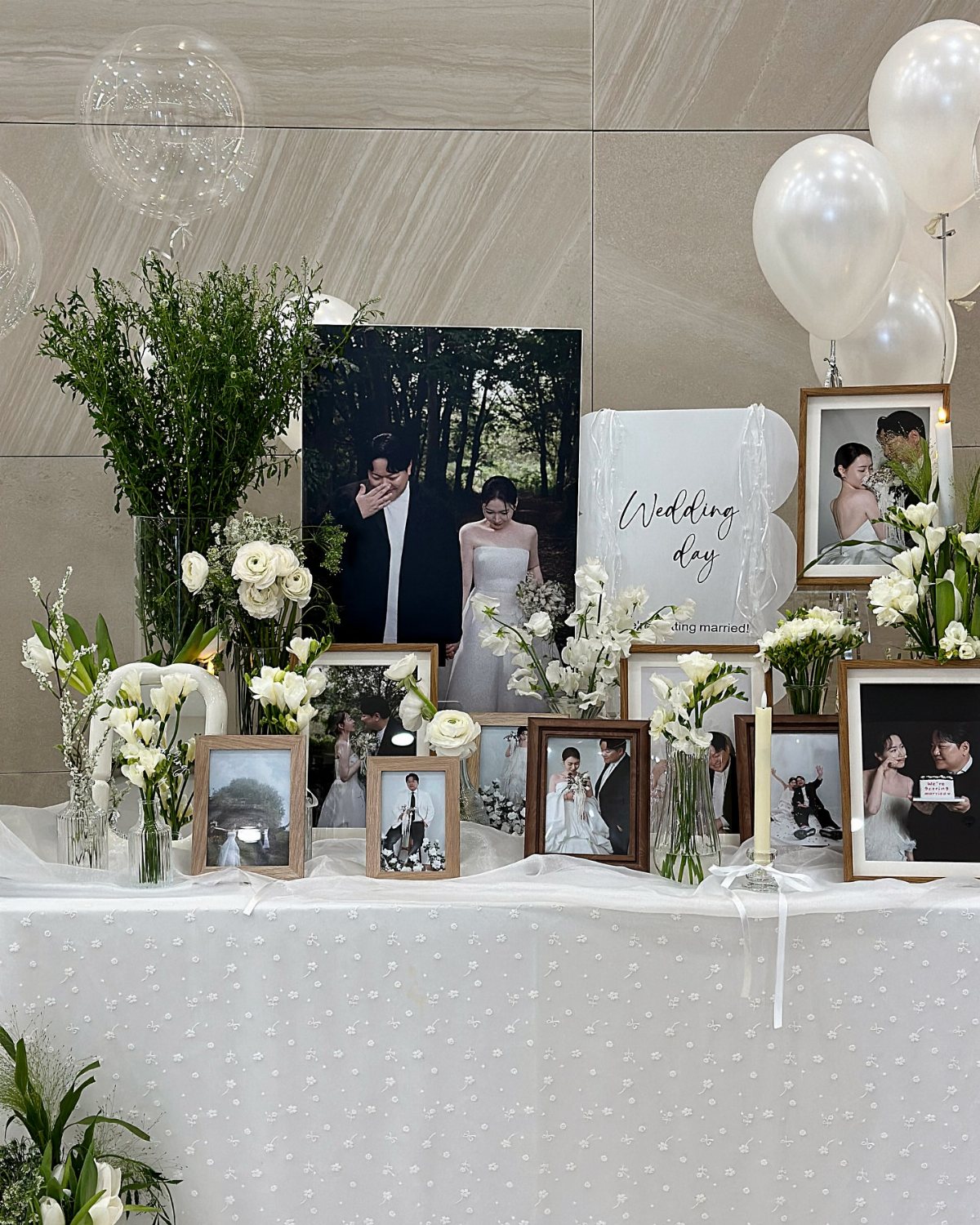
A memory table lets guests who never met your grandparents see the faces that shaped you.
Layer framed photographs with fresh flowers and a simple sign, which reads as invitation rather than museum display. I prefer this open, guest-facing arrangement to a closed album that only one person can browse at a time.
Whether to add a guest album for instant photos depends on your crowd. A photo booth near this table creates a natural loop: guests pose, then add their strip to the collection.
Without a booth, the album risks staying empty.
Check your venue’s wall rules before you plan a hanging display. Freestanding tables work anywhere, since they do not need a wall behind them.
6. Head Table
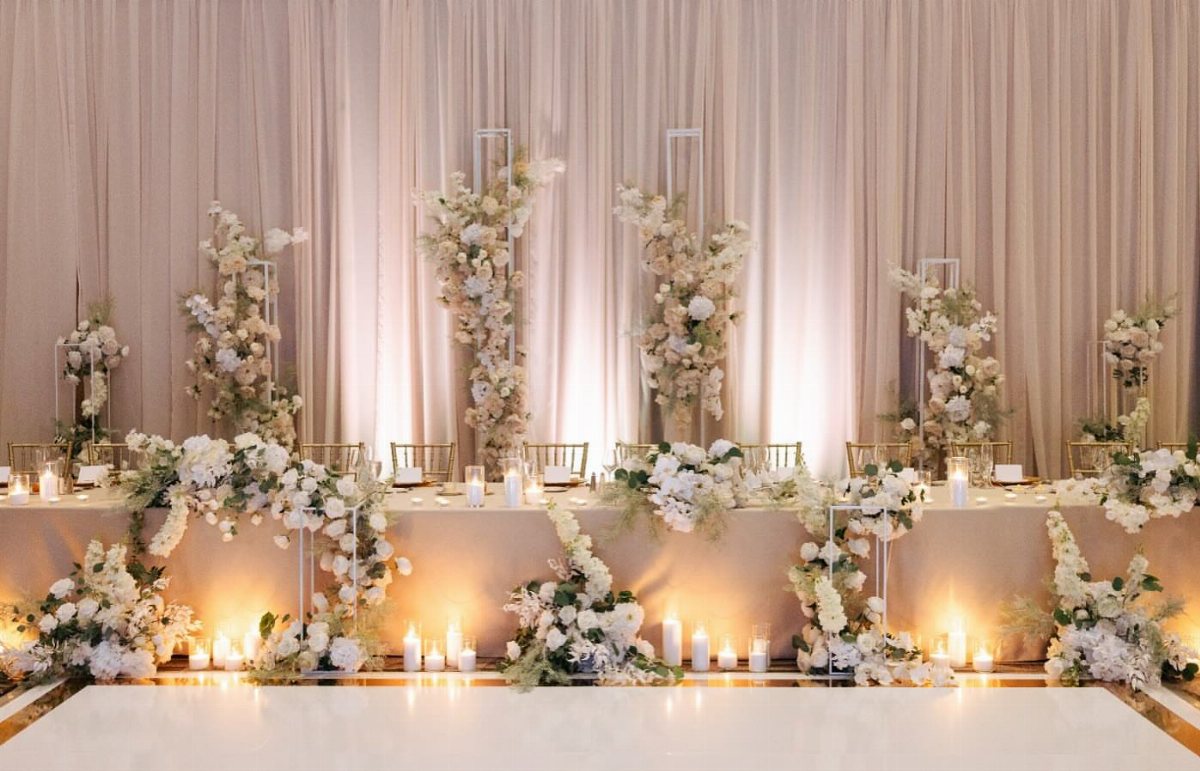
The head table puts the couple and their party on display for the whole meal.
This is the most visible table in the room, so abundant florals and floor candles set the tone guests will remember. I would rather invest here than spread decoration thin across guest tables that hold centerpieces guests will talk over.
The long rectangular shape faces the crowd rather than sitting among them, making the bridal party the room’s focal point.
Your bridal party size determines the length; measure enough space per person so no one is elbowing their neighbor through salad. Your party eats in public, performing togetherness instead of catching up with old friends at guest tables.
For couples who want their party to enjoy the reception, I would seat the bridal party at their own individual tables scattered among guests, and keep a sweetheart table for two.
7. Table Layout Planning
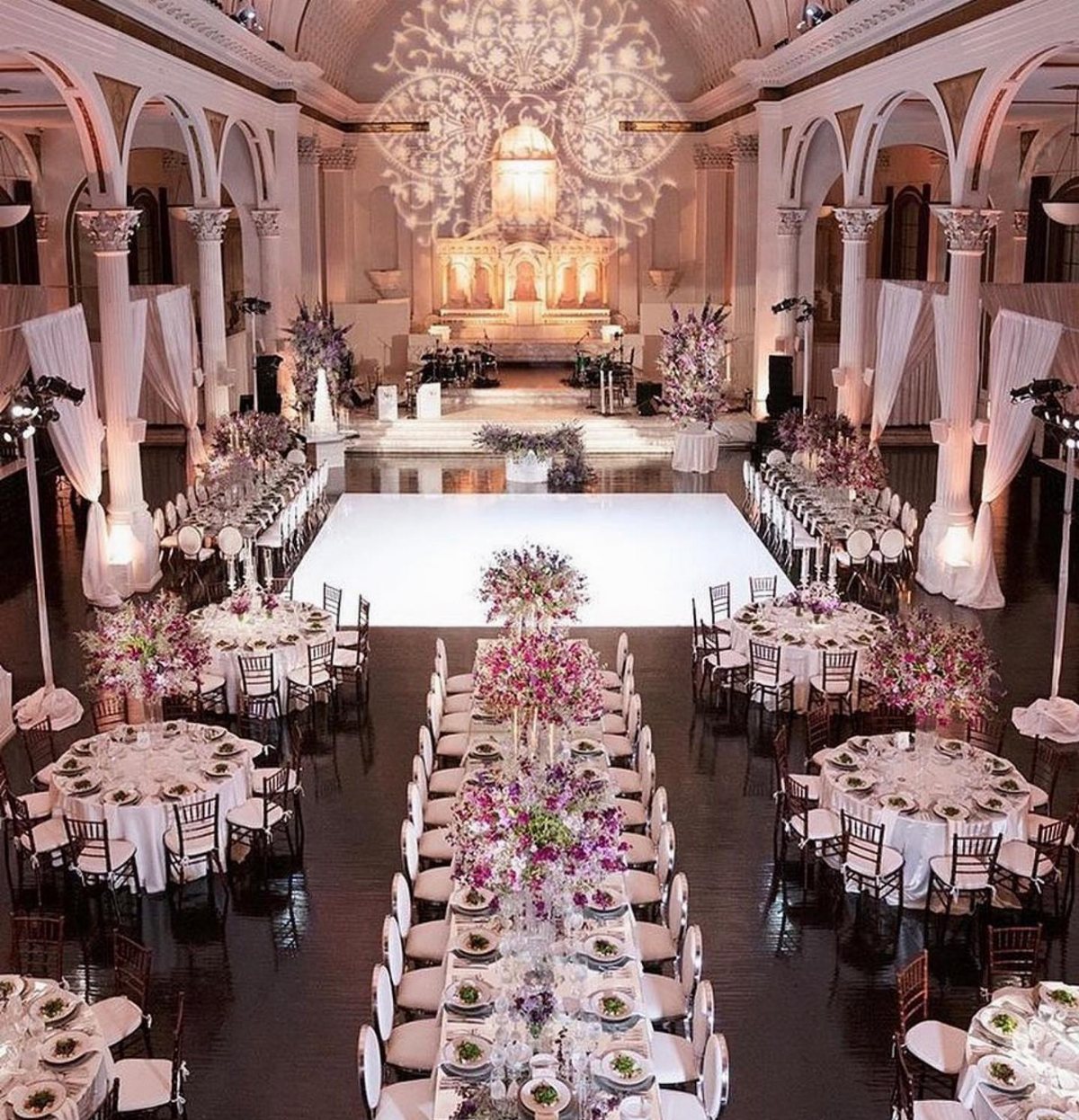
A good layout starts with the floor, not the furniture. I begin by placing the add-on stations: the photo booth, memory table, dessert spread.
These need breathing room, especially where guests will cluster to find their names on a seating chart. Then I work inward with the guest tables, leaving 60 inches or more between each for servers and seated chairs to move freely.
For 100 guests at 60-inch rounds, a 30×40 tent is the minimum; anything larger and I am paying for empty air. The dance floor sits last, where the room’s natural traffic already wants to pause.
8. Guest Tables
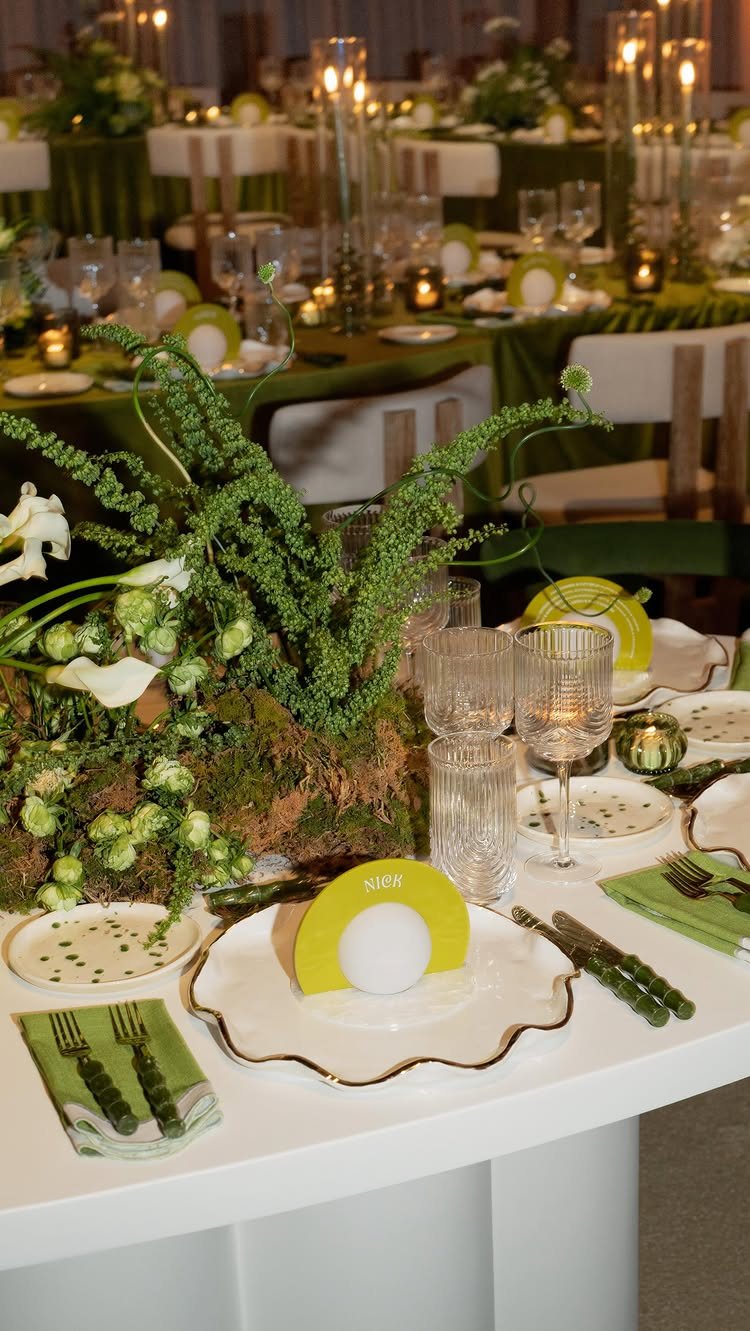
Round tables seat a full group comfortably; rectangular ones push that higher but narrow the conversation across.
A moss and greenery runner works because it stays low; tall centerpieces belong at the bar or buffet, not where faces need to see faces.
For a 150-guest count, I would plan 19 rounds plus a sweetheart table, an 18×18 dance floor, and 3 buffet lines. That fills a tent without cramming.
9. Cake Table
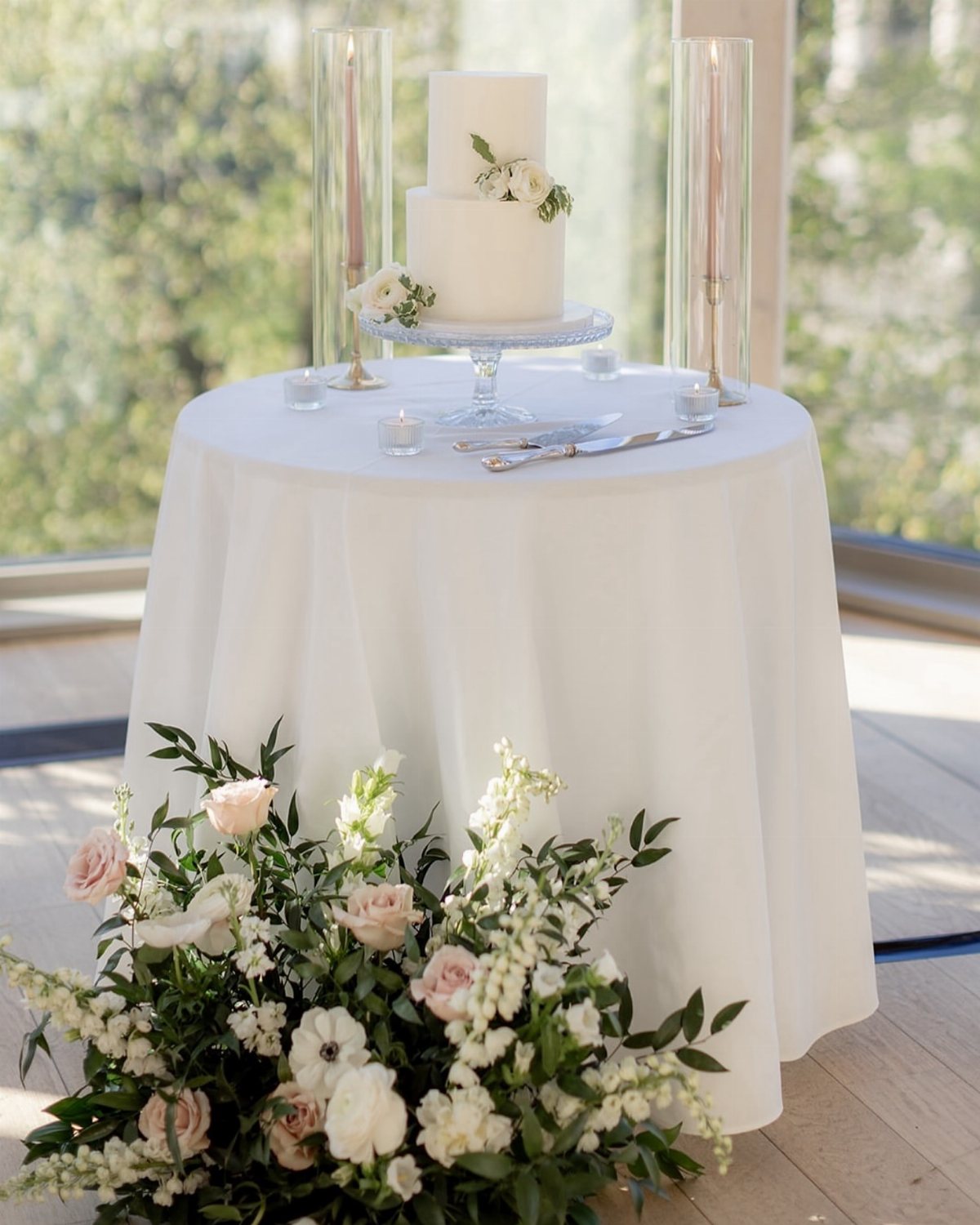
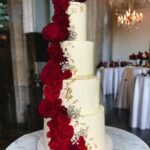
The cake table needs less space than most couples give it. A small round with a clean linen, the cake on a raised stand, and two items beside it: the server set and one low arrangement.
Everything else competes. I have seen couples fold the cake into a full dessert station, which saves a table rental but risks the tiered piece looking like one option among many.
If the cake matters to your photos, give it its own moment. Check that the stand’s base clears the table edge; a skirt-hugging pedestal tips when cut.
10. Gift Table
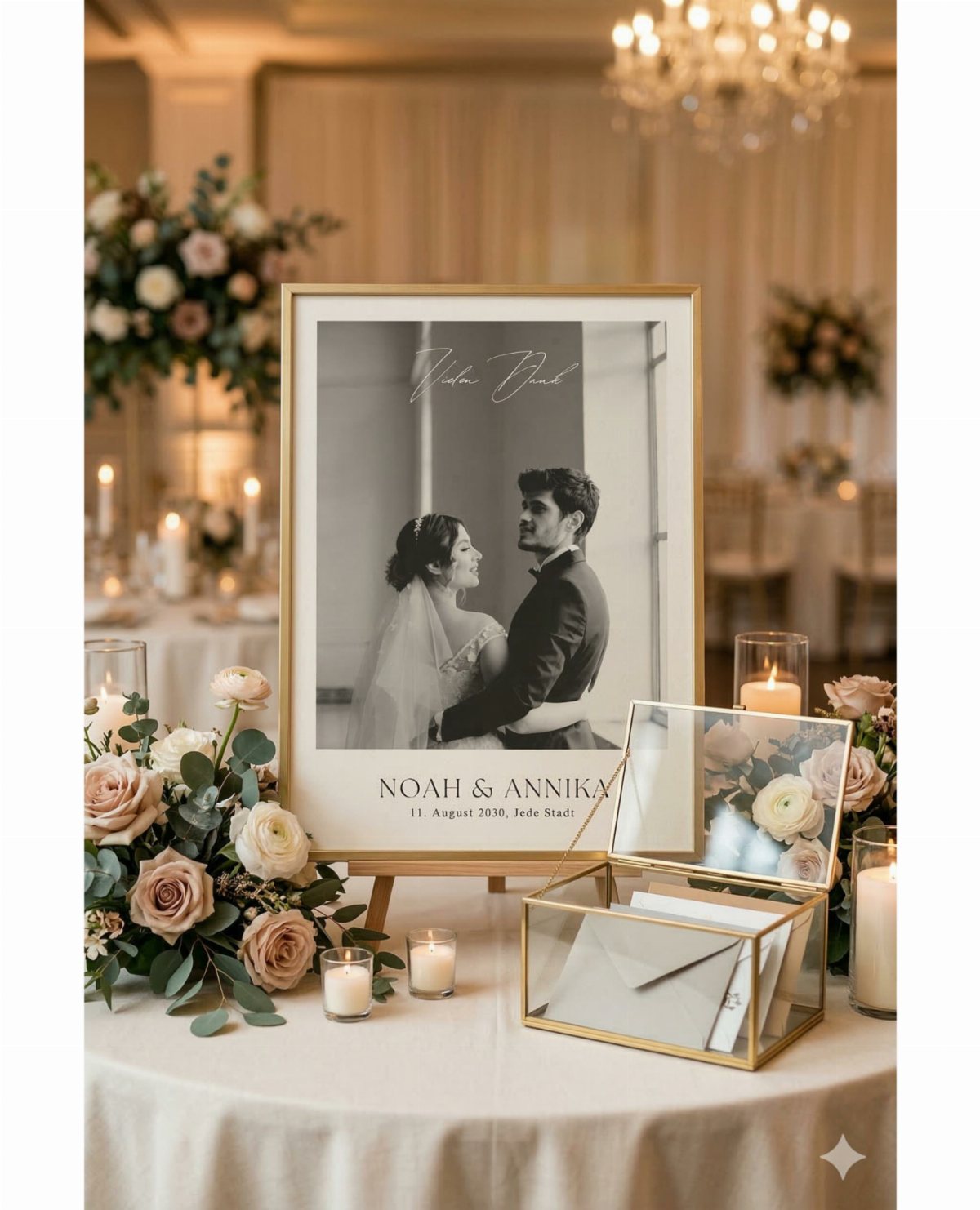
Someone has to watch the gift table, even briefly. I assign this to a trusted cousin, not the venue staff, because cards with cash disappear faster than boxed appliances.
A clear glass box looks elegant but shows contents; I prefer a locked slot or a box with a narrow opening. Frame the couple’s names and date beside it so guests know they have reached the right place.
For smaller weddings, I skip the dedicated table entirely and have a family member collect envelopes at the door.
11. Long Tables for Communal Dining
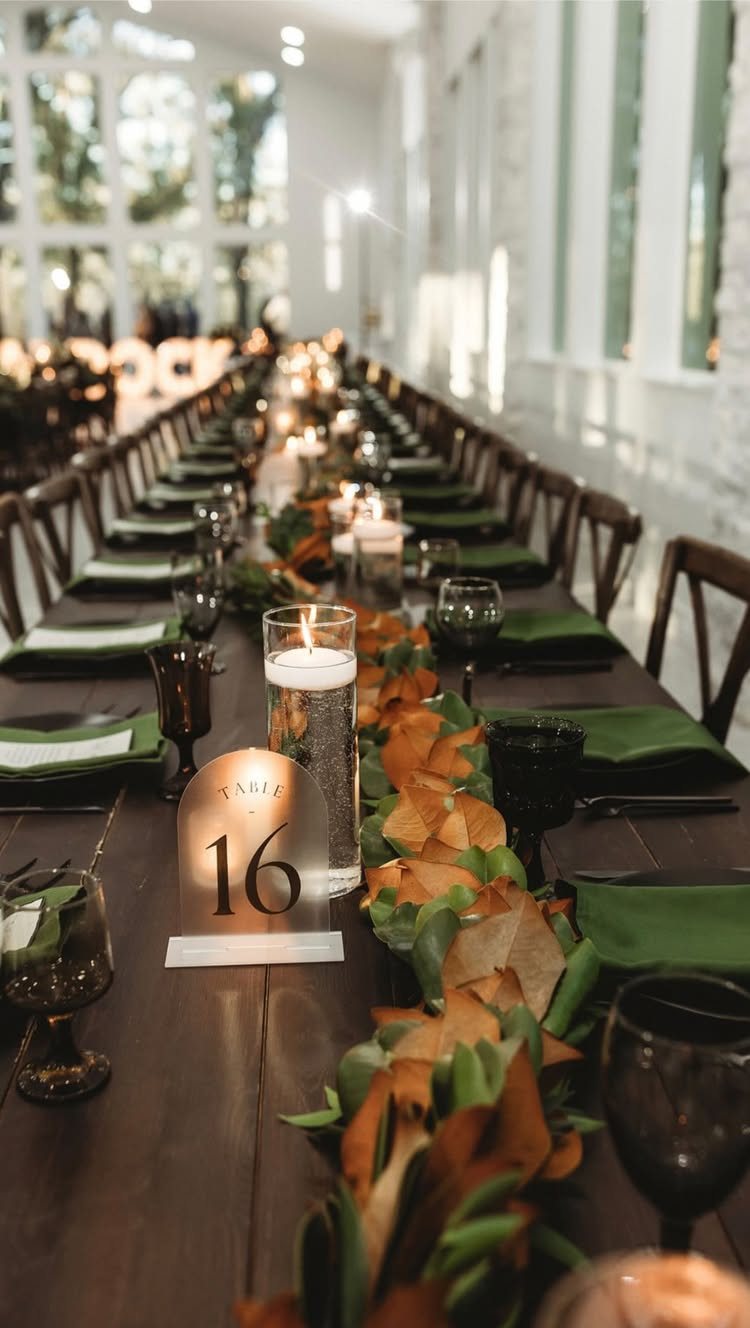
Long tables turn a reception into a dinner party, which is the point. Two 8-foot banquet tables pushed together seat 16; I use this for friend groups who already talk across each other at brunch.
Service style matters: plated or family-style works, but buffet lines clog when a full table rises at once. I mix long tables with rounds, putting college friends at the communal rows and parents’ friends at circles where conversation flows easier.
A garland runner and green napkins keep the look grounded; without that restraint, long tables read as cafeteria.
12. Table Numbering System
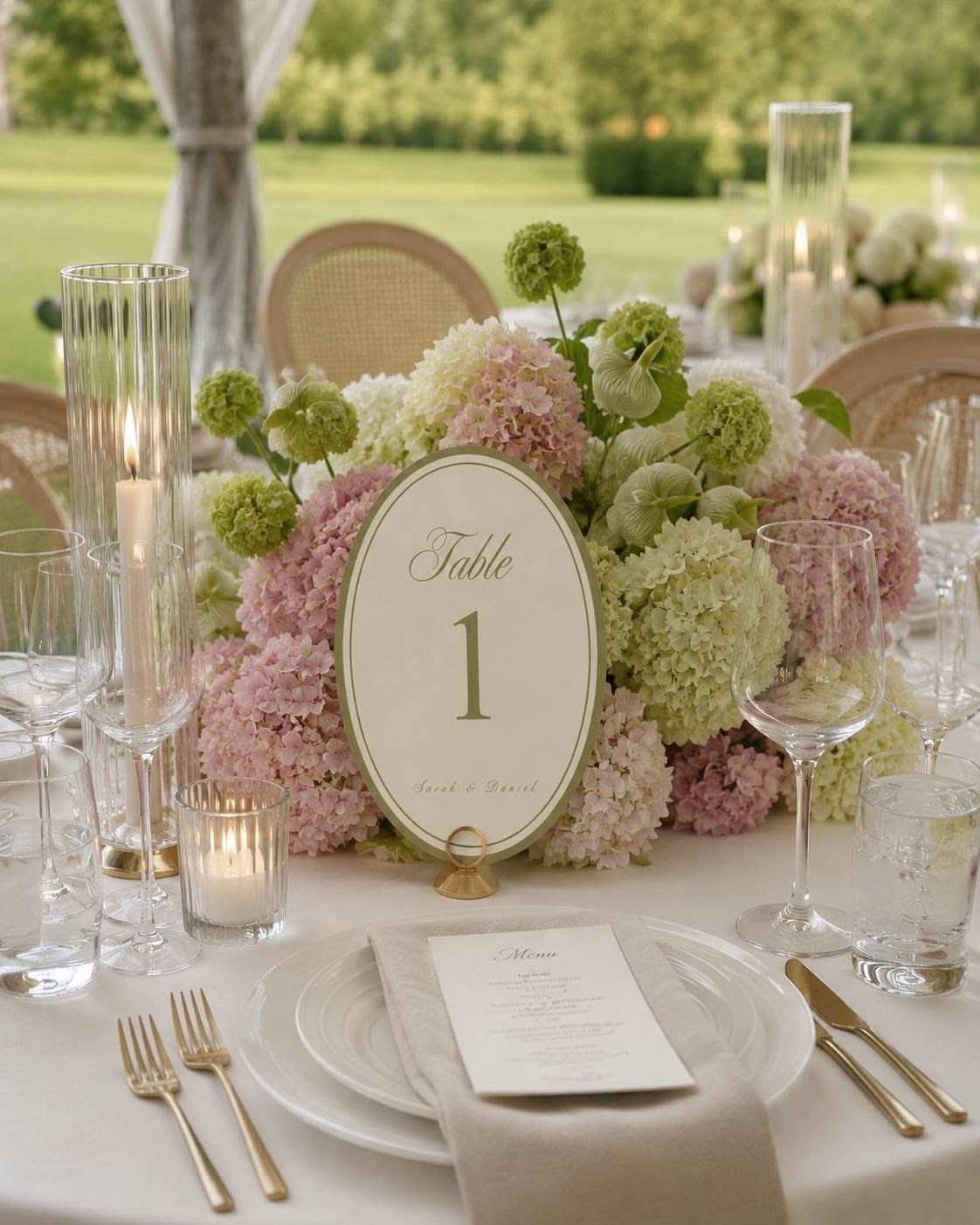
Table numbers fail when they are pretty but unreadable. I print the couple’s names below the digit, which helps guests confirm they are at the right table and not a similar number from across the room.
An oval stand at center height, not buried in flowers, lands where the seating chart’s sightline reaches first. For themed weddings, I have seen tables named after traveled cities or songs, but guests hunt longer for "Paris" than for "7."
Numeric order, sequential from the entrance, cuts down wandering and keeps dinner service on time.
13. Table Linens
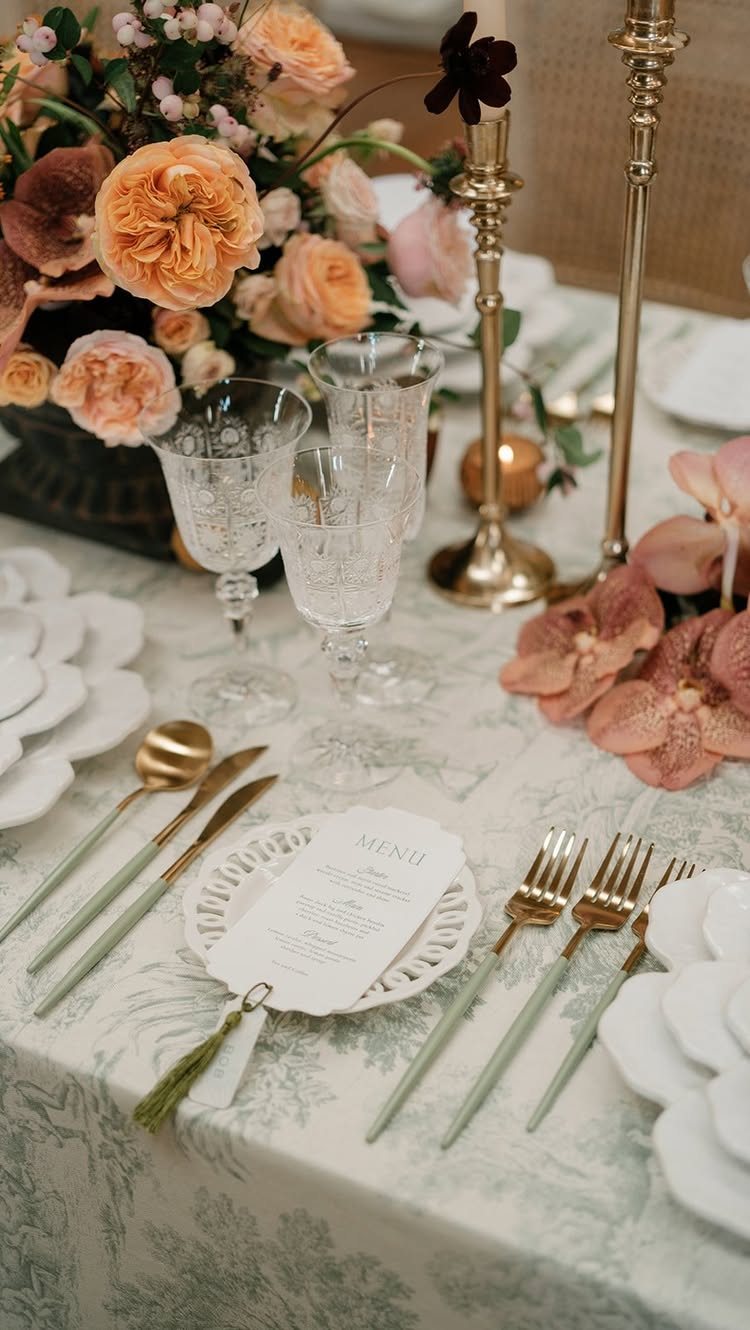
A patterned cloth turns a rented banquet table into something that belongs to your wedding. Sage and cream paired with gold flatware dresses a summer reception without making the room feel overdone.
A single cloth in your base color keeps guest tables simple and the cost per table low if you buy polyester blends.
The head table is where I would spend more: a sequined or velvet overlay, or a lace runner layered over a solid ground. The difference reads in photographs and in person.
Renting runs higher but skips laundering and pressing. Own the cloths and resell them after if you are keeping the budget tight.
One warning: patterned linens fight busy centerpieces. Choose one to carry the visual weight.
14. Continuous Long Tables
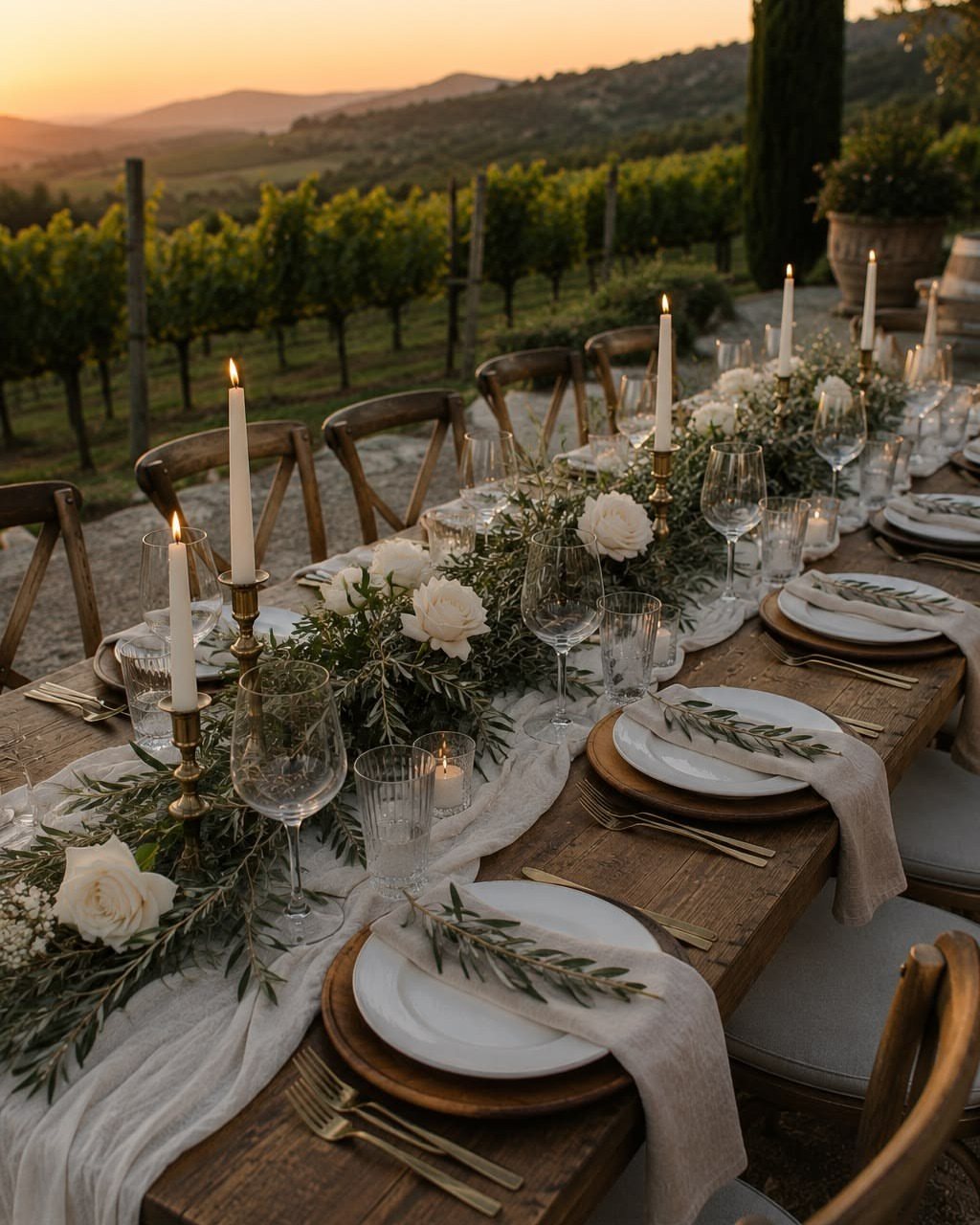
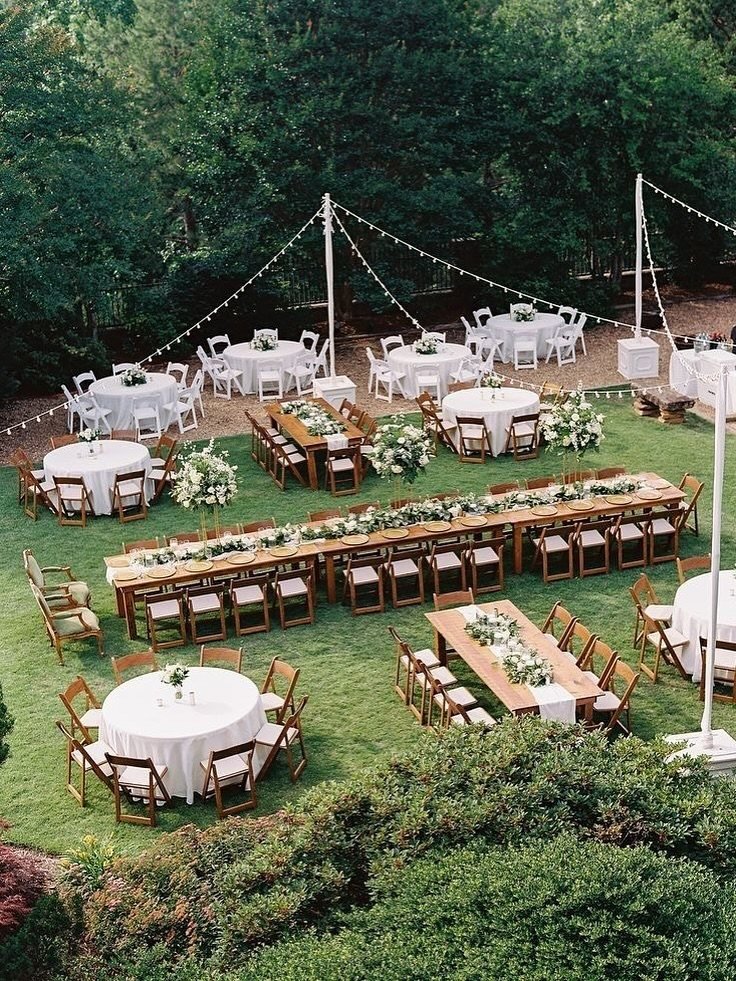
One unbroken table through your reception space makes every guest part of the same conversation. Strangers passing dishes across these rows at barn weddings drops the formality without making the wedding feel any less intentional.
A greenery runner down the center, broken by clusters of white flowers and taper candles in brass holders, gives you the look without centerpieces at every place.
The setup takes longer than standard rounds; your venue needs staff who have done it before or a coordinator who can direct them.
This layout suits a midsize guest list best. Below that, the table looks thin.
Above it, service becomes a logistical puzzle. For the couple who wants family-style dining and a vineyard or barn setting, I think this is the choice that guests remember.
Choosing Table Shapes
Round tables seat 8–10 guests and keep conversation flowing in a circle where everyone sees everyone. Rectangular banquet tables stretch space further, lining guests up for family-style or plated service.
Square tables at 5 feet by 5 feet seat the same 8–10 but break the expected geometry; I would use them sparingly, as accents among rounds rather than the main arrangement.
Different sizes of round tables let you group people by how many actually know each other instead of packing eight strangers together because the chart says so.
A 3-foot round holds 4 to 5, a 4-foot round holds 5 to 6, and a 6-foot round stretches to 10 to 12. The head table and sweetheart table sit apart from this math, serving display rather than conversation.
Decorating Tables
Centerpieces set the height language of the room. Tall arrangements on round tables draw the eye upward; low runners on long tables keep faces visible across the spread.
I would not mix these languages at neighboring tables.
Accent decor fills the gaps: taper candles in brass holders, tealights in clear votives, lanterns where the venue allows open flame.
Wine bottles or vintage bottles clustered at varying heights add texture without the cost of fresh arrangements at every seat. Lace, satin, sequined, or burlap overlays shift the same table shape into a different wedding entirely.
The cake table deserves its own restraint. Fresh flowers or greenery at the base, small votives or pillars for glow, and nothing else competing for attention.
Guest Comfort
Spacing rules exist because breaking them ruins the night. Leave 5 feet between round tables so guests can push back their chairs and stand without negotiating a maze.
A 12 by 12 foot dance floor is the floor minimum for 100 guests; smaller and the floor clears for the first dance, then empties for the rest of the night.
Servers require 4 feet behind chairs to move plates without hovering over shoulders.
These numbers are minimums, not ideals. I would add a foot anywhere the venue allows, especially near the entrance where coats, hugs, and seating-chart consultations cluster.
Frequently Asked Questions
What tables do you need at a wedding reception?
At minimum, you need guest tables, food tables, and a place for the couple. Most weddings also add a gift table, a cake table, and a memory or photo table.
What are the basic tables set up?
The core setup includes guest tables, a head table or sweetheart table for the couple, food tables for service, and a gift table.
A cake table gets its own moment if the tiered piece matters to your photos, and a memory table lets guests see the faces that shaped you.