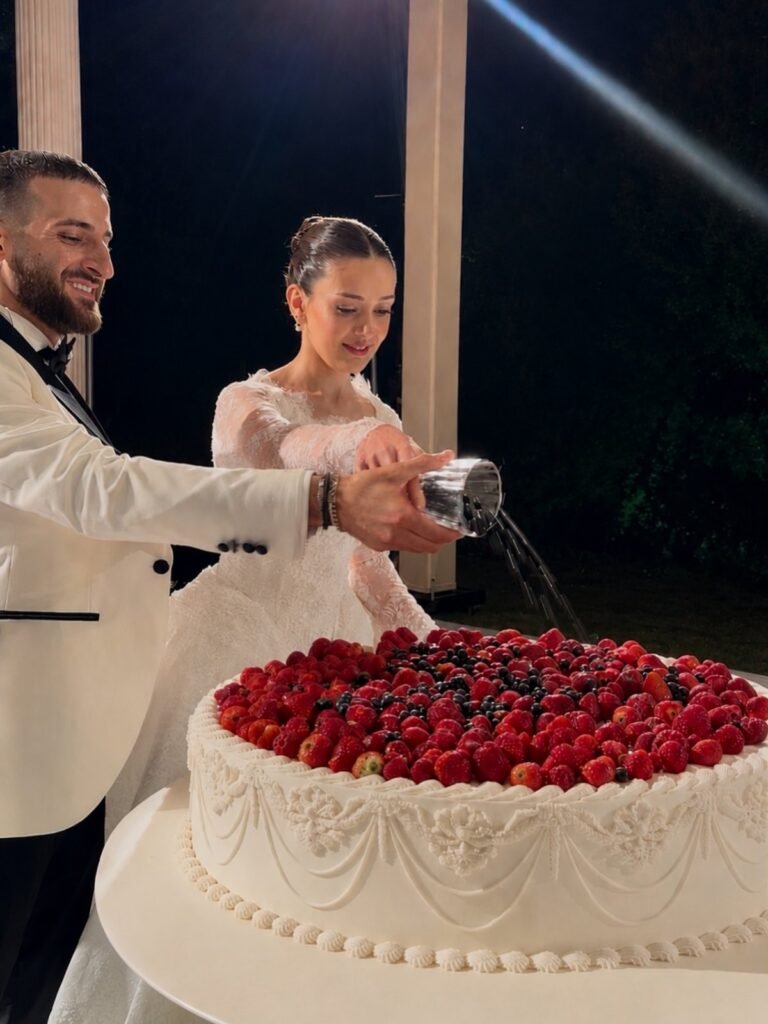
The cakes below run from a supermarket sheet cake you finish with a star tip to a three-tier fruitcake soaked in spirits and meant to carry a whole dinner’s visual weight.
What settles it is where the cake sits in your budget relative to everything else: the same couple might choose the rectangular sheet cake with berries for a tight food budget and the multi-tiered cake when the cutting photo matters more than the centerpieces.
1. Exotic Fruit Toppings
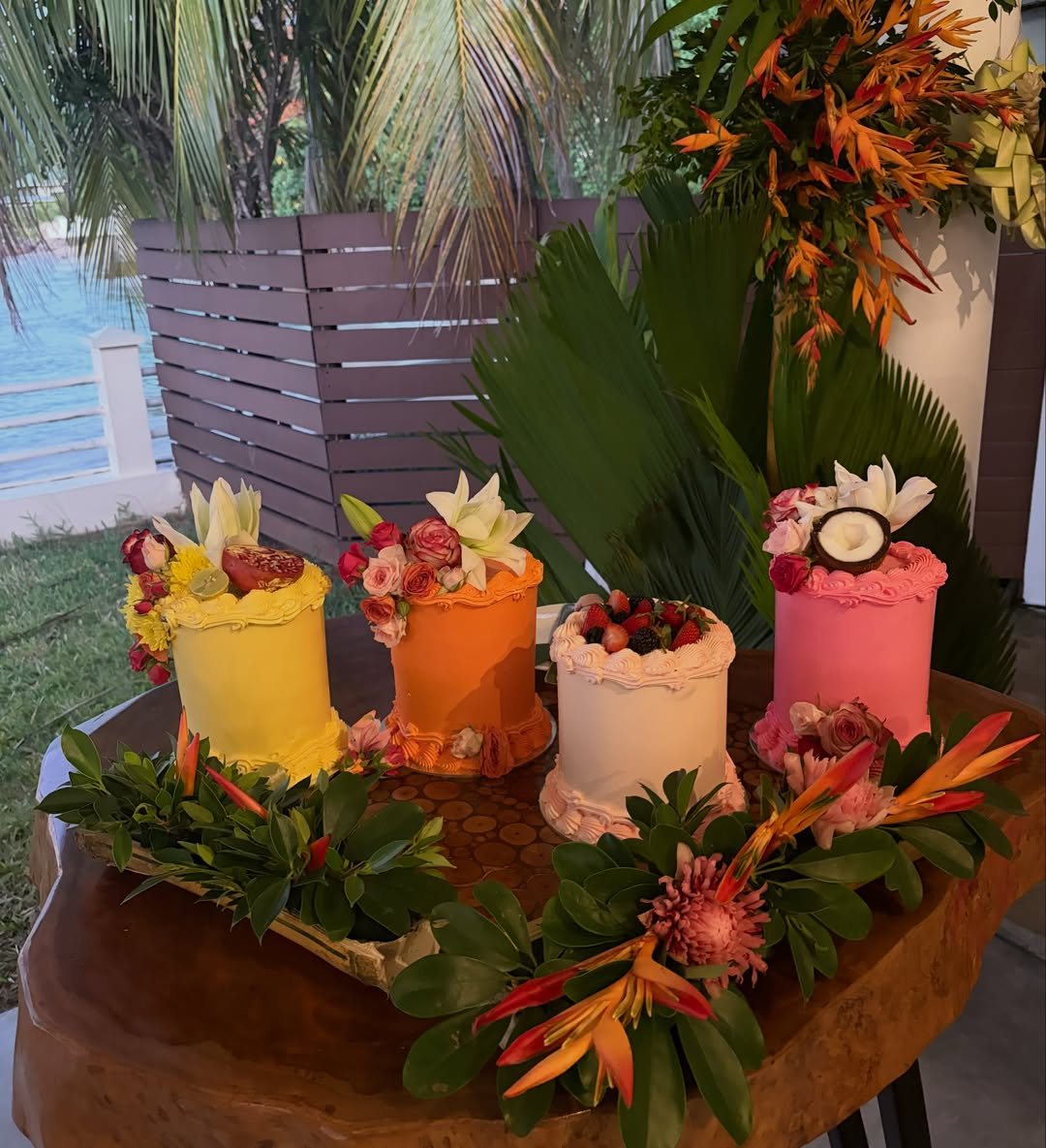
Small frosted cakes in bright colors give each table its own flavor without the pressure of one perfect centerpiece.
Figs, pineapple, pomegranate, coconut and peaches layer over the frosting in clusters rather than patterns, which means a home baker can assemble them the morning of without piping skills.
The tropical look needs warmth and humidity to keep the fruit from dulling; an outdoor summer reception in the South or Southwest carries it off, while a dry winter ballroom would leave the same arrangement looking tired by the first dance.
I’d steer a couple with a tight total food budget toward this instead of a single showpiece: several small cakes feed the same crowd and photograph better on Instagram.
2. Cakes with Fresh Fruits
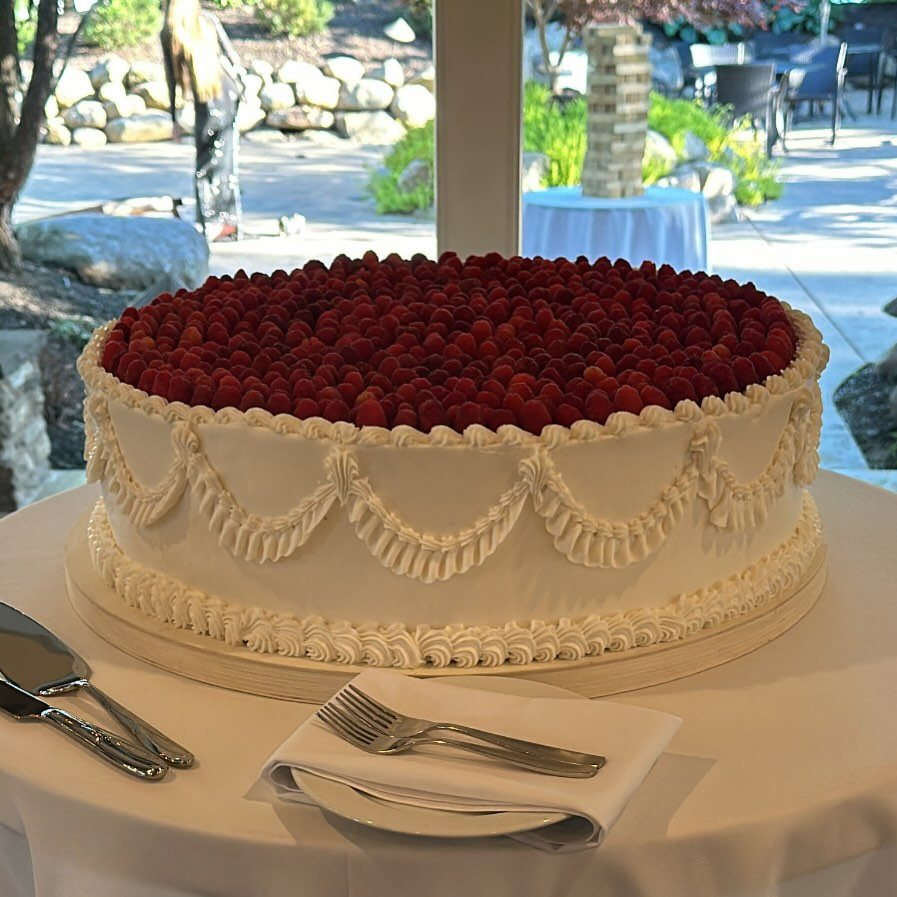
A single layer of white frosting with fresh fruit pressed right into the surface keeps the cake itself simple and shifts the cost to what’s in season.
Raspberries, figs or sliced peaches work only if they are ripe that week; a caterer ordering close to the event can manage it, but a bakery shipping frozen will not.
A berry-covered cake needs no gum paste, no gold leaf, nothing the bride has to special-order. This suits a small wedding where the couple cuts the cake themselves and guests serve from the kitchen after.
The limit is the frosting: buttercream softens under fruit juices within a few hours, so the fruit goes on last or the cake switches to fondant.
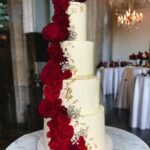
3. Multi-tiered Cakes with Fruit
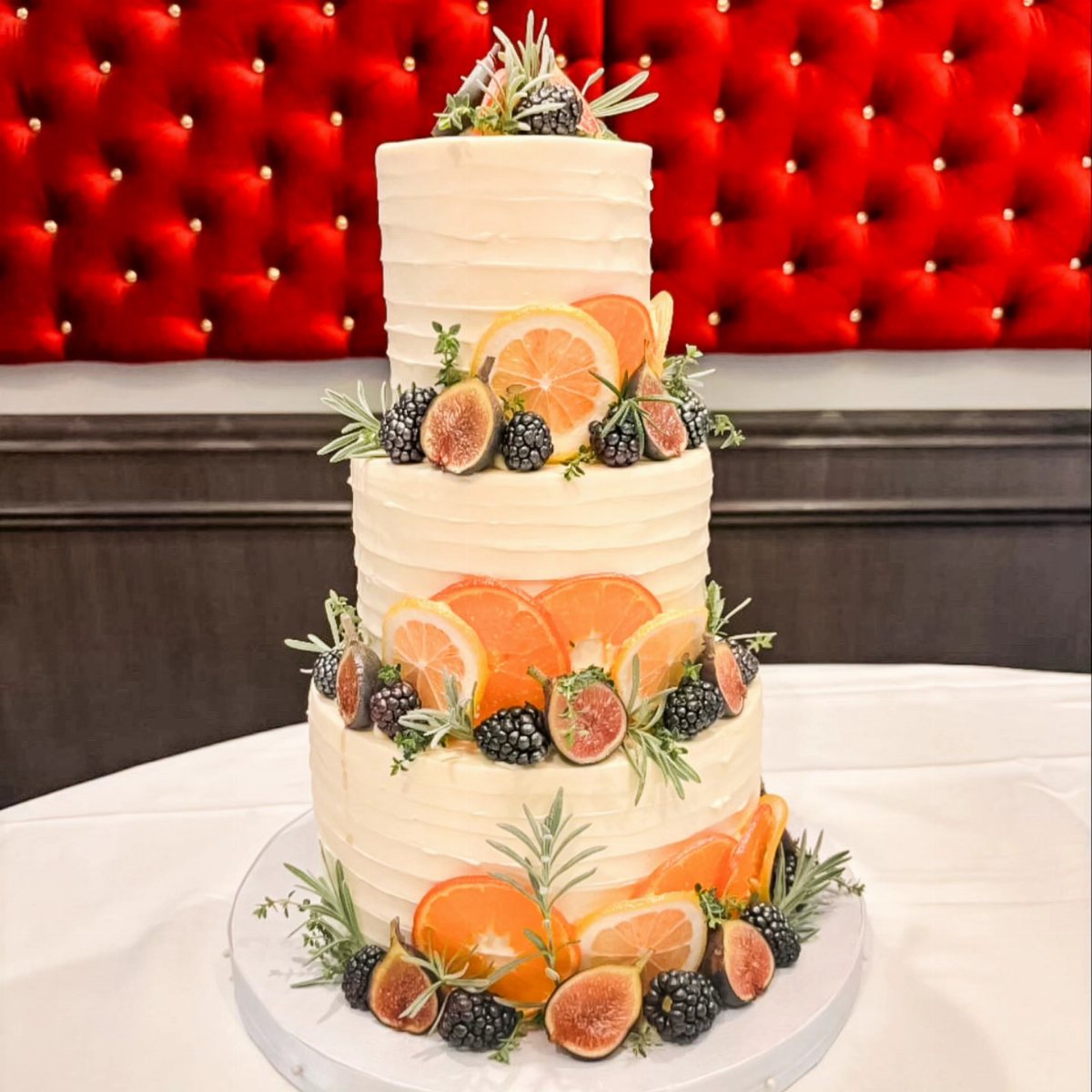
Three or more tiers let each level carry a different fruit and, if you want it, a different spirit brushed into the sponge.
The structure matters more than the flavor: fruitcake bakes dense enough to stack without compressing, which is why the traditional English wedding cake used it. The alcohol is optional; without it, the cake still holds but the flavor stays milder.
This is the choice for a seated dinner where the cake sits visible through the meal and the couple wants the cutting photo to carry weight.
4. Fig and Grape Wedding Cakes
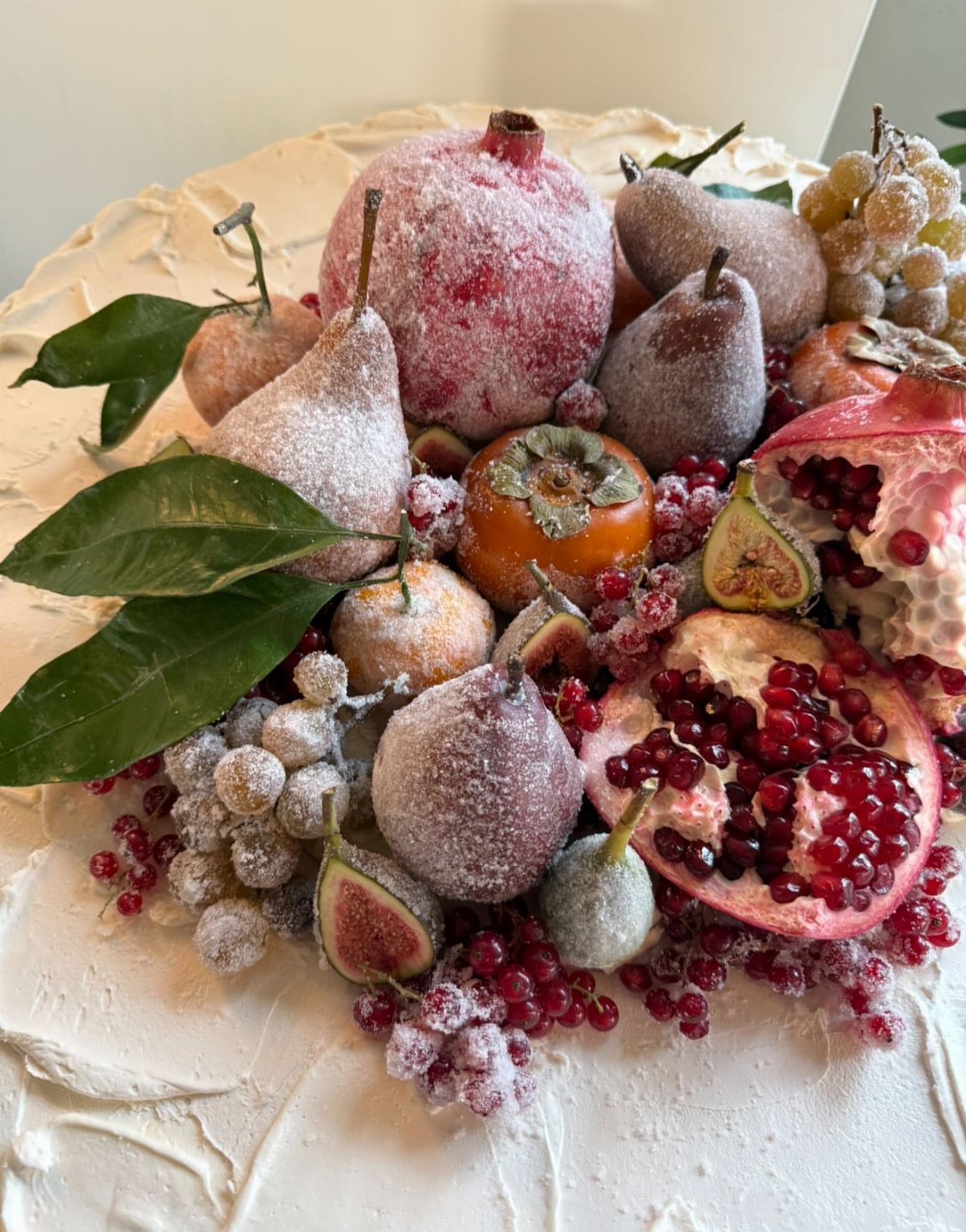
Powdered sugar over autumn fruit turns a white cake into something that reads seasonal without orange food coloring or cinnamon sticks.
Figs, grapes, pomegranate and persimmon all ripen in the same narrow window, so the whole look depends on a fall wedding date; move it to summer and you are paying air-freight prices or accepting second-rate flavor.
The sugar dusting is done on-site right before display, or it absorbs into the fruit and disappears.
A bakery that delivers the night before cannot manage this step, which means either a day-of coordinator or a willing aunt with a sieve.
The style suits a vineyard or barn venue where the cake should look like it grew there.
5. Rectangular Sheet Cakes with Berries
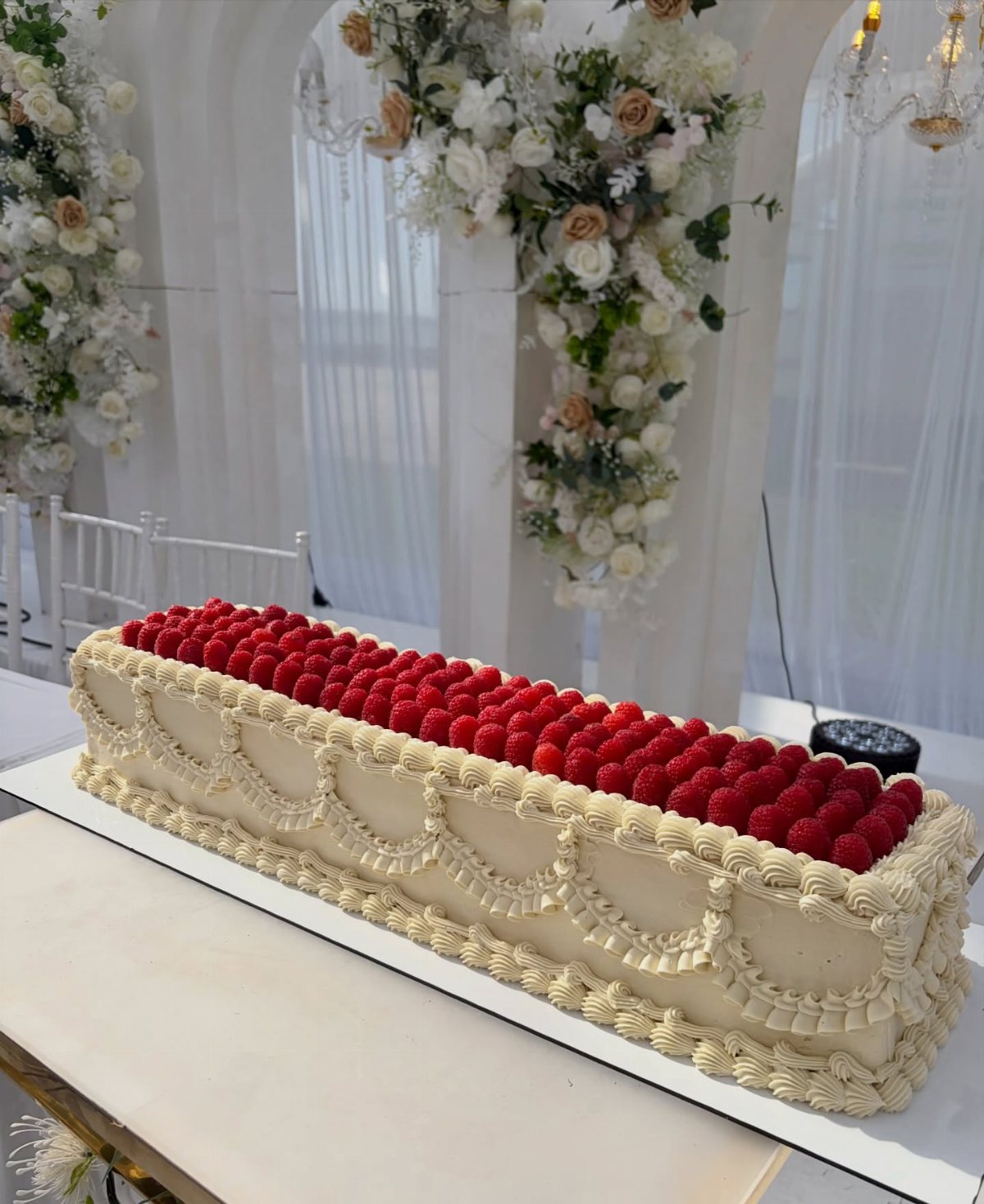
A rectangular sheet cake stretches the berry budget across more servings than any round tiered shape, and the piped border hides a supermarket bakery base if needed.
Raspberries cover the top in a solid carpet, which looks generous but requires serious volume; blackberries or sliced strawberries substitute at the same amount.
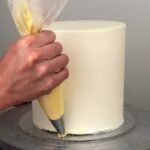
The piping can be done with a star tip in a single afternoon by anyone who has frosted a birthday cake.
This is the honest choice for a backyard wedding with a large guest list and a dessert table that also holds cookies and brownies.
It will not make the cover of a magazine, but it will be gone before the last dance.
6. Green Grape Covered Cake
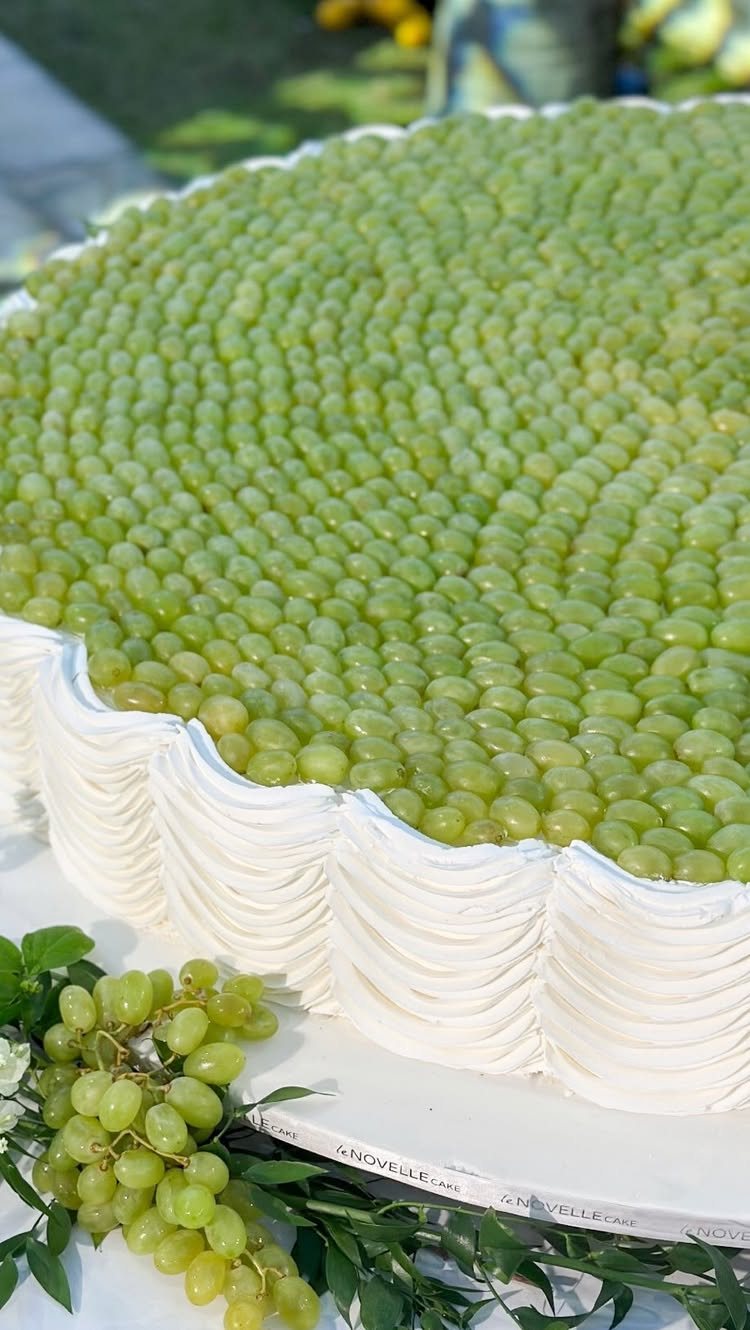
Green grapes piled high on a round white cake give a single-tier dessert the presence of something taller.
The fruit needs to be seedless, washed and fully dried, or the frosting weeps underneath; Thompson or Perlette varieties hold up at room temperature through most receptions.
A ruffled border is piped buttercream, easy to replicate with a petal tip and a turning stand.
This reads fresh and slightly unexpected, which works for a spring garden party or a couple who wants fruit but finds berries too expected.
Guests end up with grapes on their plate whether they want them, so a separate fruit-free dessert on the side keeps the allergen-conscious relatives happy.
Making Fruitcake in Advance
A fruitcake wedding cake is one of the few desserts that improves with age, which matters when your date is fixed and the kitchen has other demands.
After baking, the warm cake gets drizzled with rum or brandy, then cools overnight before storage.
The full recipe I work from yields 15 fruitcakes or 40 servings, with a listed prep time of 336 hours and bake time of 24 hours at 225–275 degrees depending on your oven.
That is not a typo; the fruit soaking accounts for most of it.
For a tiered cake, I bake the same batter in graduated sizes and stack them with dowels and boards so the weight doesn’t collapse the lower tiers.
Fondant and marzipan are the traditional finish here, not buttercream, because they seal the cake and hold the structure through months of storage.
Alcohol in Fruitcakes
Alcohol in a fruitcake does more than flavor it. Brandy, rum, or Tia Maria all work; the same liquor that soaks the fruit before baking gets poured over the cake afterward and repeated during storage.
A cheesecloth wrap lets you add more without drowning the crumb: remove the cloth, douse the cake, wrap it again, and seal it in a closed container.
The batter itself is thick with butter, dark brown sugar, eggs, flour, spices, and the soaked fruit mix.
The exact dried fruits are flexible; dark and golden sultanas, golden raisins, cranberries, cherries, figs, apricots, and candied peel all work as long as the total weight stays consistent so the cake bakes evenly.
Nuts can stay whole or get chopped; either way changes how the slice looks more than how the cake holds together.
Soak fruit with Brandy or Liquor of choice for a minimum of 1 week 2 weeks is better and 3 months is excellent.
— Food.com
Decorating with Fruits
Traditional British fruitcake decoration favors restraint over excess. A single-tier cake finished in marzipan and fondant can carry crimped arches and frills made with a crimper tool, each arch set above a fondant frill for a clean border.
I prefer one fondant or gum paste rose as a focal point instead of scattering flowers everywhere, and a ring of mini blossoms with edible pearls at the base finishes it without fighting the fruit inside.
This style assumes the cake itself is the statement. The marzipan layer matters as much as the fondant; it adds flavor, seals the cake for storage, and creates the smooth surface the fondant needs.
A fruitcake wedding cake decorated this way sits at the reception looking established rather than trendy, which suits a couple who wants the cutting photo to read as heritage.
Fruitcake Baking Tips
Fruitcake baking is slow and low. The oven runs 225–275 degrees depending on how it behaves; start at 225 if it runs hot and edge up only if needed.
I pack the batter into greased, lined tins about three-quarters full and bake until a skewer comes out clean. Doneness is judged by eye and toothpick, not by time alone.
Mixing is done by hand, thoroughly, so the heavy fruit and nut load distributes evenly. A small portion of the flour gets dusted over the soaked fruit before it meets the creamed butter, sugar, eggs, jelly and vanilla.
This keeps the pieces from sinking during the long bake.
The cake stores wrapped and sealed, with additional liquor poured over at intervals. My own preference is brandy or rum; a friend uses Tia Maria to the same effect.
The cheesecloth method lets the cake breathe enough to take repeated doses without turning to pudding.
Frequently Asked Questions
What are the wedding cake trends for 2026?
Individual cakes in citrus or berry shades let guests cut something closer to their seats, and the fruit on top doubles as both flavor and finish.
Pineapple rings, fig halves, coconut flakes and pomegranate arils sit where the baker places them, so the decoration is forgiving and the fruit does the visual work.
Heat keeps tropical fruit glossy; a July reception in Houston or Phoenix handles that naturally, while a dry climate risks papaya and mango looking tired by the last dance.
How much should a wedding cake for 100 guests cost?
A sheet cake in a rectangle pan carries berries across more slices than a stacked round, and a piped buttercream edge covers a plain grocery-store base well enough for a buffet line.
Multiple small cakes with fresh fruit on each can feed the same head count as one tall tiered cake and give the photographer more angles to work with.
How far in advance can you make a fruit wedding cake?
The density that made fruitcake the standard for English wedding towers also means it holds up to stacking without sinking into the layer below.
The cake can be made well ahead, often tasting better after resting, and the structure holds whether or not alcohol is brushed into the sponge.
Without alcohol, the flavor stays milder but the cake still keeps its shape through a seated dinner where it sits visible for hours.
What cake goes best with fruit?
A dense crumb is what lets fruitcake support tiers; sponge or chiffon would compress under the weight of even a small stacked cake.
When the fruit itself is the statement, a single flat layer of white buttercream keeps the cost in the produce aisle rather than the pastry kitchen.