Vintage wedding cake design runs from a single buttercream tier with grocery-store spray roses to a multi-tier Lambeth build with sugar roses that each take hours to form and dry.
The right choice depends on whether your reception room has climate control or August humidity, whether your baker owns a small star tip and the weekend patience to use it, and whether you need the cake to read as dessert or as sculpture.
The post below covers 11 directions, starting with buttercream frills that pipe in one session and ending with edible lace appliqué matched to gown details.
1. Buttercream Frills

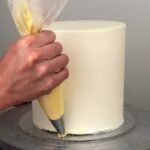
Buttercream frills give you the Lambeth look without the Lambeth timeline. A baker can pipe scallops and swags in a single session rather than building royal icing layers over days.
The frosting itself stays soft: 16 ounces of cream cheese, 2 cups of unsalted butter, clear vanilla, and a tablespoon of corn syrup to keep it from crusting. Whitener brightens the color if you want that studio-white finish.
This suits couples who need the visual drama fast. Buttercream softens in heat, so the cake stays refrigerated until the last hour.
For a summer tent reception, I’d pick fondant instead. For a climate-controlled room in October, frills win.
2. Lambeth Wedding Cake
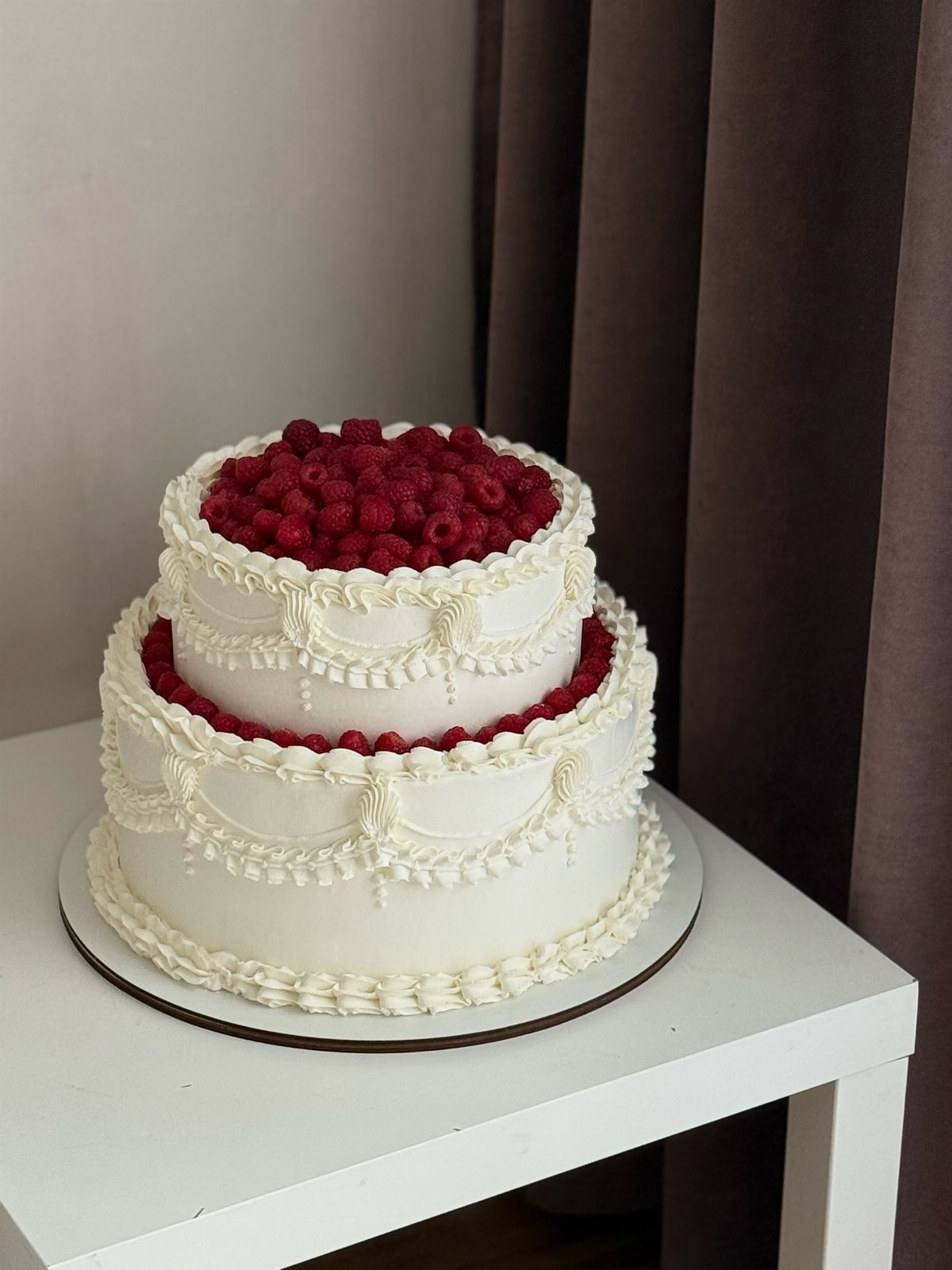
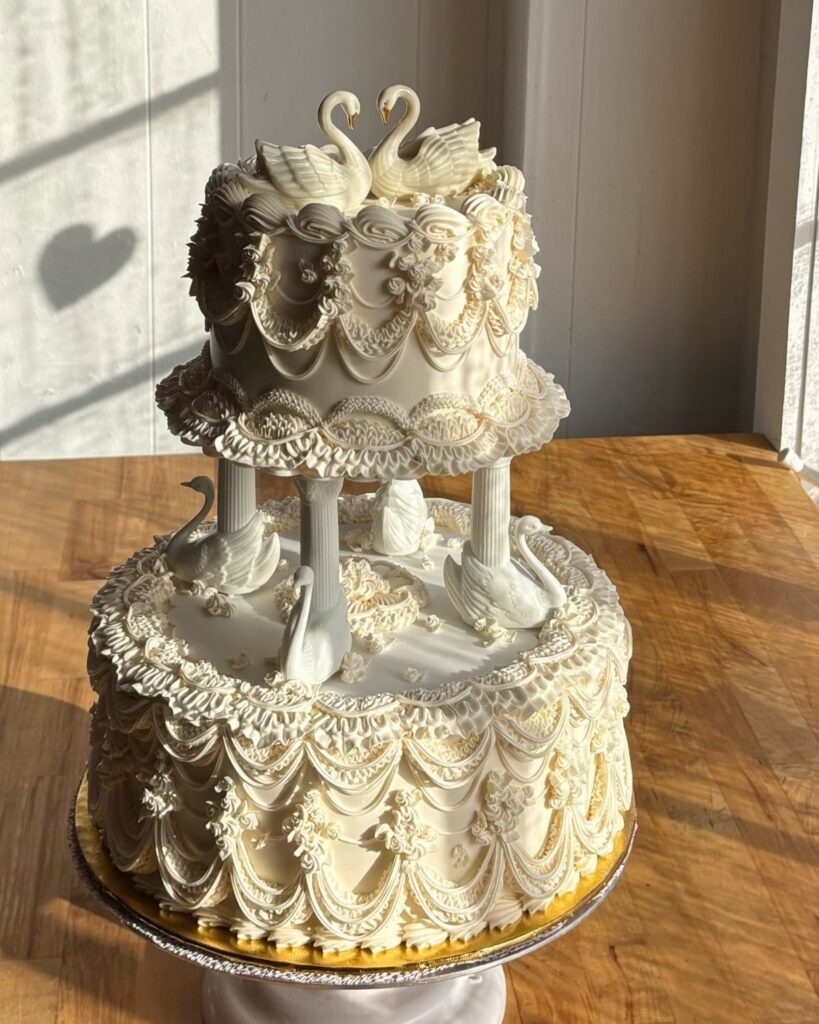
The Lambeth method layers piped royal icing until the surface looks like pressed lace. Piping a Lambeth border takes multiple drying periods: pipe, let it harden, pipe over it, repeat.
The raspberries on top are fresh, not sugar, which means they go on the morning of.
A one-tier version with dainty sugar flowers costs less and ships easier. The full multi-tier build needs internal straws or dowels; skip them and the top tier sinks into the base.
I learned that the hard way once.
This cake demands a baker who owns a small star tip and has the patience to use it. If your vendor books that many weddings in a weekend, they are not that baker.
3. Dainty Floral Cake

A single tier dressed in buttercream and fresh roses keeps the budget under control while still reading as vintage. The flowers you choose change everything: garden roses open wider and cost more, spray roses stay tight and cost less.
Either works if the palette stays soft: white, blush, or the palest butter yellow.
A metallic stand and scattered pearls keep the look light without adding weight to the cake itself. Those details cost little and photograph well.
What the baker charges for depends on rose count and whether the flowers are wired in or simply tucked between tiers.
Check whether your florist will provide blooms cleaned for food contact. Some won’t, and grocery store roses need the pesticide stems stripped before they go near frosting.
4. Classic Iced Cake
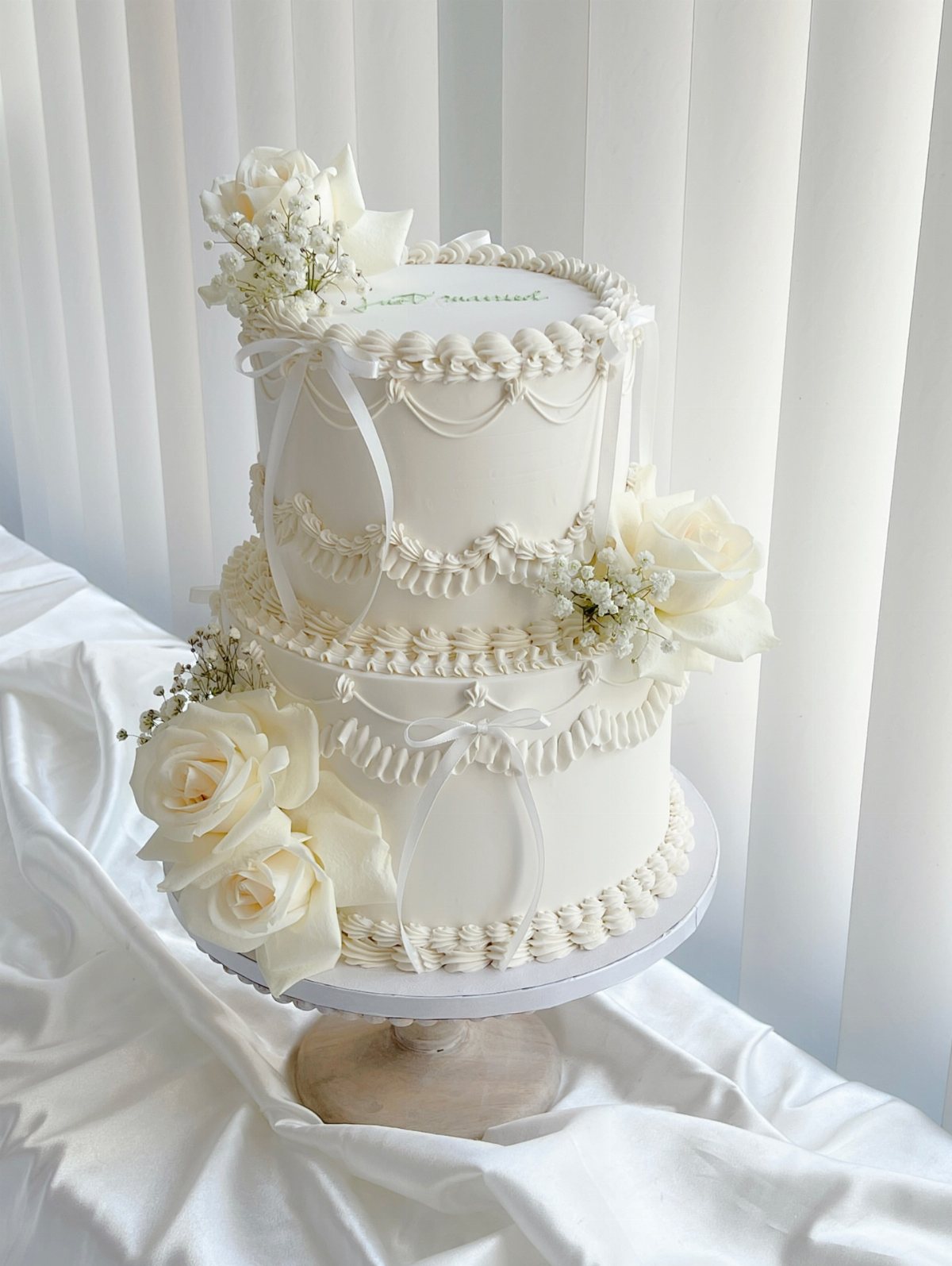
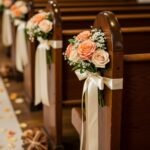
Ribbon bows and baby’s breath mark this as the later revival strain of vintage rather than the earlier one. The icing is smooth, the piping is scalloped, and the "just married" script on top is edible or a lightweight topper.
Fresh ivory roses sit at the base of each tier.
This style works with any bakery that handles traditional wedding cakes; you are not hunting a specialist. Fabric ribbons work better than paper ones, and both should come off before anyone cuts a slice.
Florists know this, grocery store bakeries sometimes do not.
I’d point small-budget couples here first. The look is recognizable, the techniques are standard, and the final cost depends heavily on city and tier count.
5. Square Tier Cake
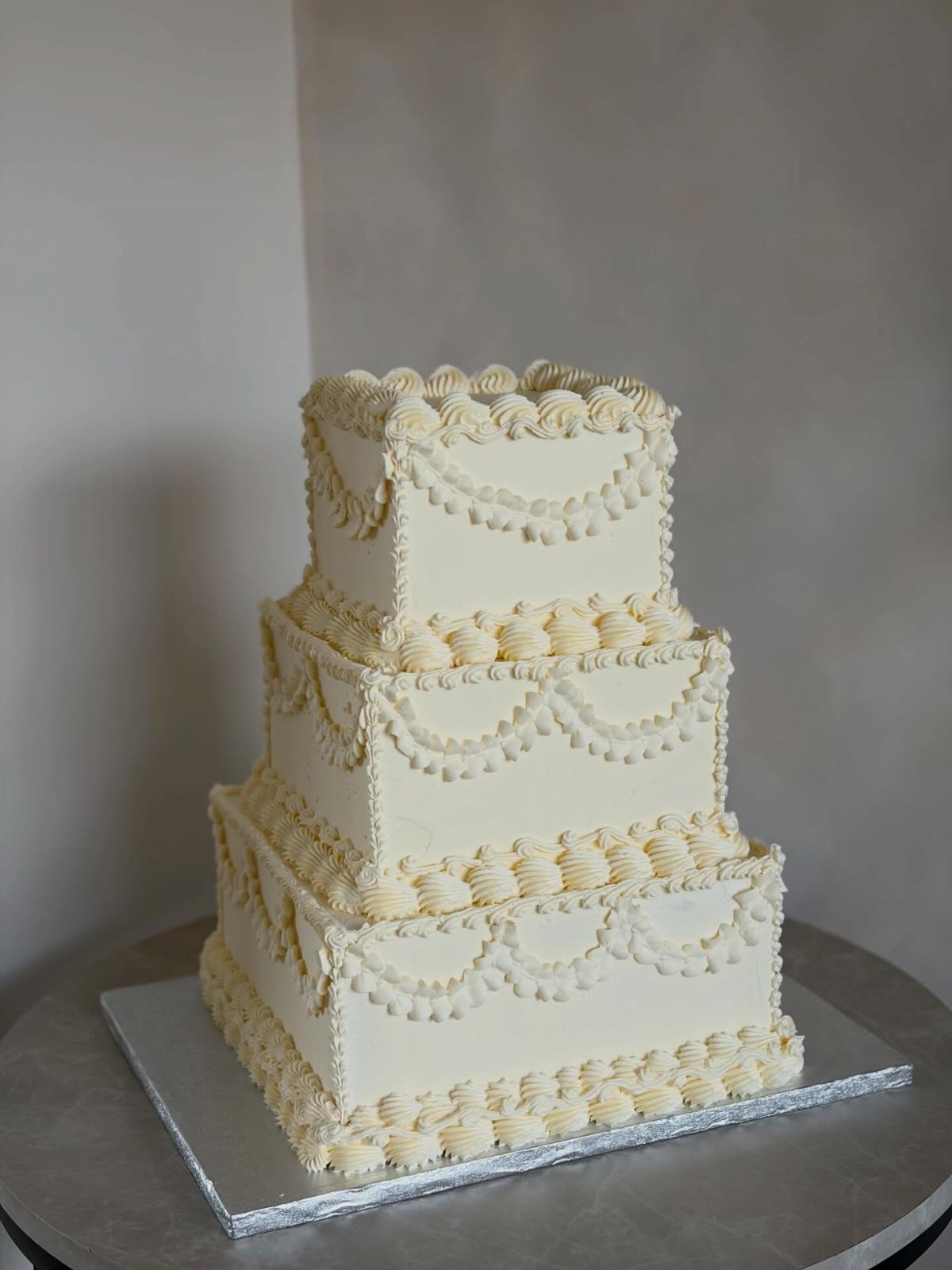
Square tiers read as vintage because they were standard before rounds took over. The piped lace patterns follow the edges differently: corners need their own motif, which adds labor.
A three-tier square cake feeds the same count as a three-tier round but looks larger on the table.
The support structure matters more here than with rounds. Milkshake straws cut to the height of each tier, plus one central straw for alignment, keep the stack from shifting during transport.
I once skipped dowels and watched a top tier sink halfway through a base tier; the cake survived but my pride did not.
This shape suits modern venues where clean lines matter. Square slices look smaller to guests accustomed to wedges, so plan portions accordingly.
6. Vintage Botanical Cake
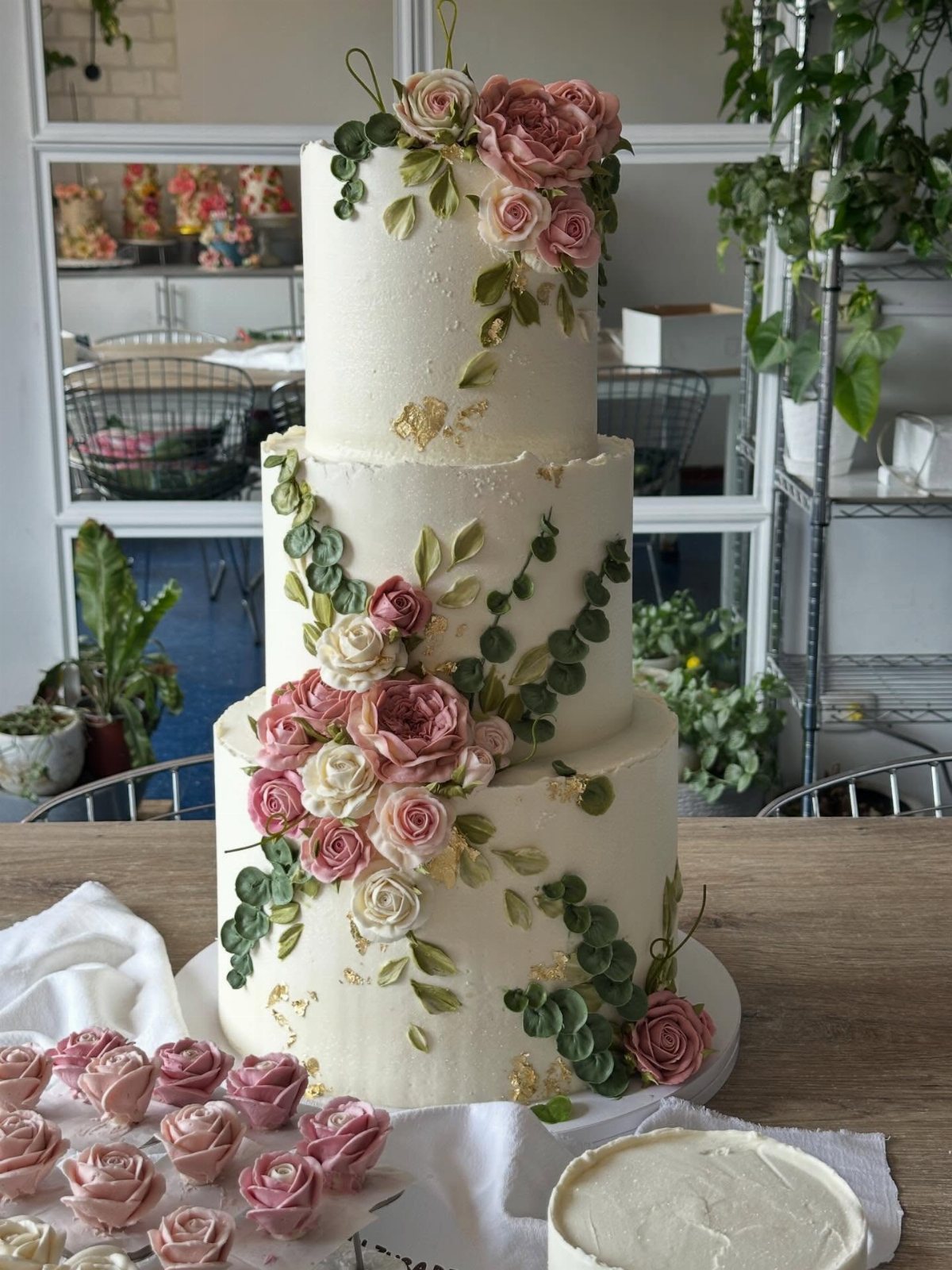
Sugar roses and painted leaves let a baker control every element months ahead. Edible gold leaf comes in fragments for this kind of work; sheets cost more and tear easily.
Botanical cakes often run taller than floral ones because the vertical space shows off climbing stems and scattered petals.
What you pay for is hours. A single realistic sugar rose takes serious time to build, dry, and color, which shows up in the final price.
A cake with 15 of them carries labor cost that fresh flowers avoid. The advantage is weather: sugar does not wilt in August humidity.
This suits couples who want their cake to read as sculpture. If your priority is flavor over appearance, the budget here is misplaced.
7. Swan Topper Vintage Cake

Swan toppers turn a Lambeth-piped cake into something from a mid-century reception at the country club.
The figurines read as sentimental rather than trendy, which suits couples whose grandparents married in that era and want the same mood without the same recipe.
I would ask the baker to keep the piping in white or ivory so the swans do not compete for attention. Ceramic toppers survive the decades; resin ones cost less but look it up close.
A bakery that already does Lambeth work usually stocks a few topper styles or knows where to source them fast.
This one wins for a small wedding where the cake table sits in photographs all evening. The trade is that swan toppers read as feminine, and a couple wanting something gender-neutral might prefer the botanical route instead.
8. Cherry-Garnished Vintage Cake
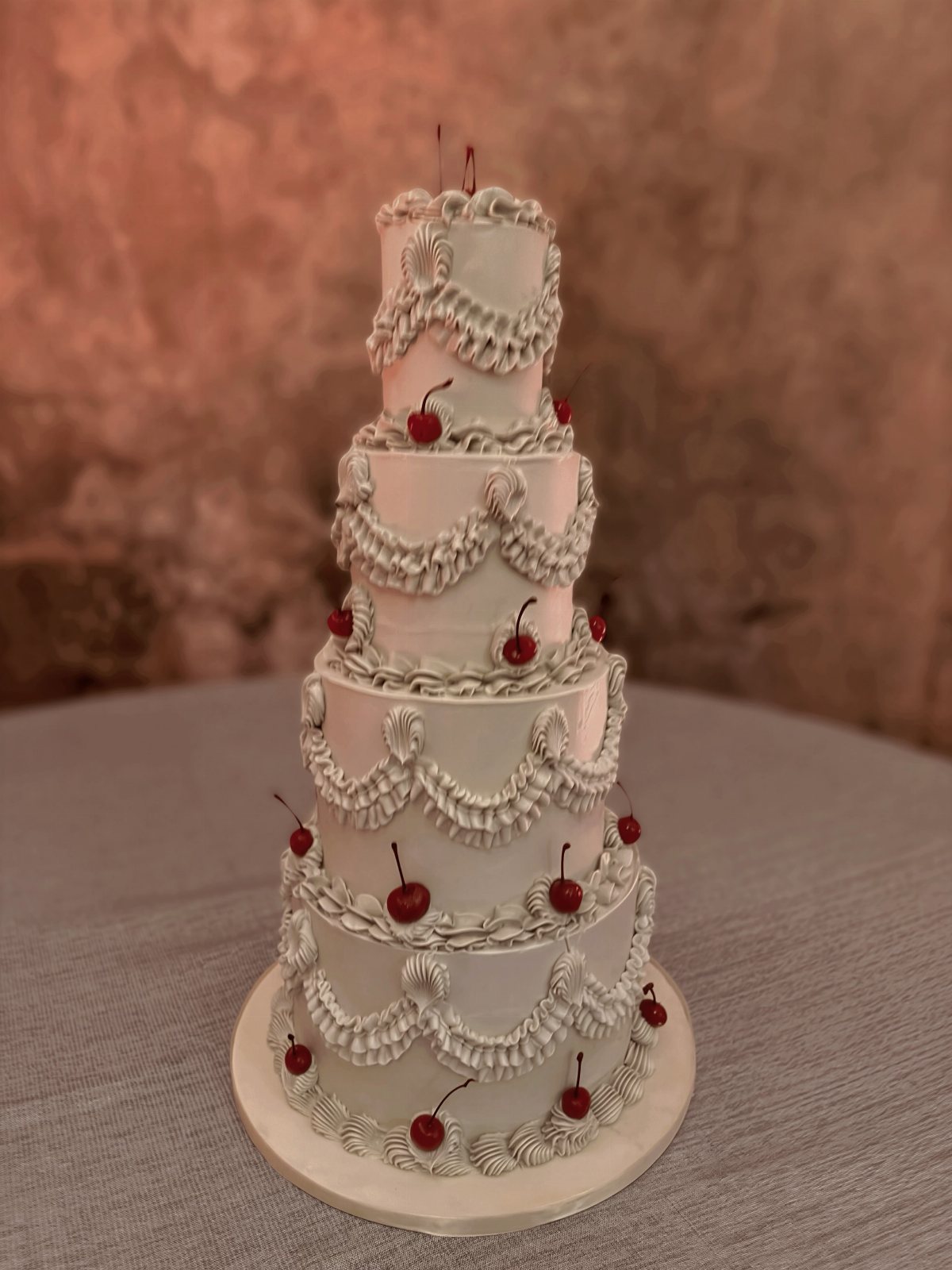
Fresh cherries against white buttercream give the same color pop as raspberries with a darker, more formal tone. The fruit does the decorating, so the piping can stay simple: a shell border or modest swag, nothing that fights the garnish.
Season matters more than with frozen or sugar fruit. Cherries ship from Washington and Michigan in summer; off-season, the price triples and the flavor goes flat.
I would confirm the wedding date against harvest calendars before promising this look to a baker, or budget for imported fruit and accept the cost jump.
Stems-on presentation works for a styled shoot; for serving, pitted fruit sits cleaner on the slice. Ask which version the baker plans to build.
9. Raspberry-Accented Tiered Cake
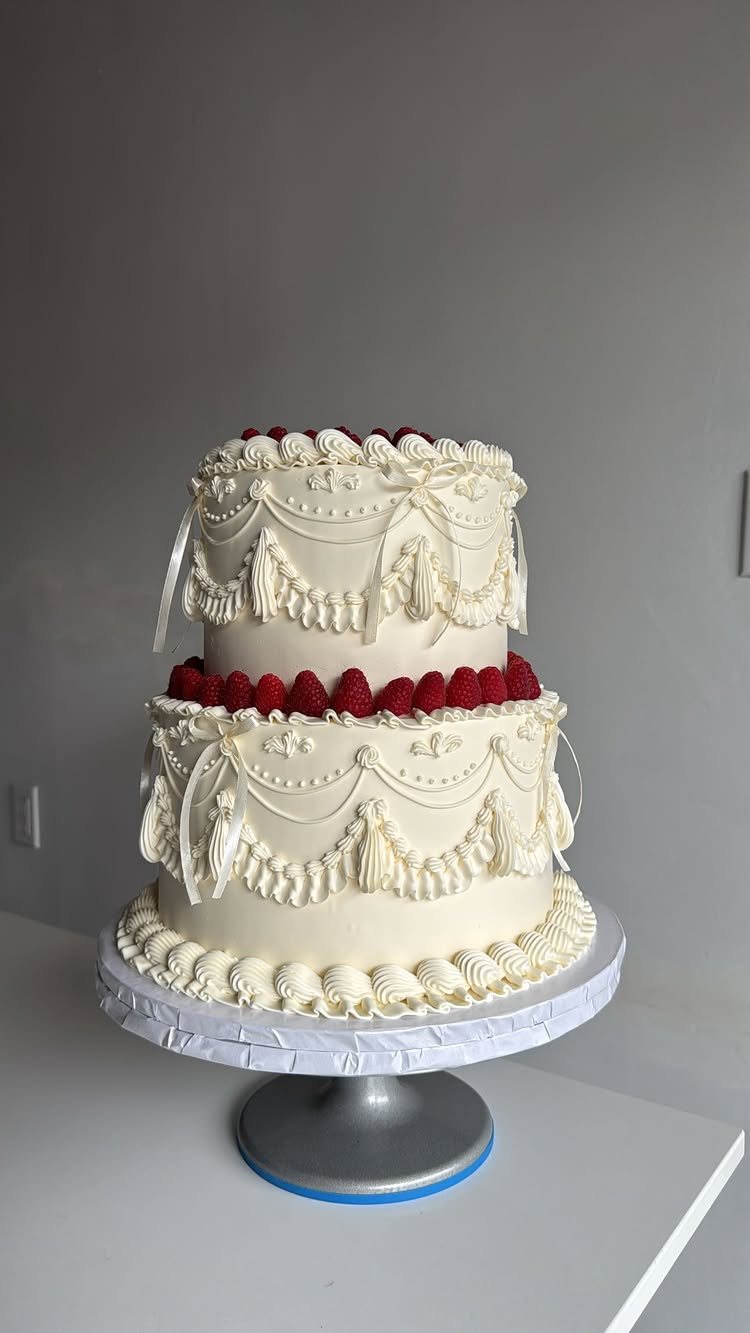
Raspberries bridge the gap between cake and dessert table: the color signals fresh flavor, and guests who spot fruit assume the crumb matches.
That assumption only holds if the baker actually uses raspberry in the filling, so I would taste for it at the consult.
Two tiers keep the proportion reasonable; more tiers and the berries scatter too thin or cost too much to blanket.
The silver stand lifts the white cake off a white tablecloth, which I think matters more than couples realize until they see the room.
This suits a summer wedding with a garden or farm venue where fresh fruit fits the surrounding menu.
The risk is timing: raspberries weep after a few hours out of refrigeration, so the kitchen needs a cool staging spot and a precise delivery window.
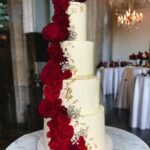
10. Gold Drapery and Red Roses

Gold piping on cream fondant reads as old money in a way that white-on-white does not quite reach.
The red roses add depth without clutter; I would keep them to buds rather than full blooms, which can look top-heavy on a narrow column.
The draped swag technique takes steady handwork, so this is not a last-minute bakery order. A decorator accustomed to modern minimal piping may charge more for the hours, or may simply decline.
I would ask to see photos of their actual drapery work, not just the portfolio of buttercream flowers they prefer to sell.
This cake belongs in a ballroom or a historic hotel with gilded mirrors and heavy drapery already in the room. In a barn or garden tent, the formality fights the setting.
11. Edible Lace Appliqué Cake

Edible lace appliqué lets a cake carry the same detail as a vintage wedding gown without the weight of fondant ruffles or sugar flowers.
The lace sheets arrive pre-made from specialty suppliers; the baker cuts and attaches them with a thin layer of piping gel, which dries clear and holds the edge down.
Ruffled elements are built up from multiple layers, each one placed while the last is still slightly soft so they meld at the seam. That timing means the decorator works in stages rather than finishing in a single stretch.
I would confirm the delivery schedule against that reality.
This suits a bride who wants her cake to match lace details from her dress or veil.
Choosing a Cake Style
Your wedding theme should narrow the field fast. A garden venue in June pulls toward fresh fruit and botanical piping; a winter ballroom rewards gold drapery and sugar roses that do not wilt under heat vents.
Personal style matters more than trend: the couple who wears vintage clothing daily will carry a Lambeth cake naturally, while the pair in minimalist tailoring might look borrowed against frills and swags.
The 1934 spread of the Lambeth method through professional kitchens changed what "vintage" meant on a cake table. Before that, decoration was simpler; after, the lace-piped look became the standard to imitate.
Modern bakers now mix eras freely, so knowing which decade you want to evoke saves consultation time.
Traditions & Facts: Priscilla and Elvis Presley married in December of 1966, their six-tier wedding cake became an icon and cost $3,200 — roughly $22,000 in today’s economy.
— Delish
Cake Decoration Techniques
Lambeth icing builds its pattern in passes, not one continuous session. The decorator pipes a base line, lets it crust, pipes over it, and repeats until the ridge stands in relief.
Royal icing hardens as it dries, which gives the structure but demands patience; buttercream frills achieve a similar silhouette in a single sitting because the frosting stays workable.
The forgiving quality of vintage piping matters for home attempts. Small wobbles disappear into the overall pattern, and the eye reads repetition as precision.
A star tip in varying sizes builds most of the effect; no specialized equipment beyond what a standard cake kit holds.
For bakers, the skill is in pressure control and spacing. For couples hiring out, the skill is in recognizing who actually possesses both.
Budget Considerations
Base pricing runs on three variables: size, tier count, and exterior finish. Buttercream is the starting point; fondant runs $20–$125 extra per tier based on size, and semi-naked buttercream lands somewhere in the middle at $10–$40 more.
Everything else, from flavor upgrades to decorative upcharges, stacks on top.
A single-tier cake with one buttercream flavor and one buttercream filling lands at the entry point. Add tiers and the structure costs rise: internal supports, extended delivery time, and the labor of stacking on-site.
Complex décor, sugar flowers, and premium fillings each carry their own line item.
The first thing I’d do is get the base price on paper, then build from there one choice at a time. Seeing the increment for each choice keeps the total from drifting.
Flavor Options
Classic vanilla and rich chocolate carry the vintage association because they dominated mid-century wedding menus. A bakery’s standard buttercream menu usually includes both at base price; premium fillings upgrade the profile for an additional charge.
The pairing matters more than the single flavor. Vanilla cake with raspberry filling, if the baker uses real fruit, gives the same color logic as a raspberry-garnished exterior.
Chocolate with mocha buttercream reads as period-appropriate without demanding decoration that announces the era.
Taste at the consult for substance, not just sweetness. A vintage look with a bland crumb disappoints; the style should extend through the slice, not stop at the frosting.
Frequently Asked Questions
What is the vintage cake design called?
The style most people mean is Lambeth, a method of layering piped royal icing until the surface looks like pressed lace.
Victorian and botanical styles also fall under the vintage label, along with anything using buttercream frills, edible lace appliqué, or sugar flowers.
The name matters less than the technique: small star tips, drying periods between layers, and patience that a busy weekend baker usually cannot spare.
What did wedding cakes look like in the 1920s?
White icing stayed standard, but bakers added sharp geometry in gold or silver: zigzags, chevrons, sunbursts, plus feathers, jeweled frames, and stylized flowers crowning the tiers.
The look embraced the glamour of the era rather than the softness of earlier Victorian styles.
That contrast still helps date a design today; the frills and lace I have covered here lean pre-1920s, while metallic geometry reads as the later decade.