
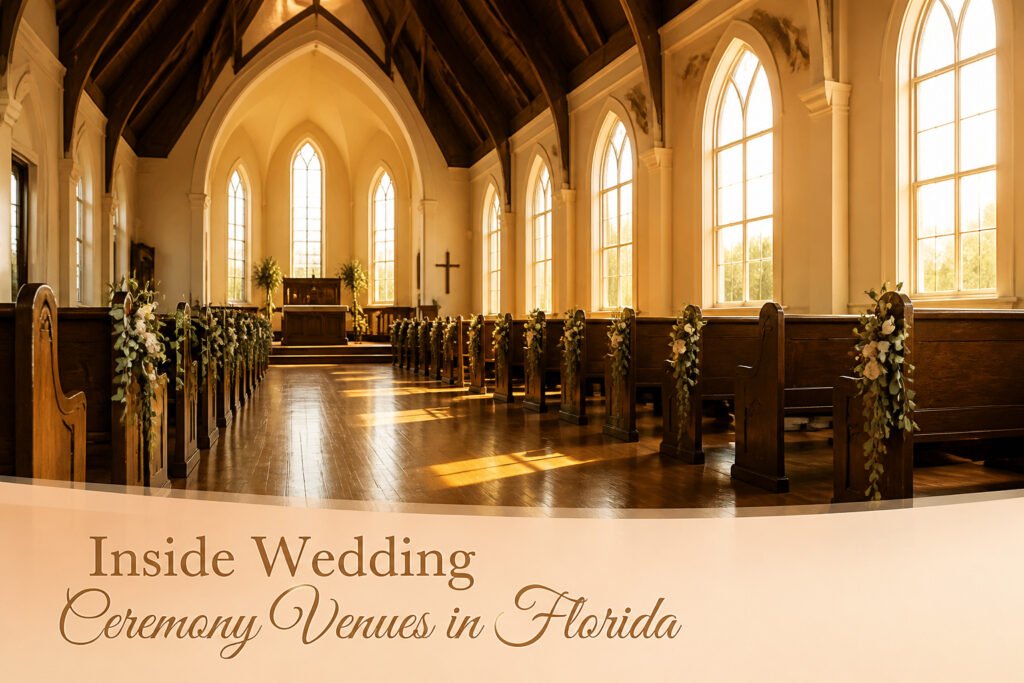
The Legacy in Tavares wins for couples who want the weight of a church wedding without denominational requirements, since its 1923 bones still carry arched windows and a pitched roofline that do the decorative work for you.
Everyone else should look elsewhere: the grandeur is built into the walls, which means you cannot soften or modernize the room if your taste runs contemporary.
1. The Legacy
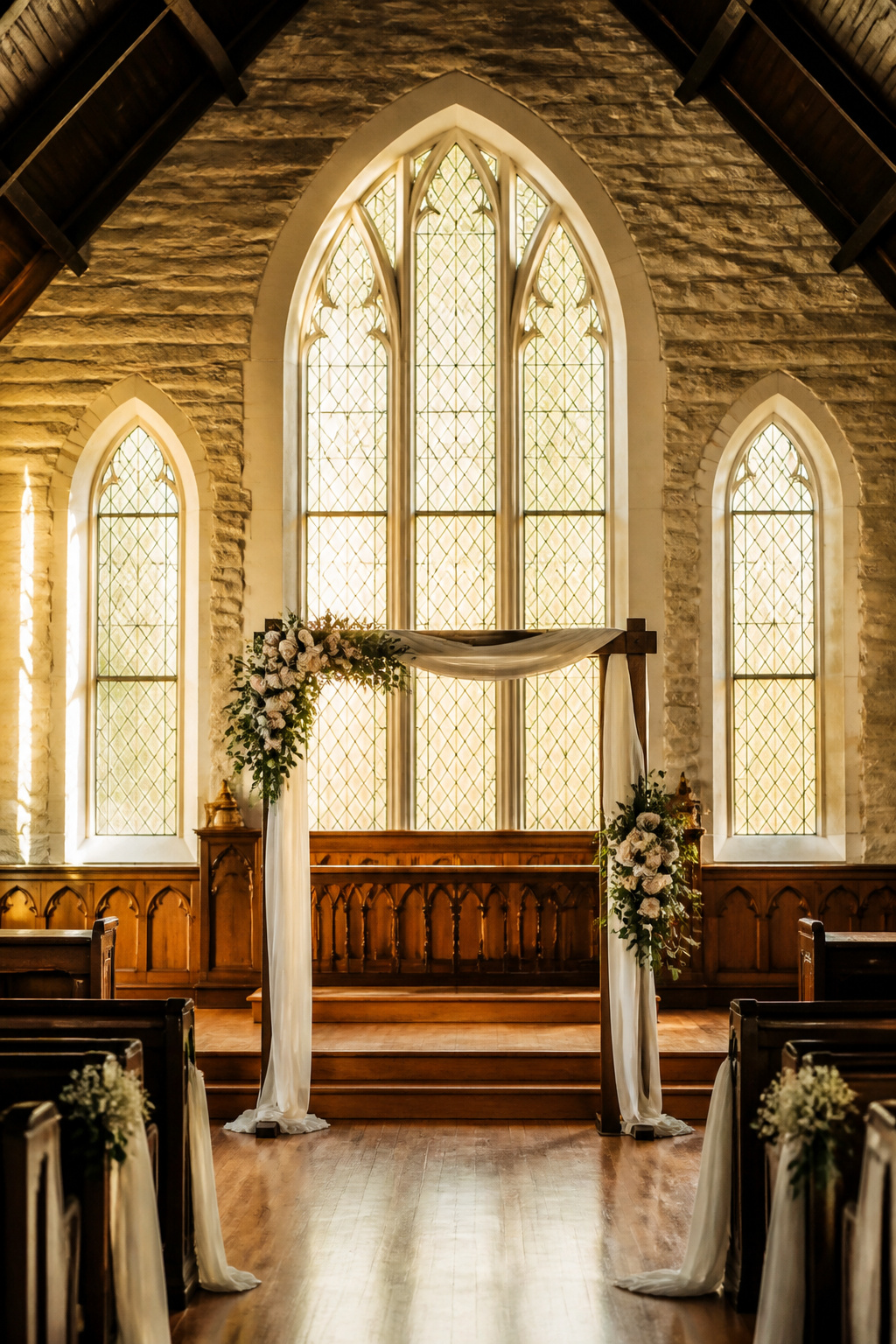
Built in 1923 as a working church, The Legacy in Tavares still carries the bones of its original purpose: arched windows, a pitched roofline, and the vertical proportions that once directed eyes toward a pulpit.
Those same architectural choices now give couples a traditional ceremony backdrop without any rented draping or imported arches. The renovation left the structural character intact, so the grandeur is built into the walls, not staged on top of them.
I like this place for couples who want the weight of a church wedding without the denominational requirements.
The chapel handles the ceremony while a connected reception space keeps everyone in one location, which matters more than people expect until they start pricing transportation between sites.
Rental rates run $–$$, rehearsal time comes included, and you are working inside walls that have already absorbed a century of vows.
2. Daytona Aquarium and Rainforest Adventure

The Island Oasis at Daytona Aquarium and Rainforest Adventure surrounds a ceremony with live rainforest plantings, waterfalls, and aquarium exhibits without a single rental drape.
That built-in environment means a couple spending modestly can put the decoration budget toward photography or the reception instead. Climate control keeps humidity and temperature steady year-round, which matters in Florida more than most couples realize until a July afternoon.
Ceremony timing needs to work around exhibit hours, so Saturday evenings and Sunday mornings tend to open first. Weekday slots exist but run shorter; guests clear before school field groups arrive.
The venue includes bridal suites and a banquet room, so the whole event stays under one roof without shuttling between spaces in afternoon storms.
3. Orlando Museum of Art

The Orlando Museum of Art carries a $$ price tag and delivers exactly what that suggests: gallery walls that do the decorating for you, so the budget line for florals and draping drops noticeably.
Art museums build in atmosphere, but they also build in rules. Ask specifically which galleries stay open during your ceremony and which close; some exhibits rotate and the piece behind your altar last month may be crate-bound by your date.
Photography gets complicated fast. Flash is almost always restricted, and your photographer should walk the space beforehand to map the available light, since gallery spots rarely match where couples naturally stand.
Your guests will wander during cocktail hour, and that is exactly what you want, but confirm whether they have free range or follow a docent-guided route.
Seated dinner capacity matters here more than standing room, because the same open floor plan that feels intimate for seventy can turn sparse for forty.
Check what the rental fee covers, whether outside vendors are permitted, and who runs the event on the day, since museum staff think like curators first and coordinators second.
You sacrifice some control over the visual program and gain a backdrop no rental company can replicate.
4. The Alfond Inn

The Alfond Inn sits in Winter Park as a hotel venue built around a private art collection, and that combination changes what couples bring to the room.
The Park Avenue Ballroom runs with high ceilings and clean, modern design, which means sound carries differently than in a draped or carpeted space.
Vows travel upward and outward rather than getting swallowed by fabric, so the officiant’s voice and any live music need planning. A string quartet fills the vertical space naturally; an unamplified soloist can thin out against the hard surfaces.
The modern aesthetic also sets the terms for decoration. The architecture and contemporary art already do the visual work, so couples tend to subtract rather than add.
Heavy floral installations or vintage furniture can look like they are arguing with the room.
The couples who do best here let the space stay spare and put budget toward lighting that controls the mood after sunset, or toward the on-site catering and guest rooms that keep the party in one place.
Southern hospitality layered over boutique hotel luxury sounds like marketing language until you watch out-of-town guests roll from rehearsal dinner to ceremony to brunch without needing a car.
That convenience costs in the $$$ range, but it buys back planning hours and reduces the number of vendor contracts to track.
5. Crowne Plaza Orlando Downtown

The Crowne Plaza Orlando Downtown sits where a couple actually needs it: close enough to walk to bars after the rehearsal dinner, far enough from the theme parks that out-of-town guests stop asking about FastPasses.
Its ballrooms run large enough for 150 to 200 guests at a seated ceremony, which is the point where many hotel spaces start pinching the aisle width.
I have seen a 180-person wedding here where the groom’s side filled three rows and the bride’s still had five, with no one squeezing past a fire column.
Hotel ballrooms solve the ceremony-to-reception problem by hiding the transition in plain sight. Staff flip the room during cocktail hour, usually held in a secondary space or the pre-function area.
The Orlando property follows the typical package structure: a flat room rental plus per-person catering, with linens and basic lighting bundled in.
What costs extra is the obvious stuff, open bar upgrades and late-night snacks, but also the second room if you want guests moving rather than waiting.
One trade-off to weigh: skyline views through floor-to-ceiling windows photograph beautifully at golden hour, but the same light can glare on a phone-wielding aunt during vows.
Ask for a site visit at your actual ceremony time, not the sales team’s preferred 2 p.m. slot.
6. The Bridge Event Center

The Bridge Event Center in East Orlando handles up to 200 guests, a number that sits right where most Florida weddings land.
That capacity is large enough to invite the full circle, college friends through grandparents, without the empty-room problem that haunts oversized venues.
12 to 15 square feet per seated guest is the industry rule, which would put a 200-person dinner in roughly 2,400 to 3,000 square feet of clear floor, plus whatever the dance floor and bar claim.
The included catering and bar service matter here because the kitchen infrastructure and permanent bar placement shape how much of that square footage actually goes to tables.
A venue with its own commercial setup does not sacrifice dining space to portable equipment or vendor staging.
The rehearsal time included in the package also helps, since walking the layout with your actual guest count, not the advertised maximum, reveals whether 200 means 200 seated comfortably or 200 shoulder-to-shoulder with no room for a dance floor.
I would ask for the seated-dinner number specifically, not the standing reception figure, and request a floor plan showing table rounds versus a head table or sweetheart setup.
The industrial character gives flexibility, but flexibility only helps if you know how much room each choice actually eats.
7. Unity Event Center
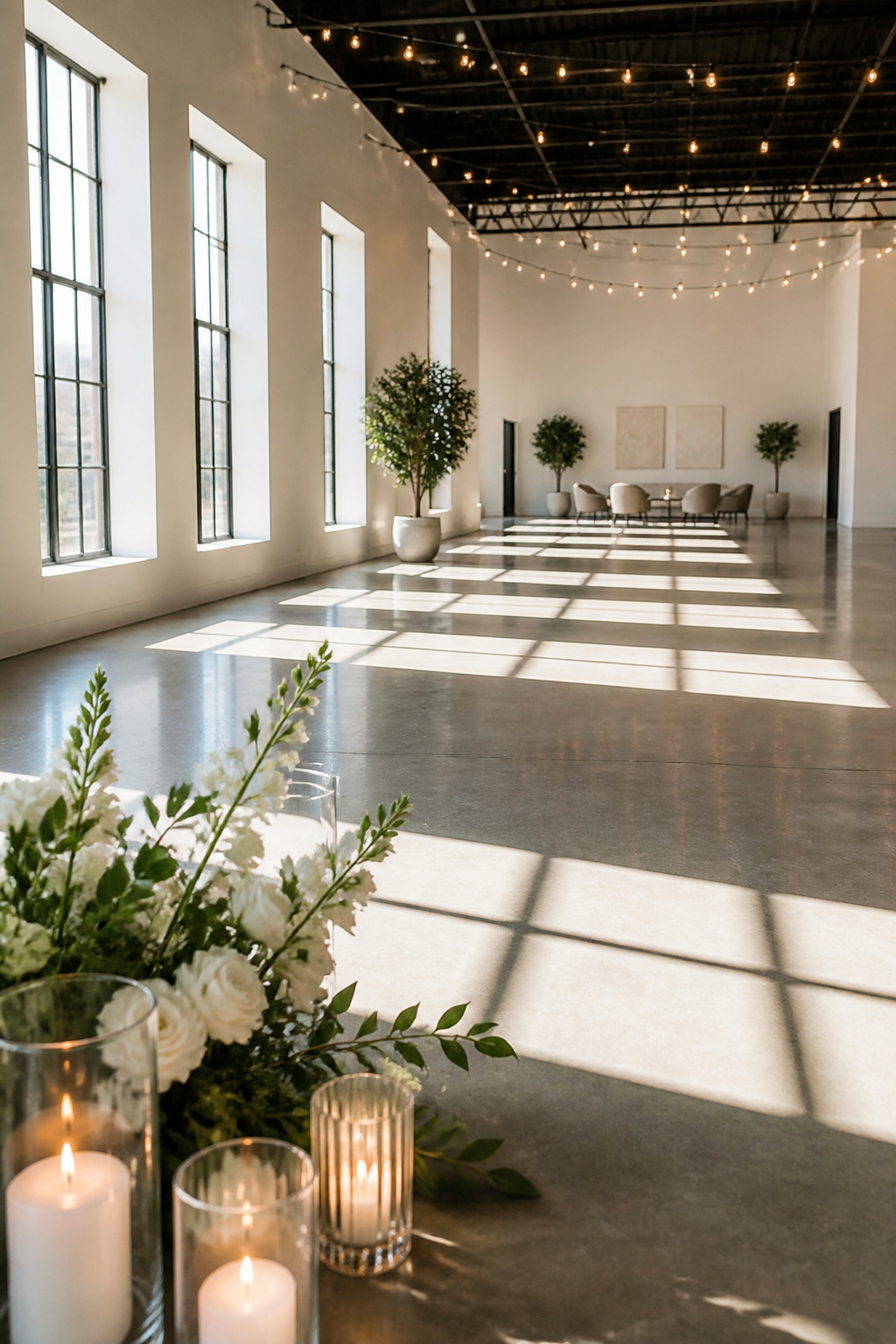
Unity Event Center sits just outside Orlando with a modern build and a mid-sized layout that can flip from ceremony to reception without dragging guests across town.
The polished floors, large windows, and simple lighting read as intentional blankness, which is the point: you bring the color palette or the fantasy theme, and the room holds it without fighting.
What blankness costs in effort is the real consideration. A venue this flexible leaves the arch, the aisle markers, and the ceremony focal point entirely up to you.
That freedom saves money on built-in décor you never wanted, but it spends it on rentals, setup time, and the mental load of designing sightlines that a more styled room would have handled.
Polished floors look elegant in photos and amplify every scuff your bridal party drags in.
Pricing sits at two dollar signs, which in this market typically means a rental fee under $10,000 and often closer to half that.
Check what the quote covers: some flexible venues charge extra for the reconfiguration window between ceremony and cocktail hour, or limit your vendor list to ones who know their loading dock schedule.
Ask specifically whether the rental window runs long enough to set a ceremony, strike it, and reset for dinner without overtime kicking in.
8. The Center at Deltona

The built-in sound system at The Center at Deltona is the kind of detail that turns a rental fee into something closer to a full package.
Couples who have priced out ceremony audio separately know that a basic DJ or A/V rental starts around $500 and climbs fast once you add wireless mics for the officiant and readers.
Having speakers, mics, and mixing already in the room shifts that money toward flowers, extra hours of photography, or simply staying under budget.
What saves the most is skipping the separate delivery and setup fee, but the savings only hold if the coverage actually reaches where you need it.
The center’s system runs through ceiling-mounted speakers, which works beautifully for spoken word in the main seating area.
Where couples get caught is the ceremony spot itself, especially if the room has an aisle longer than about 30 feet or if the officiant stands apart from the main speaker bank.
Ask specifically whether wireless lapel mics or a handheld are included, and test how they sound at the front of the room versus the back row.
Nothing hollows out a vow exchange like a mic that drops at the exact moment you need it most.
Musicians are a separate question. The built-in system handles playback and speech, but live ceremony music, a string quartet, or even a solo guitarist usually needs their own amplification or direct inputs.
The center may have a 1/4-inch or XLR connection for this, or it may not; that conversation belongs in the first venue walkthrough, not the week before the wedding.
9. Gallery J
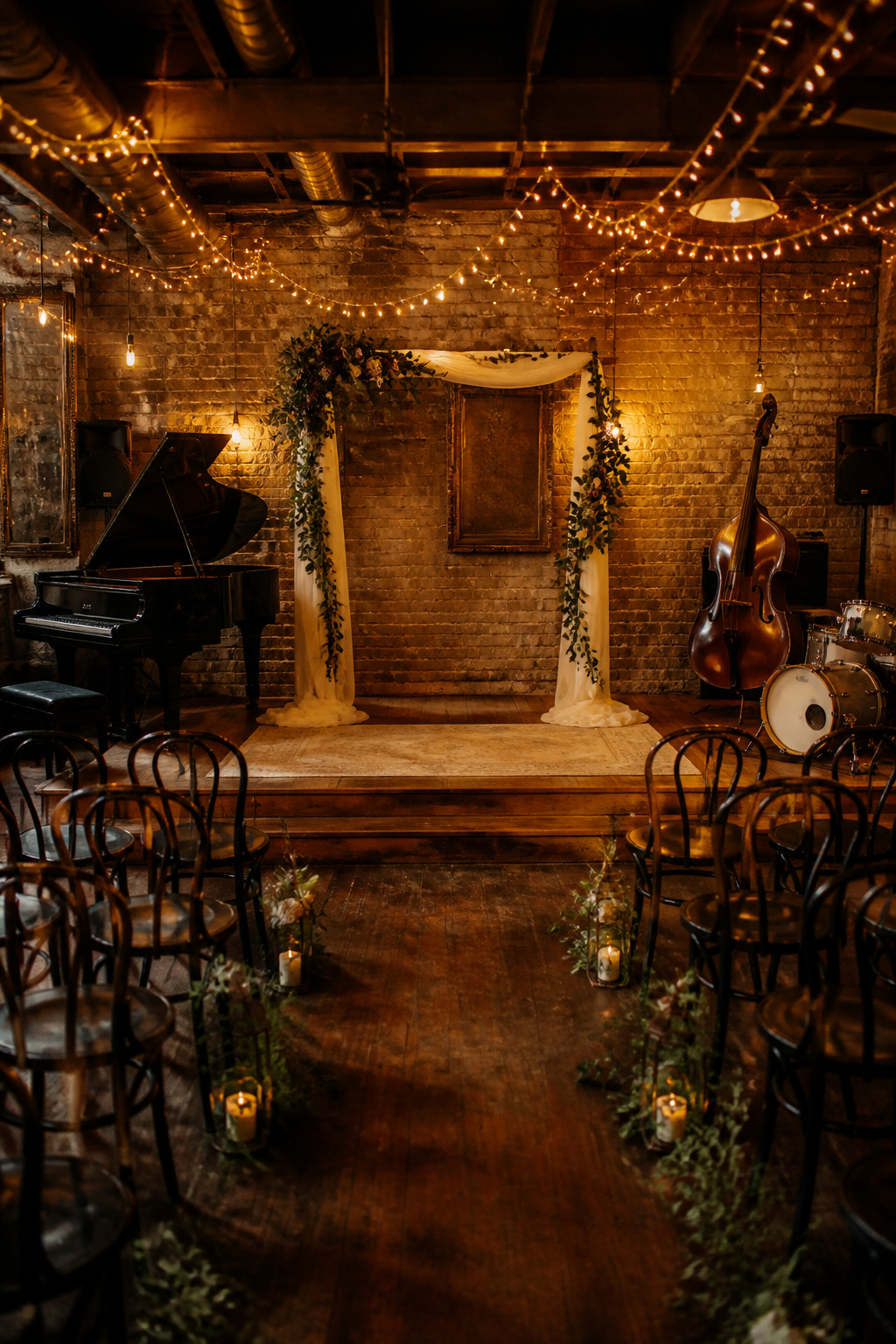
Gallery J in Winter Springs carries a vintage jazz club feel that does most of the decorative work for you.
Twinkle-lit ceilings and the existing moody lighting mean you spend less on ceremony flowers and draping, but you need a photographer who knows how to shoot in low, warm light without flattening skin tones.
The theatrical, intimate setting suits couples who want a relaxed ceremony that still feels like an event; a black-tie processional would fight the room rather than use it.
At a mid-range price point, the flexibility to hold both ceremony and reception under one roof keeps guest movement and rental costs down, though the single aesthetic leaves little room to soften or brighten the mood if your vision drifts lighter.
10. Eola View
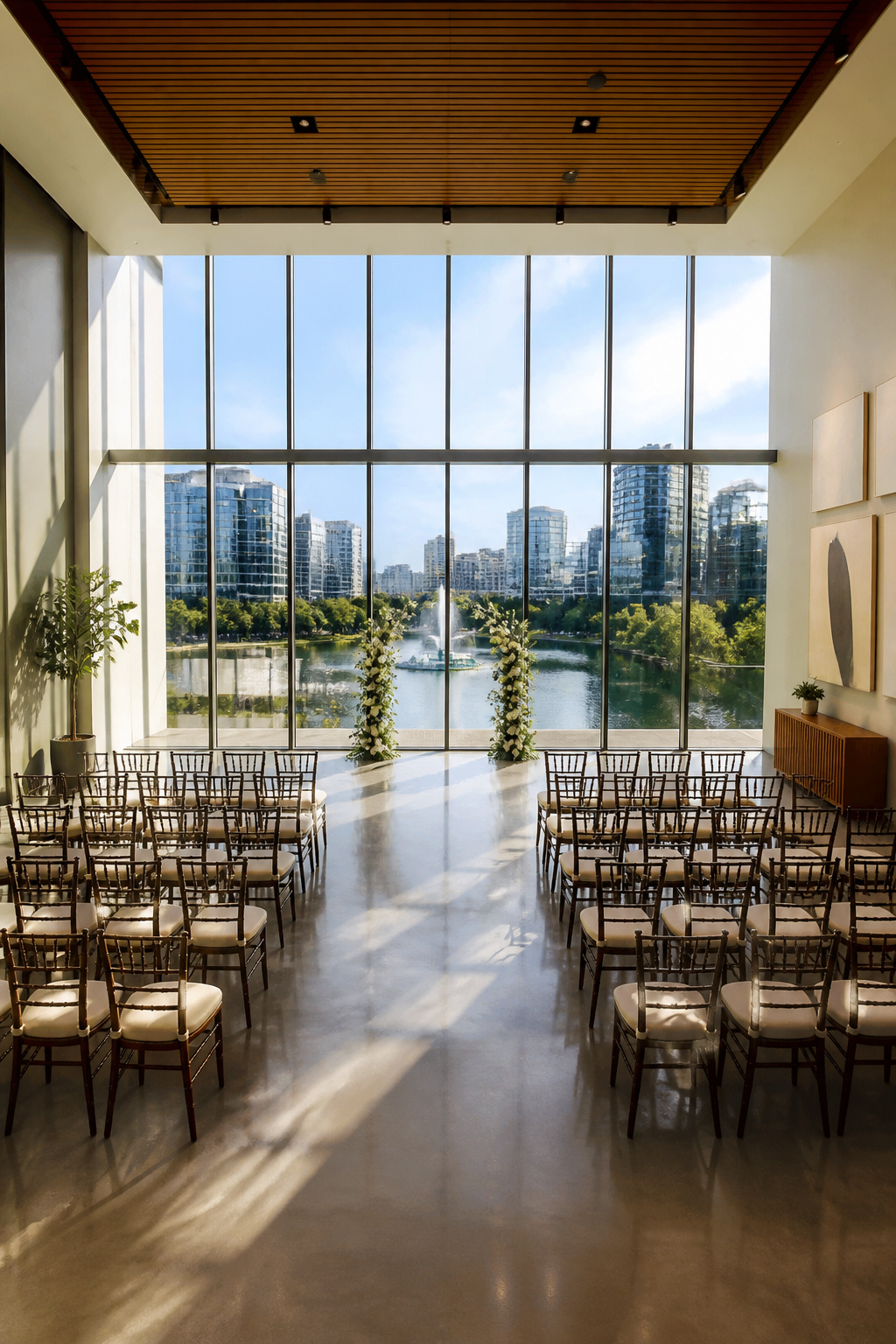
Floor-to-ceiling windows define Eola View’s entire approach to an inside wedding ceremony venue. During the day, the glass pulls Lake Eola in as your backdrop, so the officiant stands against water and skyline rather than a draped wall.
That same transparency means the space brightens naturally, cutting your need for added uplighting until late afternoon.
After dark, the dynamic flips. The lake becomes black mirror and city lights replace the water view, so your florist or lighting designer has to decide whether to compete with that urban glow or let it stand alone.
Most couples I have seen work through this venue lean into the shift: candles and warm pin spots for the ceremony, then open the windows to the balcony for cocktail hour so guests feel the breeze without the humidity.
The building sits near downtown Orlando, which means parking is manageable and out-of-town guests have hotel options nearby.
The space reads modern and fairly neutral, so the money question becomes whether you spend on transforming it or on letting the window wall stay the statement.
11. Brannon Center

The Brannon Center in New Smyrna Beach is a modern ballroom that sits right on the water, with expansive windows pulling Florida’s coastline into the ceremony itself.
Polished finishes and customizable lighting let a couple set the mood without fighting the room’s architecture, and the space handles a large guest list without the hollow feel some big ballrooms get.
I looked at a lot of waterfront venues in this part of the state, and most force the choice: raw natural setting with weather risk, or fully indoor space with a printed backdrop where the view should be.
This one threads that needle. The sleek design reads contemporary rather than coastal kitsch, which matters if your Pinterest board runs more city loft than seashell centerpieces.
The staff runs full event support, which for a ceremony venue means more than it sounds.
You’re not just booking a room; you’re buying the hours of setup that keep you from begging favors from guests who should be seating themselves. At $$, it sits mid-range for the region.
Worth it if clean sightlines and predictable light matter more to you than outdoor photo potential, or if you’ve already planned a separate portrait session on the sand and need the actual vows somewhere dry.
12. Estate on the Halifax

The chapel at Estate on the Halifax sits inside a larger property, and that distinction matters more than most couples realize when they start touring.
An estate venue keeps the ceremony, the portraits, and the reception under one ownership, which means the timeline bends around your wedding instead of your wedding bending around a hotel’s checkout policy or a restaurant’s seating rotation.
Southern charm is the stated design language here: exposed beams overhead, fixtures that read elegant rather than trendy, and stained glass windows filtering light onto wooden pews.
The effect is closer to a family chapel than a decorated ballroom, which is exactly what separates an estate from a purpose-built event space.
Hotels build neutral so they can sell to corporate accounts on Saturday and your wedding on Sunday. An estate bets on one aesthetic and lives with it.
The reception hall, called Tavern Hall, carries that same risk. Its open layout and classic design give your planner bones to work with rather than a finished look to fight against.
That flexibility is useful, but it also means the budget for atmosphere falls to you in ways a hotel ballroom with built-in uplighting and preset draping does not.
Port Orange puts this roughly midway between Orlando and the Atlantic coast, so guests flying into either airport face a drive.
The estate model absorbs that trade-off by offering the full day in one place, which matters in Florida’s afternoon storm season more than the brochure admits.
13. Pegasus Manor
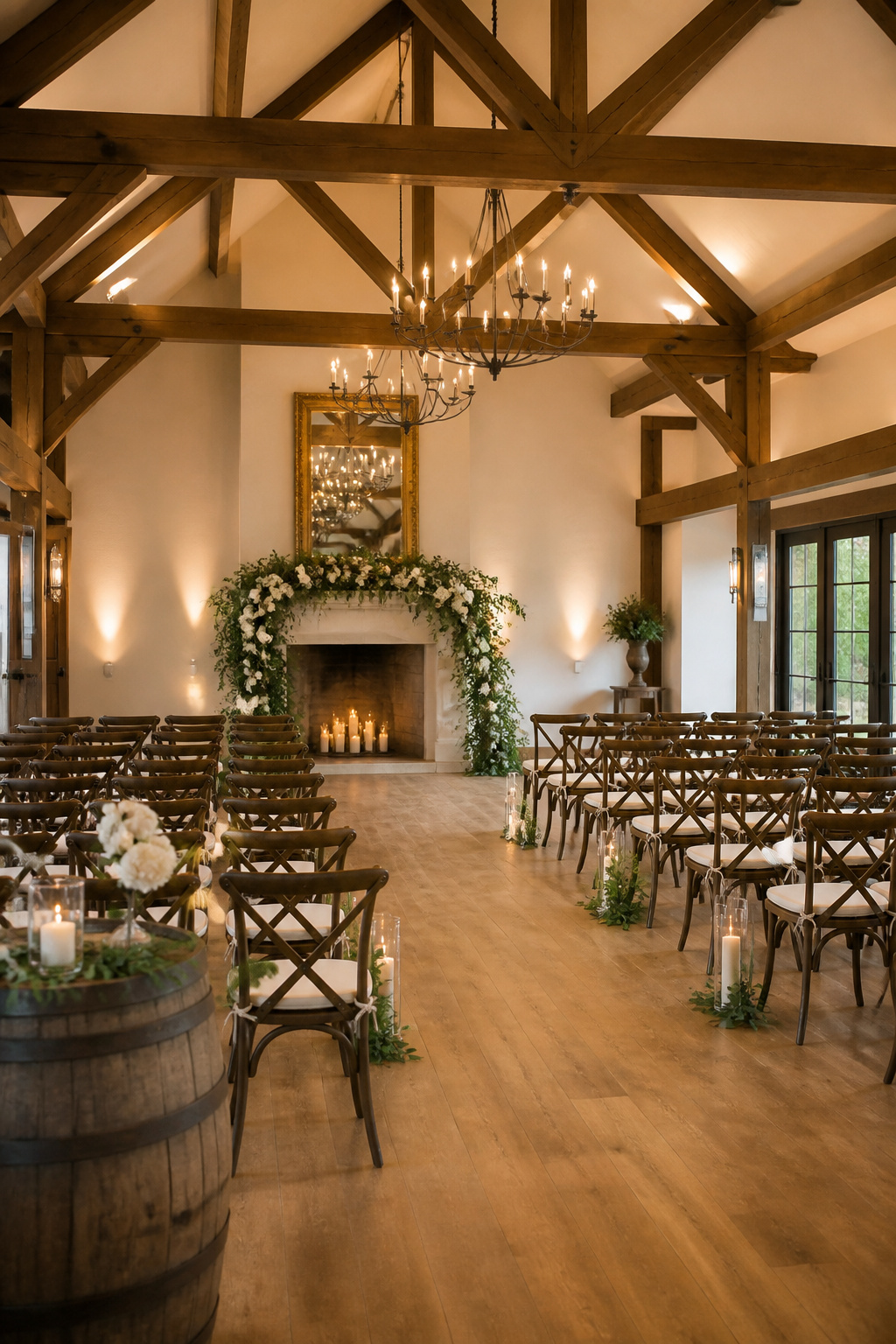
Pegasus Manor sits in Eustis, Florida, where the countryside outside gives way to a Grand Hall with vaulted ceilings, exposed wooden beams, and the kind of romantic lighting that does most of the decorating for you.
The style lands in that refined-rustic middle space between barn charm and ballroom elegance, which means you are not starting from scratch on atmosphere but you are also not walking into a blank box.
A manor-style venue like this typically hands you the bones: the bridal and groom suites, the indoor reception area with room for dancing and dinner, and the ceremony footprint itself.
What you will likely arrange separately are the ceremony specifics the building does not dictate. Chairs for the aisle, the altar focal point, and any personal touches beyond the beams and uplighting fall to you or your coordinator.
Sightlines and acoustics for the vow exchange matter here, since the same grand volume that makes the space memorable can swallow words if you do not plan for it.
The 5.0 rating and mid-range price point suggest couples find the balance workable, but ask on your tour whether the rental fee covers setup and breakdown or if that hours onto your day.
14. World Equestrian Center
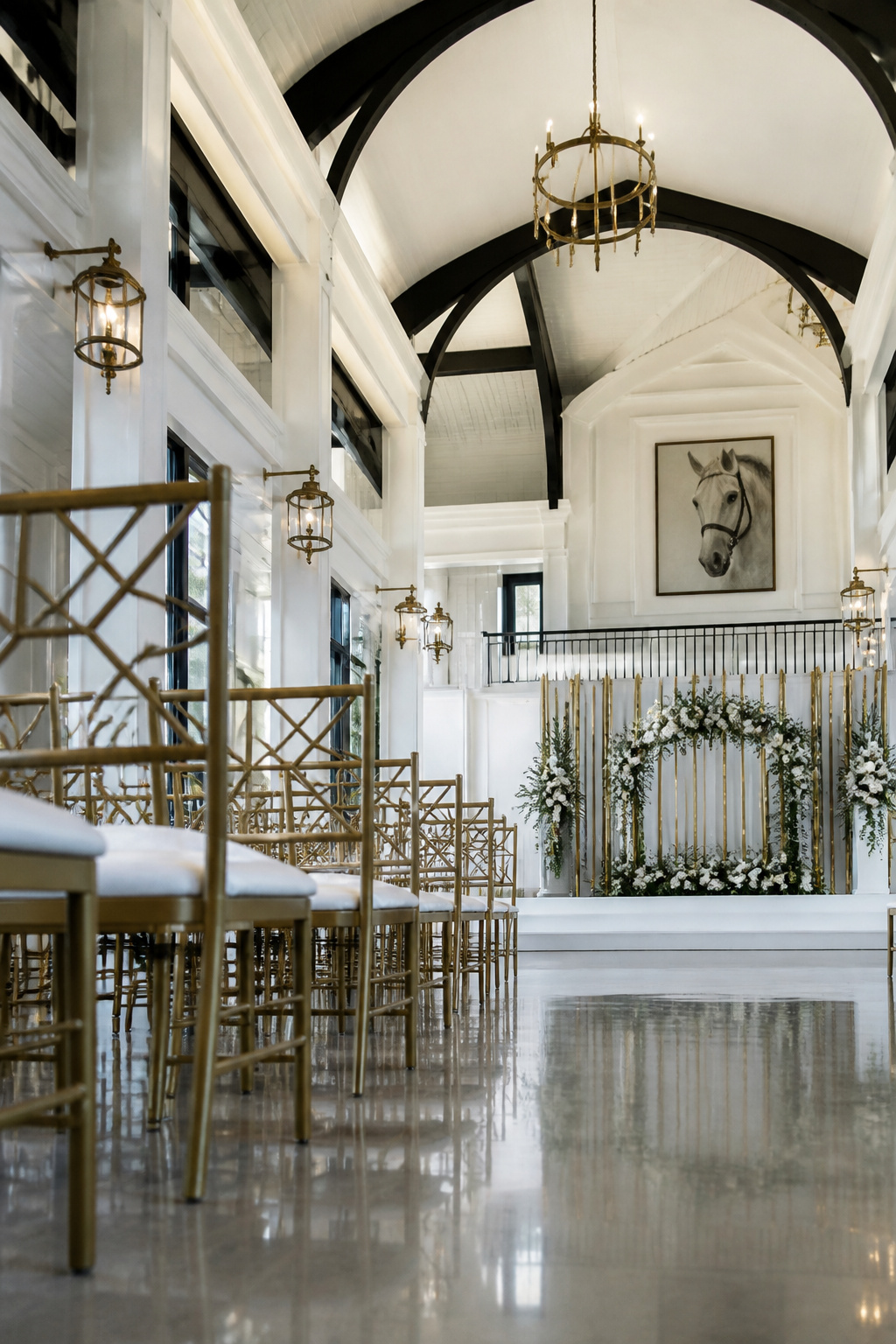
World Equestrian Center in Ocala was built for horse-show crowds, and the architecture makes that scale impossible to miss.
Vaulted ceilings and polished surfaces carry sound differently than a chapel or ballroom, so a ceremony of sixty guests can feel swallowed by space unless you work with it deliberately.
Florists I have spoken with suggest clustering arrangements at the aisle entrance and altar to create visual walls that draw eyes inward, and musicians place speakers closer to guests rather than pushing volume to fill the room.
The equestrian details, polished enough to read as general luxury from a distance, still announce themselves up close: brass fittings, leather accents, the faint suggestion of barn structure under all the gloss.
Non-riding couples should decide early whether they want to lean into that texture or soften it with draping and candlelight; pretending it is not there tends to look like an oversight rather than a choice.
Cost positioning runs toward the higher tier for Florida inside wedding ceremony venues, though the base rental sometimes includes more hours and vendor flexibility than competing spaces at similar price points.
Where couples lose control of the budget is in the add-ons required to make the space feel intimate: extra draping, upgraded lighting, sometimes a custom dance floor to segment the room.
Those line items accumulate fast, and the venue’s grandeur can nudge spending upward before you have made a conscious decision to splurge.
15. Zymarium Meadery

Zymarium Meadery runs as Orlando’s only working meadery first and an event space second, which shapes everything about holding a ceremony there.
The production floor stays active, so event availability clusters around the times the tanks aren’t being racked or the bottling line isn’t running.
That constraint is the trade-off for the atmosphere: fermentation tanks and industrial equipment create a black-and-gold backdrop that reads as intentional rather than rented.
I toured a working winery in Virginia once where the smell of active yeast hit the doorway before the host did.
Zymarium’s mead production likely carries the same consideration: the space will smell like honey and fermentation, which some couples treat as character and others as something to ask about.
The award-winning facility leans into its industrial aesthetic rather than hiding it, which means the ceremony happens inside the same architecture that produces the beverage.
Ask what the rental fee includes versus what the production schedule requires you to work around.
At small venues attached to working businesses, the night manager is often the same person who showed you the space, or it is someone you’ve never met.
The difference matters more at 40 guests than at 200, because there is no production staff to hide a gap in service.
16. Chapel & Cellar
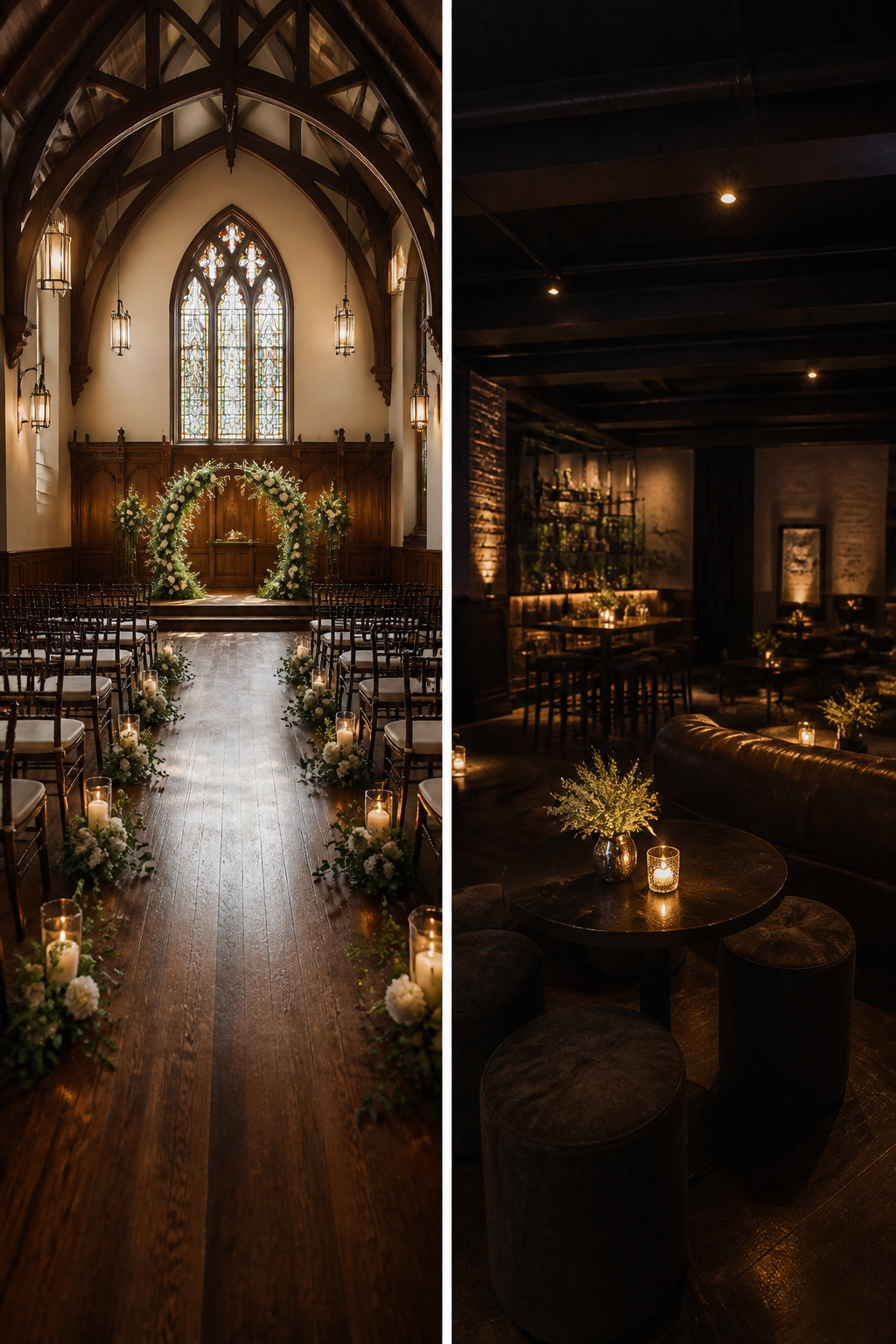
A chapel upstairs and a cellar lounge below keeps the whole wedding on one property without the usual venue-hopping.
The ceremony happens in the chapel space with its wood accents, stained glass, and warm overhead light, then guests move downstairs for cocktail hour or the full reception.
Downstairs runs speakeasy-style: dimmer, moodier, a deliberate shift from the upright formality of the service above.
The dual concept works best for smaller guest counts. The chapel’s intimate scale suits micro-weddings, and the cellar’s lounge atmosphere would feel thin stretched over too many bodies.
For couples weighing a single-location wedding against the convenience of separate ceremony and reception venues, this trade is clean: you sacrifice the grand entrance from a second location and gain an hour nobody spends on a shuttle bus.
The aesthetic split is the real draw. The chapel reads traditional and familial; the cellar reads like a secret you are letting guests in on.
That contrast photographs well, and it gives the day two distinct moods rather than one long stretch of the same room.
17. The Grand 721
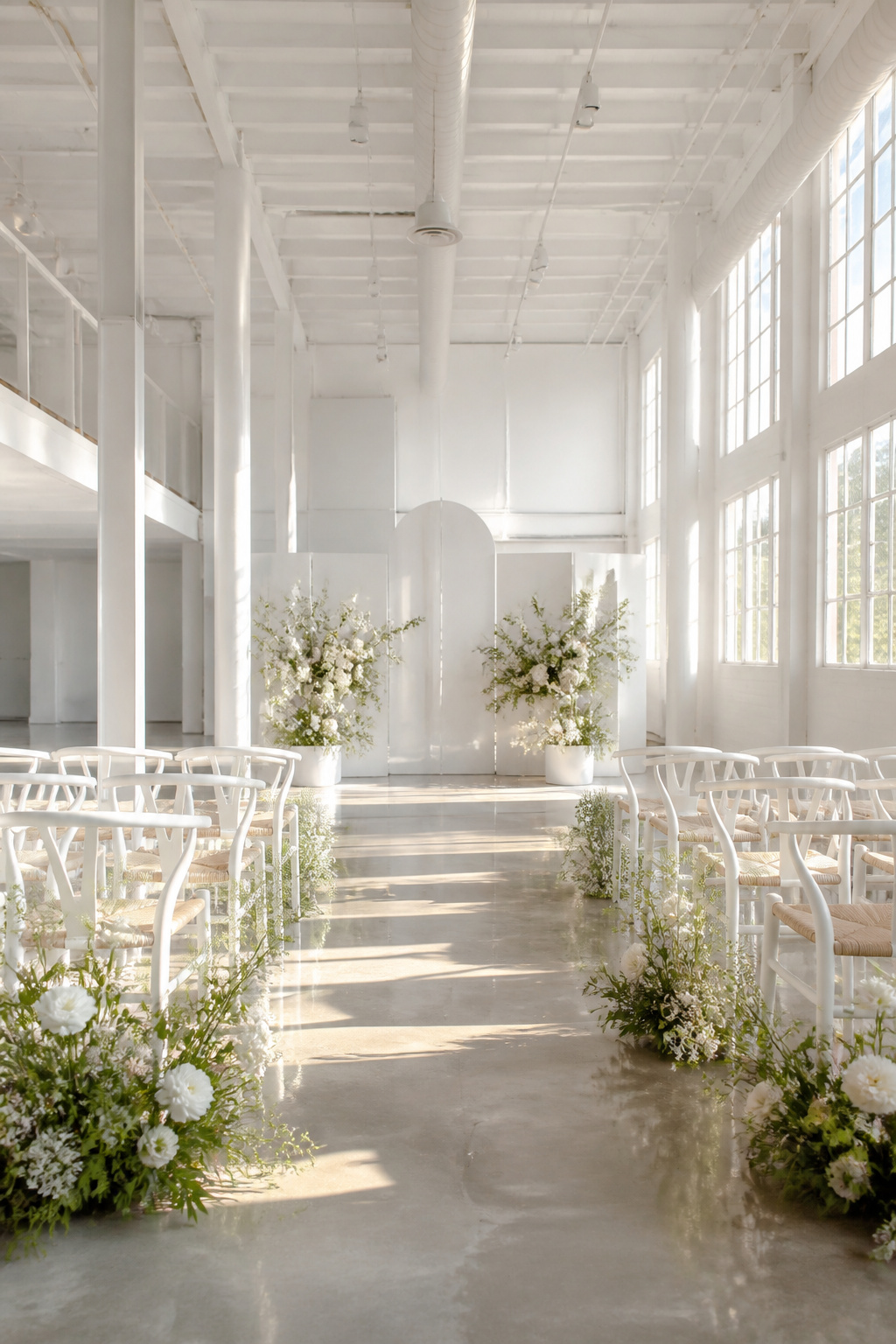
The all-white interior at The Grand 721 in New Smyrna Beach is the kind of space that makes a couple decide whether they trust their own taste or hire someone to impose one.
White walls, white floors, white ceiling: every color you bring in reads exactly as you brought it, which sounds liberating until you see how a blush runner turns salmon under the venue’s modern lighting and your aunt’s phone flash bounces off the sleek flooring like a signal mirror.
Photographers tend to love it or fight it. The blank canvas means no clashing backgrounds, but it also means no shadow to hide a wrinkle in the dress and no warm wood tone to flatter skin.
A photographer I spoke with once called all-white ballrooms "honest to the point of cruelty." The Grand 721’s lighting is built in and contemporary, so the fix is usually bringing your own color temperature, not fighting theirs.
If you want color, the venue does not resist it the way a historic space with gilt details would. The risk runs the other direction: without enough pigment, the room can feel like a gallery between shows.
Most couples who land here go one of two ways. They either commit to the clean, modern look and keep the palette to two tones, or they rent enough draping, uplighting, and linen to make the white disappear entirely.
Doing half of that, a few colored centerpieces against all that blankness, tends to look accidental.
18. New York Beer Project

New York Beer Project in Horizon West runs about mid-range on price and calls itself a brewery-meets-ballroom, which is the first thing to unpack if you are considering it for an inside wedding ceremony.
The exposed brick, iron, and theatrical lighting read industrial-chic, and that aesthetic pulls the whole event in one of two directions.
Embrace the casual side and hold a short ceremony in the working brewery space, letting the tanks and equipment stay visible, then flow straight into a reception that feels like a very good private party.
Or rent the more polished ballroom areas and dress the room into something more formal, though the architecture will keep fighting you toward the casual end.
The real variable is noise. Active breweries have compressors, ventilation, and staff moving kegs on schedules that do not pause for vows.
The 5.0 rating suggests they have figured out the event logistics, but the question for your ceremony is whether the brewing side shuts down or gets walled off.
A working brewery that keeps operating during your four o’clock ceremony will need lapel mics at minimum, and you should walk the space at the exact hour you plan to marry to hear what the HVAC is doing.
Sightlines work in their favor: multiple indoor areas mean you can stage the ceremony in the room with the strongest natural focal point, then reconfigure for dinner without asking guests to relocate to a second venue.
19. Trinity Oaks Event Venue
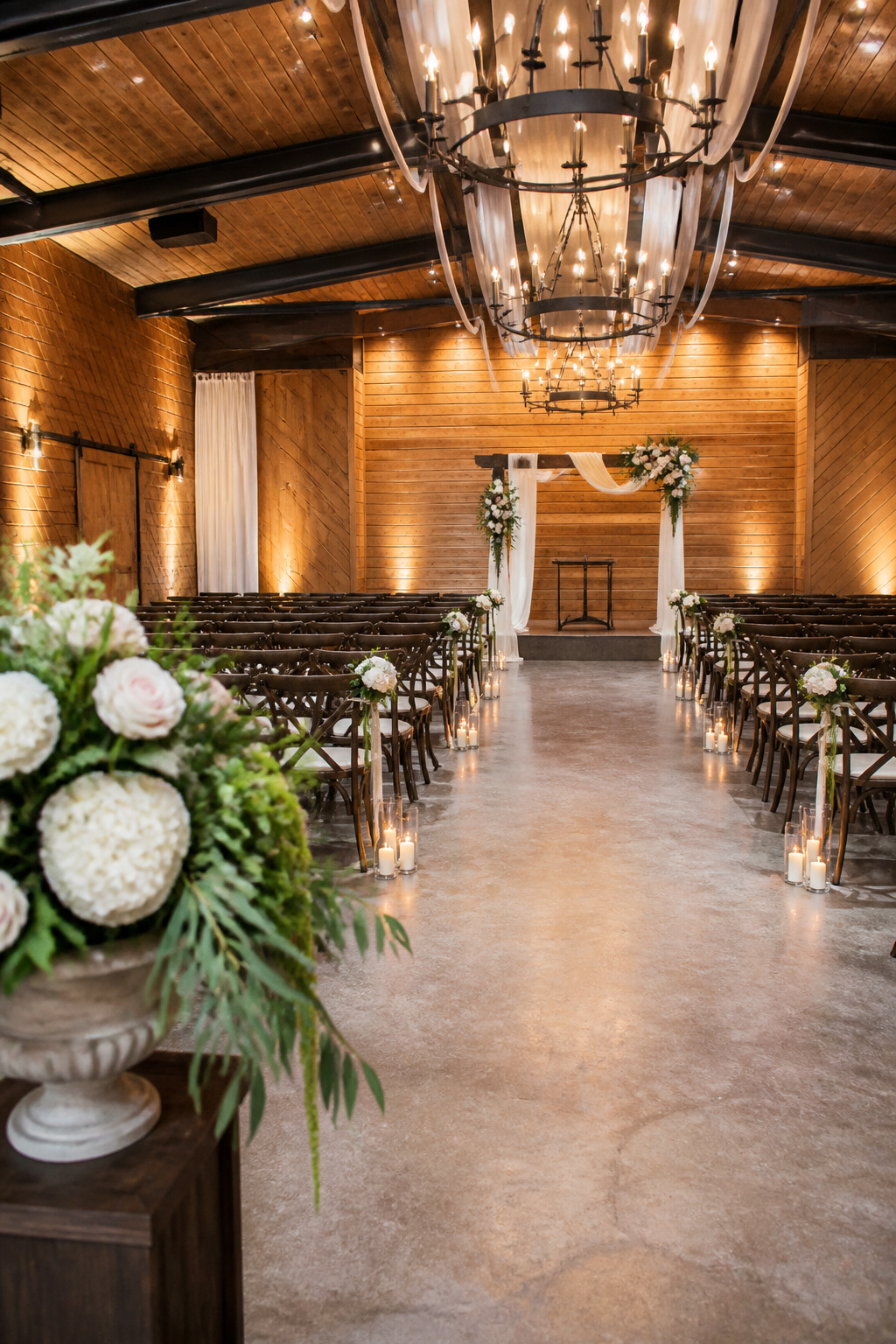
Trinity Oaks Event Venue sits in DeLand with wood-accent walls and lighting that does the romantic work for you, not against it.
The climate control runs the full building, which matters in Florida from May through October when outdoor ceremonies become a bet on afternoon storms.
A bridal suite and prep area are built in, so the transition from getting dressed to walking the aisle stays under one roof without a car ride in between.
The layout handles both ceremony and reception indoors, a real budget saver for couples who would otherwise pay two venue fees or shuttle guests between sites.
Capacity lands in the mid-sized range, right for weddings where you know most guests’ names but still need a dance floor.
The $$ category puts it within reach of modest budgets without crossing into the stripped-down hall territory that shows up at the lowest tier.
I would place this against similar Central Florida venues by its combination of rustic material and modern infrastructure. Too many barn-style spaces look the part and then sweat through July; too many hotel ballrooms stay cool and feel anonymous.
Trinity Oaks threads that gap.
The one question to press on a tour is whether the wood details read fresh or already dated to your eye, since rustic has had a long run and personal taste on that point varies hard.
20. Tavares Pavilion on the Lake

The Grand Ballroom at Tavares Pavilion on the Lake hangs chandeliers under a vaulted ceiling that draws the eye upward and spreads light through the room in a way flat overhead fixtures never manage.
Chandeliers need dimming capability because Florida afternoon sun through those giant windows competes hard with artificial light, and a ceremony at 4 PM reads as hollow and cold if the fixtures stay at full brightness.
The lake proximity matters more than the view; the water surface bounces light upward through those windows, so the indoor space stays luminous even on overcast days without ever feeling like a tent or a cave.
That wraparound veranda gives guests somewhere to breathe after the ceremony, but the real win is the ballroom itself: you get waterfront atmosphere without the waterfront gamble, no wind flipping programs, no humidity flattening hair, no backup plan crowding into a catering tent.
The cost bracket is solidly mid-range at $$ on the local scale, which puts it within reach for couples who would stretch for a resort but would rather spend that difference on photography or a longer cocktail hour.
21. White Rock Canyon

White Rock Canyon in Bushnell builds its name from the spring-fed rock quarry that anchors the property, and that geology carries inside through limestone textures and the kind of heavy, cool walls that keep Florida humidity from flattening the mood.
The indoor spaces are not the main draw; the dramatic cliffs and private ceremony island outside get the photographs.
But the covered areas function as backup that does not feel like surrender, which matters more than couples expect when they book a venue for its outdoor drama and then face an August thunderstorm on the day.
The $$ pricing puts it mid-range for Central Florida, though that covers the whole venue rather than a per-guest rate.
What to verify: whether the indoor option is a dedicated room or a tent-style shell, whether the kitchen or prep space attached to it can handle a seated dinner at the same capacity as the outdoor lawn, and whether the rental fee shifts for indoor-only use.
Ask also who controls the climate systems; limestone holds temperature well but needs active cooling once bodies fill the space. The quarry setting is the reason you are there.
Make sure the indoor contract still lets guests see it.
22. The BEV – Barney E. Veal Event Center

The BEV – Barney E. Veal Event Center in Minneola operates on a naming convention that can trip up couples searching for indoor ceremony space.
The abbreviation "BEV" reads like a restaurant or bar on a map, and the full name gives no signal that weddings happen there at all.
I watched a friend scroll past it twice while looking for inside wedding ceremony venues near Orlando before she caught the "Event Center" at the tail end and clicked through.
Dedicated event centers like this one solve what hotel ballrooms often complicate. The main ballroom carries high ceilings and modern décor as a fixed feature, not a setup fee.
Additional rooms sit ready for getting-ready hours or cocktail hour without the logistics of moving guests between buildings or negotiating a second rental.
The team manages hospitality in-house, which matters when your budget is under $10,000 and hiring a separate month-of coordinator would split that number in half.
The model trades destination appeal for function. Guests driving from across Central Florida find it convenient; guests flying in find nothing to photograph until they arrive.
For couples who need the ceremony and reception in one climate-controlled space and would rather put money toward catering than venue mystique, that trade lands in the right direction.
23. Hotel Beauden, Autograph Collection

The Autograph Collection sits a tier below Marriott’s luxury flagships, which is worth understanding before you book a site visit.
You get the corporate backbone: block rooms at negotiated rates, a preset catering menu with per-head pricing, and an on-site coordinator who handles the hotel’s end of the timeline. What that backing costs you is flexibility.
Independent venues in St. Petersburg or Tampa often let you bring your own bartender or waive the cake-cutting fee; hotel chains rarely do.
I walked a property in this tier once where the ceremony space was technically a ballroom partition, and the flip time between their corporate lunch and our setup was non-negotiable. The trade is predictability against personality.
If your guest list is heavy on out-of-towners who need airport shuttles and you want one invoice for the weekend, the chain structure earns its keep.
If you pictured a hand-painted aisle runner and a bar stocked with a mead you discovered together, the corporate playbook starts to chafe around hour two of the contract review.
Hotel Beauden itself carries the Autograph Collection standard of design-forward lobbies and local artwork commissions, so the visual foundation is stronger than a standard Marriott. Just read the food and beverage minimum before you fall in love with the atrium.
24. Renaissance Orlando at SeaWorld

Renaissance Orlando at SeaWorld sits on the resort strip near the parks, and that location shapes the day in ways couples sometimes forget to weigh.
The SeaWorld proximity reads as a plus for guests flying in with kids or extending the weekend, but the parking lots and shuttle traffic also mean your ceremony photos pick up roller coaster silhouettes and the ambient crowd noise never fully drops away.
The venue itself works inside a familiar resort structure: grand ballrooms with crystal chandeliers for the main event, smaller salons for rehearsal dinners or morning-after brunches, and the usual package of on-site catering, guest rooms, and a staff planner who knows the room layouts cold.
Modern interiors keep the look sleek rather than themed, which helps if you are trying to steer the day away from vacation energy and toward something more formal.
One call to make early is whether you treat the park access as a guest perk or a distraction to downplay in your signage and timeline.
The hotel will list both options neutrally; your job is deciding which one matches the tone you are actually after.
Hotels, Museums, and Industrial Spaces

Hotels package the whole day into one contract, and that convenience costs.
A ballroom at a place like Hotel Roanoke keeps guests under one roof with catering, bar service, and setup handled in-house, which suits couples who would rather trade control for time.
The budget assumption is higher, and the decoration approach is minimal: you are buying their look, not building your own.
Museums and cultural venues flip that trade. The art and architecture are already there, so your flowers and linens compete with a Rothko or a vaulted ceiling rather than filling a blank slate.
These spaces carry restrictions, often limited hours and vendor lists, and they assume you value identity over customization.
The budget can land lower than a hotel if you spend less on decor, but the time investment shifts to coordination and compromise.
Industrial spaces like converted warehouses ask the most of both resources. Exposed brick and high ceilings give you raw character, but the square footage is empty until you bring in lighting, draping, and furniture.
The Bridge Event Center in Orlando includes catering and planning support, which softens the load, yet the core assumption remains: you wanted a blank canvas, and now you have to paint it.
Budget $5,000 to $15,000 above a hotel package for the transformation, and expect months of design decisions.
Climate Control and Predictable Light
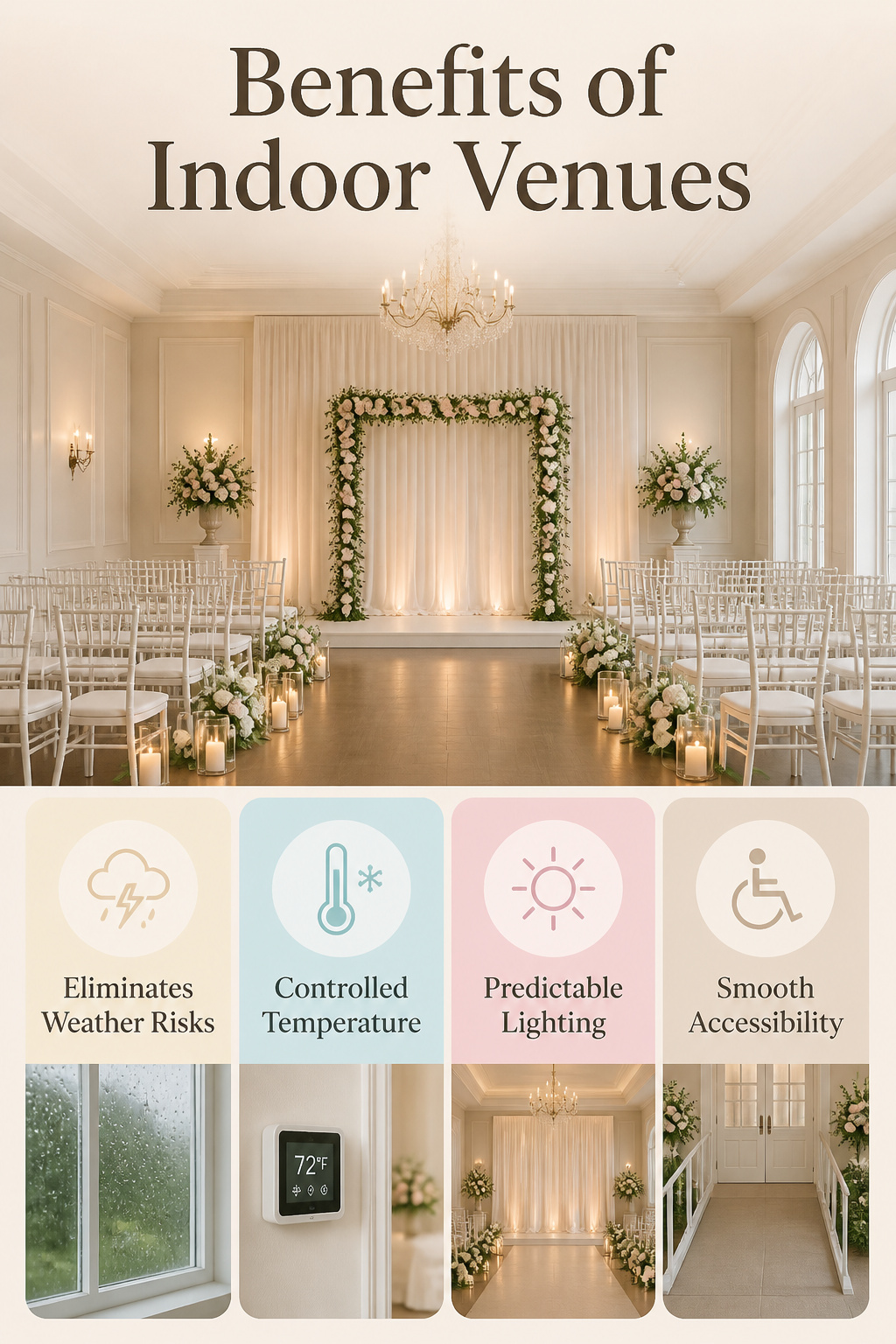
Indoor venues strip away the variable that derails more Florida weddings than any other: the weather.
I watched a friend’s outdoor ceremony in St. Augustine shift from sun to sideways rain in twenty minutes, guests scattering with programs over their heads while the florist tried to save the arch. An indoor space eliminates that contingency entirely.
No backup tent to rent, no hourly radar checks, no decision at 10 a.m. about whether to move eighty chairs.
Controlled temperature and predictable light mean your photographer isn’t chasing golden hour or fighting glare through sweat-fogged lenses. The vows come through clearly because walls contain sound instead of letting it bleed across open lawns.
Guests with mobility needs move from ceremony to reception without gravel paths or grass in heels. The flow stays smooth because nobody relocates cars.
For couples planning against a deposit deadline, this predictability translates to fewer moving parts to track. You book the space, and the environment comes with it.
You give up the view, but in Florida’s climate, that often pays for itself in peace of mind.
Capacity, Layout, and Guest Access
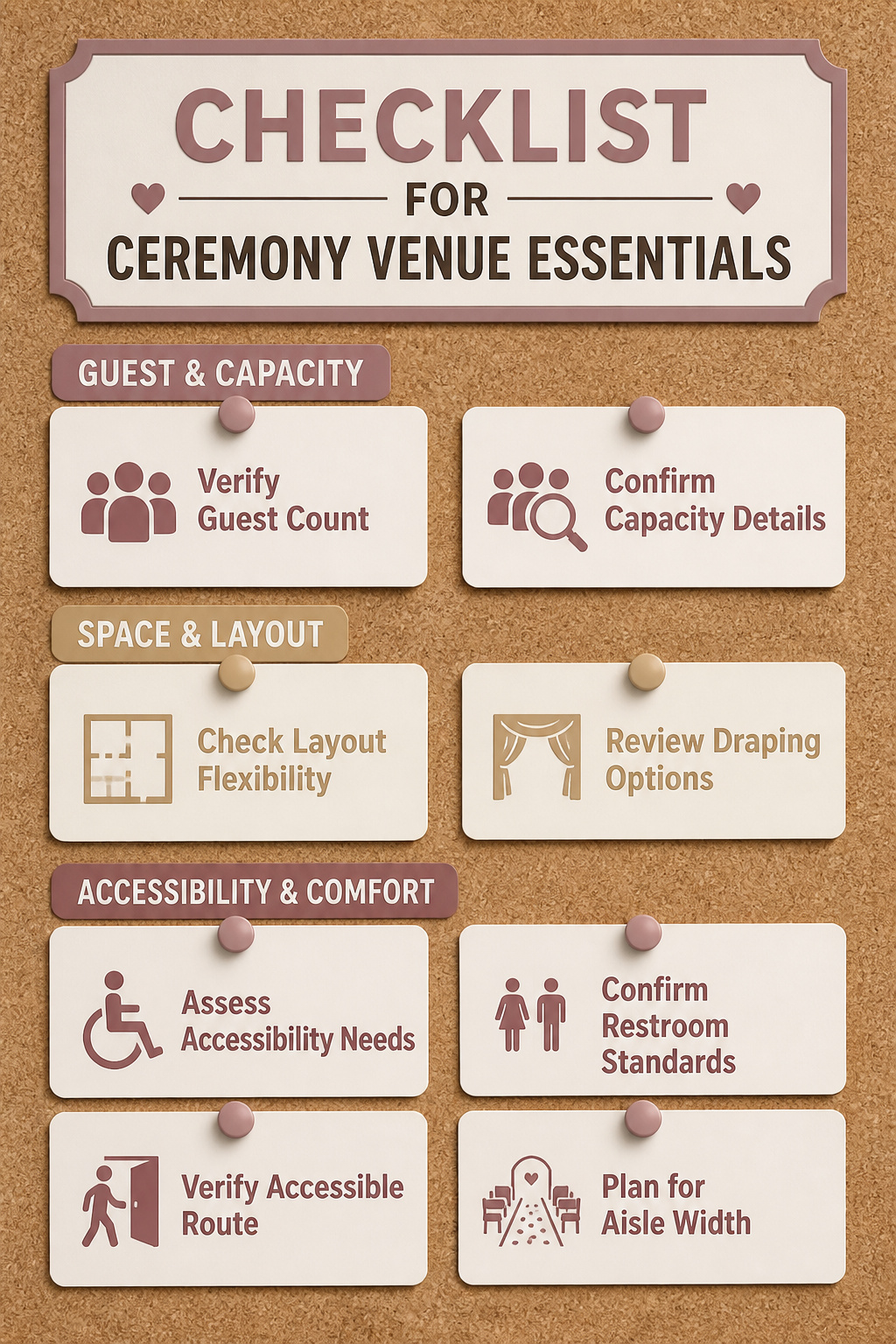
A room that swallows your guest count is one of the most common mistakes couples make when touring inside wedding ceremony venues.
Industry planning figures suggest roughly 8 to 10 square feet per guest for a standing ceremony, and 12 to 15 for seated dinner service afterward.
That difference matters because many Florida venues advertise their maximum standing capacity, not the comfortable seated number that leaves space for an aisle, an altar focal point, and the natural light you actually want for vows.
Layout flexibility separates venues that work for a ceremony-only booking from those that handle a full ceremony-to-reception flip. A single room of 1,500 to 2,000 square feet can manage both for 50 to 75 guests with a quick reset during cocktail hour.
Larger spaces demand either built-in partitioning or your own draping budget to shrink the visual footprint, or the room photographs sparse and the energy dissipates.
Ask specifically whether the venue provides curtaining or whether you are renting a true blank canvas where your florist bears the full cost of defining the space.
For accessibility, what sources actually confirm varies widely, so verify directly: whether the entrance you saw on the tour matches the accessible route guests will use, whether restrooms meet current ADA reach and turn requirements, and whether the aisle width your ceremony layout requires works with the room’s fixed architecture.
Older Florida buildings in particular may list "handicap accessibility" without specifying which areas that covers. The time to walk the route yourself, slowly, is before the deposit clears.
Frequently Asked Questions
What is an indoor wedding venue?
An indoor wedding venue is a fully enclosed event space designed to host the ceremony, reception, or both inside a controlled environment.
In Florida, this means climate control during humid summers and afternoon storm season, plus the ability to move guests from vows to dinner without shuttling between locations.
Why choose an indoor wedding venue over an outdoor one?
Indoor venues offer predictable weather, controlled lighting and acoustics, climate comfort across all seasons, and easy flow from ceremony to reception.
In Florida specifically, the July heat and sudden storms make indoor spaces worth considering even for couples who pictured an outdoor ceremony.
How much do indoor wedding venues cost?
Indoor wedding venues in Florida range from roughly $3,000 to $8,000 for smaller or mid-range spaces up to about $10,000, with premium hotel ballrooms and full-service estates running $20,000 or more.
What is the 50/20/30 rule for weddings?
The 50/20/30 rule is a budgeting guideline suggesting you spend 50% of your budget on needs like the venue and food, 20% on savings or debt, and 30% on wants like upgrades and extras.
For wedding planning specifically, couples often adapt this to allocate roughly half to venue and catering, with the remainder split across photography, attire, and personal priorities.
What is the rarest month to get married?
January and February are typically the rarest months for weddings in the United States, with January often ranking lowest due to post-holiday budgets and unpredictable winter weather.
In Florida, this pattern holds less strongly since the state’s mild winter makes January more viable than in northern states.
Is $5,000 a reasonable budget for a wedding?
A $5,000 budget is tight but workable for a very small wedding or elopement, though it becomes difficult for a traditional reception with 100+ guests.
Where is the cheapest place to host a wedding?
The cheapest places to host a wedding are typically public parks, community centers, or a private residence with enough space, though these often require more vendor coordination and weather backup plans.
Among dedicated venues, working businesses like Zymarium Meadery or flexible event centers with rental fees under $10,000 offer more structure for the price than premium hotels or estates.